
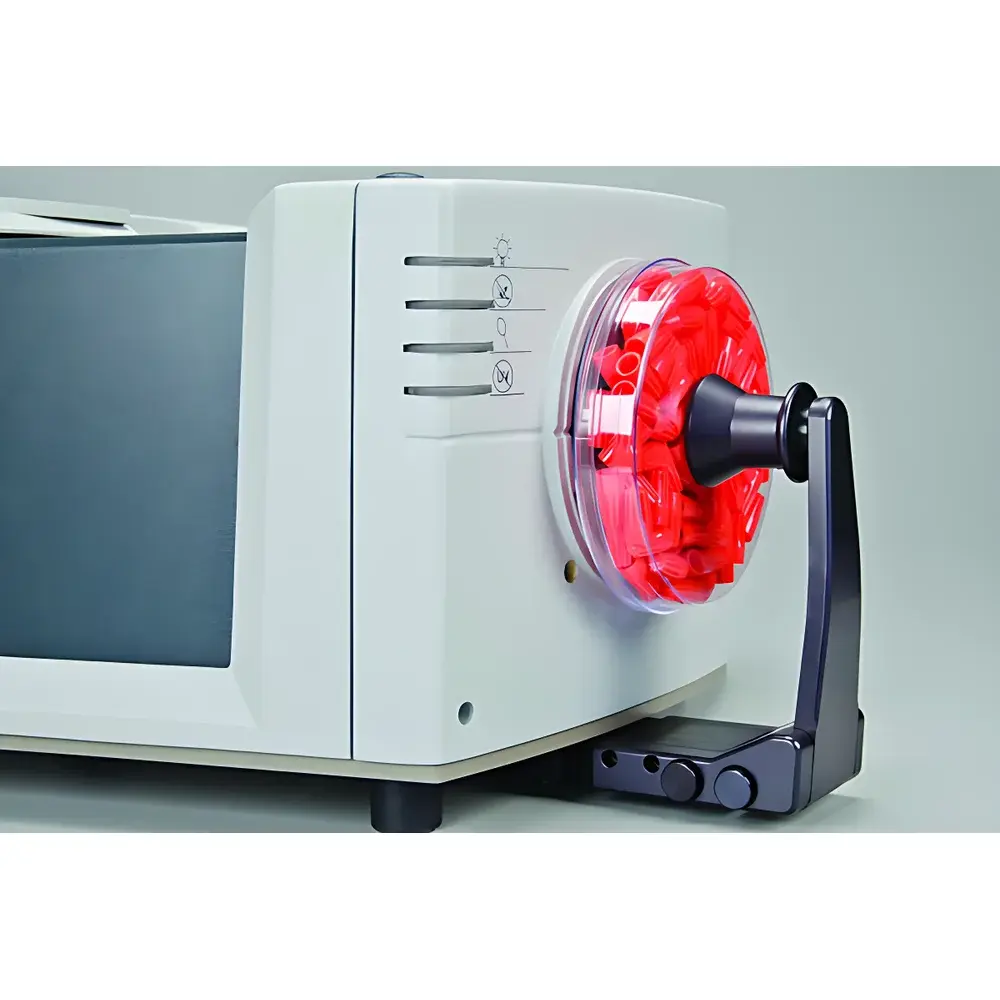
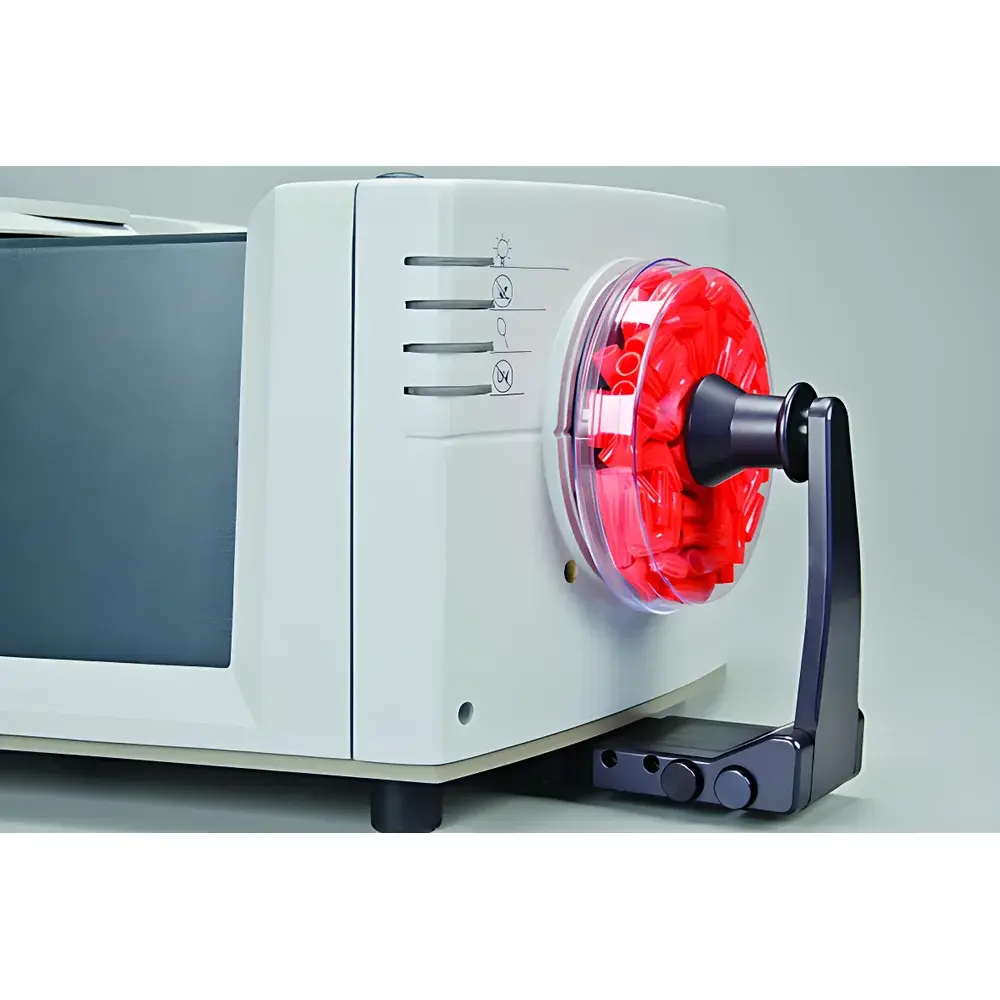
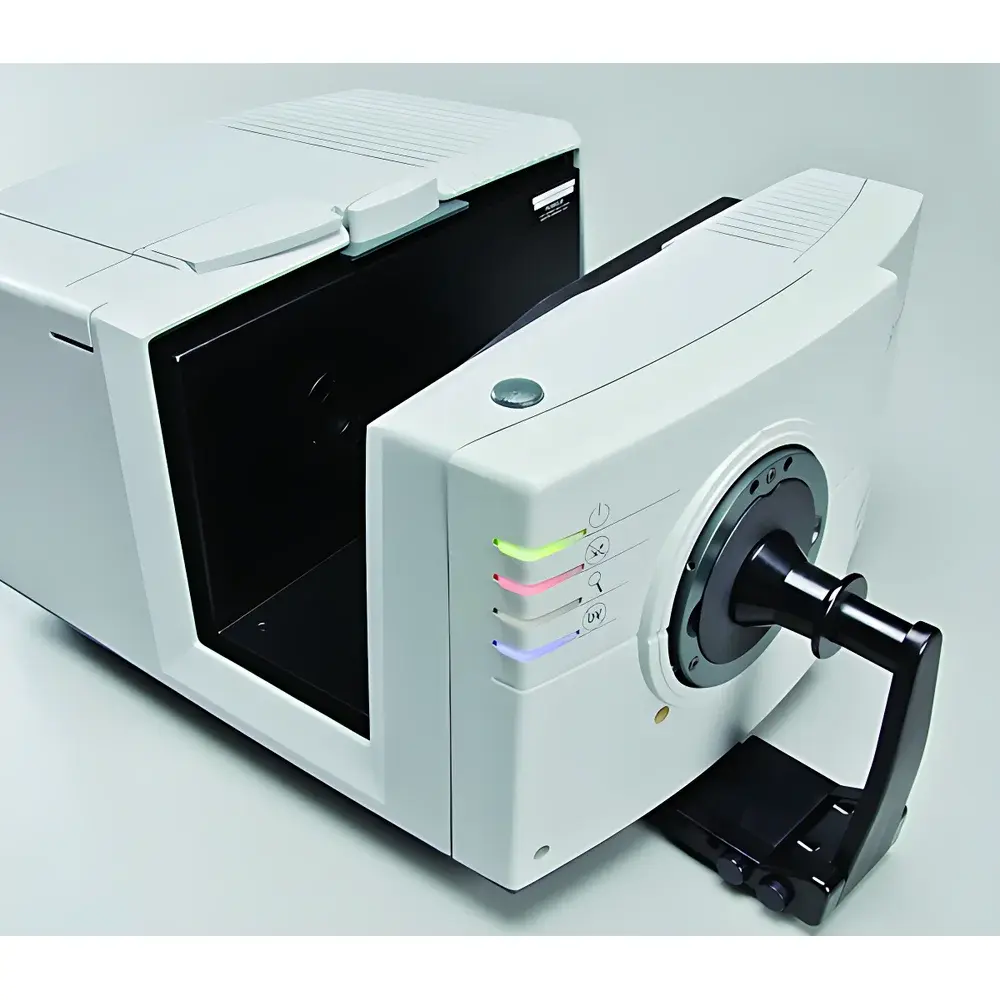
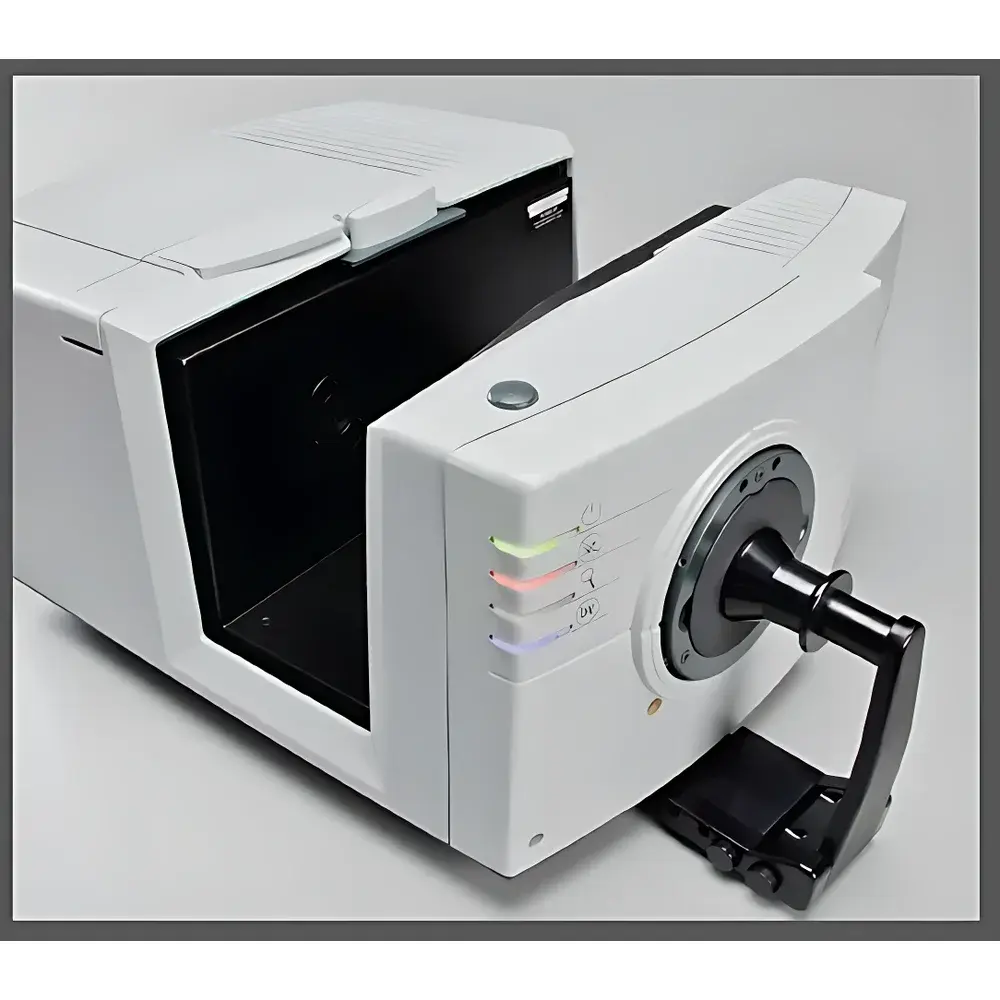
HunterLab UltraScan VIS Benchtop Color Measurement Spectrophotometer
| Brand | HunterLab |
|---|---|
| Origin | USA |
| Model | UltraScan VIS |
| Product Type | Colorimeter |
| Instrument Type | Benchtop |
| Optical Geometry | d/8° integrating sphere |
| Light Source | Pulsed xenon lamp |
| Spectral Range | 360–780 nm |
| Repeatability | ΔE*ab ≤ 0.03 |
Overview
The HunterLab UltraScan VIS is a high-precision benchtop spectrophotometer engineered for absolute color measurement fidelity across solid, liquid, and translucent samples. It operates on the CIE-recommended visible spectral range (360–780 nm) using a d/8° integrating sphere optical geometry—compliant with ISO 7724-1, ASTM E308, and CIE Publication No. 15—to ensure metrologically traceable tristimulus value computation (X, Y, Z) and derived color spaces (CIELAB, CIELCH, CMYK, etc.). Its pulsed xenon lamp provides stable, daylight-simulated D65 illumination without thermal drift or filament aging, enabling accurate measurement of fluorescent materials activated by UV energy below 400 nm. The instrument’s dual-beam silicon photodiode array architecture delivers real-time reference beam correction at every wavelength, eliminating photometric drift and ensuring robust performance across extended operational cycles.
Key Features
- Optical platform constructed from precision-machined, anodized aluminum and grade-304 stainless steel hardware—designed to minimize mechanical creep and thermal expansion effects on optical alignment.
- Integrating sphere coated with high-reflectance, barium sulfate–based diffuse material (≥97% reflectance from 360–780 nm), certified per NIST-traceable standards.
- Dual-aperture system: 25 mm and 9.5 mm port diameters configurable via motorized aperture selection—optimized for large-area solids (e.g., tiles, textiles) and small-volume liquids (e.g., pharmaceutical solutions).
- Automated specular component included (SCI) and excluded (SCE) measurement modes, selectable via software or front-panel interface; supports simultaneous reflectance and transmittance evaluation.
- Transmittance compartment engineered with three-sided open access—accommodates oversized samples up to 50 mm in height and 120 mm in width without mechanical obstruction.
- Integrated status LEDs indicating active mode (SCI/SCE), aperture size, illumination state, and calibration readiness—enhancing operator situational awareness in regulated environments.
Sample Compatibility & Compliance
The UltraScan VIS measures opaque, transparent, and translucent specimens—including powders (e.g., pigments, silica), viscous liquids (e.g., milk, fruit juice), molded plastics (e.g., PET preforms), coated substrates (e.g., automotive glass, optical lenses), and fibrous materials (e.g., carpet, yarn). Its d/8° geometry meets ISO 13655 requirements for M0/M1/M2 illumination conditions, supporting fluorescence correction protocols essential for UV-brightened detergents, paper, and cosmetics. All firmware and calibration routines comply with FDA 21 CFR Part 11 for electronic records and signatures when used with validated EasyMatch QC software. Instrument design adheres to IEC 61000-4 electromagnetic compatibility standards and UL 61010-1 safety certification for laboratory equipment.
Software & Data Management
EasyMatch QC v5.x serves as the native control and analysis platform—validated for GxP environments and supporting full audit trail functionality, user role-based permissions, and electronic signature workflows aligned with GLP and GMP requirements. It enables spectral data export in ASTM E2534-compliant .qtx format, batch statistical reporting (e.g., ΔE*ab control charts, tolerance zone mapping), and seamless integration with LIMS via ODBC or HL7 interfaces. Built-in wavelength validation uses NIST-traceable holmium oxide and didymium filters; daily verification routines include reflectance standard (ceramic tile) and transmittance standard (air/glass blank) checks—all logged with timestamp, operator ID, and pass/fail status.
Applications
UltraScan VIS is deployed in quality control laboratories across paint & coatings (film opacity, gloss-independent color), food & beverage (juice clarity, dairy whiteness index), pharmaceuticals (tablet coating uniformity, excipient hue), plastics (bottle resin yellowness, film haze), and textiles (dye lot consistency, metamerism assessment). Its ability to resolve high-chroma and low-reflectance surfaces—such as black automotive paints or saturated dyes—stems from optimized signal-to-noise ratio (>4000:1 at 550 nm) and dynamic range exceeding 4.5 absorbance units in transmission mode. Research applications include spectral modeling of scattering media (e.g., turbid liquids per ASTM D1003), development of color-difference tolerances (ΔE00), and correlation studies between instrumental metrics and human visual assessment under standardized viewing conditions.
FAQ
Does the UltraScan VIS support fluorescence correction for UV-excited samples?
Yes—it captures full spectral data from 360 nm, enabling quantification of UV-induced fluorescence and subsequent application of CIE 15:2018-compliant correction algorithms within EasyMatch QC.
Can it measure both reflectance and transmittance without hardware reconfiguration?
Yes—automated sample compartment positioning and dual-beam optics allow sequential or concurrent measurement of reflectance (with backside black trap) and transmittance (with air/glass reference) in a single workflow.
Is calibration traceable to national standards?
All factory calibrations are performed against NIST-traceable standards; users receive a certificate of calibration including uncertainty budgets per ISO/IEC 17025 requirements.
What maintenance is required beyond routine calibration?
No lamp replacement is needed—the xenon flash tube has a rated lifetime exceeding 2 million flashes; only annual verification of sphere coating integrity and aperture alignment is recommended.
How does it handle metamerism assessment?
By storing full spectral reflectance/transmittance curves (10 nm intervals), the instrument supports multi-illuminant simulation (D65, A, F2, etc.) and calculation of metameric index (MI) per ASTM D4086.




