
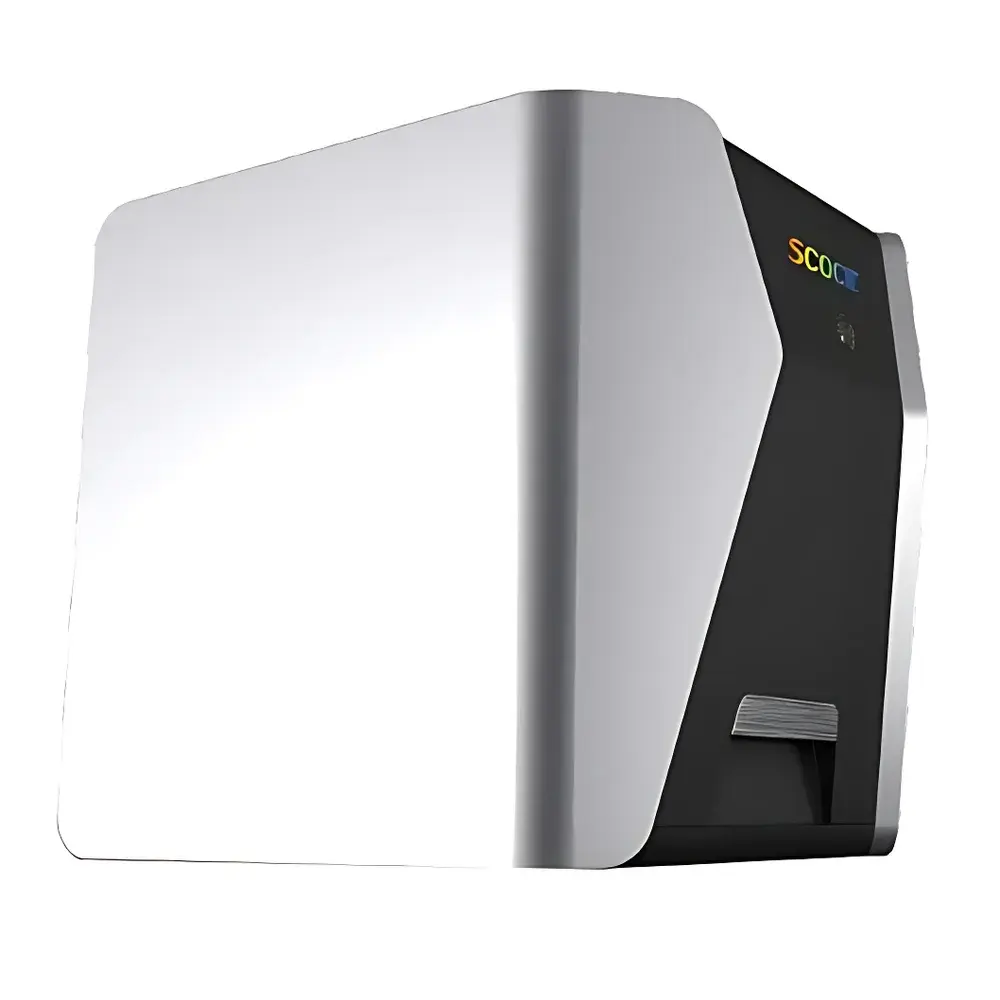
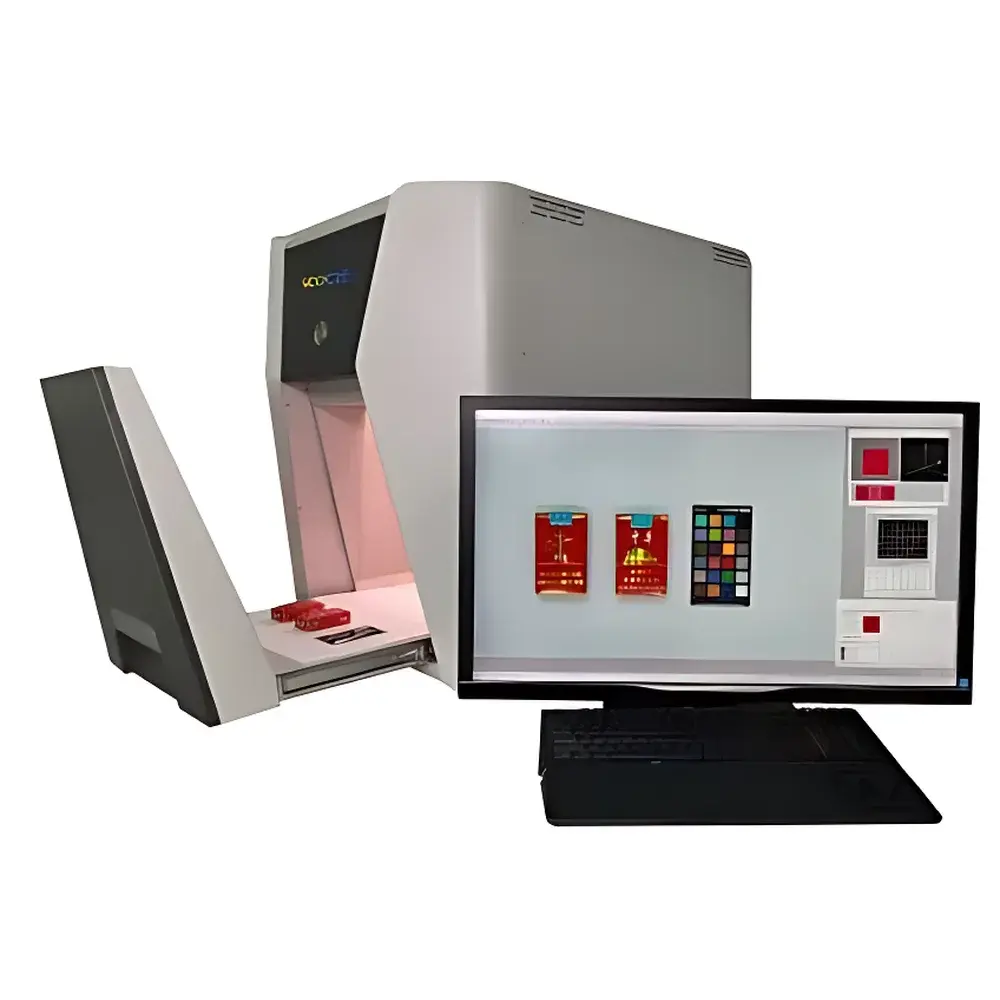
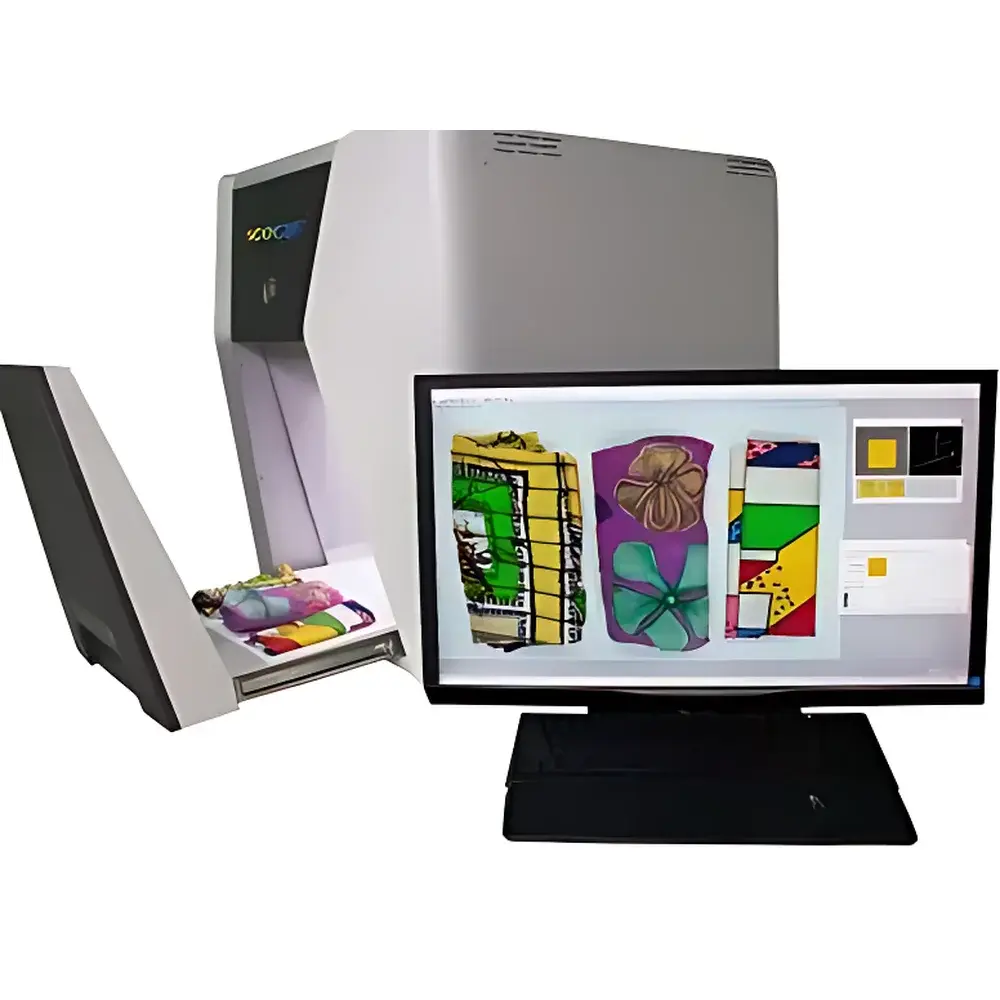
Digieye Digicolor Desktop Spectrophotometric Color Measurement System
| Brand | SCOSIE |
|---|---|
| Origin | Shanghai, China |
| Model | Digicolor |
| Type | Benchtop Spectrophotometer |
| Optical Geometry | 0°/45° Integrating Sphere |
| Illuminant | Standard D65 |
| Spectral Range | 400–700 nm |
| Repeatability | ΔE*ab ≤ 0.03 |
| Color Spaces | CIELAB, CIELCH, CIELUV, Hunter Lab, Munsell |
| Observer Angles | 2° & 10° |
| Color Difference Formulas | CIE L*a*b*, CMC (l:c), CIE94, CIEDE2000 |
| Data Output Formats | CSV, QTX, TXT, DAT |
| Compliance | ASTM E308, ISO/CIE 11664, ISO 7724, GB/T 3978–2008, GB/T 8424.1–2013 |
| Warranty | 24 months |
Overview
The Digieye Digicolor is a benchtop spectrophotometric color measurement system engineered for high-fidelity, non-contact digital color and appearance evaluation across heterogeneous, textured, and geometrically complex surfaces. Unlike conventional tristimulus colorimeters constrained by small-spot measurement apertures and limited spatial sampling, the Digicolor employs a calibrated multispectral imaging architecture combined with an integrated 0°/45° optical geometry—compliant with ISO 7724-1 and ASTM E308—to capture full-field reflectance data across the visible spectrum (400–700 nm). Its D65-standard illuminant and dual observer angle support (2° and 10°) ensure metrological alignment with human visual perception under standardized daylight conditions. The system delivers CIE-compliant tristimulus values (XYZ), chromaticity coordinates, and derived color spaces—including CIELAB, CIELCH, CIELUV, Hunter Lab, and Munsell—with traceable repeatability of ΔE*ab ≤ 0.03 under controlled environmental conditions. Designed for integration into industrial quality control workflows, it bridges the gap between traditional spot-based spectrophotometry and macroscopic appearance analysis.
Key Features
- Non-contact, full-field multispectral imaging—enables measurement of irregular, curved, patterned, or multi-color samples without physical contact or sample preparation
- 0°/45° integrating sphere optical configuration compliant with ISO 7724-1 and ASTM E308 for diffuse reflectance measurement and minimized directional bias
- Calibrated spectral response across 400–700 nm with 10 nm spectral resolution; supports D65, A, F11, D50, F02, and F07 illuminants for cross-illuminant comparison
- Simultaneous computation of multiple color difference metrics: CIE L*a*b*, CMC (l:c), CIE94, and CIEDE2000—each configurable with user-defined tolerances
- Comprehensive color parameter output: K/S (color strength), whiteness/yellowness indices (ASTM E313, ISO 2470), opacity (ISO 2846-1), ISO 105-A11 staining/colour change ratings, and spectral reflectance/transmittance curves
- Pass/Fail decision logic with customizable tolerance ellipsoids in CIELAB or CIELCH space, supporting automated QC gatekeeping in production environments
Sample Compatibility & Compliance
The Digicolor accommodates a broad range of material classes without requiring standardization of surface finish or geometry: woven and knitted textiles, coated metals, injection-molded plastics, ceramic glazes, printed packaging substrates, pharmaceutical tablets, cosmetic emulsions, food surfaces (e.g., baked goods, confectionery), and heritage artifacts. Its optical design mitigates errors from surface gloss, texture, and micro-topography that compromise conventional 8mm-spot instruments. Regulatory alignment includes ISO/CIE 11664 (colorimetry fundamentals), ISO 7724 (color measurement of surfaces), ASTM D2244 (color difference calculation), and GB/T 8424 series (Chinese national standards for textile and paint color evaluation). The system supports audit-ready data logging per GLP/GMP principles, including timestamped measurement metadata, operator ID, instrument calibration status, and environmental condition tags (ambient temperature/humidity).
Software & Data Management
Bundled Digicolor Studio software provides a validated platform for instrument control, spectral data acquisition, color space transformation, and statistical process monitoring. It supports FDA 21 CFR Part 11–compliant user authentication, electronic signatures, and immutable audit trails for all measurement sessions and parameter modifications. Raw spectral data (reflectance % vs. wavelength) and derived colorimetric outputs are exportable in CSV, QTX (QuarkXPress-compatible), TXT, and DAT formats for downstream integration with LIMS, MES, or ERP systems. Batch reporting includes statistical summaries (mean ΔE, standard deviation, CPK), trend charts, and annotated image overlays highlighting out-of-tolerance regions. Remote calibration verification and firmware updates are supported via secure HTTPS interface.
Applications
- Textile & Apparel: Shade matching across dye lots, batch-to-batch consistency validation, ISO 105-A11 fastness assessment, and digital archiving of fabric standards
- Coatings & Plastics: Color release testing for automotive OEM parts, RAL/BS/DIN standard compliance, and weathering study tracking via spectral shift analysis
- Food & Packaging: Quantitative assessment of browning (L* decline), pigment degradation (a*/b* drift), and print registration accuracy on flexible films
- Pharma & Cosmetics: Tablet coating uniformity mapping, lipstick batch color homogeneity, and stability testing under accelerated aging protocols
- Cultural Heritage: Non-invasive pigment identification, fading kinetics modeling, and conservation treatment documentation aligned with CIE 15:2018 guidelines
- Electronics: Display panel chromaticity uniformity, PCB solder mask color verification, and OLED emissive layer consistency screening
FAQ
Does the Digicolor require annual recalibration to maintain traceability?
Yes—recommended annual calibration against NIST-traceable ceramic tile standards (e.g., BCRA Series II) is required to sustain ISO/IEC 17025–aligned measurement uncertainty budgets. Certificate of Calibration includes spectral responsivity verification at 10-nm intervals.
Can the system measure transparent or translucent materials?
Yes—via optional transmission mode using a backlit stage; supports measurement of films, bottles, and liquid samples with configurable path length and integrating sphere port selection.
Is spectral data export compatible with third-party color formulation software?
Yes—CSV exports include wavelength-indexed reflectance values (380–780 nm, 10-nm steps) and XYZ/LAB coordinates, fully compatible with X-Rite Color iMatch, Datacolor Match Textile, and BASF ChromaTool.
What environmental conditions are specified for optimal performance?
Operating range: 15–30°C ambient temperature, 30–70% RH non-condensing; measurement stability requires <±1°C/hour drift and absence of direct sunlight or fluorescent flicker interference.
How is user access controlled in regulated manufacturing environments?
Role-based permissions (Operator, Supervisor, Administrator) enforce separation of duties; all critical actions (calibration, tolerance edits, report deletion) require dual electronic signature and generate time-stamped audit log entries with IP address and workstation ID.






