
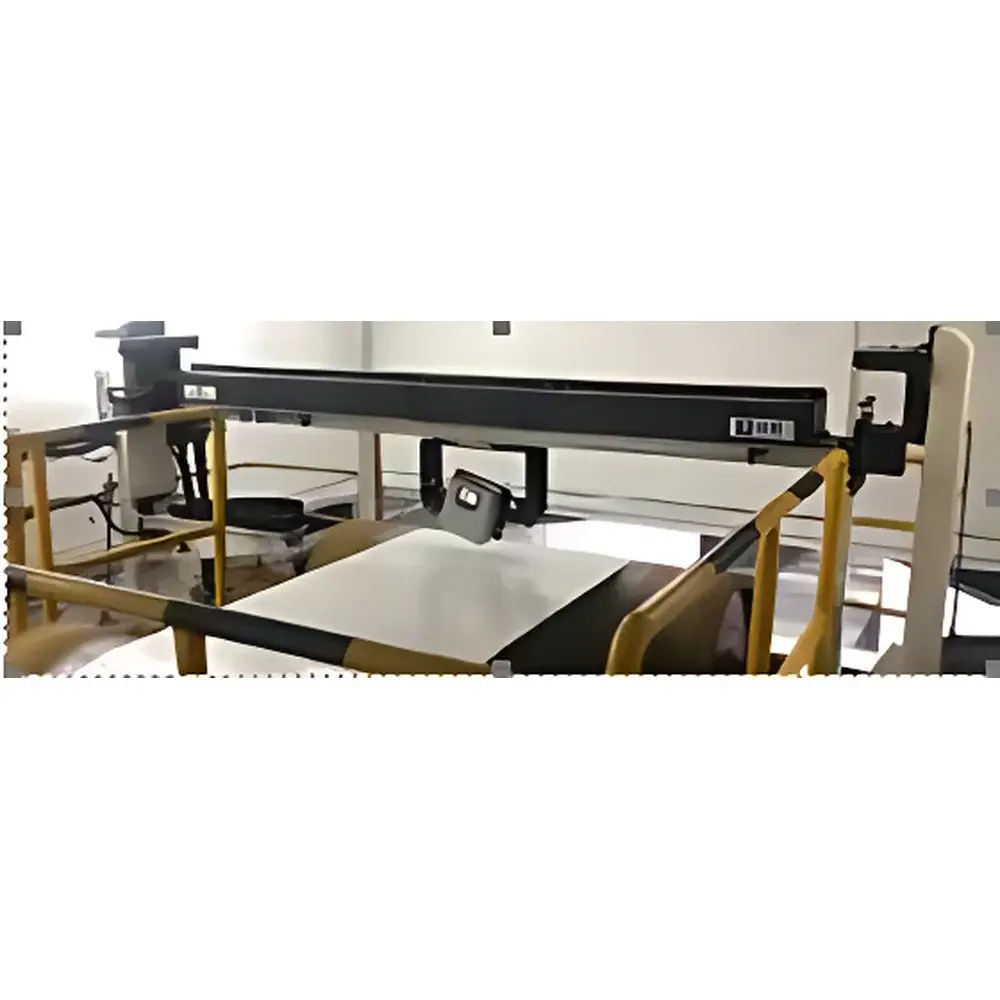
HunterLab SpectraTrend HT Paper Web Online Color Measurement System
| Brand | HunterLab |
|---|---|
| Origin | USA |
| Model | SpectraTrend HT – Paper Web Online Colorimeter |
| Product Type | Spectrophotometric Color Measurement System |
| Instrument Type | In-Line |
| Optical Geometry | 0/45° Integrating Sphere |
| Light Source | Full-Spectrum Balanced Solid-State LED Array |
| Spectral Range | 400–700 nm |
| Spectral Bandwidth | 10 nm |
| Repeatability (ΔE*ab) | ≤ 0.03 |
| Measurement Distance | Up to 100 mm (4 in) |
| Measurement Speed | 5 Hz (non-contact) |
| IP Rating | NEMA 4 / IP56 |
| Interface | Standard Ethernet (TCP/IP), PLC-compatible, No RS-232 Required |
| Software Platform | HunterLab EasyMatch QC v5.x (FDA 21 CFR Part 11 compliant with audit trail, user roles, electronic signatures) |
Overview
The HunterLab SpectraTrend HT Paper Web Online Color Measurement System is a purpose-engineered, spectrophotometric in-line color monitoring solution designed exclusively for continuous paper manufacturing processes. Utilizing a 0/45° integrating sphere optical architecture with a full-spectrum, thermally stable solid-state LED light source (400–700 nm), the system delivers laboratory-grade spectral reflectance data at production line speed. Unlike traditional spot-checking or offline benchtop instruments, the SpectraTrend HT performs non-contact, real-time color measurement across the full web width—capturing spatial color uniformity, detecting localized chromatic deviations, and quantifying both CIE L*a*b*, ΔE*ab, and spectral power distribution (SPD) continuously. Its core function is closed-loop process visibility: by correlating spectral response with paper basis weight, coating formulation, drying kinetics, and calendering parameters, it enables proactive correction before off-spec material accumulates. The system operates under ISO 13655:2017 (M1 illumination), ASTM D2244 and ISO 11664-4 compliant spectral analysis, ensuring metrological traceability to NIST standards.
Key Features
- Full-web, motorized traverse system with programmable lateral scanning—enabling high-resolution spatial mapping of color variation across paper width (up to 4 m)
- Integrated height-sensing capability: simultaneously measures sample height (±0.1 mm resolution) and applies real-time geometric compensation for distance-induced spectral shift
- Auto-compensation for conveyor speed fluctuations and web flutter via synchronized trigger input and dynamic exposure control
- NEMA 4/IP56-rated industrial enclosure—designed for high-humidity, dust-laden paper mill environments with no moving parts requiring maintenance
- Factory-calibrated inter-instrument agreement (IIA) < ±0.08 ΔE*ab across units—validated per ASTM E308 and ISO/CIE 15:2004
- Zero manual recalibration requirement: automated self-diagnostic routines and scheduled reference tile verification (user-definable interval)
- Acoustic-optical alarm system with configurable threshold triggers for out-of-tolerance events, including visual location tagging on operator HMI
Sample Compatibility & Compliance
The SpectraTrend HT is validated for use on uncoated, coated, recycled, and specialty papers—including kraft, bleached sulfate, mechanical pulp grades, and functional barrier papers. It accommodates surface textures from supercalendered gloss to matte-finish newsprint without contact pressure artifacts. All measurements conform to ISO 2471 (opacity), ISO 2470-1 (brightness), and TAPPI T485 (color of paper and paperboard). System validation documentation supports GMP/ISO 9001 quality management systems and satisfies FDA 21 CFR Part 11 requirements for electronic records and signatures when deployed with EasyMatch QC’s audit-trail-enabled configuration. Calibration traceability is maintained through annual NIST-traceable verification services offered by HunterLab-certified field engineers.
Software & Data Management
HunterLab EasyMatch QC v5.x serves as the central analytical and operational interface. It provides real-time visualization of CIELAB trends, spectral overlays, deviation heatmaps, and statistical process control (SPC) charts (X-bar/R, Cpk, Ppk). Data export supports CSV, XML, and direct Microsoft Excel (.xlsx) generation with customizable templates—enabling seamless integration into MES (Manufacturing Execution Systems) and LIMS platforms. Role-based access control (RBAC) enforces separation of duties: operators view pass/fail status and alarms; supervisors configure tolerances and SPC limits; QA managers approve calibration events and audit logs. All measurement events—including timestamp, sensor ID, web position, height reading, and raw spectral data—are stored with SHA-256 hashing for integrity verification. Data retention policies comply with GLP and internal document retention protocols (configurable up to 10 years).
Applications
Primary deployment occurs in paper machine dry end sections, coating stations, and reel-up areas—where color consistency directly impacts brand perception and print readiness. Secondary applications include real-time monitoring of pigment dispersion uniformity in wet-end additives, evaluation of optical brightener activation during drying, and detection of fiber furnish shifts (e.g., hardwood vs. softwood ratio changes affecting yellowness index). The system also supports cross-process correlation studies—for example, linking color drift to steam pressure variations in Yankee dryers or to pH excursions in sizing chemistry. While optimized for paper, its height-compensated 0/45° geometry permits adaptation to other planar, semi-rigid substrates including nonwovens, laminated films, and corrugated board—subject to application-specific validation per ISO/IEC 17025.
FAQ
How does the SpectraTrend HT maintain accuracy across varying paper heights?
It employs dual-wavelength triangulation (850 nm + 940 nm) to determine instantaneous sample-to-sensor distance, then dynamically adjusts integration time and applies empirically derived spectral correction coefficients based on height-dependent Fresnel reflectance models.
Can it replace laboratory spectrophotometers for quality release?
Yes—when installed, validated, and operated per ASTM D6290 and HunterLab’s IQ/OQ/PQ protocol, it meets the precision and traceability requirements for in-process release testing under ISO/IEC 17025-accredited labs.
Is Ethernet connectivity sufficient for integration with legacy DCS systems?
Yes—Modbus TCP and OPC UA gateways are supported via optional middleware; native analog 4–20 mA outputs (with configurable scaling) are available for direct PLC interfacing without network dependency.
What is the minimum detectable color shift under production conditions?
Under typical paper web speeds (< 1200 m/min) and standard lighting, the system reliably detects ΔE*ab ≥ 0.025 with 95% confidence (α = 0.05), verified using certified ceramic tile standards and process-representative paper samples.
Does HunterLab provide installation qualification support?
Yes—factory-trained application engineers perform site surveys, mechanical alignment verification, optical path validation, and full IQ/OQ documentation aligned with Annex 11 and GAMP5 guidelines.






