
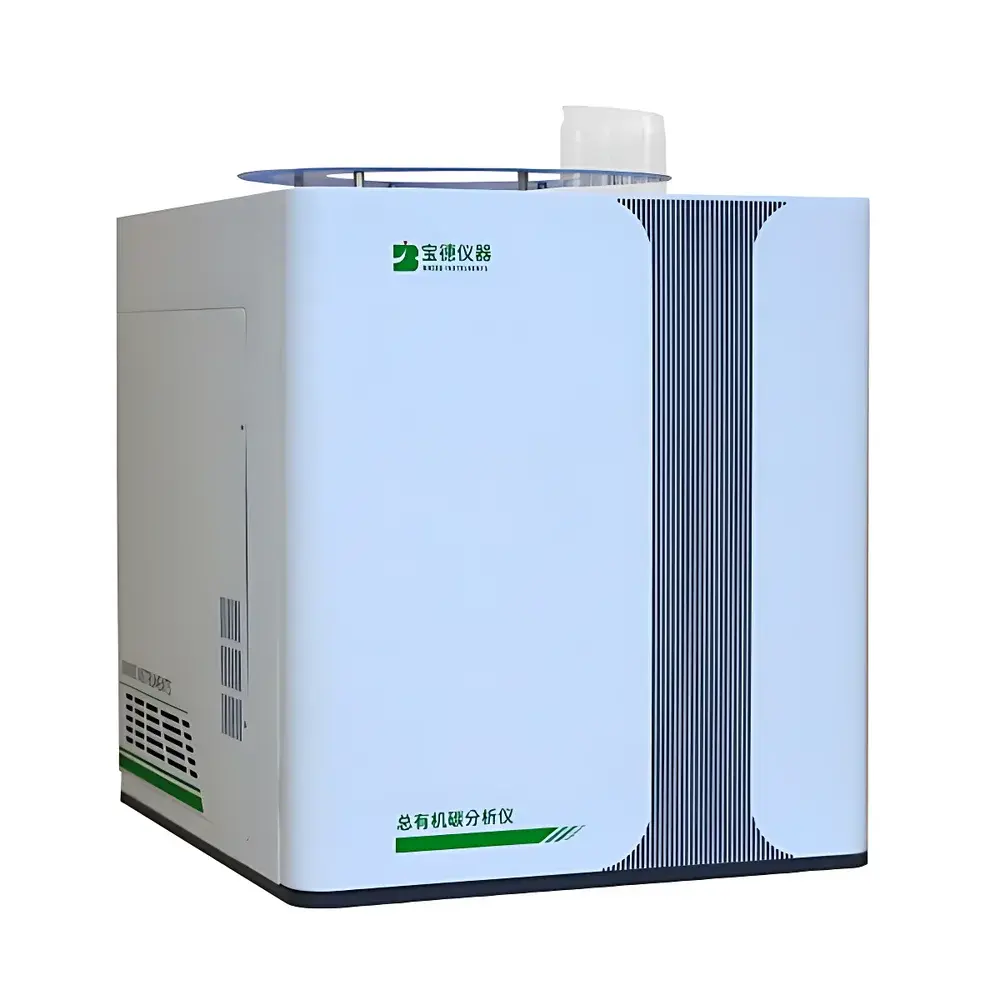
BTPD BTOC-30L Total Organic Carbon Analyzer
| Brand | BTPD |
|---|---|
| Origin | Beijing, China |
| Manufacturer Type | Direct Manufacturer |
| Instrument Type | Laboratory TOC Analyzer |
| Detection Principle | Non-Dispersive Infrared (NDIR) Absorption |
| Oxidation Method | High-Temperature Catalytic Combustion |
| Applicable Standards | GB/T 5750.8–2023, HJ 501–2009, GB 1886.304–2020 |
| Sample Matrix Compatibility | Drinking water, surface water, domestic wastewater, food-grade phosphoric acid, industrial effluents |
Overview
The BTPD BTOC-30L Total Organic Carbon Analyzer is a laboratory-grade instrument engineered for precise, trace-level quantification of total organic carbon (TOC) in aqueous matrices. It operates on the combustion oxidation–non-dispersive infrared (NDIR) absorption principle—a reference method recognized for its high oxidation efficiency, broad dynamic range, and minimal matrix interference. In this process, liquid samples are injected into a high-temperature catalytic oxidation furnace (typically operating at ≥680 °C), where organic carbon compounds are quantitatively converted to carbon dioxide (CO₂) in the presence of excess oxygen and a platinum-based catalyst. The evolved CO₂ is then swept by ultra-pure carrier gas (e.g., synthetic air or nitrogen) through a moisture removal module and delivered to a dual-beam NDIR detector. The detector measures the absorbance difference at 4.26 µm—the characteristic vibrational absorption band of CO₂—enabling linear, calibration-based calculation of TOC concentration in units of mg/L (ppm C). This methodology ensures >99% oxidation efficiency for refractory organics, including humic substances, surfactants, and low-volatility acids, making the BTOC-30L suitable for regulatory-compliant analysis across environmental, pharmaceutical, and food-grade applications.
Key Features
- High-temperature catalytic combustion system with integrated Pt catalyst and quartz combustion tube, ensuring complete oxidation of recalcitrant carbon species
- Dual-beam NDIR detection architecture with temperature-stabilized optical path and auto-zero referencing for long-term signal stability
- Integrated reagent-free design: no chemical oxidants (e.g., persulfate) required; eliminates reagent contamination risk and operational cost
- Automated acidification–sparging module for inorganic carbon (IC) removal prior to TOC measurement, supporting both TOC and TC/IC differential modes
- Robust sample introduction system with peristaltic pump, programmable injection volume (0.1–2.0 mL), and ceramic syringe valve for corrosion resistance
- Self-diagnostic firmware with real-time status monitoring of furnace temperature, gas flow, detector voltage, and baseline drift
Sample Compatibility & Compliance
The BTOC-30L is validated for use with low-conductivity and moderate-salinity aqueous samples, including potable water, groundwater, surface water, municipal wastewater, pharmaceutical process water (PW/WFI), food-grade phosphoric acid (per GB 1886.304–2020), and industrial effluents with TDS ≤ 5,000 mg/L. It conforms to multiple national standard methods: HJ 501–2009 (China’s official method for TOC determination in water), GB/T 5750.8–2023 (Standard Examination Methods for Drinking Water), and supports method adaptation for ISO 8245:1999 and ASTM D5903–18. Instrument performance verification includes system suitability testing per USP and EP 2.2.44 guidelines, with documented linearity (r² ≥ 0.999 over 0.5–30 mg/L C), repeatability (RSD ≤ 3% at 2 mg/L), and recovery (95–105% for sucrose and benzoquinone spikes). Data integrity complies with ALCOA+ principles; audit trail functionality meets GLP/GMP documentation requirements.
Software & Data Management
The BTOC-30L is operated via BTPD TOC Control Suite v3.2—a Windows-based application supporting full instrument control, method configuration, calibration management (multi-point linear/non-linear), and automated report generation. Software features include electronic signature support, user role-based access control (administrator/operator/auditor), and secure data storage with encrypted .tdb database format. All analytical events—including calibration updates, maintenance logs, and result modifications—are timestamped and immutable within the audit trail. Export options include CSV, PDF, and XML formats compatible with LIMS integration (via ODBC or HL7). The system supports 21 CFR Part 11 compliance when deployed with network authentication, digital certificates, and periodic password policy enforcement.
Applications
- Regulatory monitoring of drinking water treatment plants per GB/T 5750.8–2023 and local environmental protection bureau mandates
- Wastewater discharge compliance testing for municipal and industrial facilities under China’s Effluent Discharge Standards (GB 8978–1996)
- In-process TOC verification in biopharmaceutical manufacturing, including cleaning validation of chromatography systems and buffer preparation tanks
- Quality control of food-grade phosphoric acid used in beverage and additive production, per GB 1886.304–2020 specifications
- Research applications in aquatic biogeochemistry, including DOC characterization in lake sediments and riverine organic load assessment
- Support for ISO 14001 environmental management system audits through standardized, auditable TOC records
FAQ
What is the typical detection range and limit of detection (LOD) for the BTOC-30L?
The instrument achieves an analytical range of 0.5–30 mg/L TOC (extendable to 100 mg/L via dilution), with an LOD of ≤0.2 mg/L (based on 3σ of blank response, n=10).
Does the BTOC-30L require daily calibration or only before each analytical batch?
Calibration is performed prior to each analytical sequence using certified potassium hydrogen phthalate (KHP) standards; system suitability checks (e.g., blank, mid-level spike) are mandatory between calibration and sample analysis.
Can the instrument measure TOC in high-salinity seawater or brine samples?
Direct analysis is not recommended for salinities >5,000 mg/L TDS due to potential catalyst poisoning and salt deposition; pre-dilution or solid-phase extraction is advised for such matrices.
Is the BTOC-30L compliant with international pharmacopeial requirements for water quality testing?
Yes—it supports method execution aligned with USP , EP 2.2.44, and JP 17 General Tests for TOC, provided system qualification (IQ/OQ/PQ) and procedural validation are completed per site-specific protocols.
How often does the combustion catalyst require replacement?
Under normal operation (≤20 samples/day), the Pt catalyst maintains performance for ≥12 months; replacement intervals are tracked automatically in software and signaled via maintenance alert.
Related Products







