
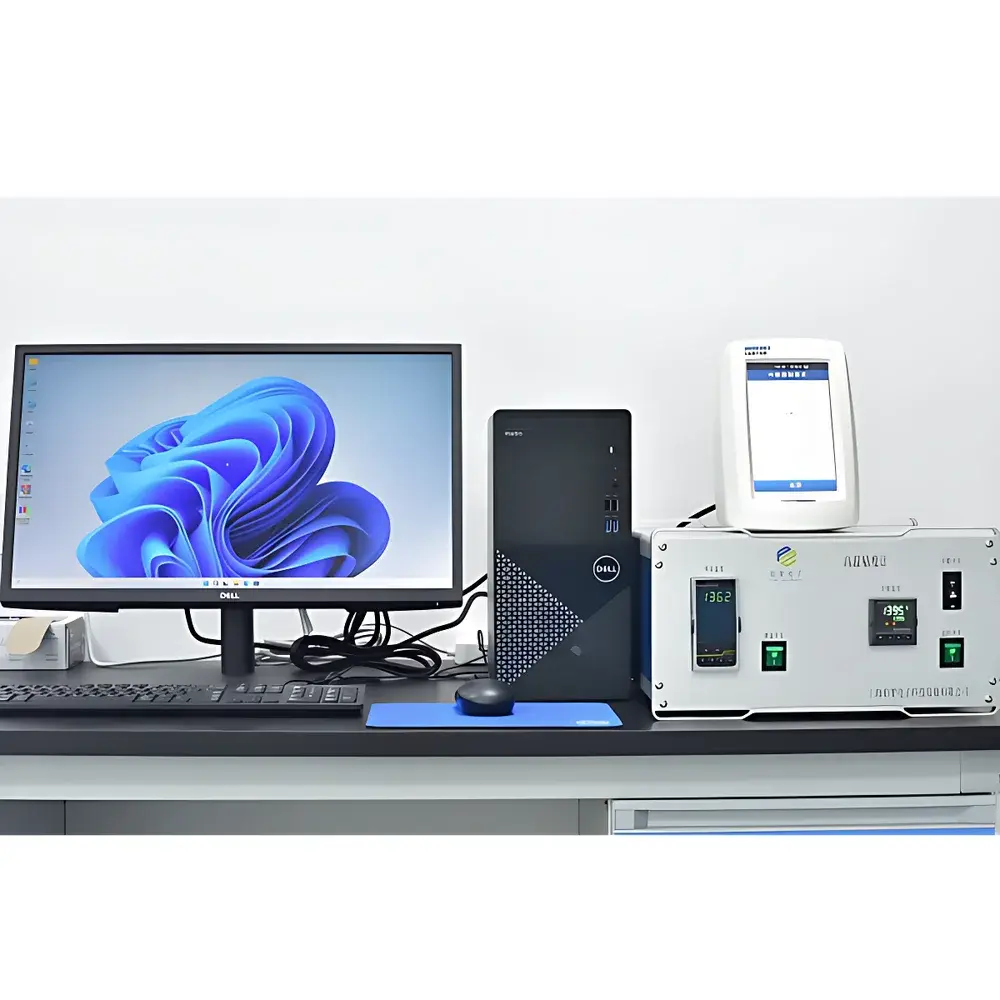
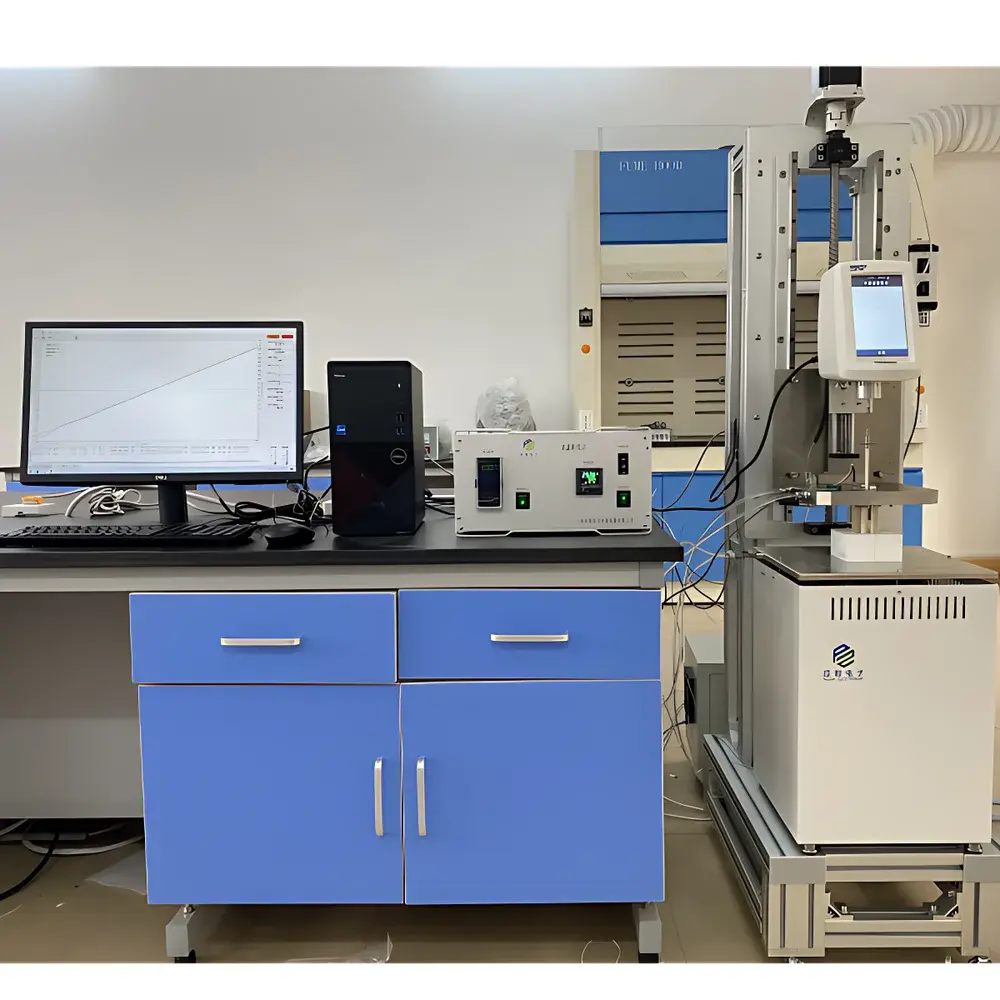
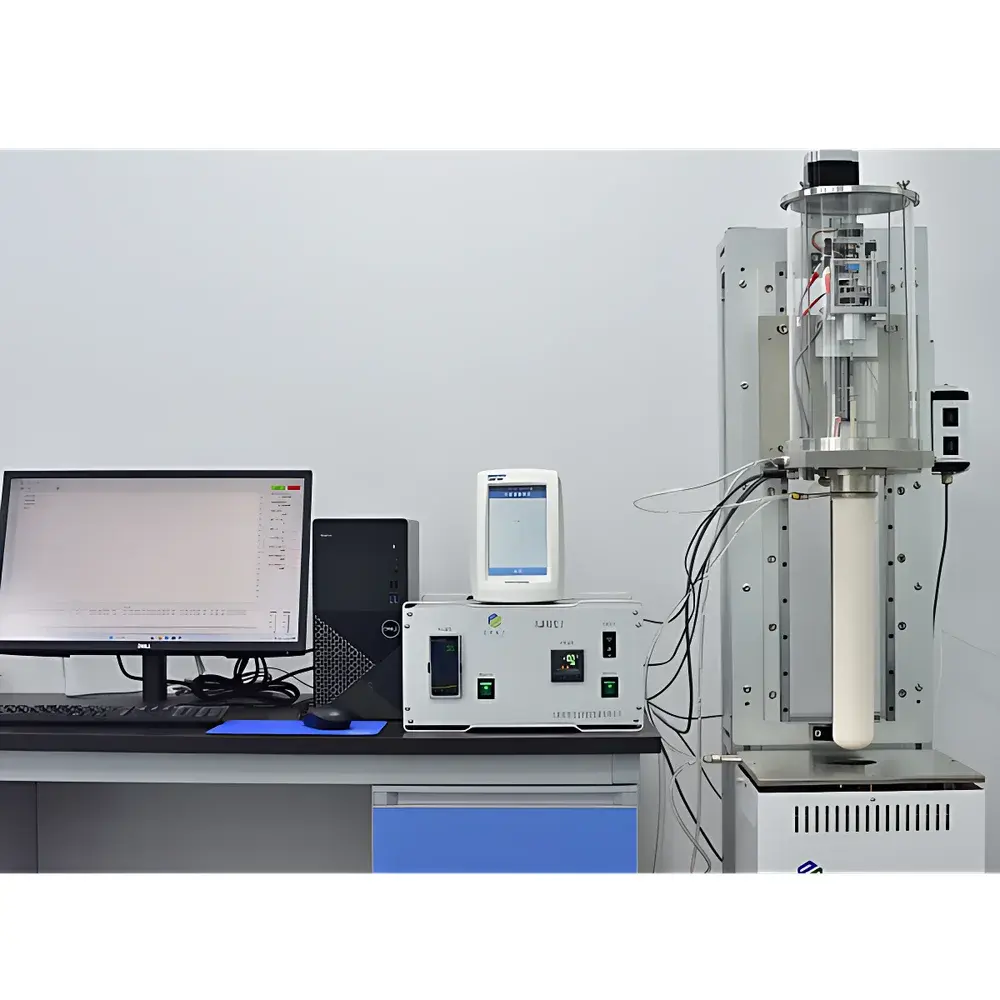
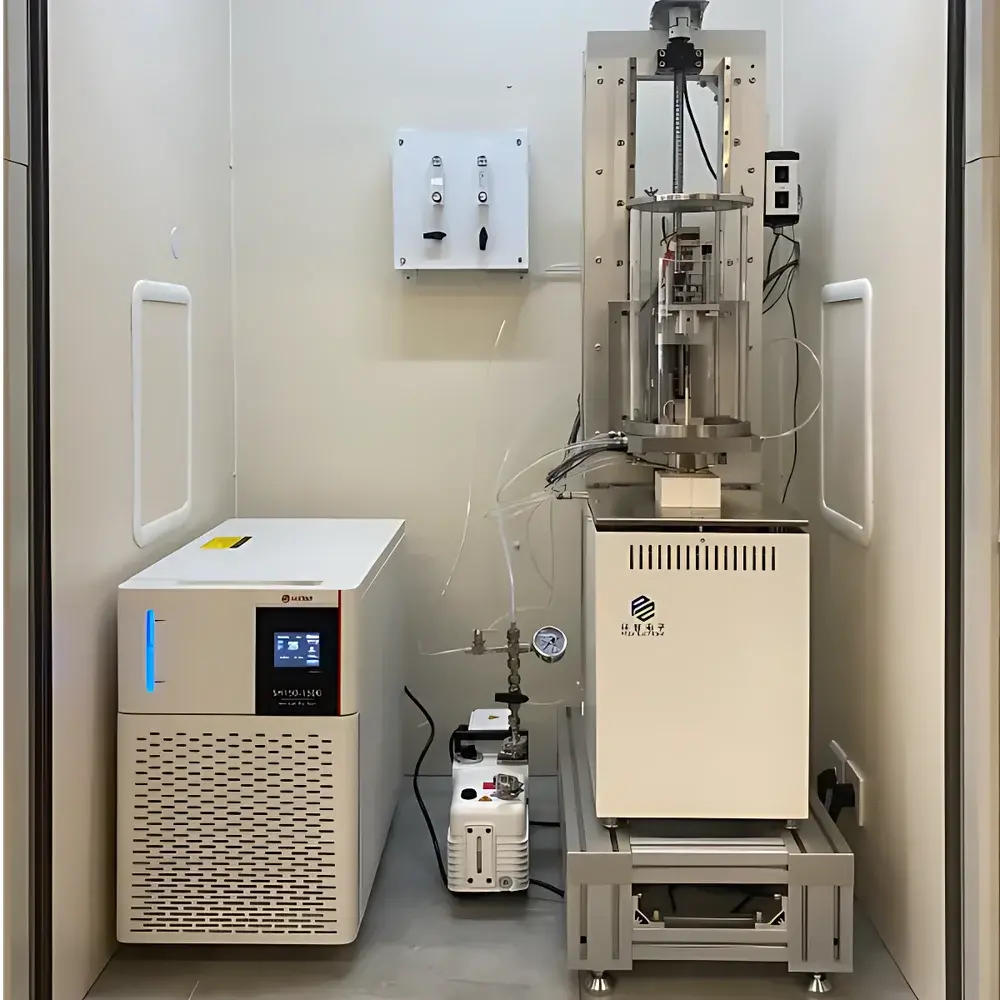
Pozhi RHEO1600 High-Temperature Rotational Viscometer
| Brand | Pozhi Electronic |
|---|---|
| Origin | Shanghai, China |
| Model | RHEO1600 |
| Instrument Type | Fixed-Mount High-Temperature Viscometer |
| Operating Environment | High-Temperature Melt |
| Viscosity Range | 100–5,000,000 mPa·s |
| Temperature Range | 0–1700 °C |
| Temperature Resolution | 0.1 °C |
| Temperature Accuracy | ±1 °C |
| Heating Rate | 0–50 °C/min |
| Compliance Standards | ASTM C965, GB/T 31424-2015 |
| Viscometer Core Module | DVNext-based torque transduction system |
| Sample Crucible Capacity | 40 mL |
| Atmosphere Options | Air, Inert Gas (N₂/Ar), Vacuum (10⁻² mbar and 10⁻⁴ mbar) |
| Crucible Material Options | Platinum (Pt), ODS-Pt (Oxide-Dispersion-Strengthened Platinum), Graphite, Molybdenum, Sintered Alumina |
Overview
The Pozhi RHEO1600 High-Temperature Rotational Viscometer is an engineered solution for precise dynamic viscosity characterization of inorganic melts under controlled thermal and atmospheric conditions. It operates on the principle of rotational viscometry—measuring the viscous torque exerted on a rotating spindle immersed in a molten sample. This torque is directly proportional to the shear stress generated under defined angular velocity, enabling calculation of absolute dynamic viscosity (η) via Newtonian or non-Newtonian rheological models. Designed for continuous operation up to 1700 °C, the system integrates a high-stability DVNext-derived torque sensor with active thermal management, ensuring high reproducibility across extended test cycles. Its architecture supports both steady-shear and time-resolved measurements, making it suitable for fundamental rheological profiling of silicate, oxide, metallic, and slag systems where thermal stability, chemical inertness, and measurement fidelity are critical.
Key Features
- Robust high-temperature furnace with programmable heating rates up to 50 °C/min and temperature stability of ±1 °C over full 0–1700 °C range
- DVNext-derived torque transduction module offering resolution down to 0.01 mN·m and calibrated accuracy traceable to NIST-equivalent standards
- Modular crucible assembly supporting multiple material options—including Pt, ODS-Pt, high-purity graphite, Mo, and sintered Al₂O₃—to match chemical compatibility requirements of diverse melt chemistries
- Atmosphere control interface enabling operation under ambient air, inert gas (N₂ or Ar), or vacuum environments (10⁻² mbar and 10⁻⁴ mbar levels)
- Integrated safety interlocks including overtemperature cutoff, gas leak detection, and mechanical spindle collision prevention
- Front-panel touchscreen HMI with embedded PID tuning and real-time graphical display of torque, temperature, and rotational speed
Sample Compatibility & Compliance
The RHEO1600 is validated for use with optically transparent and opaque high-melting-point materials including borosilicate and aluminosilicate glasses, ceramic precursors, metallurgical slags, coal ash melts, electronic pastes, and molten metals (with appropriate crucible selection). Its design adheres to ASTM C965 (“Standard Test Method for Viscosity of Glass Melts”) and GB/T 31424-2015 (“Determination of Viscosity of High-Temperature Melts”), ensuring data comparability in academic, industrial, and regulatory contexts. All hardware components—including thermocouple sheaths, spindle shafts, and furnace insulation—are selected to meet ISO 9001 manufacturing controls and support GLP-compliant documentation workflows.
Software & Data Management
Data acquisition and analysis are managed through PozhiViscoControl™ v4.2—a Windows-based application supporting multi-channel synchronized logging (torque, temperature, rotation rate, atmosphere pressure). The software enables automated viscosity sweeps, stepwise isothermal holds, and time-dependent creep/recovery protocols. Export formats include CSV, Excel, and XML; raw data files retain full audit trail metadata (user ID, timestamp, calibration ID, instrument firmware version). The platform complies with FDA 21 CFR Part 11 requirements for electronic records and signatures when configured with optional user role management and digital signature modules.
Applications
- Rheological mapping of glass-forming systems during fiber drawing and float glass production
- Slag viscosity optimization in blast furnace and electric arc furnace operations
- Coal ash fusion behavior and slagging propensity assessment under reducing atmospheres relevant to IGCC and entrained-flow gasifiers
- Development and quality control of low-expansion TFT glass substrates and photovoltaic encapsulant melts
- High-temperature rheology of advanced ceramic slurries and tape-casting formulations
- Fundamental studies of non-Newtonian flow behavior in metal matrix composites and eutectic alloys
FAQ
What spindle geometries are supported for high-temperature operation?
Standard configurations include cylindrical spindles (e.g., CP-41, CP-51) and custom-designed crucible-integrated rotors optimized for minimal thermal lag and maximal torque transmission at >1500 °C.
Can the system perform oscillatory measurements?
No—the RHEO1600 is configured for steady-state rotational viscometry only. For oscillatory high-temperature rheology, refer to the Pozhi OSCI-1800 series with electromagnetic drive and dual-frequency torsion control.
Is calibration traceable to international standards?
Yes—factory calibration includes certified reference oils (e.g., Cannon N27, N3000) and high-temperature viscosity standards traceable to NIST SRM 2490c (glass melt reference material).
How is crucible alignment maintained at elevated temperatures?
A motorized vertical positioning stage with optical encoder feedback ensures repeatable sub-10 µm axial alignment before each test cycle, compensating for thermal expansion of furnace and spindle components.
Does the system support remote monitoring and control?
Yes—via Ethernet-connected OPC UA server interface compatible with LabVIEW, MATLAB, and SCADA platforms; TLS-encrypted web dashboard available as optional add-on.



