
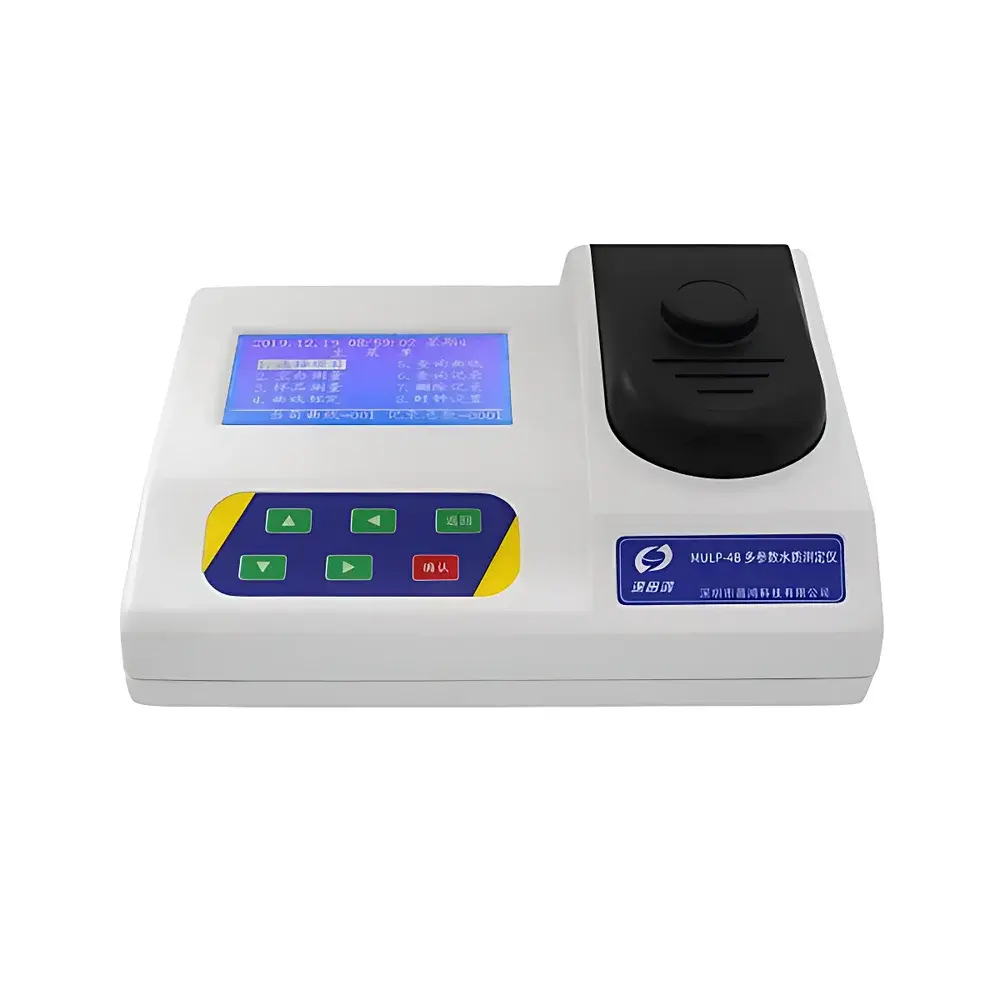
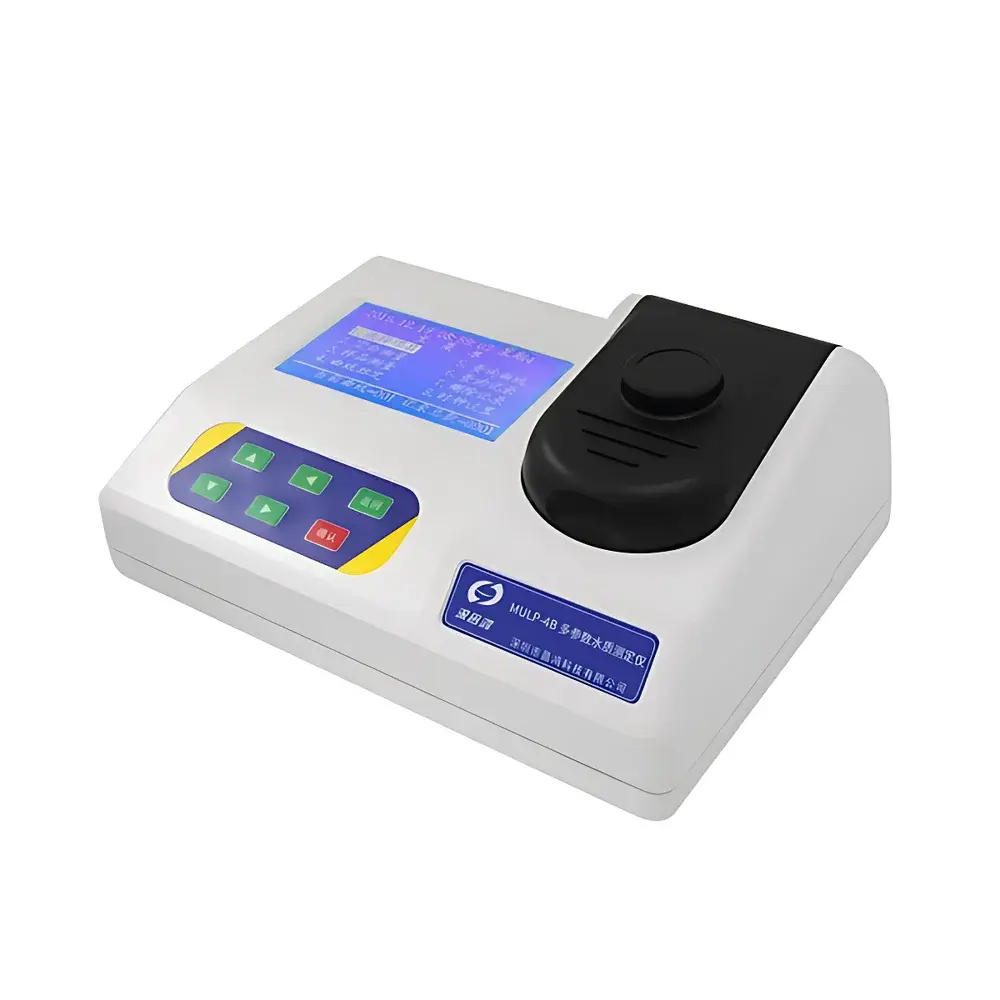
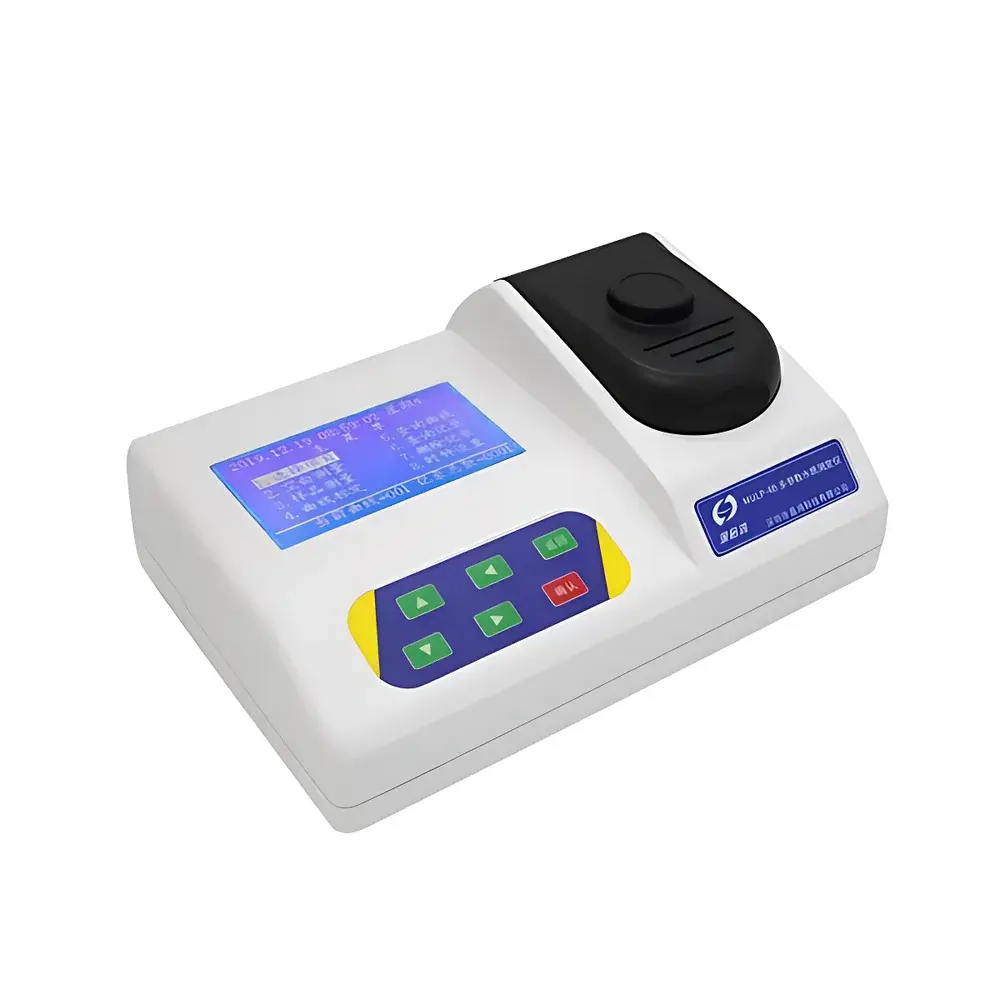
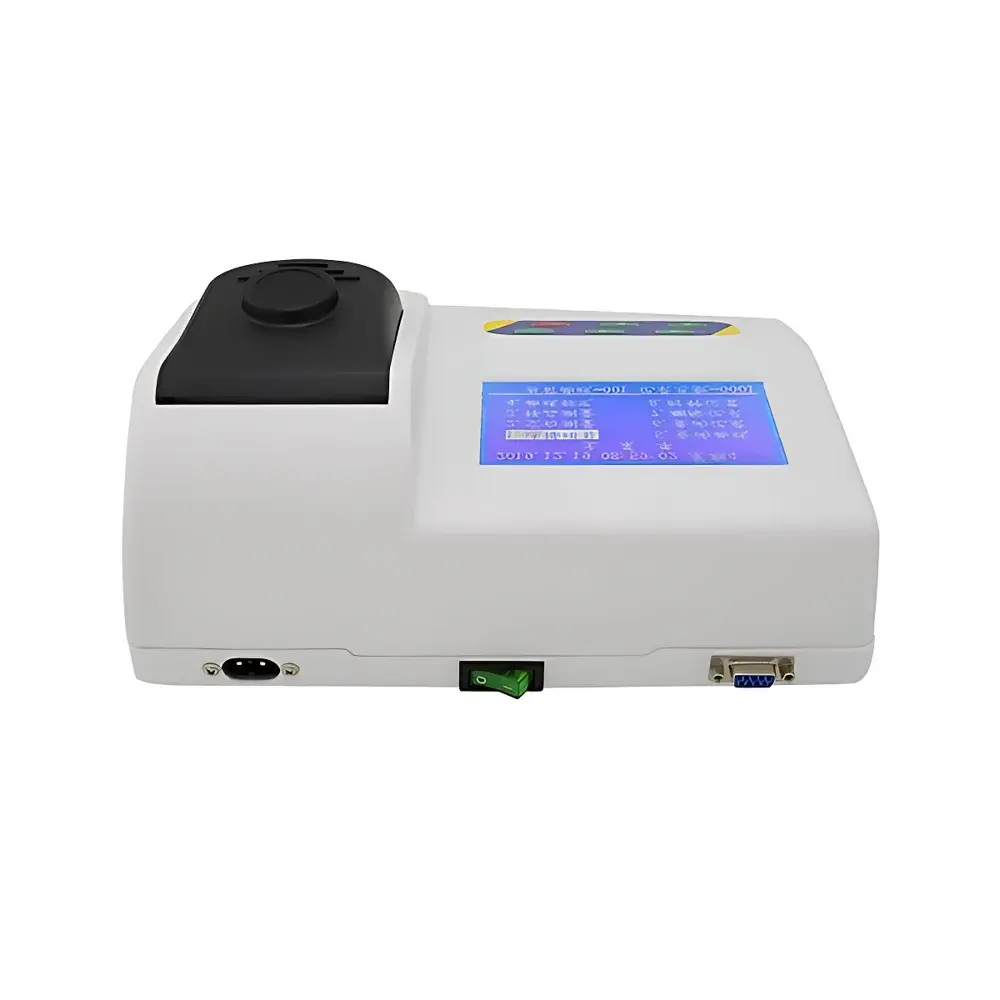
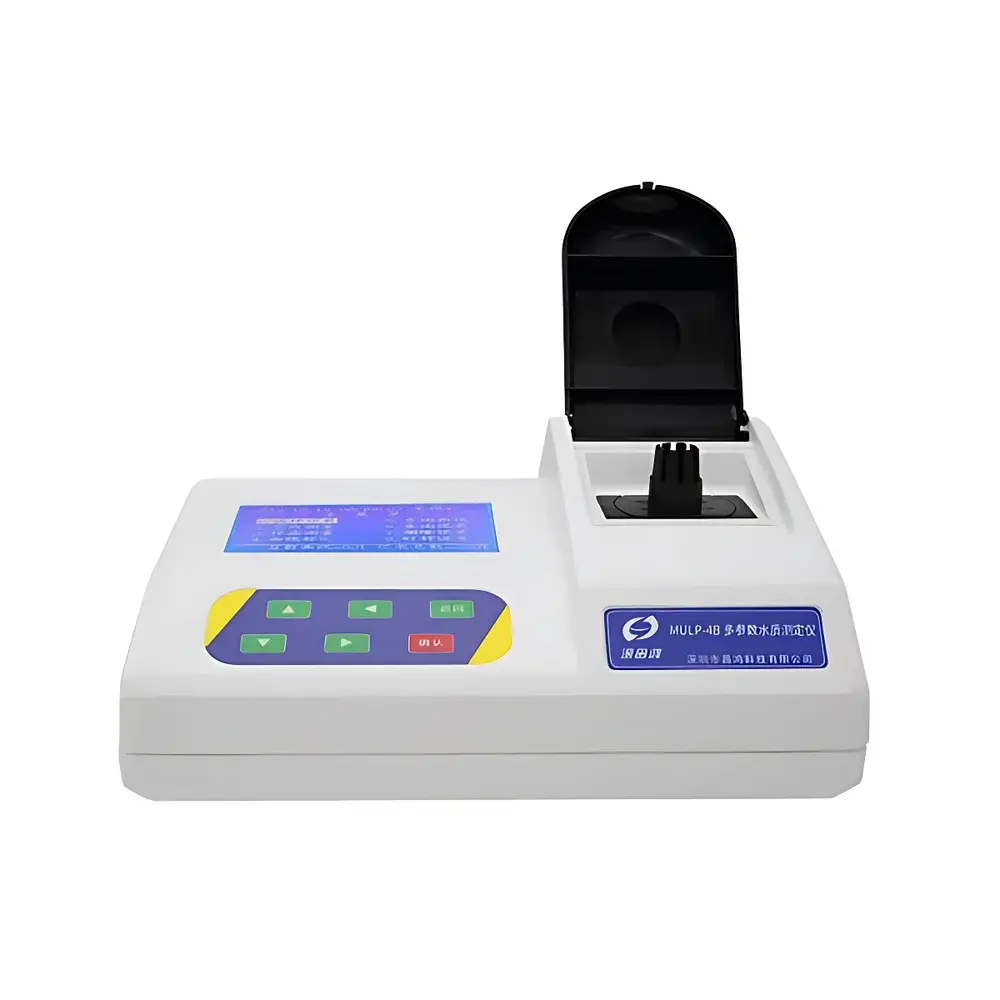
Shenchanghong MULP-4B Multi-Parameter Water Quality Analyzer
| Brand | Shenchanghong |
|---|---|
| Origin | Guangdong, China |
| Manufacturer Type | Direct Manufacturer |
| Product Category | Domestic (China-Made) |
| Model | MULP-4B |
| Instrument Type | Laboratory Water Quality Analyzer |
| Measured Parameters | COD, Total Phosphorus, Total Nitrogen, Ammonia-Nitrogen |
| Wavelength Range | 420–700 nm (user-selectable 4 fixed wavelengths from 12 standard options) |
| Wavelength Accuracy | ±1 nm at center wavelength |
| Optical Stability | Absorbance drift < 0.002 A over 20 min |
| Dimensions | 266 mm × 200 mm × 130 mm |
| Weight | < 1 kg |
| Display | LCD with Chinese menu interface |
| Compliance | Designed for ASTM D1253, ISO 7890-2, ISO 6060, ISO 15681-1, USP <643>, and EPA Method 4500-P E (phosphate), 4500-NH₃ F (ammonia), 410.4 (COD), supporting GLP-compliant data recording when paired with optional audit-trail software |
Overview
The Shenchanghong MULP-4B Multi-Parameter Water Quality Analyzer is a compact, benchtop spectrophotometric analyzer engineered for precise, routine quantification of critical water quality parameters in laboratory environments. It operates on the principle of absorbance-based colorimetric analysis—measuring light attenuation at user-defined wavelengths following chemical reaction between analytes and proprietary reagents. The instrument integrates a fixed-grating optical system with pre-aligned LED sources and a silicon photodiode detector, eliminating mechanical wavelength adjustment and ensuring long-term photometric stability. Its design prioritizes operational consistency across diverse sample matrices—including drinking water, surface water, wastewater, and industrial effluents—while maintaining compliance with internationally recognized test methods for ammonia-nitrogen (NH₃-N), chemical oxygen demand (CODMn), total phosphorus (TP), and total nitrogen (TN). Unlike portable field meters, the MULP-4B is optimized for controlled lab conditions where reproducibility, traceability, and method flexibility are essential.
Key Features
- Automated wavelength selection: Pre-programmed spectral channels (420 nm to 700 nm) enable rapid switching between up to four user-configured wavelengths without manual calibration or alignment.
- High optical fidelity: Center wavelength accuracy of ±1 nm and absorbance drift < 0.002 A over 20 minutes ensure measurement repeatability across daily operation cycles.
- Dual-range parameter support: Each measured parameter includes low- and high-range configurations (e.g., NH₃-N: 0.02–5.00 mg/L and 5.00–25.00 mg/L), minimizing dilution errors and extending dynamic linear response.
- Modular assay compatibility: Supports over 100 colorimetric and spectrophotometric methods—including heavy metals (Cu, Fe, Ni, Cr⁶⁺), nutrients (PO₄³⁻, NO₂⁻-N, NO₃⁻-N), disinfectants (Cl₂, ClO₂, O₃), and physical indices (turbidity, color, pH by indicator)—with standardized reagent kits supplied per parameter group.
- Compact benchtop architecture: Dimensions of 266 × 200 × 130 mm and mass under 1 kg facilitate integration into constrained laboratory workspaces without sacrificing optical path integrity or thermal stability.
- Intuitive human-machine interface: Backlit LCD display with Chinese-language menu navigation simplifies method selection, calibration execution, and result review—reducing operator training burden while preserving data entry integrity.
Sample Compatibility & Compliance
The MULP-4B accepts standard 16-mm round glass or quartz cuvettes (10 mm path length) and accommodates clarified, filtered, or digested aqueous samples per method-specific pretreatment protocols. It is validated for use with EPA-approved digestion procedures (e.g., alkaline persulfate for TN, molybdate-antimony for TP) and supports matrix-matched calibration using NIST-traceable reference standards. Regulatory alignment includes ASTM D1253 (residual chlorine), ISO 7890-2 (ammonia), ISO 15681-1 (phosphate), and USP (total organic carbon surrogate via permanganate oxidizability). When operated with optional data logging firmware enabling timestamped, user-ID-tagged results and electronic signature support, the system meets baseline requirements for GLP documentation and internal QA/QC audits under ISO/IEC 17025-accredited laboratories.
Software & Data Management
The MULP-4B operates autonomously without PC dependency; all calibration curves, method protocols, and measurement history are stored internally in non-volatile memory. Optional USB data export enables transfer of CSV-formatted datasets—including sample ID, date/time stamp, wavelength used, absorbance value, concentration, and operator code—to external LIMS or Excel-based reporting systems. For regulated environments, an upgrade path exists to FDA 21 CFR Part 11-compliant software modules offering electronic signatures, audit trails, role-based access control, and encrypted data storage—facilitating compliance with pharmaceutical, environmental consulting, and municipal utility QA frameworks.
Applications
This analyzer serves as a primary tool in municipal water treatment labs verifying regulatory compliance for discharge permits (e.g., NPDES), in university teaching laboratories demonstrating fundamental analytical chemistry principles, and in industrial hygiene departments monitoring process water quality in food & beverage, semiconductor, and pharmaceutical manufacturing. Its broad parameter coverage makes it especially suitable for multi-analyte screening workflows—such as simultaneous assessment of nutrient loading (TP/TN/NH₃-N) in eutrophication studies or combined heavy metal profiling (Cr⁶⁺, Cd, Pb, As) in landfill leachate characterization. The instrument’s robustness against ambient light interference and low power consumption also support deployment in mobile environmental testing units.
FAQ
Does the MULP-4B support custom method development?
Yes—users may define new calibration curves and assign them to any of the 12 available wavelengths via the onboard menu; full method documentation (reagent lot numbers, digestion times, interferences) can be entered manually.
Is external calibration verification required before each analysis session?
No—optical stability validation (performed during startup self-test) confirms baseline performance; however, daily calibration verification using certified reference materials is recommended per ISO/IEC 17025 clause 7.7.
Can the instrument store historical calibration data?
Yes—up to 500 calibration events are retained with date/time stamps, slope/intercept values, and correlation coefficients, accessible via the “Calibration History” menu.
What sample volume is required per test?
Standard assays require 2.5–5.0 mL depending on the method; micro-volume adapters are not supported due to fixed 10-mm pathlength optics.
Is the MULP-4B compatible with third-party reagents?
While designed for Shenchanghong-certified reagent kits to ensure metrological traceability, open-method protocols allow use of equivalent reagents if validated per CLSI EP21-A or ISO 17511 guidelines.







