
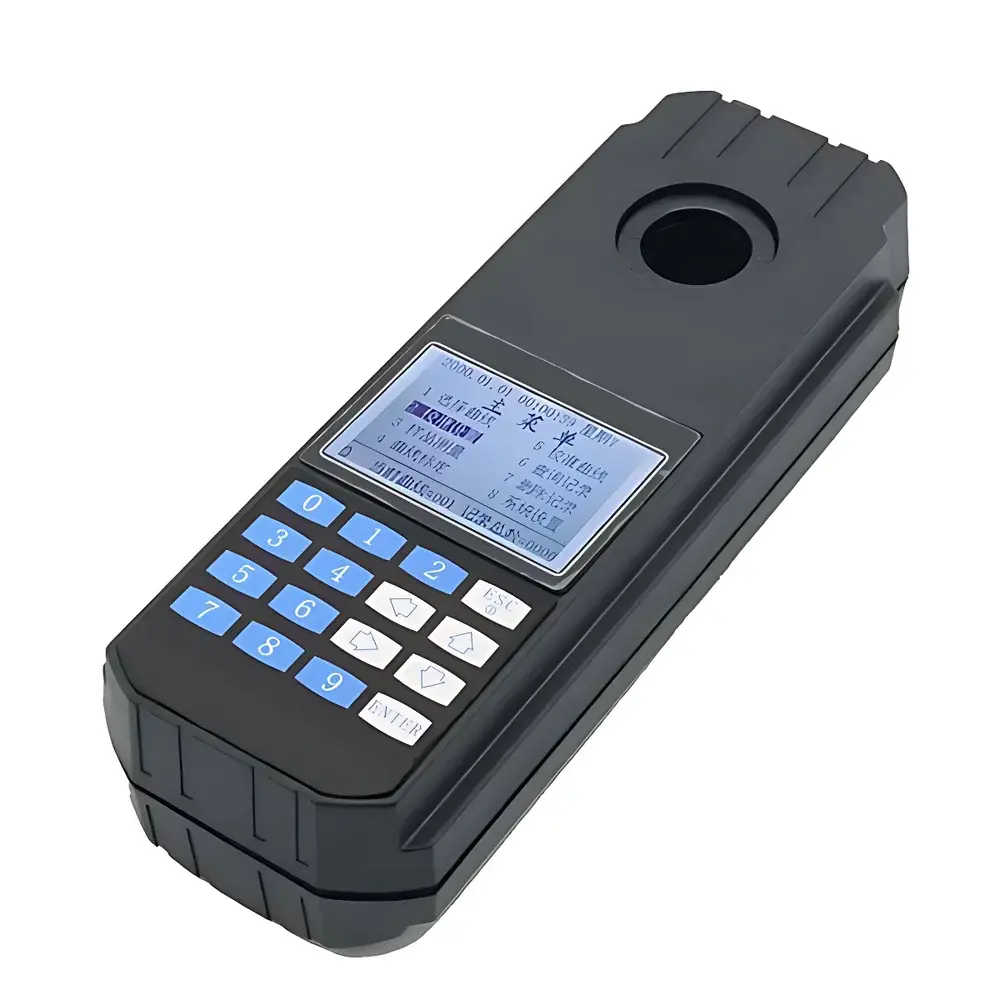
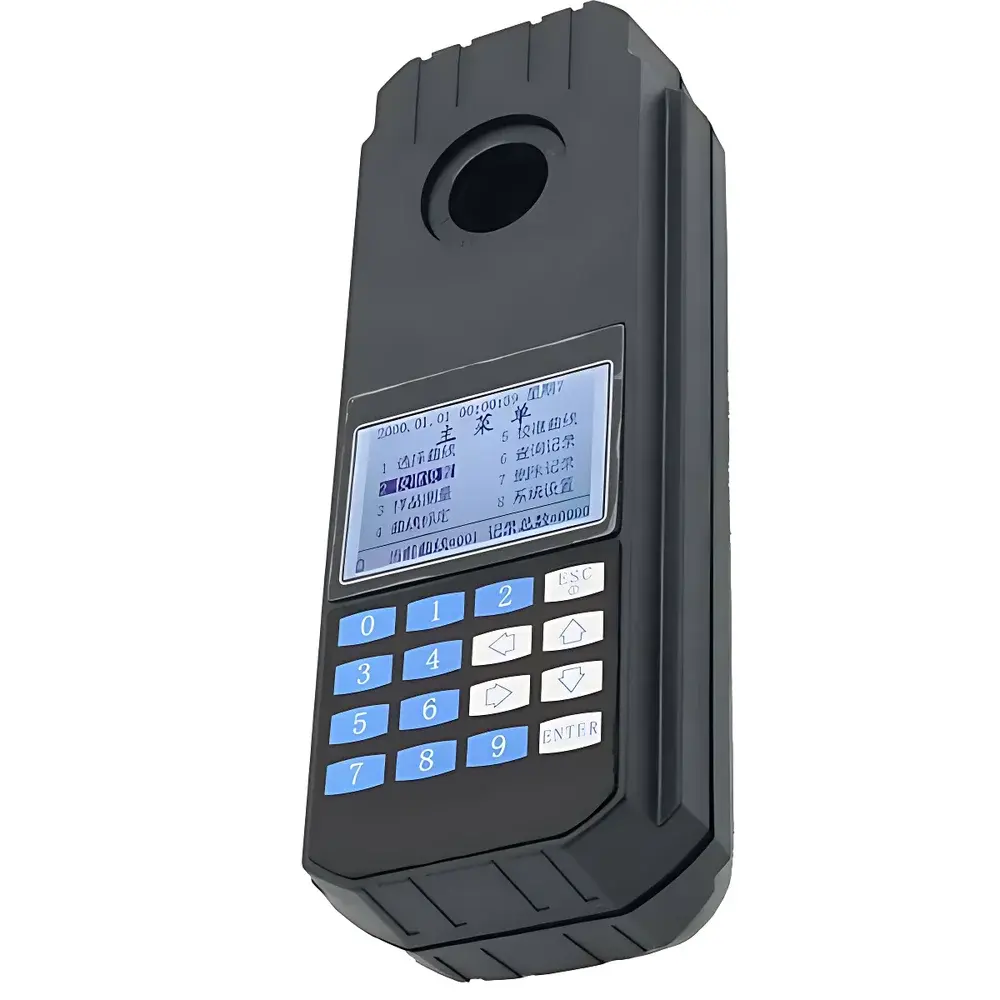
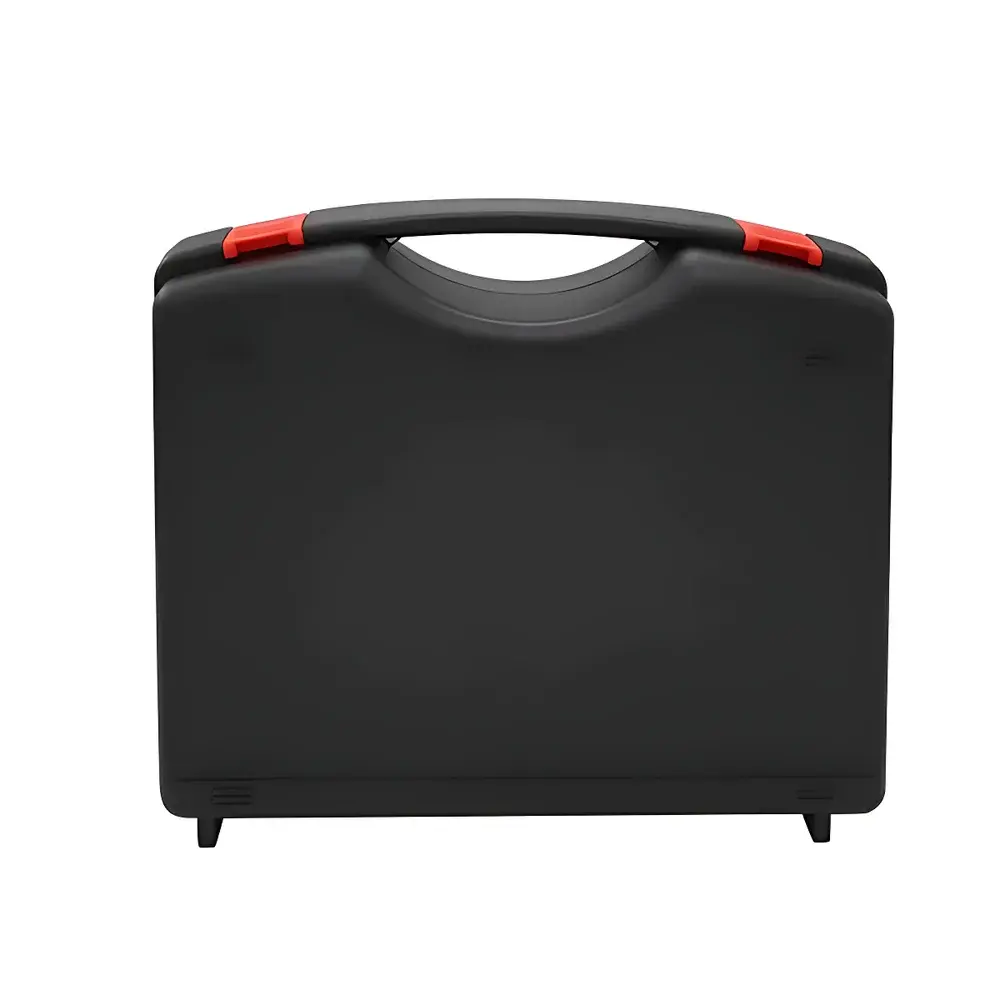
Shenchanghong PCHYS-241 Portable Sulfide Analyzer
| Brand | Shenchanghong |
|---|---|
| Origin | Shenzhen, China |
| Manufacturer Type | Direct Manufacturer |
| Country of Origin | China |
| Model | PCHYS-241 |
| Instrument Type | Portable |
| Measurement Range | 0.005–1.000 mg/L |
| Accuracy (Abs. Error) | ≤±5% |
| Repeatability | ≤3% |
| Optical Drift (20 min) | <0.002 A |
| Dimensions | 80 mm × 230 mm × 55 mm |
| Weight | 500 g |
| Operating Temperature | 5–40 °C |
| Relative Humidity | ≤85% |
| Power Supply | 4 × AA batteries |
| IP Rating | IP65 |
| Data Storage | 20 calibration curves + 199 timestamped measurements (year/month/day/hour/minute/second, absorbance, transmittance, concentration) |
Overview
The Shenchanghong PCHYS-241 Portable Sulfide Analyzer is a field-deployable photometric instrument engineered for quantitative determination of total sulfide (as S²⁻) in aqueous matrices using the methylene blue colorimetric method. It operates on the principle of selective chromogenic reaction between sulfide ions and N,N-dimethyl-p-phenylenediamine under acidic conditions, forming a stable blue-colored complex measurable at 665 nm. The analyzer integrates a precision narrow-band interference optical system with a monochromatic cold light source, eliminating thermal drift and ensuring long-term photometric stability—critical for reliable field-based environmental monitoring where laboratory-grade infrastructure is unavailable. Designed specifically for compliance with standard methods including EPA Method 376.1 and ISO 10585:1992 (Water quality — Determination of sulfide — Methylene blue spectrophotometric method), the PCHYS-241 delivers trace-level detection (LOD ≈ 0.005 mg/L) with high reproducibility across diverse water types.
Key Features
- Compact, hand-held form factor (80 × 230 × 55 mm; 500 g) optimized for rapid deployment in remote sampling locations, wastewater treatment plants, and emergency response scenarios.
- IP65-rated ABS polymer housing providing full protection against dust ingress, water splashes, and corrosion—suitable for outdoor use in humid or chemically aggressive environments.
- Low-power 16-bit microcontroller architecture enabling continuous operation for >15 hours on four standard AA alkaline batteries, with built-in power-saving mode and automatic shutdown.
- High-contrast LCD display with intuitive menu navigation and real-time visualization of absorbance, transmittance, and calibrated concentration values in mg/L.
- Integrated optical system featuring a stabilized cold LED source and fixed-wavelength interference filter (665 nm ± 2 nm), minimizing wavelength drift and eliminating need for warm-up or recalibration during sequential measurements.
- Onboard data management supporting storage of up to 20 user-defined calibration curves and 199 timestamped measurement records—including date, time, absorbance, %T, and final concentration—with automatic time stamping compliant with GLP documentation requirements.
Sample Compatibility & Compliance
The PCHYS-241 is validated for direct analysis of unfiltered or pre-filtered samples from drinking water, surface water, groundwater, municipal and industrial wastewater, and effluent streams. Sample volume requirement is 10 mL per test using supplied 10-mL glass cuvettes. The instrument complies with fundamental performance criteria outlined in ISO/IEC 17025:2017 (general requirements for competence of testing and calibration laboratories) and supports adherence to regulatory frameworks including China’s HJ 482–2009 (Environmental Monitoring Technical Specification for Water and Wastewater – Determination of Sulfide) and US EPA Region 9 Field Manual protocols. Its optical stability (<0.002 A drift over 20 minutes) meets ASTM D859–22 specifications for portable spectrophotometers used in environmental field screening.
Software & Data Management
No external PC software is required for routine operation; all calibration, measurement, and data review are executed via the embedded firmware interface. Calibration curves may be generated using up to six standard points (0.005–1.000 mg/L), with linear or polynomial regression options. Each stored result includes full metrological metadata: measurement timestamp (YYYY-MM-DD HH:MM:SS), raw absorbance (A), transmittance (%T), and derived concentration. Data retention is preserved during battery replacement due to non-volatile memory architecture. While USB or Bluetooth connectivity is not included, exported records can be manually transcribed or photographed for inclusion in LIMS or QA/QC reports. Audit trail functionality satisfies basic GLP traceability needs for field laboratories operating under internal quality assurance systems.
Applications
- Routine surveillance of sulfide levels in municipal water distribution networks to prevent odor complaints and corrosion-related infrastructure degradation.
- Real-time assessment of anaerobic bioreactor performance in wastewater treatment facilities, where elevated sulfide indicates process imbalance or septicity.
- Field verification of pretreatment compliance for industrial dischargers subject to local discharge limits (e.g., textile, pulp & paper, petrochemical sectors).
- Emergency response screening following pipeline ruptures, sewer overflows, or chemical spills involving sulfur-containing compounds.
- Educational use in environmental science laboratories for teaching colorimetric analysis principles, calibration methodology, and field sampling best practices.
FAQ
What sample preparation is required prior to analysis?
Samples should be collected in air-tight, amber glass bottles preserved with zinc acetate (to precipitate sulfide as ZnS) and sodium hydroxide (to maintain alkalinity). Prior to measurement, samples must be acidified with phosphoric acid and reacted with reagents according to the included protocol—no filtration is necessary unless suspended solids exceed 50 mg/L.
Is the instrument compatible with international standard methods?
Yes—the PCHYS-241 implements the core analytical chemistry of ISO 10585 and EPA 376.1. Users must follow corresponding sample preservation, digestion, and reagent preparation steps outlined in those standards to ensure method equivalence.
How is calibration verified in the field?
The device supports multi-point calibration using certified sulfide reference standards traceable to NIST SRM 2783 (sulfide in water). Daily calibration verification using a mid-range check standard (e.g., 0.500 mg/L) is recommended before initiating a batch of field measurements.
Does the analyzer require annual factory recalibration?
No—optical and electronic components are factory-aligned and thermally stabilized. Users perform functional verification using blank and standard solutions; only physical damage or persistent optical drift warrants service intervention.
Can the instrument measure other parameters besides sulfide?
No—the PCHYS-241 is purpose-built for sulfide quantification via the methylene blue reaction. Its optical path and firmware are not configurable for alternate wavelengths or chemistries.
Related Products







