
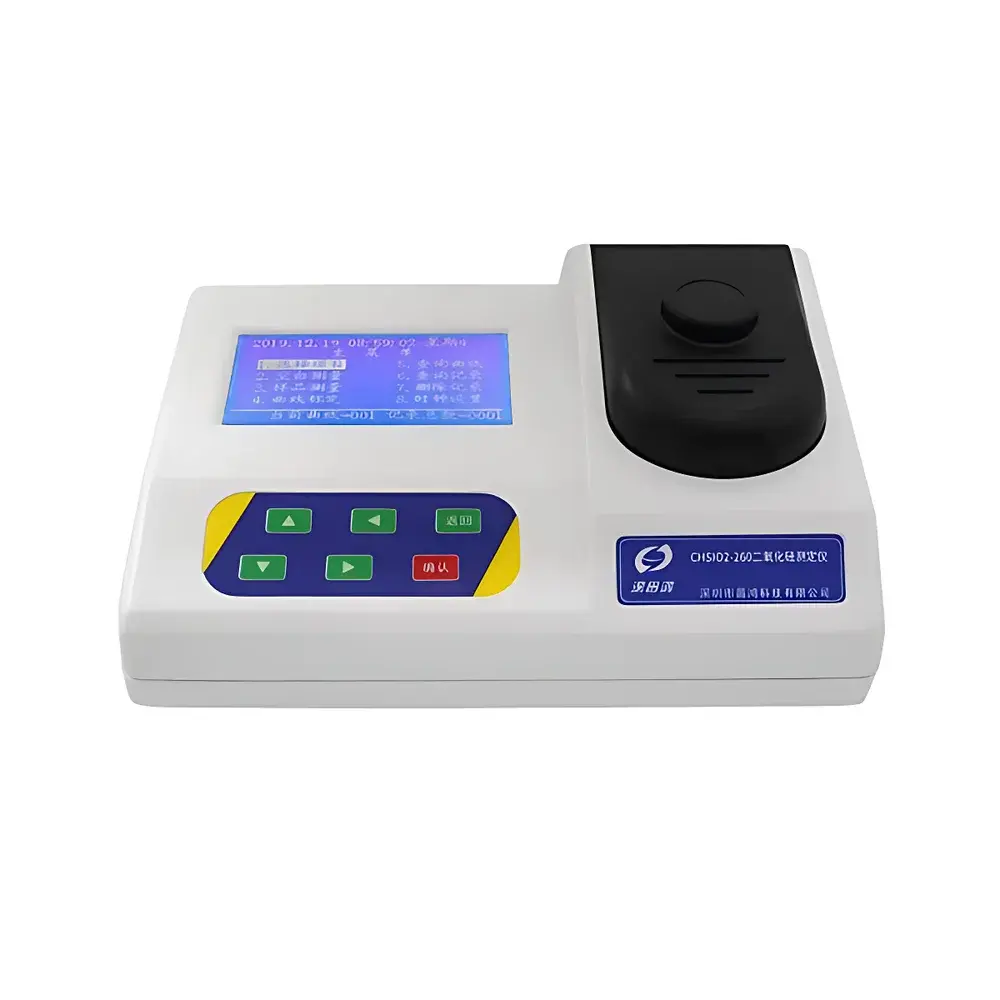
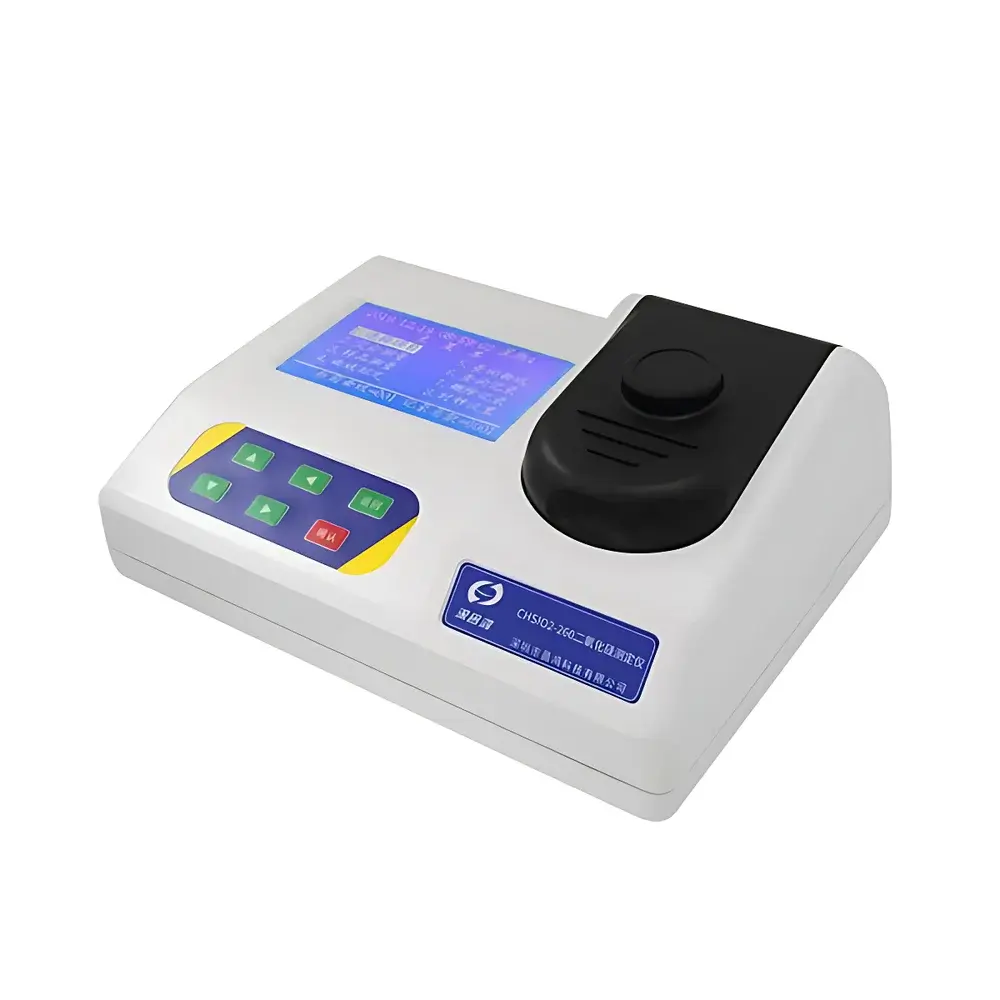
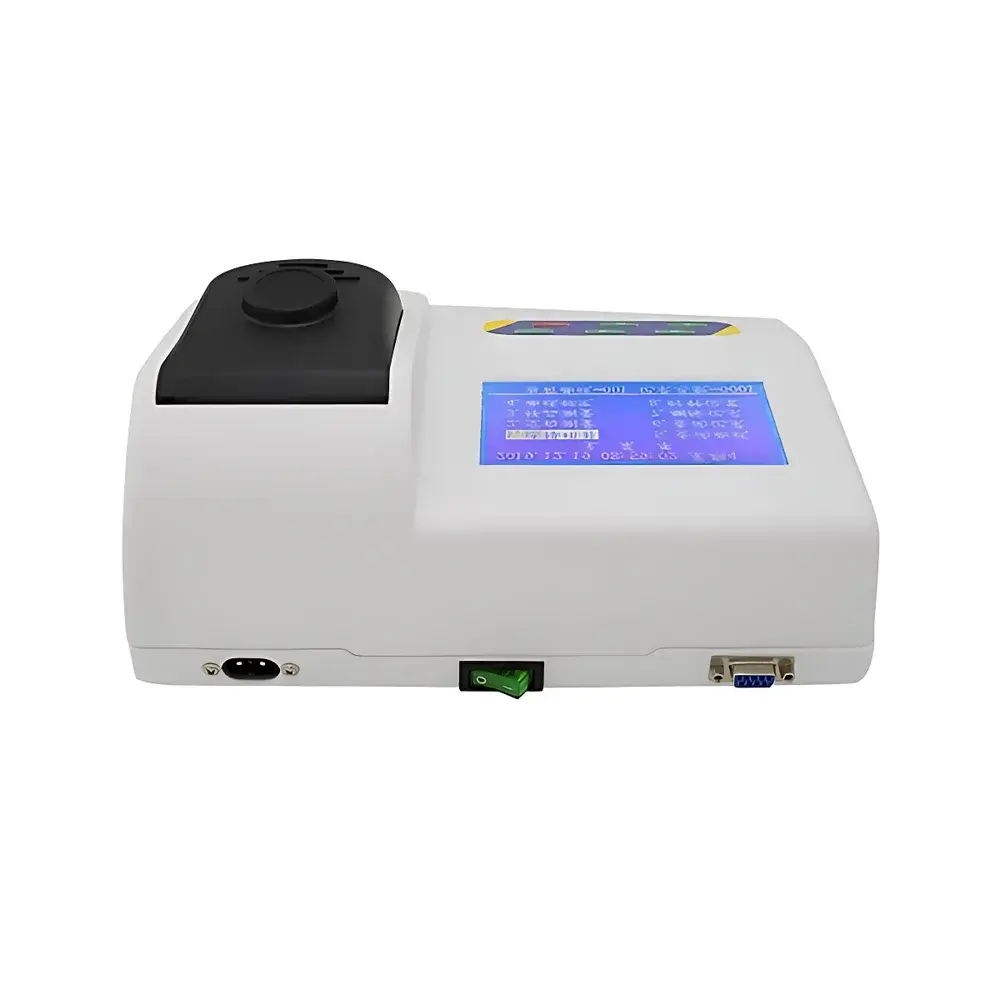
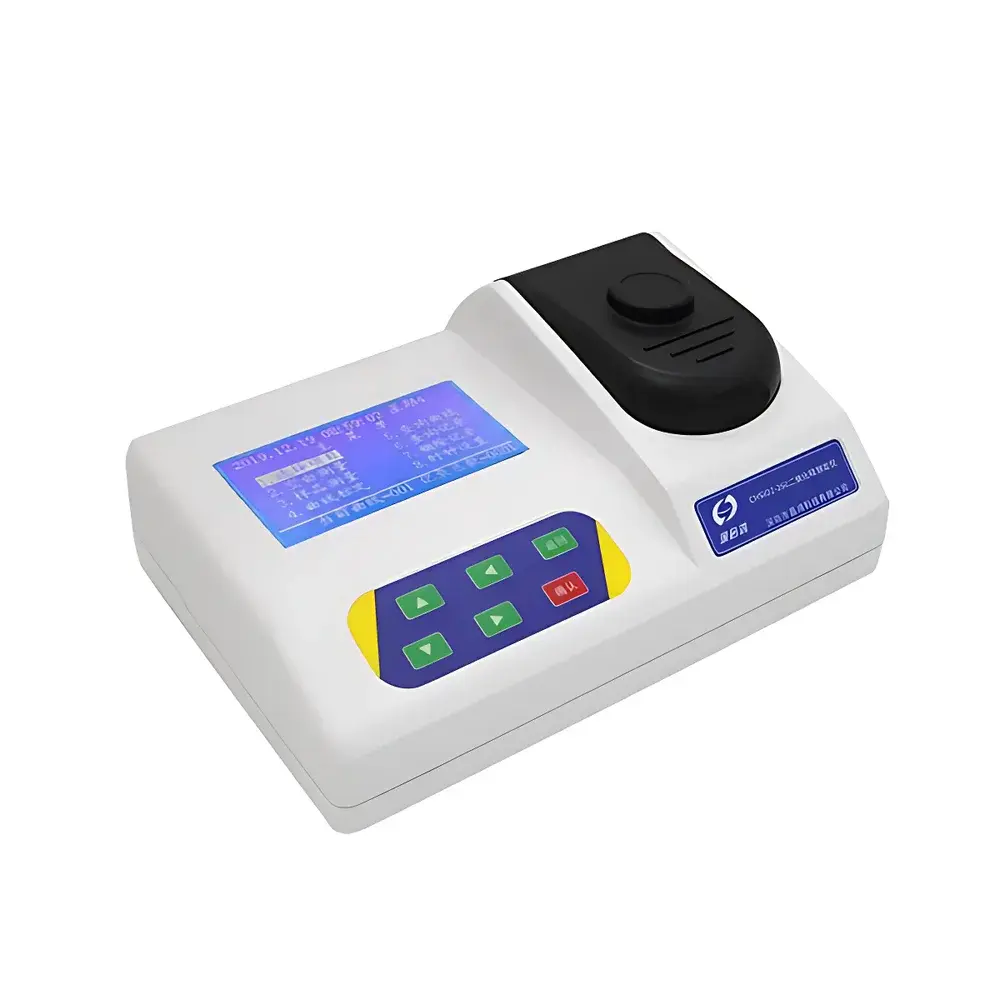
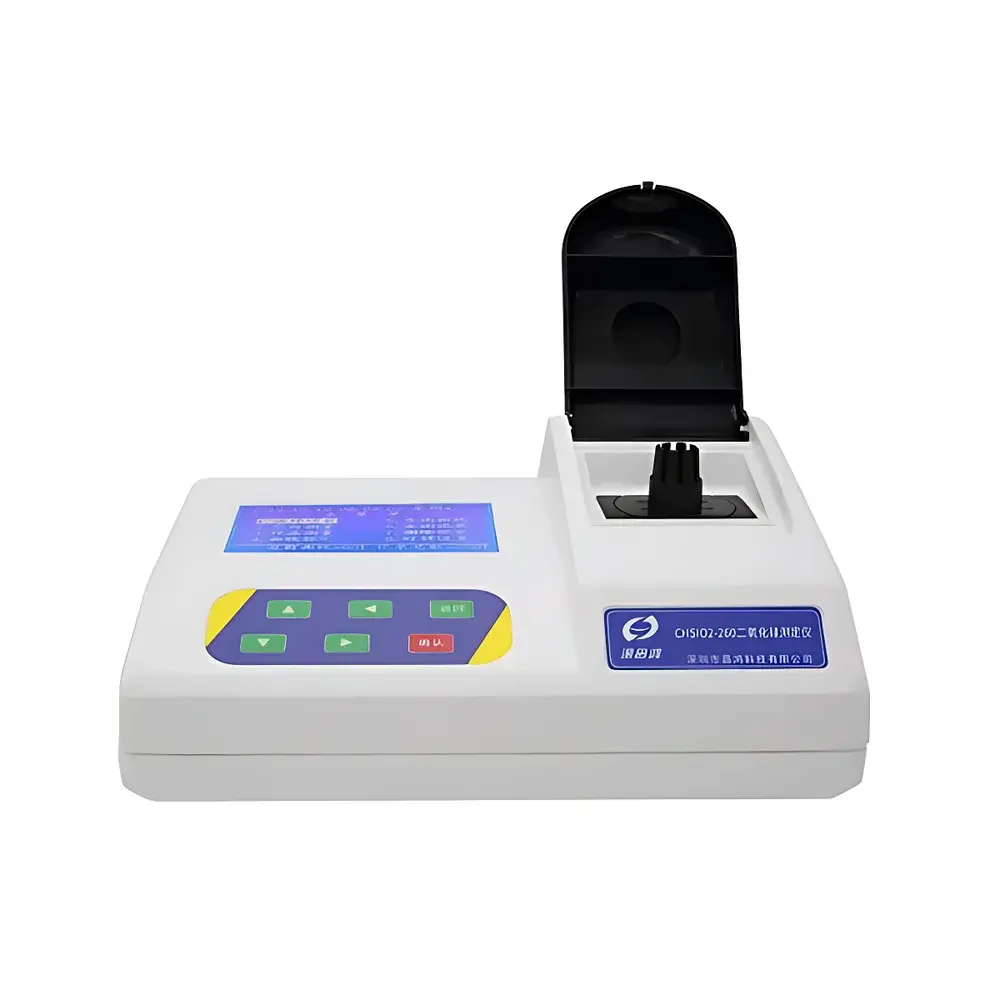
Shenchanghong CHSIO2-260 Silica Analyzer
| Brand | Shenchanghong |
|---|---|
| Origin | Guangdong, China |
| Manufacturer Type | Direct Manufacturer |
| Country of Origin | China |
| Model | CHSIO2-260 |
| Instrument Type | Benchtop Laboratory Analyzer |
| Measurement Range | 0.00–5.0 mg/L SiO₂ |
| Resolution | 0.01 mg/L |
| Accuracy | ≤ ±5% FS |
| Repeatability | ≤ 3% RSD |
| Optical Stability | ≤ 0.002 A/20 min |
| Dimensions (W×D×H) | 266 × 200 × 130 mm |
| Power Consumption | 30 W |
| Weight | < 2 kg |
Overview
The Shenchanghong CHSIO2-260 Silica Analyzer is a benchtop photometric instrument engineered for precise quantification of dissolved silica (as SiO₂) in aqueous environmental and industrial samples. It operates on the molybdate blue spectrophotometric method—per ASTM D859 and ISO 10571—where soluble silicate reacts with ammonium molybdate under acidic conditions to form a heteropoly acid complex, subsequently reduced to a stable blue-colored molybdenum blue species measurable at 650–680 nm. This principle ensures high selectivity for orthosilicic acid (H₄SiO₄) and its ionic forms, minimizing interferences from phosphate or iron when appropriate masking agents (e.g., oxalic acid or tartaric acid) are applied per standard protocols. Designed for routine compliance monitoring in wastewater treatment plants, power plant boiler feedwater systems, semiconductor rinse water quality control, and municipal drinking water laboratories, the CHSIO2-260 delivers trace-level sensitivity (detection limit ~0.02 mg/L SiO₂) within a linear dynamic range of 0.00–5.0 mg/L—fully aligned with regulatory thresholds set by EPA Method 370.1 and Chinese HJ 535–2009.
Key Features
- Stable cold-light LED source with narrow-band optical filtering (FWHM < 10 nm), eliminating spectral drift and ambient light interference—critical for long-duration batch analysis in non-climate-controlled lab environments.
- Integrated 128×64 dot-matrix LCD interface enabling full operational control: calibration setup, curve selection, sample measurement, data review, and parameter configuration—all within a single navigable menu structure.
- Dual-mode calibration architecture supporting both factory pre-loaded reference curves (N = 10) and user-defined multi-point calibration (up to 8 points), with automatic slope/intercept validation and outlier rejection based on residual error thresholds.
- Voltage-to-frequency (V/F) analog signal conversion combined with software-based redundancy checking and watchdog timer implementation—ensuring robust electromagnetic compatibility (EMC) in shared laboratory power circuits per IEC 61326-1 Class B requirements.
- Non-volatile Flash memory storage retains up to 99 measurement records and all calibration parameters across power cycles, with timestamping (YYYY-MM-DD HH:MM) and operator ID tagging support via optional password-protected user accounts.
- Chemically resistant ABS housing (UL94 HB rated) with IP20 ingress protection, designed for sustained operation in humid analytical workspaces and compatibility with common disinfectants (e.g., 70% ethanol, 0.5% sodium hypochlorite).
Sample Compatibility & Compliance
The CHSIO2-260 accepts standard 10-mm pathlength quartz or high-transmission glass cuvettes (12.5 mm outer diameter). It is validated for use with clarified, filtered (0.45 µm membrane), and acid-preserved (HNO₃ to pH < 2) samples per APHA Standard Methods 4500-SiO₂ E. Matrix tolerance has been verified for turbidities up to 5 NTU and chloride concentrations ≤ 500 mg/L; higher interferents require pretreatment via cation exchange or distillation per USP . The analyzer complies with GLP documentation requirements through built-in audit trail logging (enabled via firmware v2.3+), recording all calibration events, measurement sequences, and parameter modifications—including timestamps, user IDs, and reason-for-change fields—supporting FDA 21 CFR Part 11 readiness when paired with external networked LIMS integration.
Software & Data Management
Data export is supported via USB 2.0 port (Type-A host interface) to FAT32-formatted flash drives in CSV format, preserving column headers: “Sample_ID”, “Date_Time”, “Conc_mg_L”, “Absorbance_A”, “Curve_ID”, “Operator”. No proprietary software installation is required. Internal firmware supports firmware updates via signed HEX files with CRC-32 validation. Optional RS-232 serial output (DB9 male) enables direct connection to SCADA systems or programmable logic controllers (PLCs) for real-time process feedback loops in continuous monitoring configurations.
Applications
- Regulatory compliance testing of effluent discharge permits (e.g., NPDES) for silica limits in industrial wastewater streams from glass manufacturing, metal finishing, and geothermal energy facilities.
- Boiler feedwater and condensate monitoring in thermal power generation to prevent silica scaling on turbine blades and heat exchanger surfaces—aligned with ASME PTC 19.11 and VGB-R 450 Leitfaden guidelines.
- Quality assurance of ultrapure water (UPW) in microelectronics fabrication, where sub-0.1 mg/L silica levels are critical to avoid wafer defect formation during chemical mechanical polishing (CMP).
- Educational laboratory instruction for instrumental analysis courses covering spectrophotometric method development, Beer-Lambert law validation, and matrix interference assessment.
FAQ
What reagents are required for daily operation?
Standard reagent kits include ammonium molybdate solution (10 g/L), reducing agent (ascorbic acid or 1-amino-2-naphthol-4-sulfonic acid), sulfuric acid (1+9 v/v), and silica-free water blanks—supplied separately per ISO 17025 traceability requirements.
Is field deployment possible?
The CHSIO2-260 is strictly a benchtop instrument; it lacks battery power, ruggedized casing, or environmental sealing for outdoor use. Portable alternatives require separate mobile power supplies and shock-isolated transport cases.
How often must the optical system be recalibrated?
Photometric zero and span verification is recommended before each analytical session using deionized water and a mid-range standard (e.g., 2.5 mg/L SiO₂); full wavelength and linearity verification is advised quarterly or after 200 measurements.
Does the instrument support automatic dilution?
No—sample dilution must be performed manually using volumetric glassware prior to analysis. Over-range samples (>5.0 mg/L) require dilution factors documented in the measurement record.
Can it measure total reactive silica (TRS) versus dissolved silica?
Yes—by applying the standard filtration protocol (0.45 µm) for dissolved silica, or omitting filtration and digesting particulate-bound silica with NaOH fusion (per ISO 10571 Annex B) to report TRS.
Related Products







