
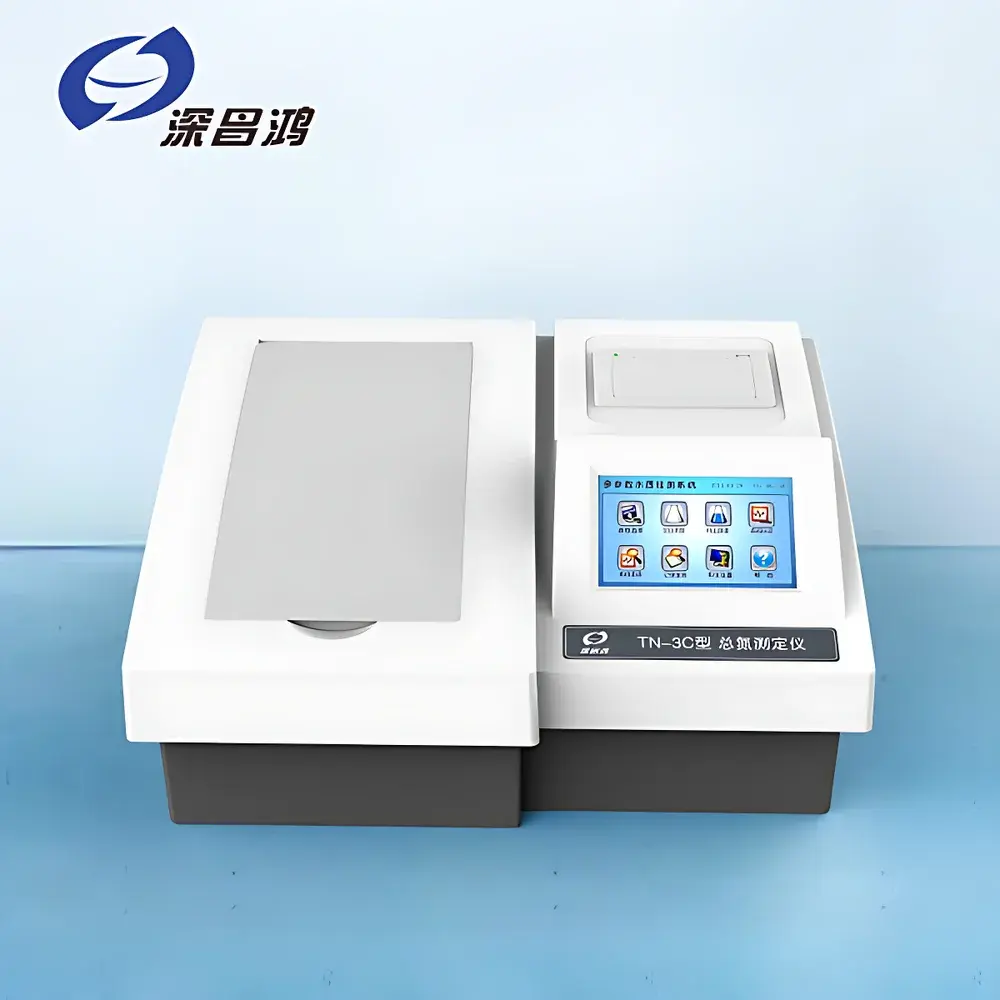
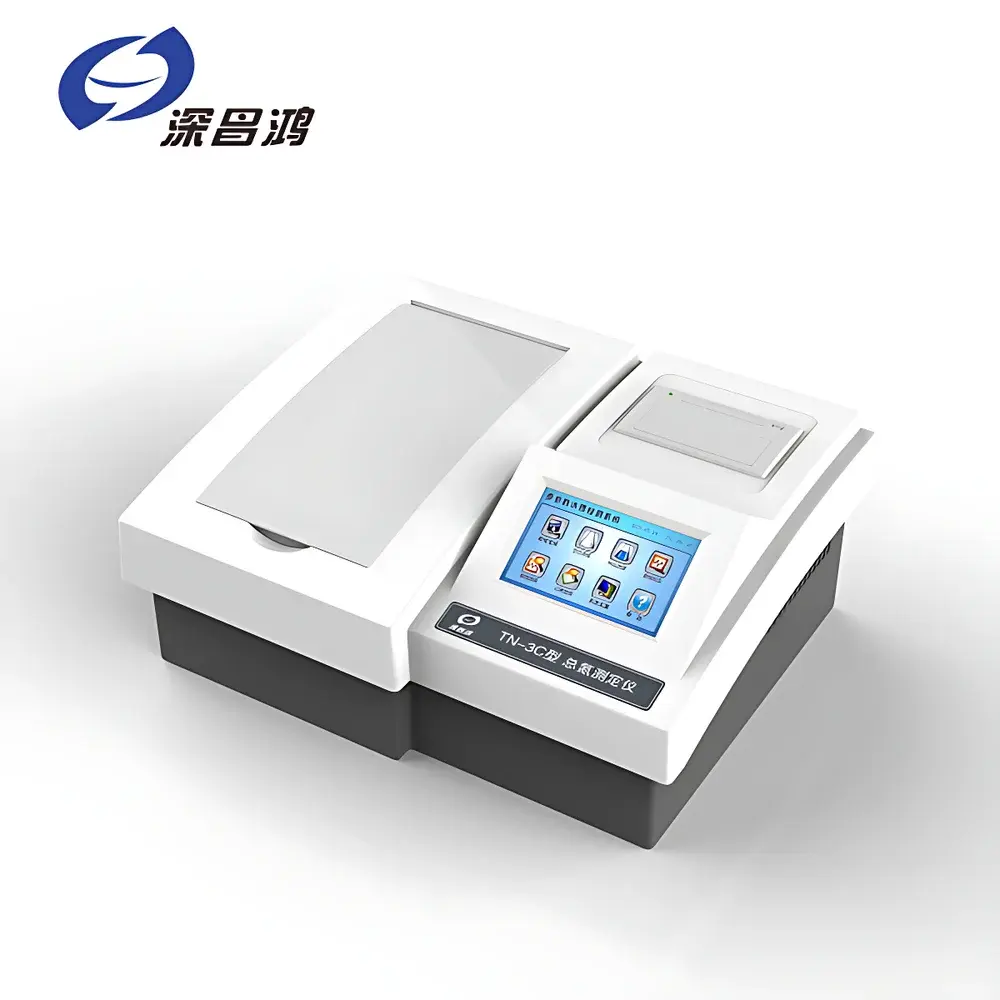
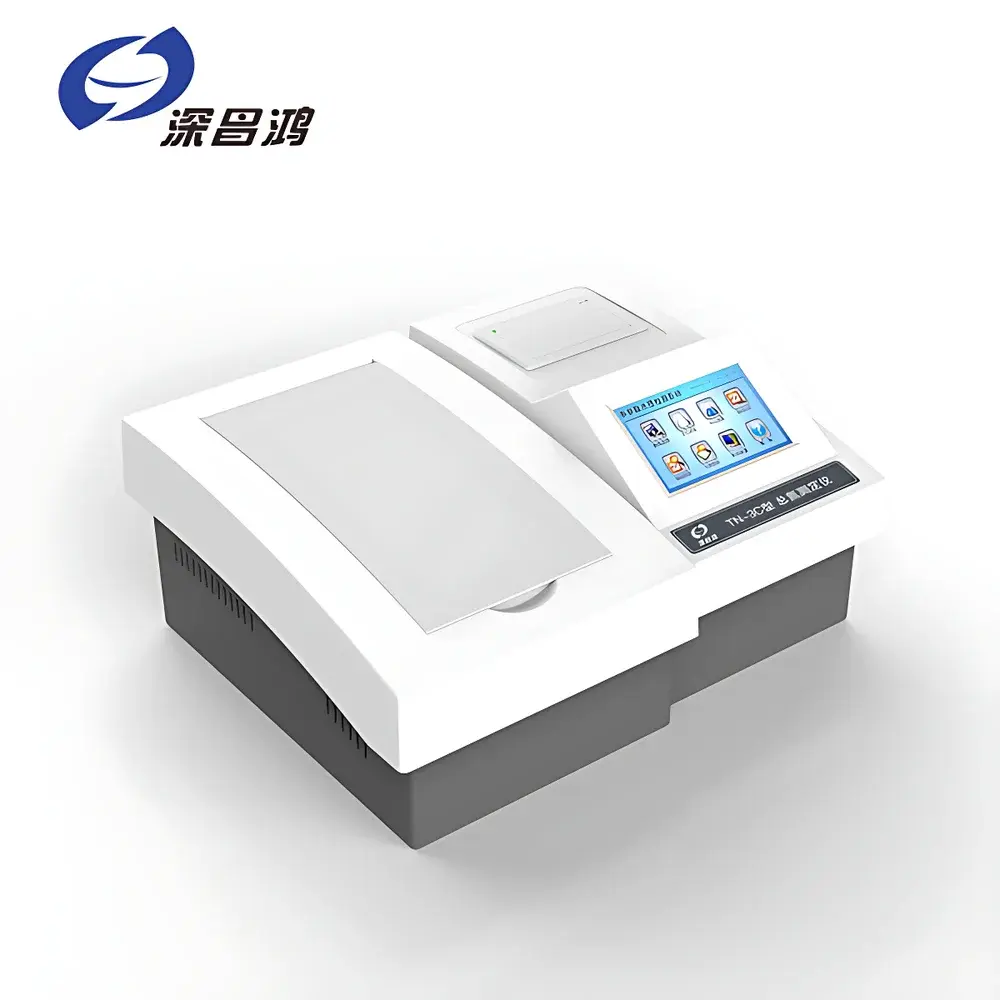
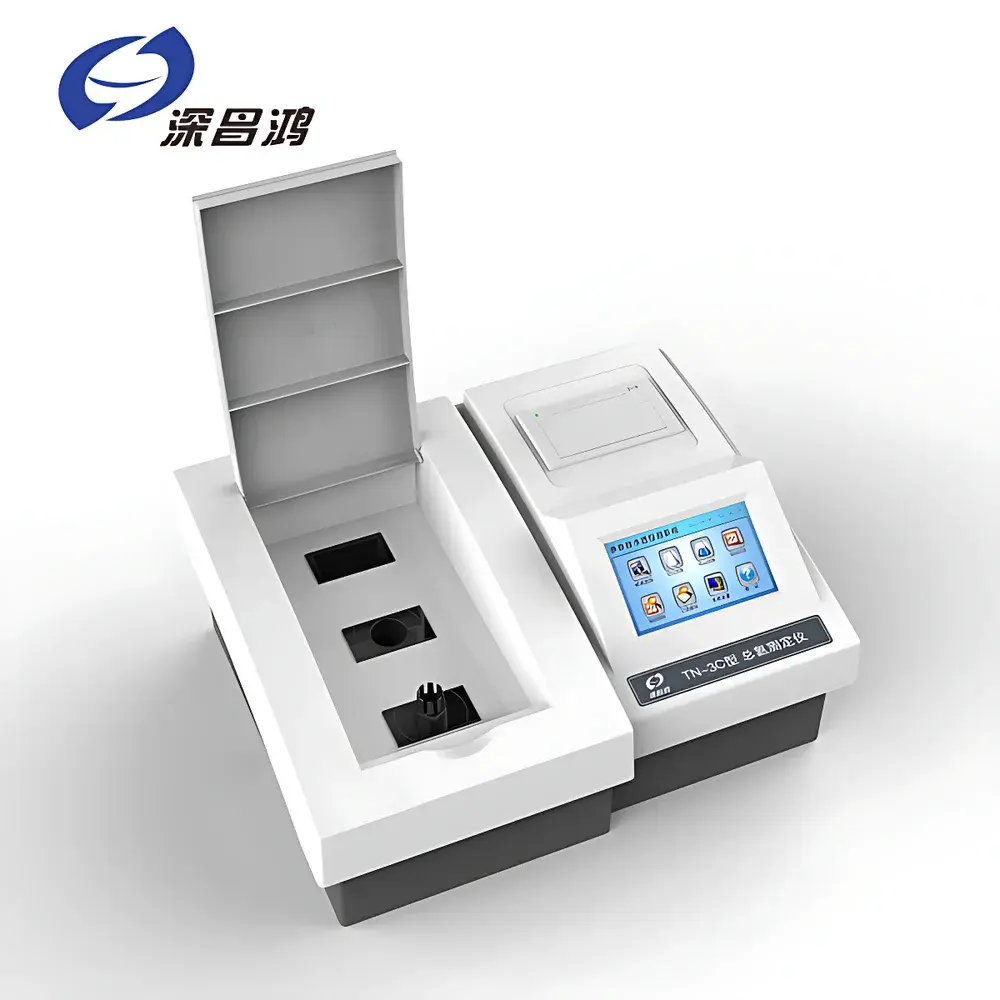
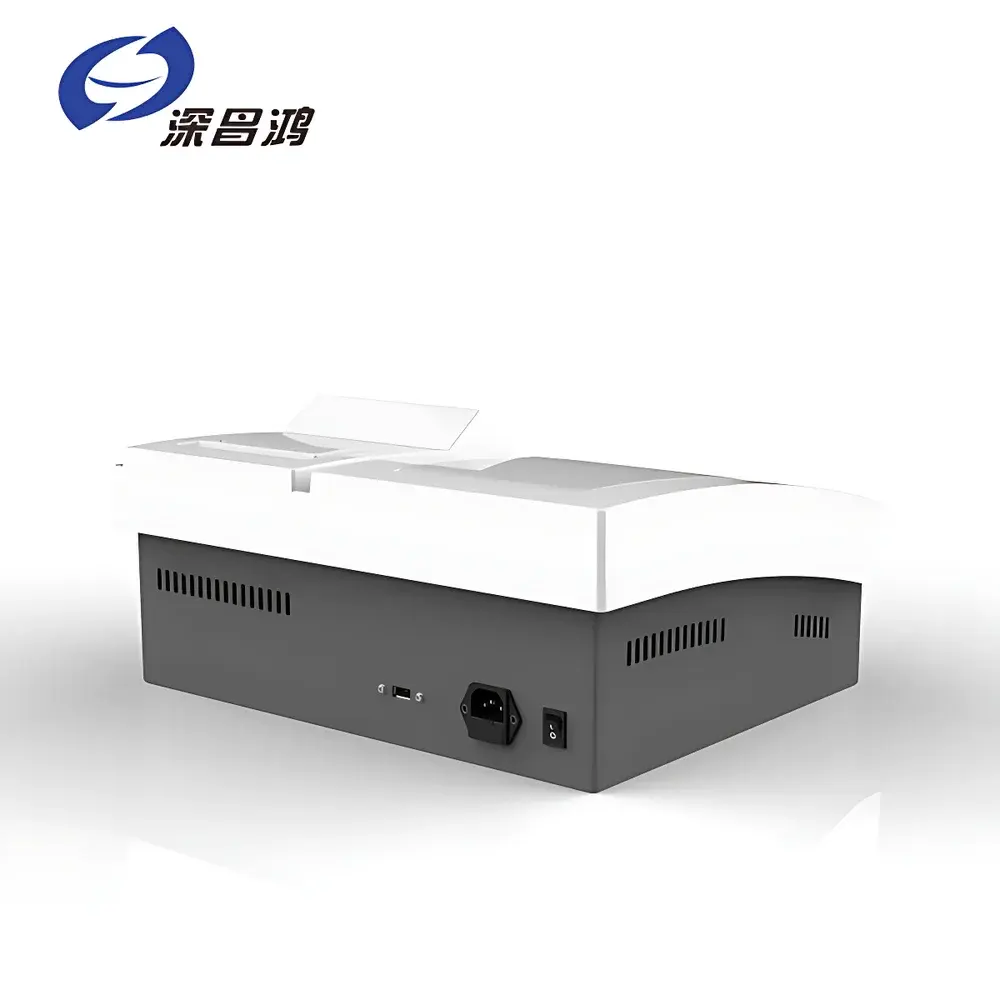
Shenchanghong TN-3C Total Nitrogen Analyzer
| Brand | Shenchanghong |
|---|---|
| Origin | Guangdong, China |
| Manufacturer Type | Direct Manufacturer |
| Origin Category | Domestic (China) |
| Model | TN-3C |
| Price | ¥12,800 |
| Measured Parameter | Total Nitrogen |
| Instrument Type | Laboratory Benchtop Analyzer |
| Measurement Principle | Sealed High-Temperature Catalytic Digestion + Colorimetric Detection (Alkaline Potassium Persulfate Oxidation) |
| Measurement Range | 0.05–100 mg/L as N |
| Accuracy | ±5% of full scale (F.S.) |
| Detection Limit | Not specified (method-dependent |
| Temperature Control Range | Ambient to 200 °C |
| Digestion Temperature | 125 °C (preset) |
| Digestion Time | 30 min (adjustable from 1–9999 min) |
| Temperature Control Precision | ≤±1.0 °C |
| Repeatability | ≤±3% RSD |
| Optical Stability | ≤0.002 A / 20 min |
| Display | 5-inch color TFT touch screen with bilingual (Chinese/English) UI |
| Data Storage | 100 calibration curves, 1000 measurement records |
| Connectivity | USB interface for data export |
| Dimensions (Analyzer) | 400 × 310 × 158 mm |
| Dimensions (Digestion Unit) | 260 × 355 × 135 mm (excl. shield) |
| Weight (Analyzer) | 5.0 kg |
| Weight (Digestion Unit) | 5.5 kg |
| Batch Capacity | 16 samples (optional 20/25/36-position blocks available) |
Overview
The Shenchanghong TN-3C Total Nitrogen Analyzer is a dedicated benchtop laboratory instrument engineered for accurate, reproducible quantification of total nitrogen (TN) in aqueous environmental and wastewater samples. It implements the standardized alkaline potassium persulfate digestion method (aligned with HJ 636–2012 and ISO 11905-1), wherein all nitrogen species—including organic nitrogen, ammonia, nitrite, and nitrate—are oxidized to nitrate under sealed, high-temperature (125 °C), high-pressure conditions. Following digestion, the resulting nitrate is quantified via spectrophotometric detection at 220 nm (and optionally corrected at 275 nm for organic interference). The system integrates a standalone digestion module with independent PID temperature control and a separate optical measurement unit—this physical decoupling ensures long-term photometric stability by eliminating thermal cross-talk between heating and detection components.
Key Features
- Independent dual-unit architecture: Separated digestion block and photometer chassis prevent thermal drift and preserve optical integrity over extended operation.
- PID-controlled digestion system: Programmable temperature range (ambient to 200 °C) and timer (1–9999 min) enable method flexibility beyond TN—suitable for COD, total phosphorus, or other oxidation-based assays.
- High-stability optical platform: Equipped with imported long-life, high-luminance cold light source and precision optical path design; optical drift ≤0.002 A over 20 minutes.
- Bilingual 5-inch capacitive touch interface: Intuitive navigation with real-time status feedback, password-protected system configuration, and one-touch factory reset functionality.
- Robust data governance: Stores up to 100 user-defined calibration curves and 1000 measurement records; supports USB mass-storage mode for direct CSV export to PC without proprietary software.
- Comprehensive calibration management: Built-in auto-calibration routine corrects baseline drift; optional curve backup/restore ensures continuity during maintenance or accidental data loss.
- Integrated safety protocols: Over-temperature cutoff, lid-sensing interlock, and configurable access passwords comply with GLP-aligned operational safeguards.
Sample Compatibility & Compliance
The TN-3C accepts standard 16-mm borosilicate glass digestion tubes and accommodates sample volumes of 5–10 mL. It is validated for use with surface water, groundwater, domestic and industrial wastewater, and treated effluent per Chinese national standard HJ 636–2012. While not certified to ISO/IEC 17025 or EPA methods out-of-the-box, its digestion protocol conforms mechanistically to EPA Method 351.2 (for nitrate+nitrite) and ASTM D1426 (for ammonia oxidation), and its optical performance meets the repeatability (≤±3% RSD) and accuracy (±5% F.S.) requirements specified in ISO 5667-3 for routine water quality monitoring. The instrument’s modular design facilitates third-party verification and integration into ISO 9001 or GB/T 19001 quality systems.
Software & Data Management
No proprietary desktop software is required. Data transfer occurs via standard USB 2.0 mass-storage mode—measurement logs and calibration tables export as plain-text CSV files compatible with Excel, LIMS, or statistical analysis platforms (e.g., JMP, R). Each record includes timestamp, operator ID (if entered), digestion parameters (T/t), absorbance values at 220 nm and 275 nm, calculated TN concentration, and QC flags (e.g., “out-of-range”, “calibration expired”). Audit trail functionality is implemented through immutable file timestamps and password-restricted modification rights. For regulated environments, users may configure manual electronic signatures and implement local backup policies aligned with FDA 21 CFR Part 11 Annex 11 principles—though full electronic signature validation requires supplementary procedural controls.
Applications
The TN-3C serves laboratories requiring routine, cost-effective TN analysis without reliance on ICP-OES or TOC-TN coupling. Primary applications include municipal wastewater treatment plant compliance reporting (discharge permits), environmental monitoring stations tracking eutrophication indicators, university teaching labs demonstrating redox digestion chemistry, and industrial QA/QC for process water and cooling tower makeup. Its adjustable digestion parameters also support research-scale method development—for instance, optimizing persulfate dosage or evaluating alternative catalysts for refractory nitrogen mineralization. Paired with Shenchanghong’s complementary TP-3C (total phosphorus) and COD-3C analyzers, it forms a scalable, interoperable platform for comprehensive nutrient profiling.
FAQ
What digestion method does the TN-3C implement?
It follows the alkaline potassium persulfate oxidation method per HJ 636–2012, converting all nitrogen forms to nitrate prior to UV spectrophotometric detection.
Is the instrument suitable for drinking water analysis?
Yes—provided samples fall within the 0.05–100 mg/L range and are pre-filtered (0.45 µm) to remove particulates that could interfere with digestion efficiency.
Can the TN-3C be used for total Kjeldahl nitrogen (TKN) measurement?
No—TKN requires acid digestion and distillation; the TN-3C measures total oxidizable nitrogen only and does not differentiate organic vs. inorganic fractions.
How is calibration traceability maintained?
Users perform multi-point calibration using certified reference materials (e.g., potassium nitrate solutions traceable to NIST SRM 2052); the instrument logs calibration date, standard concentrations, and correlation coefficient (R² ≥ 0.999 recommended).
Does the system support GLP-compliant audit trails?
Basic timestamped records and password-protected settings provide foundational GLP alignment; full audit trail compliance (e.g., user action logging, change history) requires supplemental documentation and local SOP enforcement.







