
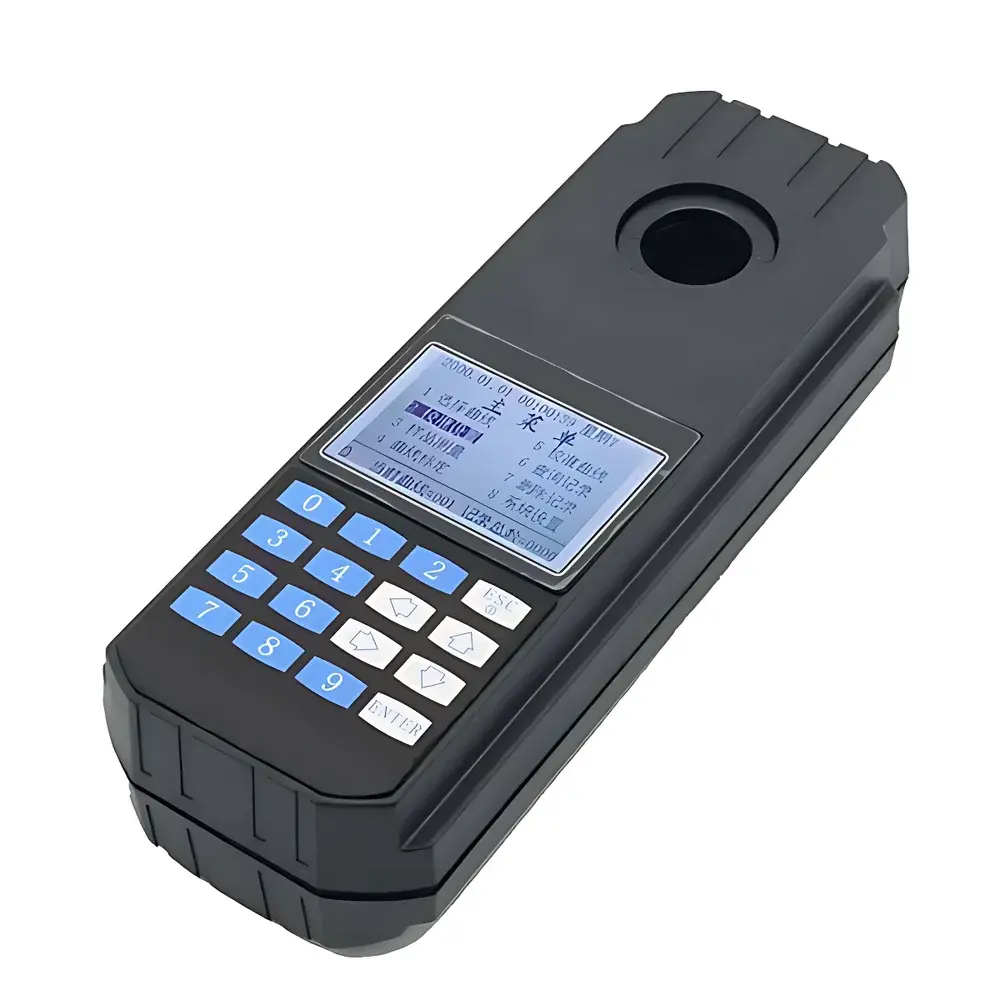
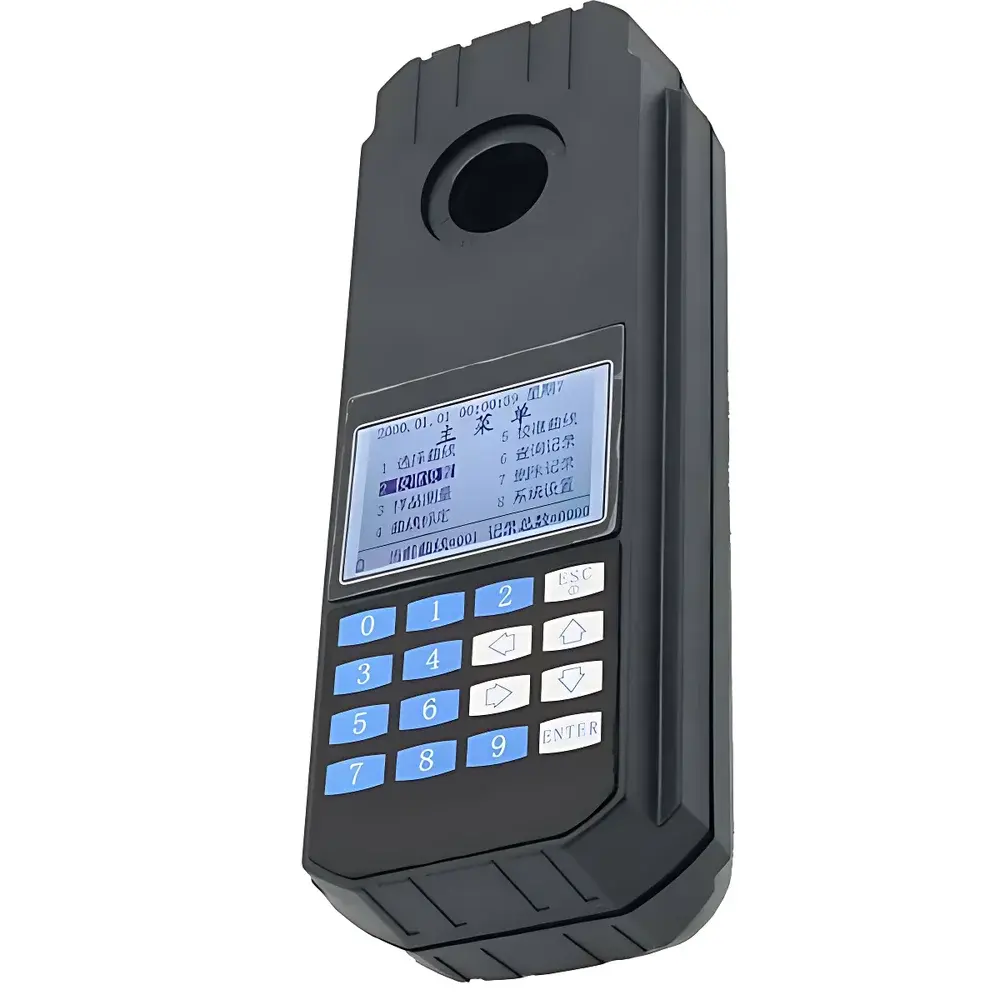
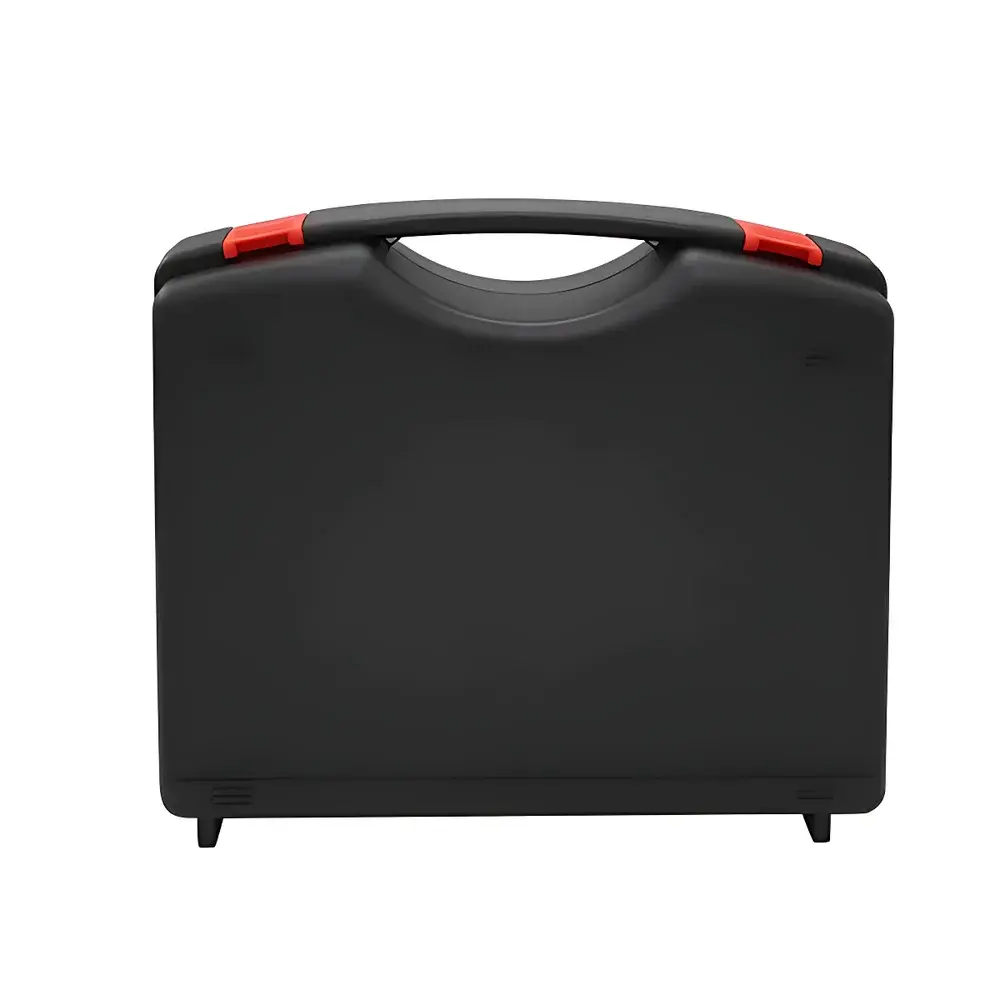
Shenchanghong PCHF-260 Portable Fluoride Analyzer
| Brand | Shenchanghong |
|---|---|
| Origin | Shenzhen, China |
| Manufacturer Type | Direct Manufacturer |
| Country of Origin | China |
| Model | PCHF-260 |
| Instrument Type | Portable/HANDHELD Water Quality Analyzer |
| Measured Parameter | Fluoride (F⁻) in Water |
| Measurement Range | 0.05–2.00 mg/L |
| Accuracy | ≤ ±5% FS |
| Repeatability | ≤ 3% RSD |
| Optical Stability | Drift < 0.002 A within 20 min |
| Dimensions | 80 × 230 × 55 mm |
| Weight | 500 g |
| Operating Temperature | 5–40 °C |
| Relative Humidity | ≤ 85% RH |
| Power Supply | 4 × AA batteries |
| IP Rating | IP65 |
| Data Storage | 199 measurement records with timestamp (YYYY-MM-DD HH:MM:SS), plus 20 preloaded calibration curves |
| Display | Backlit LCD |
| Optical System | Monochromatic cold light source + narrow-band interference filter |
Overview
The Shenchanghong PCHF-260 Portable Fluoride Analyzer is a field-deployable photometric instrument engineered for the quantitative determination of fluoride ion (F⁻) concentration in aqueous samples using the SPADNS (sodium 2-(p-sulfophenylazo)-1,8-dihydroxy-3,6-naphthalenedisulfonate) colorimetric method. It operates on the principle of absorbance measurement at a fixed wavelength (typically ~580 nm), where fluoride forms a stable pink-colored complex with SPADNS in the presence of zirconium(IV) as a masking agent. The instrument integrates a monochromatic cold light source and a narrow-band interference optical system to minimize spectral interference and ensure high photometric stability—critical for reliable field measurements under variable ambient conditions. Designed for compliance with standard methods including EPA Method 300.0 (for fluoride in drinking water) and ISO 10304-1 (water quality — determination of dissolved anions by liquid chromatography), the PCHF-260 delivers trace-level quantification across the clinically and regulatory relevant range of 0.05–2.00 mg/L, supporting routine monitoring in resource-limited or mobile laboratory environments.
Key Features
- Compact handheld form factor (80 × 230 × 55 mm; 500 g) optimized for field deployment and on-site screening.
- IP65-rated ABS polymer housing providing dust-tight, water-resistant, and corrosion-resistant protection for operation in humid, outdoor, or industrial settings.
- Low-power 16-bit microcontroller architecture enabling extended battery life—up to 200+ measurements per set of 4 AA alkaline cells.
- Backlit LCD display with intuitive menu navigation and real-time visualization of concentration (mg/L), absorbance (A), and transmittance (%T).
- Integrated data logging with timestamped storage of up to 199 measurement records (including date, time, absorbance, transmittance, and calculated F⁻ concentration) and 20 user-configurable calibration curves.
- Cold light source and precision narrow-band optical filter ensure long-term photometric stability (< 0.002 A drift over 20 minutes), reducing recalibration frequency during continuous use.
- Automatic zeroing and calibration verification routines support GLP-compliant documentation requirements.
Sample Compatibility & Compliance
The PCHF-260 is validated for direct analysis of raw and treated water matrices, including potable water, surface water, groundwater, municipal wastewater, and industrial effluents. Sample pretreatment—such as pH adjustment (to 4.5–5.5) and removal of interfering ions (e.g., iron, aluminum, phosphate) via masking agents—is performed manually prior to analysis per standard protocol. The instrument conforms to fundamental performance criteria outlined in ISO/IEC 17025:2017 for testing laboratories and supports adherence to regulatory frameworks including WHO Guidelines for Drinking-water Quality (4th ed.), US EPA Safe Drinking Water Act (SDWA) maximum contaminant level (MCL) of 4.0 mg/L for fluoride, and China’s GB/T 5750.5-2023 (Standard Methods for Examination of Drinking Water – Inorganic Nonmetallic Indices). Its portability and battery operation make it suitable for field audits, emergency response, and decentralized water quality surveillance programs.
Software & Data Management
Data are stored internally with full timestamping (year, month, day, hour, minute, second) and can be exported via manual transcription or optional USB-to-serial adapter (not included). While the device lacks built-in wireless connectivity, its structured data format—including measured absorbance, derived concentration, and calibration curve ID—facilitates downstream integration into LIMS or Excel-based QA/QC workflows. All stored records retain audit trail integrity, satisfying basic traceability requirements under GLP and ISO 9001. The instrument supports data retention during power loss via non-volatile memory, eliminating risk of record corruption during battery replacement or unexpected shutdown.
Applications
- Routine fluoride monitoring in municipal water treatment plants and distribution systems.
- Field validation of fluoride removal efficiency in activated alumina or bone char filtration units.
- Compliance testing for bottled water producers and beverage manufacturers subject to national labeling regulations.
- Environmental impact assessments near fluorine-emitting industrial facilities (e.g., aluminum smelters, phosphate fertilizer plants).
- Public health surveillance in endemic fluorosis regions, particularly in rural or off-grid communities.
- Educational use in environmental science and analytical chemistry laboratories for method validation and student training.
FAQ
What is the detection principle used by the PCHF-260?
It employs the SPADNS-zirconium colorimetric method, measuring absorbance at ~580 nm following complex formation between fluoride and the chromogenic reagent.
Can the instrument measure fluoride in seawater or high-salinity samples?
Direct analysis is not recommended due to chloride interference; sample dilution and matrix-matched calibration are required for reliable results.
Is the PCHF-260 compliant with FDA 21 CFR Part 11?
No—it does not provide electronic signature capability, audit trail export, or user access controls required for Part 11 compliance; it is intended for non-GMP field screening.
How often should the optical system be cleaned or calibrated?
Optical path cleaning is recommended after every 50 measurements in dusty environments; calibration verification using standard solutions is advised before each daily session or after prolonged storage.
Does the instrument include reagents for immediate use?
Yes—a complete reagent kit (SPADNS indicator, zirconyl chloride, buffer solution, and standard fluoride reference) is supplied with each unit.







