
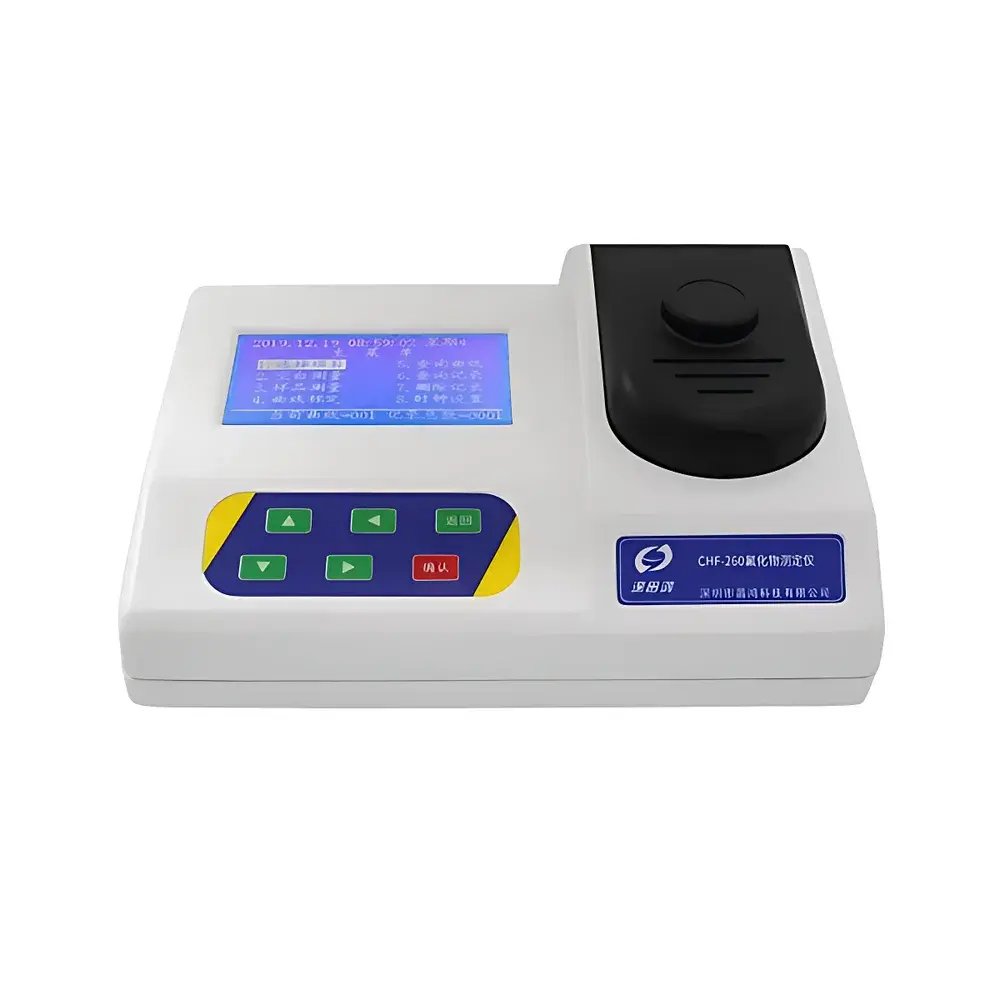
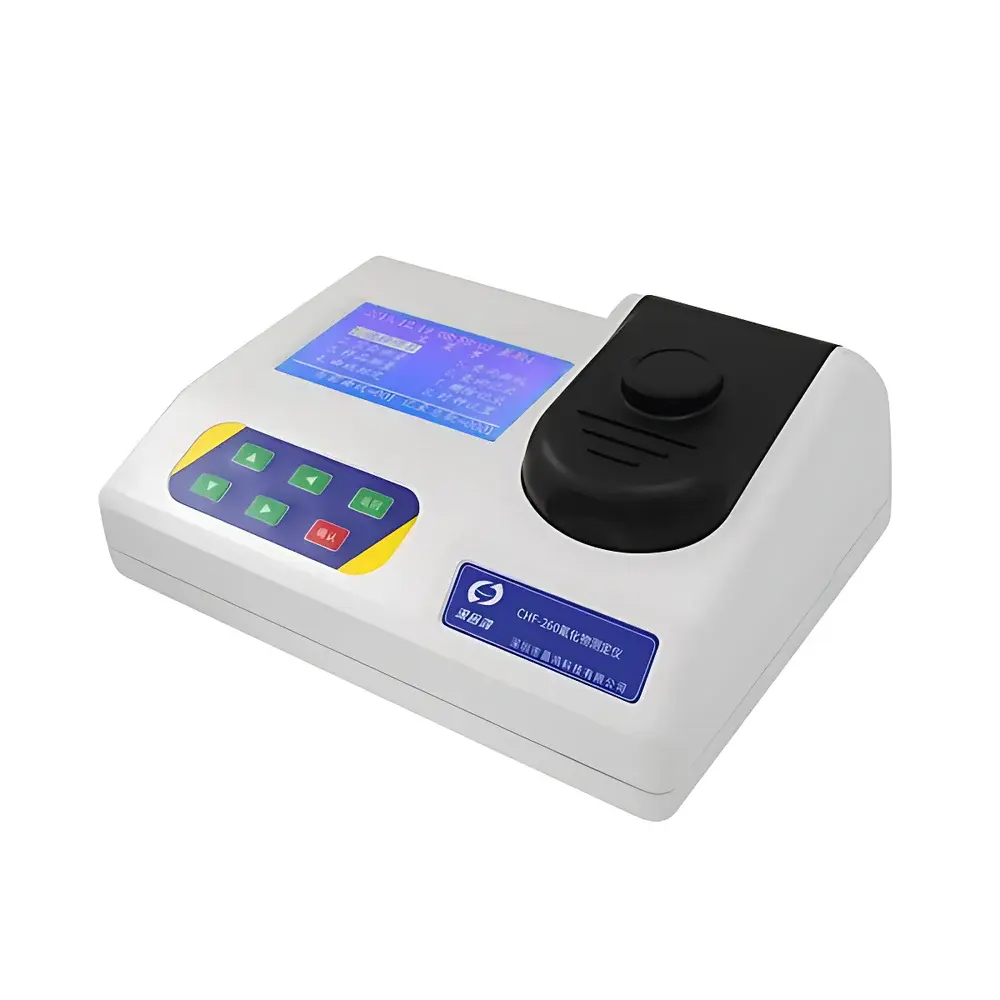
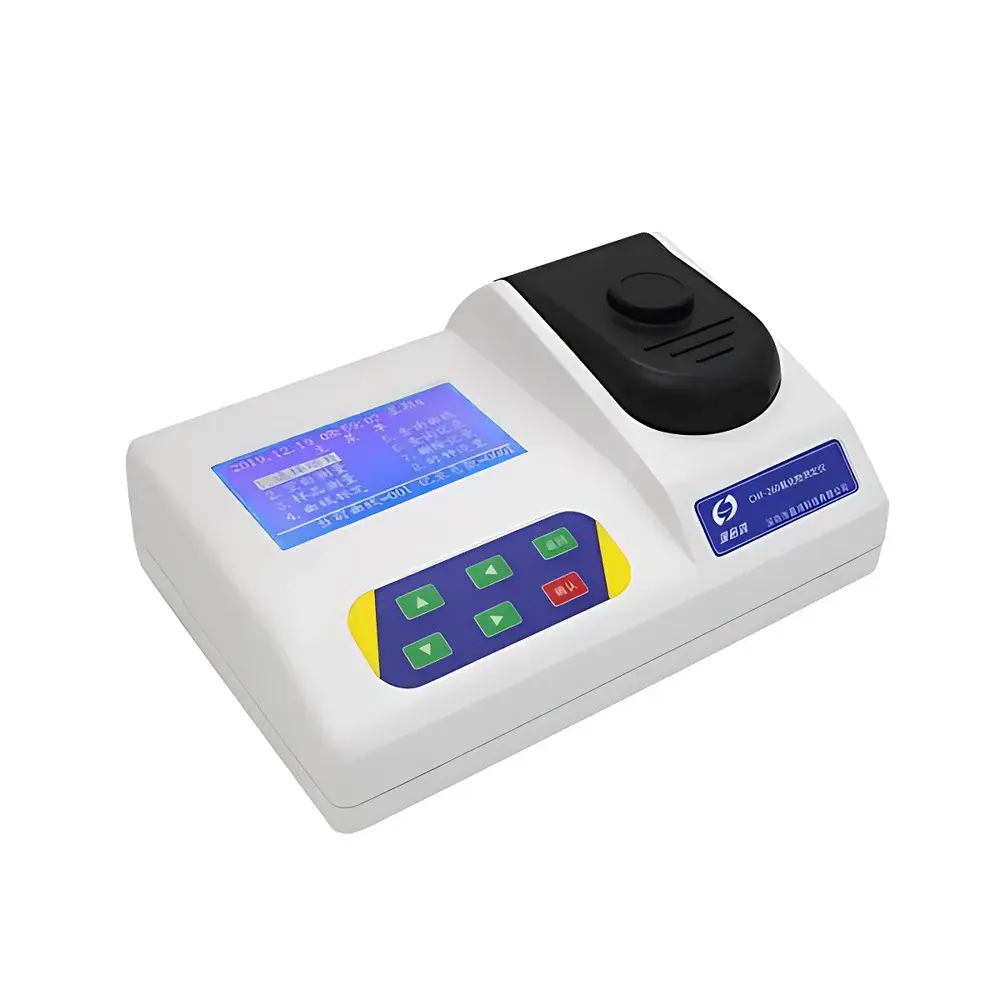
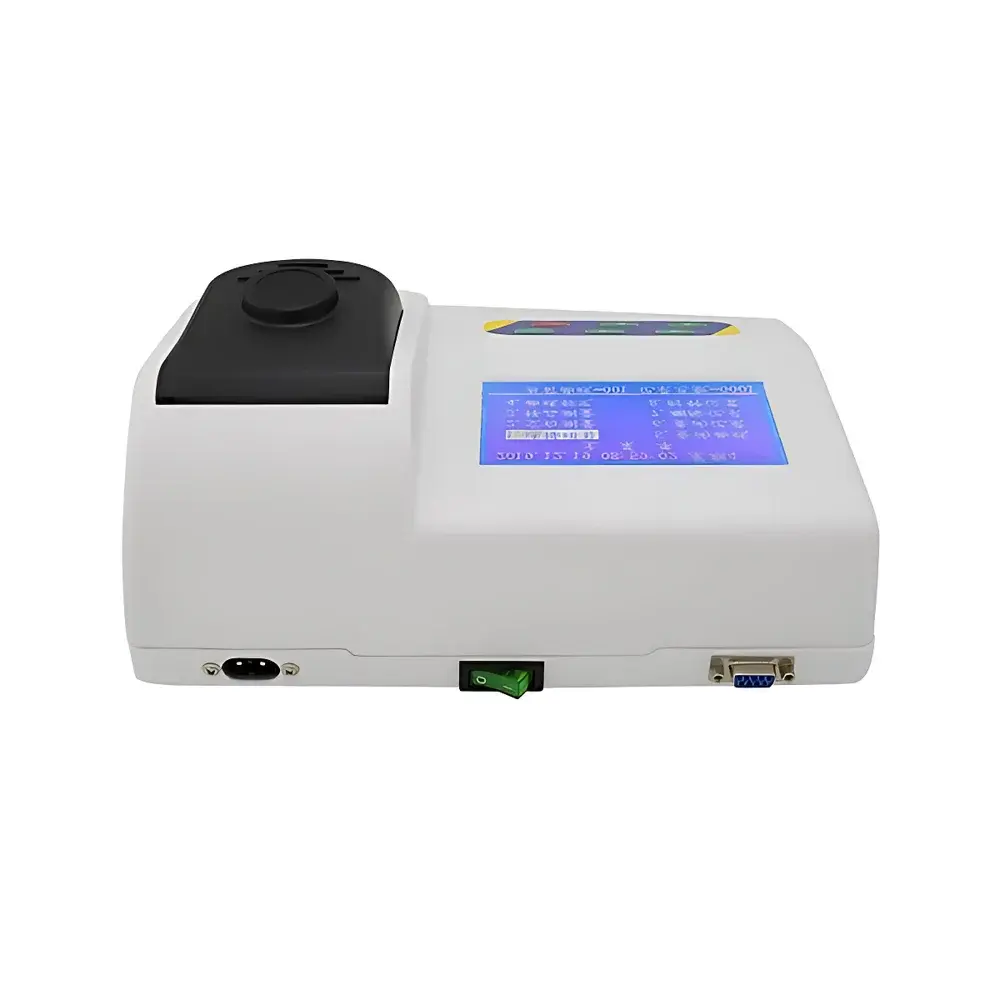
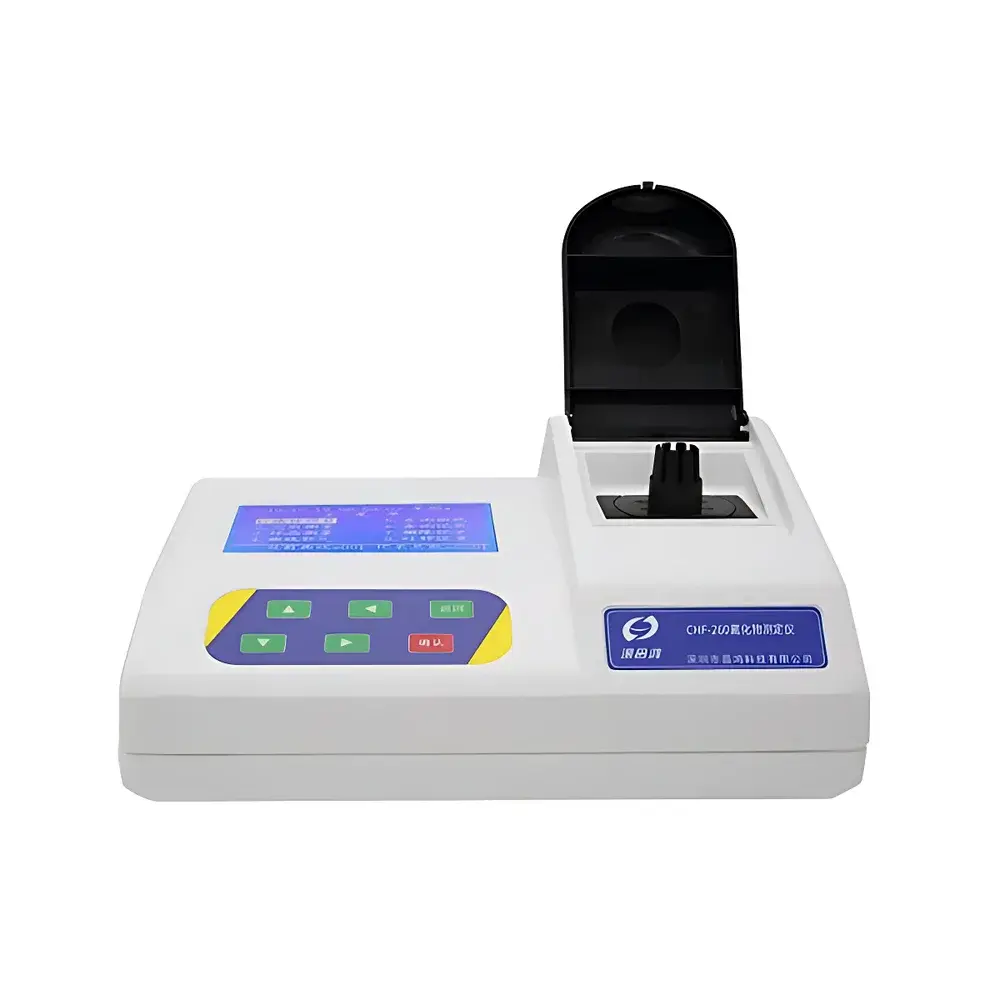
Shenchanghong CHF-260 Fluoride Analyzer
| Brand | Shenchanghong |
|---|---|
| Origin | Guangdong, China |
| Manufacturer Type | Manufacturer |
| Origin Category | Domestic (China) |
| Model | CHF-260 |
| Pricing | Upon Request |
| Measurement Range | 0.05–2.00 mg/L |
| Accuracy (Abs. Error) | ≤±5% |
| Repeatability | ≤3% |
| Optical Drift | <0.002 A in 20 min |
| Dimensions (W×D×H) | 266 × 200 × 130 mm |
| Weight | <1 kg |
| Operating Temperature | 5–40 °C |
| Relative Humidity | ≤85% |
| Power Supply | AC 220 ± 22 V, 50 ± 0.5 Hz |
Overview
The Shenchanghong CHF-260 Fluoride Analyzer is a benchtop photometric instrument engineered for accurate, reliable quantification of fluoride ion (F⁻) concentration in aqueous samples via the SPADNS (sodium 2-(p-sulfophenylazo)-1,8-dihydroxy-3,6-naphthalenedisulfonate) colorimetric method. It employs a stable monochromatic cold light source—optimized at the characteristic absorption peak near 580 nm—combined with a precision narrow-band optical filter and high-transmittance optical path design. This configuration ensures minimal spectral interference from turbidity, residual chlorine, or common anions (e.g., Cl⁻, SO₄²⁻, NO₃⁻), delivering robust analytical performance under routine laboratory and field-deployable environmental monitoring conditions. The analyzer complies with core principles outlined in ISO 10304-1 (water quality — determination of dissolved anions by liquid chromatography) and supports method validation aligned with EPA Method 300.0 and Chinese Standard HJ 488-2009 (Water Quality — Determination of Fluoride — Spectrophotometric Method Using Fluoride Reagent). Its microprocessor-controlled architecture enables direct digital readout in mg/L F⁻, eliminating manual calibration curve interpolation.
Key Features
- High-stability monochromatic cold light source (rated lifetime ≥100,000 hours) with integrated narrow-band interference filter, ensuring long-term photometric consistency and resistance to ambient light interference.
- Embedded 16-bit low-power microcontroller system enabling precise analog-to-digital conversion, real-time signal compensation, and stable baseline tracking during measurement cycles.
- Backlit LCD display with full Chinese menu interface—designed for intuitive navigation, parameter setup, and on-screen result review without external software dependency.
- Dual-curve capability: factory-preloaded calibration curve plus user-definable calibration points (up to 8-point linear or non-linear curve fitting), supporting trace-level verification and method adaptation per site-specific matrix requirements.
- Chemically resistant ABS housing with reinforced structural integrity—engineered to withstand routine handling, mild reagent exposure, and ambient laboratory humidity fluctuations.
- Optical stability verified at <0.002 A drift over 20 minutes, meeting internal QA/QC thresholds for instrumental readiness prior to sample analysis.
Sample Compatibility & Compliance
The CHF-260 is validated for use with clarified, filtered, or centrifuged samples across diverse water matrices—including potable water, surface water, groundwater, municipal wastewater effluent, and industrial process discharges. Sample pretreatment follows standard protocols: pH adjustment to 4.5–5.5 using acetate buffer, masking of interfering cations (e.g., Fe³⁺, Al³⁺) with sodium citrate or EDTA, and strict adherence to reaction time (15–20 min) and temperature (20–25 °C) control. Instrumental operation conforms to GLP-aligned practices; audit-ready documentation (calibration logs, blank checks, duplicate analyses) can be manually recorded per laboratory SOPs. While not inherently 21 CFR Part 11 compliant (lacking electronic signature or automated audit trail), its deterministic output and repeatable workflow support integration into regulated environments when paired with controlled documentation procedures.
Software & Data Management
The CHF-260 operates as a standalone embedded system with no proprietary PC software required. All operational parameters—including zero calibration, blank subtraction, curve selection, and data storage—are managed locally via front-panel controls. Up to 50 measurement records—including date/time stamp, sample ID (user-entered alphanumeric tag), and measured concentration—are retained in non-volatile memory. Data export is manual: values may be transcribed or logged externally via lab notebooks or LIMS-compatible spreadsheets. Firmware updates are not field-upgradable; revision control is maintained through hardware version labeling and manufacturer-issued calibration certificates.
Applications
- Routine compliance monitoring of fluoride in drinking water supplies per WHO guideline value (1.5 mg/L) and national regulatory limits (e.g., China’s GB 5749-2022: ≤1.0 mg/L).
- Environmental impact assessment of fluoride discharge from aluminum smelting, phosphate fertilizer production, and semiconductor etching facilities.
- Verification of fluoride removal efficiency in activated alumina or bone char filtration systems.
- Educational laboratories requiring robust, entry-level instrumentation for teaching fundamental spectrophotometric principles and water chemistry analysis.
- Field-deployable QC support in mobile environmental labs where portability (<1 kg), low power demand, and minimal maintenance are critical.
FAQ
What is the detection principle used by the CHF-260?
It uses the SPADNS colorimetric method, where fluoride forms a stable pink-colored ternary complex with zirconium and SPADNS dye; absorbance is measured at ~580 nm.
Can the CHF-260 measure fluoride in seawater or high-salinity samples?
Not without dilution and matrix-matched calibration—elevated chloride and sulfate concentrations may suppress complex formation and require interferences correction or alternative methods (e.g., ion-selective electrode).
Is the instrument suitable for GLP or ISO/IEC 17025-accredited laboratories?
Yes, provided users implement supplementary procedural controls (e.g., documented calibration frequency, analyst training records, and manual audit logs) to meet accreditation requirements.
How often must the optical system be cleaned or serviced?
No routine optical cleaning is required under normal use; the sealed light path and filter assembly are maintenance-free for ≥5 years with proper handling and dust protection.
Does the CHF-260 support automatic wavelength selection or multi-parameter analysis?
No—it is dedicated exclusively to fluoride analysis at a fixed 580 nm wavelength and does not support multi-analyte or multi-wavelength functionality.
Related Products







