
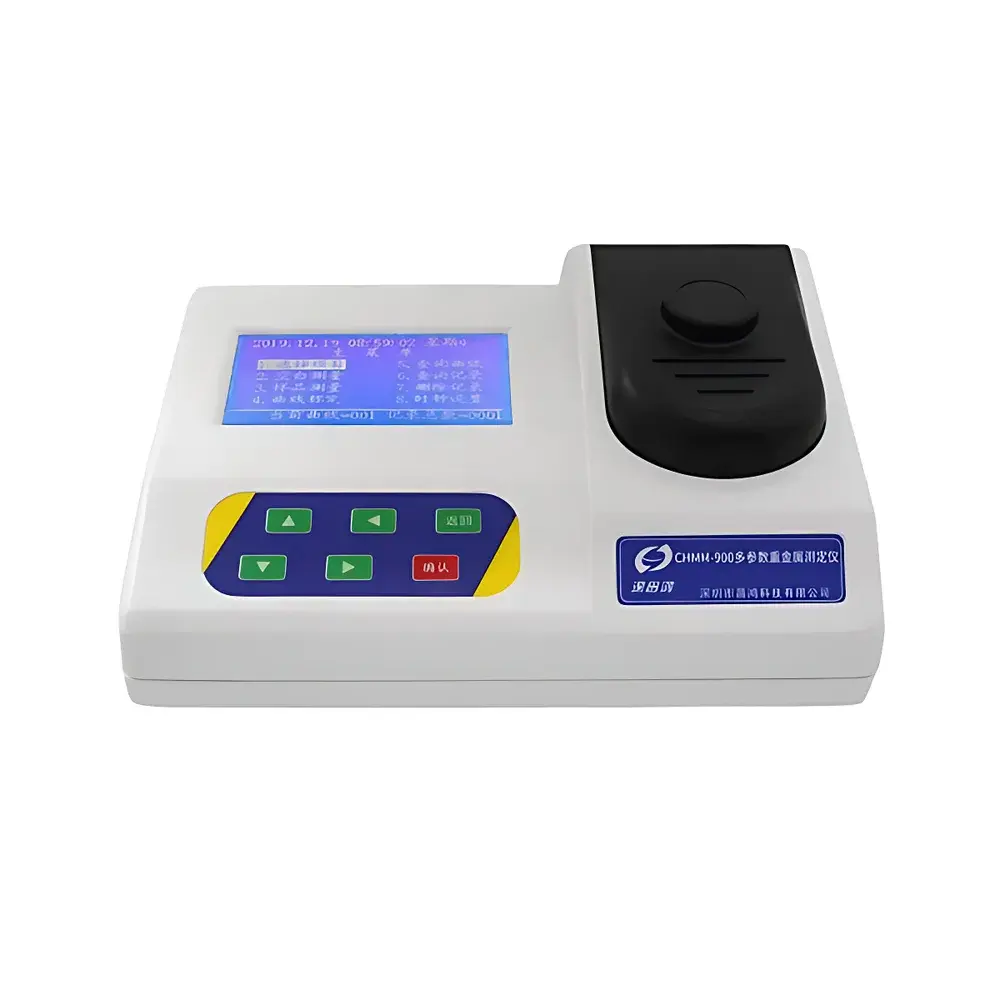
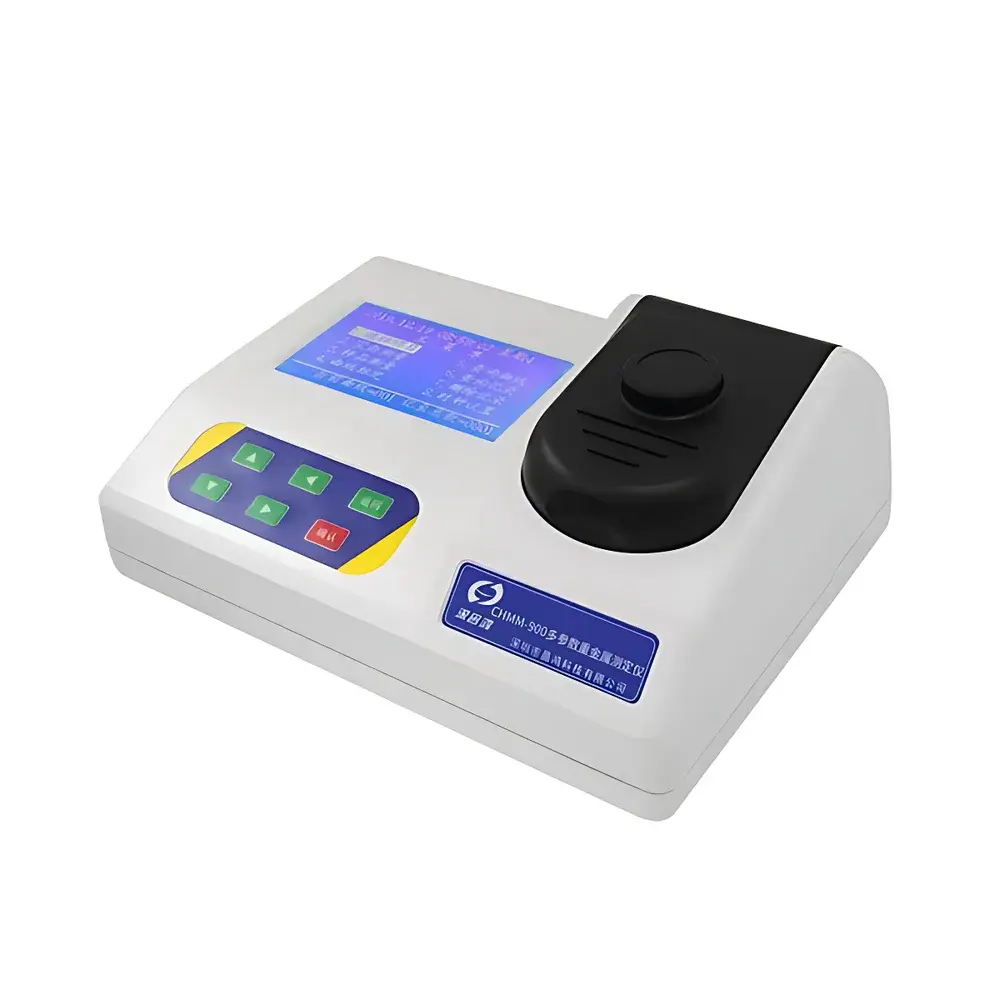
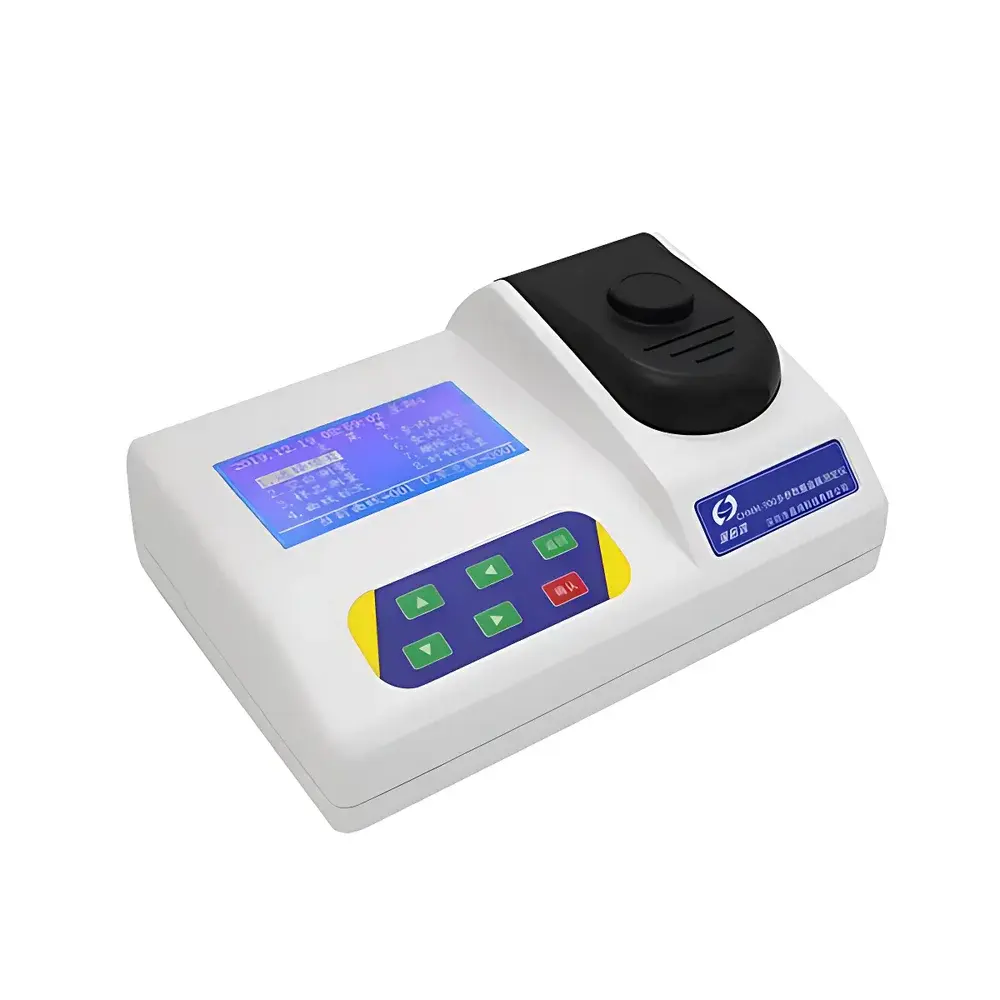
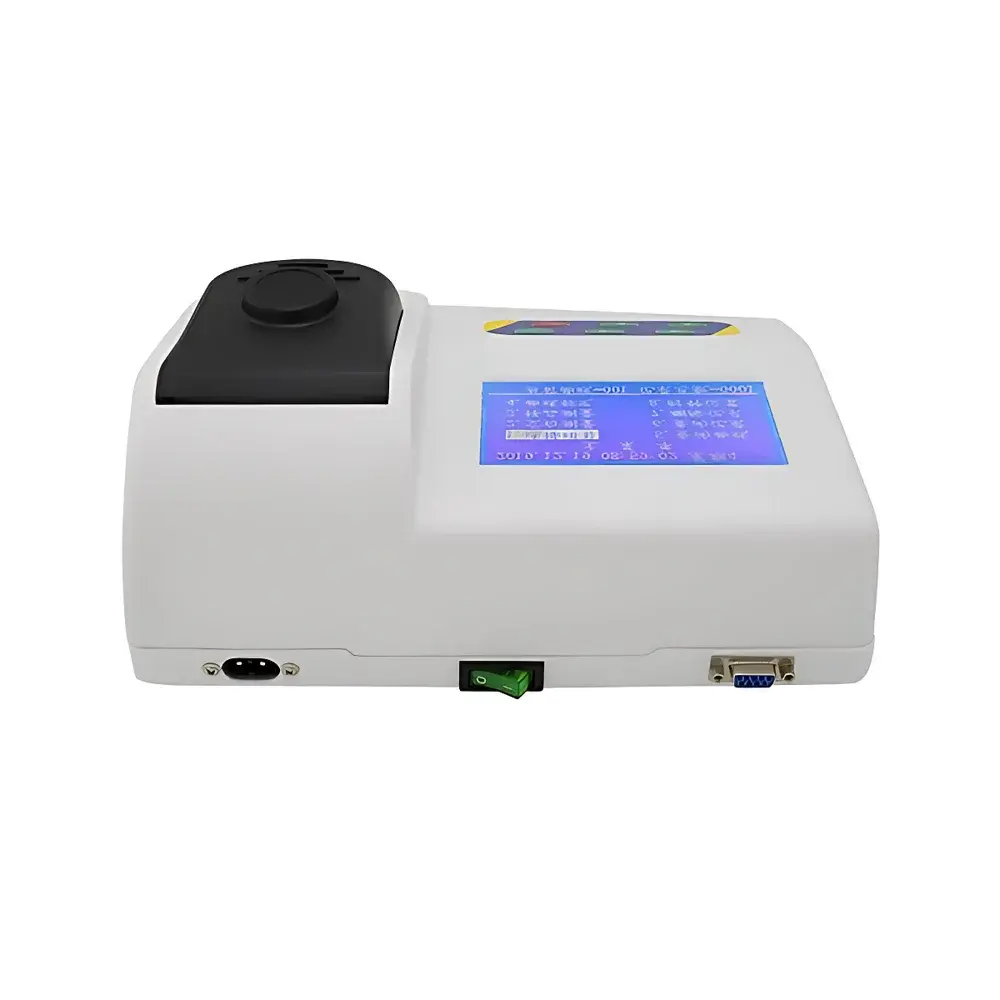
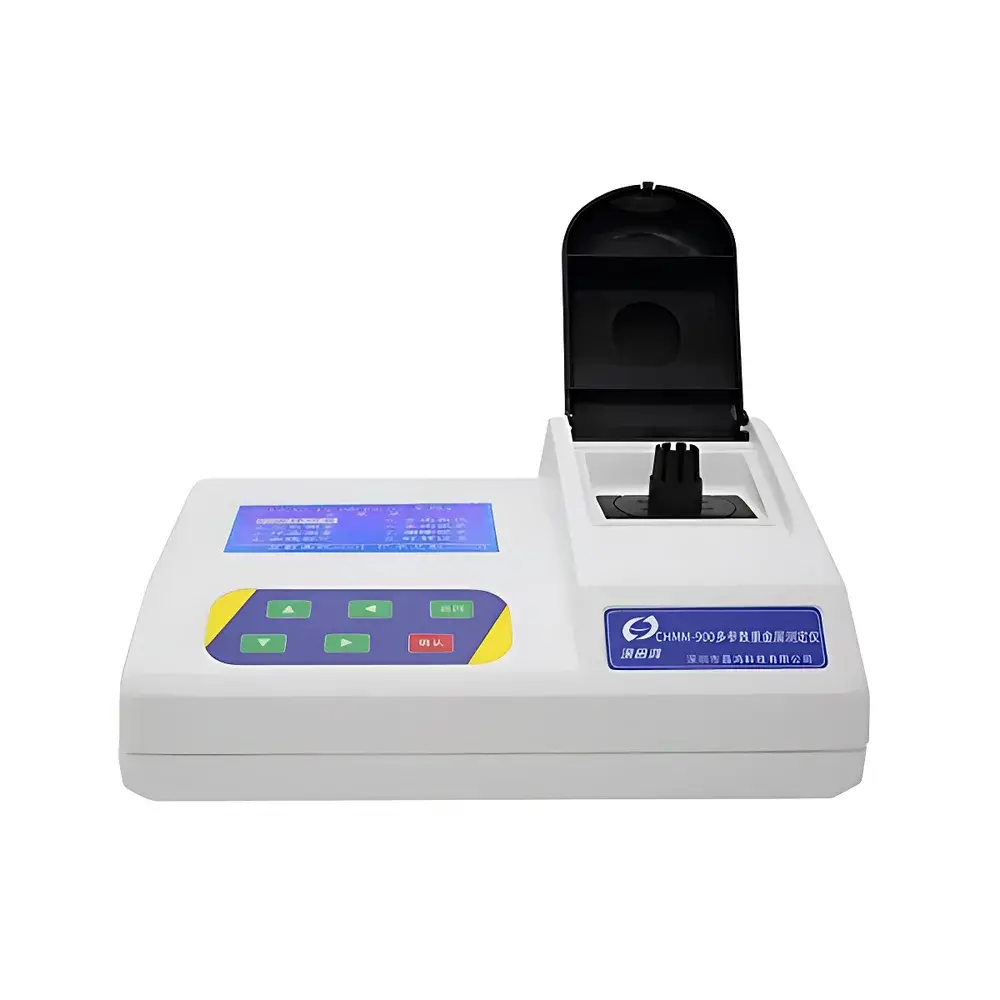
Shenchanghong CHMM-900 Multi-Parameter Heavy Metals Analyzer
| Brand | Shenchanghong |
|---|---|
| Origin | Guangdong, China |
| Manufacturer Type | Direct Manufacturer |
| Instrument Type | Benchtop Laboratory Analyzer |
| Model | CHMM-900 |
| Detection Principle | Colorimetric Spectrophotometry (Absorbance-Based) |
| Measurable Metals | Cu, Ni, Cr(VI), Mn, Fe, Zn, Pb, Cd, Hg, Sb (Simultaneous or Selectable Dual/Multi-Parameter Mode) |
| Analysis Time | ≤20 min per sample |
| Accuracy | ≤±5% of full scale |
| Repeatability | ≤3% RSD |
| Optical Stability | Absorbance drift <0.002 A within 20 min |
| Resolution | 0.01 mg/L |
| Measurement Ranges | Ni (0.01–1.00 mg/L), Cu (0.02–10.00 mg/L), Cr(VI) (0.01–1.00 mg/L), Mn (0.02–5.00 mg/L), Fe (0.05–10.00 mg/L), Zn (0.20–5.00 mg/L), Pb (0.01–0.50 mg/L), Cd (0.05–0.50 mg/L), Hg (0.002–0.05 mg/L) |
| Dimensions | 266 × 200 × 130 mm |
| Weight | 1.0 kg |
| Operating Environment | 5–40 °C, ≤85% RH, AC 220 V ±10%, 50 Hz ±0.5 Hz |
| Housing Material | Corrosion-Resistant ABS |
| Light Source | High-Brightness, Long-Life LED (100,000 h rated lifetime) with Narrow-Band Interference Filters |
| Display | Backlit LCD with Chinese UI (Menu-Driven) |
| Data Storage | Internal non-volatile memory for calibration curves and measurement history |
| Microcontroller | Low-Power 16-bit MCU architecture |
Overview
The Shenchanghong CHMM-900 Multi-Parameter Heavy Metals Analyzer is a benchtop spectrophotometric instrument engineered for precise, routine quantification of priority toxic metals in aqueous environmental matrices. It operates on the principle of colorimetric analysis—where target metal ions react with specific chromogenic reagents to form stable, light-absorbing complexes. Absorbance is measured at defined wavelengths using a high-stability LED light source and narrow-band optical filtering, minimizing spectral interference and ensuring robust photometric performance. Designed explicitly for compliance-driven water quality laboratories, the CHMM-900 supports rapid, standardized testing of drinking water, surface water, groundwater, municipal wastewater, and industrial effluents in accordance with widely adopted methods—including EPA Method 200.7 (ICP-OES reference), ISO 8692 (water quality—determination of heavy metals), and national standard GB/T 5750.6–2023 (Standard Methods for Examination of Drinking Water—Metals). Its dual/multi-parameter capability allows sequential or simultaneous determination of up to ten regulated analytes without hardware modification—reducing cross-contamination risk and operator workload.
Key Features
- High-fidelity optical architecture featuring long-life, high-luminance LEDs (rated >100,000 hours) paired with precision narrow-band interference filters—ensuring consistent wavelength selection and minimal baseline drift.
- Optical stability verified at <0.002 A absorbance drift over 20 minutes, meeting stringent requirements for low-concentration trace metal analysis where signal integrity is critical.
- Integrated 16-bit microcontroller platform delivering deterministic response timing, low thermal noise, and energy-efficient operation—ideal for continuous use in resource-constrained lab environments.
- Corrosion-resistant ABS housing with sealed optical path and chemical-resistant sample compartment—designed for durability under repeated exposure to acidic digestates and chelating reagents.
- User-configurable calibration: factory-loaded reference curves for all supported metals plus dedicated slots for user-defined calibrations—including multi-point linear and polynomial fits—enabling method validation and matrix-matched standardization.
- Onboard data retention with non-volatile memory supporting ≥1,000 sample records, complete with timestamp, operator ID (if enabled), parameter ID, and raw absorbance values—facilitating audit-ready documentation.
Sample Compatibility & Compliance
The CHMM-900 is validated for direct analysis of clarified, filtered aqueous samples—including raw and treated drinking water, river/lake surface water, leachates, and pre-digested industrial wastewater (e.g., after EPA 3010A or ISO 11885 acid digestion). Sample volume requirement is 10–25 mL depending on selected assay; no dilution or pre-concentration is required within specified ranges. The instrument complies with ISO/IEC 17025:2017 general requirements for competence of testing and calibration laboratories, and its operational protocols align with GLP principles for environmental testing. While not FDA 21 CFR Part 11 certified out-of-the-box, its data logging architecture supports configurable electronic signature and audit trail implementation when integrated into validated LIMS environments.
Software & Data Management
Data export is supported via USB interface to standard CSV format, compatible with Excel, LabArchives, and ELN systems. Calibration curve parameters—including slope, intercept, correlation coefficient (r²), and residual error—are stored alongside each measurement batch. All stored data include embedded metadata: date/time stamp, selected parameter, reagent lot number (user-entered), and operator identifier. Firmware updates are delivered via encrypted USB drive with version-controlled checksum verification—ensuring traceability and preventing unauthorized modification.
Applications
- Routine monitoring of regulatory compliance parameters in municipal water treatment plants (e.g., Pb, Cd, Cr(VI), Hg per WHO Guidelines and EU Directive 2020/2184).
- Industrial pretreatment verification for electroplating, battery manufacturing, and metal finishing facilities discharging to POTWs.
- Field-deployable lab support for environmental consultants conducting site investigations under ASTM D5673 (Standard Test Method for Determination of Metals in Water by ICP-MS) — where CHMM-900 serves as a rapid screening tool prior to confirmatory ICP-MS analysis.
- Educational laboratories requiring cost-effective, safe, and reproducible instruction in analytical chemistry fundamentals—particularly redox titration analogs and complexometric colorimetry.
- Emergency response scenarios involving suspected heavy metal contamination (e.g., post-flood leaching, mining runoff), where sub-30-minute turnaround enables timely decision-making.
FAQ
What sample preparation is required prior to analysis?
Most natural and treated waters require only filtration (0.45 µm membrane) and pH adjustment if outside the reagent’s optimal range (typically pH 4–9); digested wastewater samples must be cooled to ambient temperature and diluted if exceeding upper detection limits.
Can the CHMM-900 be used for soil or sediment extracts?
Yes—provided extracts are prepared according to ISO 11885 or EPA Method 3050B, filtered to remove particulates, and brought to appropriate ionic strength and acidity before colorimetric reaction.
Is method validation documentation available?
Shenchanghong provides a comprehensive validation report including LOD/LOQ determination, spike recovery studies (n=6 per matrix), inter-day precision (RSD ≤3%), and comparison data against certified reference materials (CRMs) such as NIST SRM 1643e.
How often does the instrument require recalibration?
Factory calibration remains stable for ≥6 months under normal use; however, daily verification with a mid-range CRM is recommended per ISO/IEC 17025 clause 7.7.1, and full recalibration is advised after reagent lot changes or maintenance events.
Does the system support remote diagnostics or network connectivity?
The base model operates as a standalone analyzer; optional Ethernet module (CHMM-900-NET) enables TCP/IP communication, SNMP status polling, and integration with SCADA or central lab informatics platforms.
Related Products







