
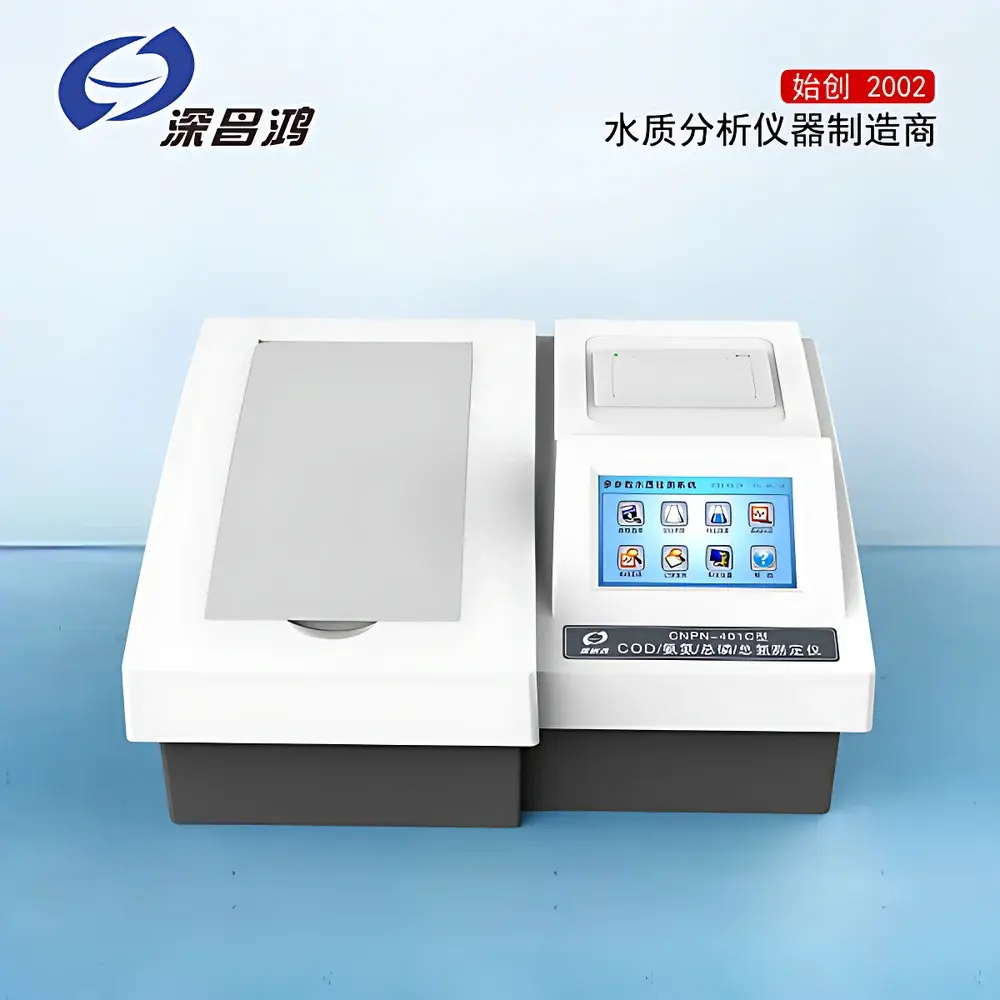
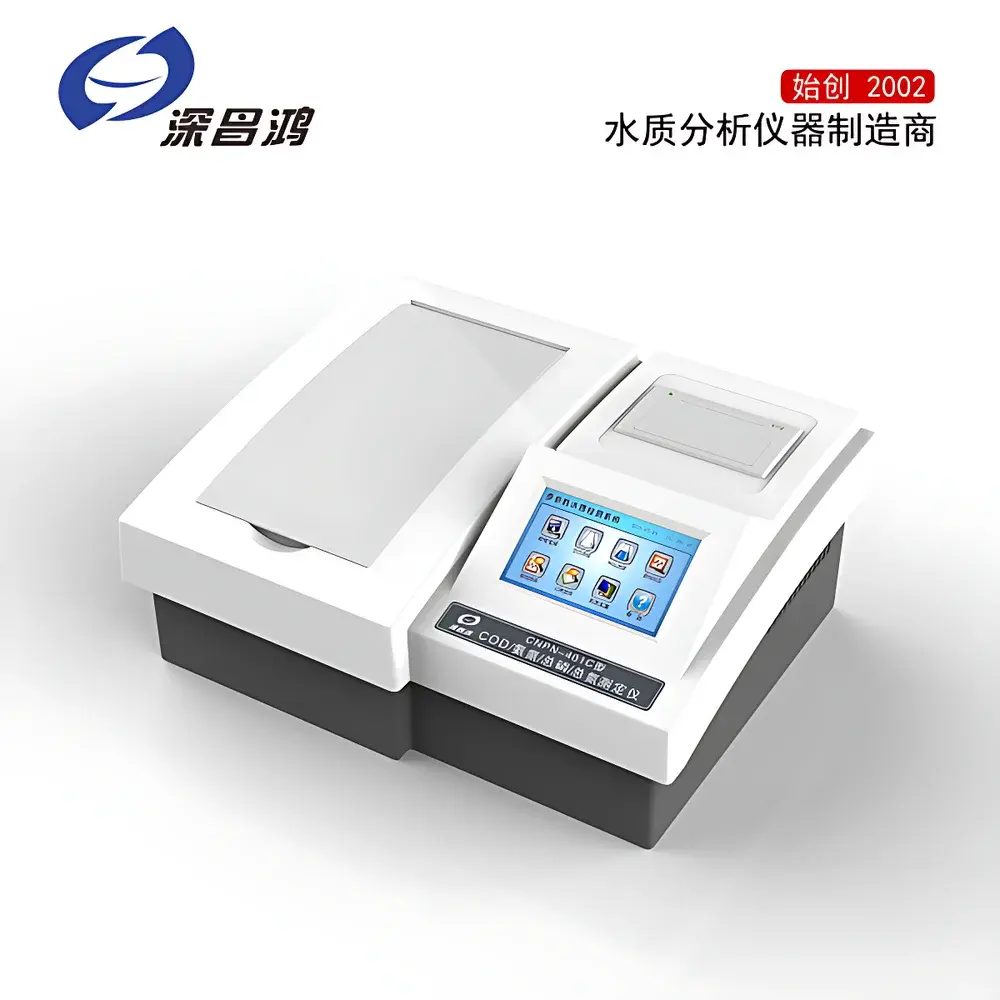
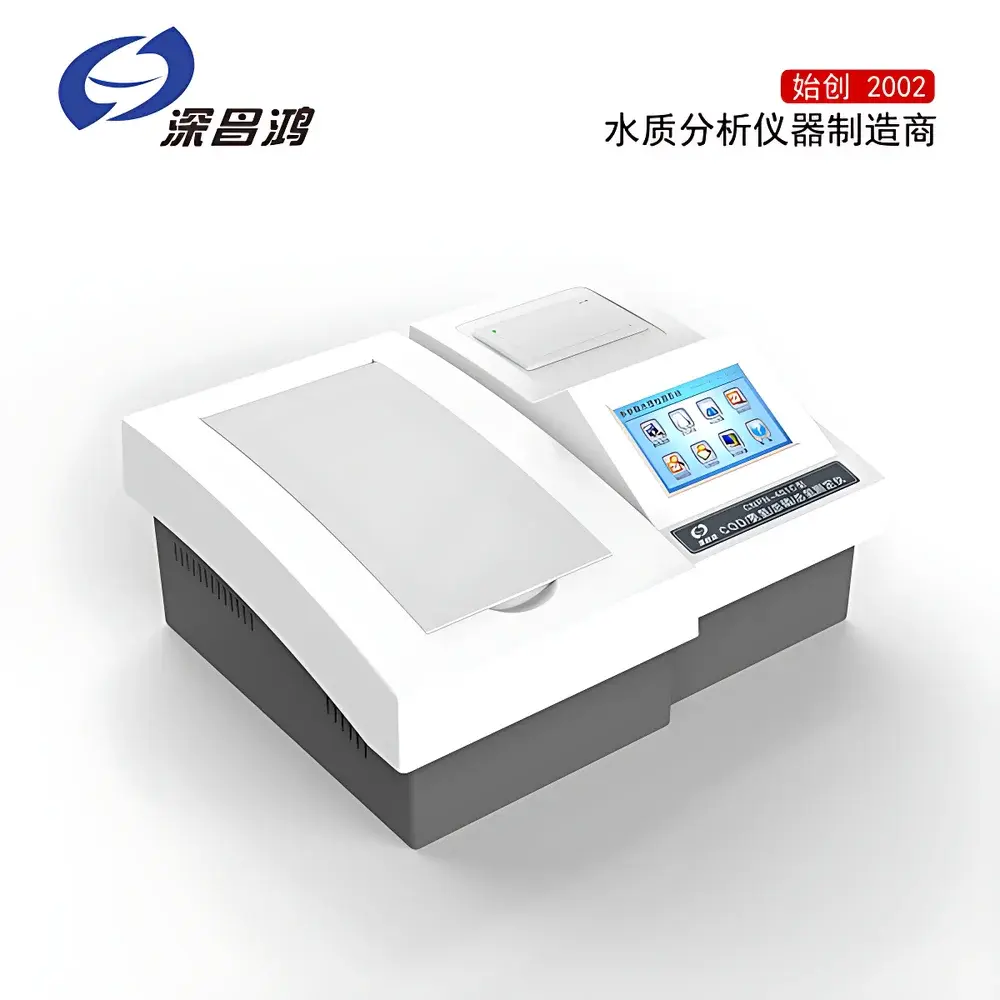
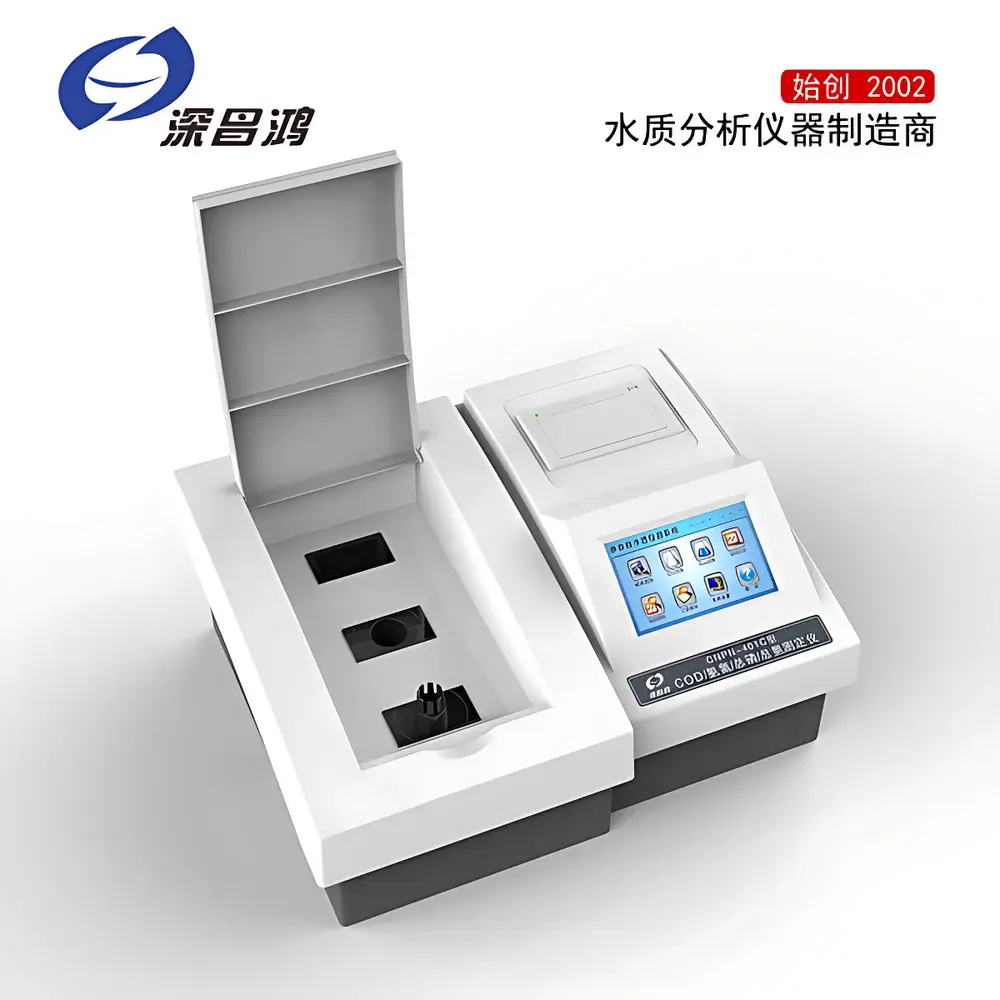
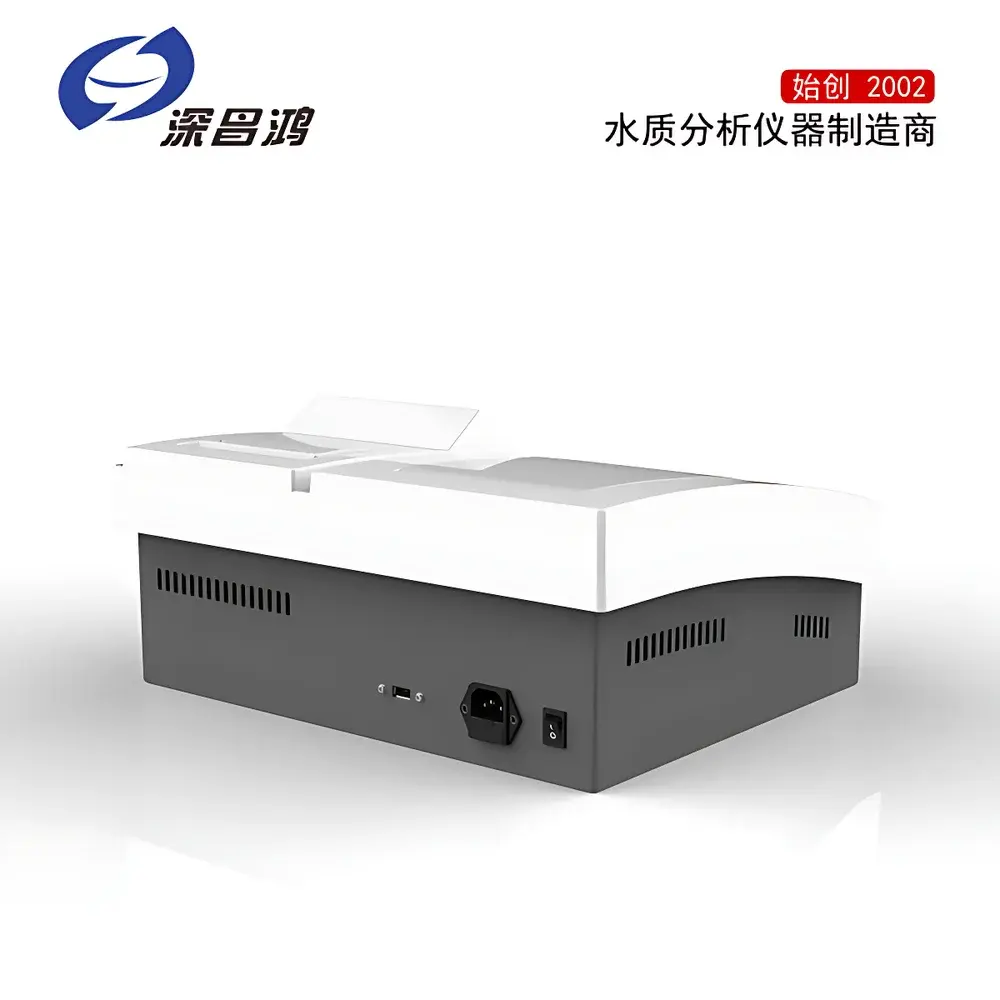
Shenchanghong MULP-8C / MULP-8D Multi-Parameter Water Quality Analyzer
| Brand | Shenchanghong |
|---|---|
| Origin | Guangdong, China |
| Manufacturer Type | Direct Manufacturer |
| Product Category | Domestic Laboratory Instrument |
| Model | MULP-8C / MULP-8D |
| Instrument Type | Benchtop Laboratory Water Quality Analyzer |
| Measurable Parameters | >90 Customizable Parameters (COD, Total Phosphorus, Ammonia Nitrogen, Chlorine, Nitrate, Heavy Metals, etc.) |
| Wavelength Options | 340, 420, 440, 470, 520, 540, 560, 610, 630, 660, 680, 700 nm |
| Absorbance Range | –2.000 to +2.000 AU |
| Absorbance Accuracy | ≤ ±0.005 AU |
| Measurement Error | ≤ ±5% (varies by parameter and range) |
| Light Intensity Adjustment | 16-level programmable |
| Display | 5-inch color capacitive touchscreen |
| Data Storage | MULP-8C — 100 calibration curves, 1,000 measurement records |
| Optical System | Optimized dual-beam photometric architecture (MULP-8D) |
| Power Supply | AC 220 V (165–240 V), 30 W |
| Operating Temperature | 10–35 °C |
| Relative Humidity | ≤90% RH (non-condensing) |
| Dimensions | 400 × 310 × 158 mm |
| Weight | 5 kg |
Overview
The Shenchanghong MULP-8C and MULP-8D are benchtop multi-parameter water quality analyzers engineered for precision photometric analysis in environmental laboratories, municipal water treatment facilities, and industrial QA/QC settings. These instruments operate on the principle of single-wavelength spectrophotometry, applying the Lambert-Beer law to quantify analyte concentrations based on measured absorbance. Unlike scanning spectrophotometers, the MULP series employs discrete, user-selectable LED-based optical channels at 12 standardized wavelengths (340–700 nm), enabling rapid, interference-minimized quantification across a broad spectrum of water quality parameters—including COD (by dichromate or permanganate methods), total phosphorus, ammonia nitrogen, free/total chlorine (DPD method), nitrate, heavy metals (e.g., Cr(VI), Pb, Cd, As), and organic contaminants (e.g., formaldehyde, phenol, hydrazine). The MULP-8D incorporates an upgraded optical architecture featuring enhanced thermal stability, reduced stray light, and improved signal-to-noise ratio—delivering superior long-term repeatability and drift resistance essential for regulatory-compliant reporting.
Key Features
- Programmable 16-level light intensity control enables dynamic optimization of signal response across wide concentration ranges—critical for high-accuracy low-level detection and high-range saturation avoidance.
- Flexible calibration architecture supports both factory-loaded standard curves and user-defined curves via manual point calibration or multi-point linear/non-linear (piecewise) regression—accommodating non-ideal Beer’s law behavior in complex matrices.
- Full audit trail functionality: Each stored curve retains metadata including calibration date, operator ID, standard reference values, corresponding absorbance readings, and wavelength used—ensuring traceability per GLP and ISO/IEC 17025 requirements.
- Dual-language interface (English/Chinese) with intuitive touch navigation; all system prompts, error messages, and report headers render consistently in the selected language.
- Integrated password protection for power-on access, method editing, calibration, and data deletion—supporting role-based security protocols aligned with FDA 21 CFR Part 11 Annex 11 expectations.
- Onboard self-calibration routine corrects for photometric baseline drift using internal reference optics—reducing reliance on frequent blank re-measurement and improving day-to-day operational consistency.
- One-touch recovery function restores factory calibration data and user curves from embedded backup memory—mitigating risk of data loss due to accidental reset or firmware interruption.
- Comprehensive reporting: Supports single-record or batch printing (page-wise), direct USB export of CSV-formatted datasets, and optional PC synchronization via RS232 or USB virtual COM port.
Sample Compatibility & Compliance
The MULP-8C/D accepts standard 10–25 mm round or rectangular cuvettes (including 10 mm pathlength quartz or optical-grade plastic), compatible with common EPA, ISO, and Chinese HJ standard digestion and colorimetric protocols. Predefined methods align with ASTM D1253 (residual chlorine), ISO 6060 (COD), ISO 11908 (ammonia nitrogen), ISO 11273 (phosphate), and HJ 505–2009 (COD by dichromate). All measurement algorithms apply matrix-matched correction where applicable (e.g., turbidity compensation for chlorine assays). Instruments comply with IEC 61010-1 safety standards for laboratory electrical equipment and meet electromagnetic compatibility (EMC) requirements per EN 61326-1. While not certified under UL or CE for EU market placement without local conformity assessment, the hardware design adheres to essential requirements of Directive 2014/30/EU (EMC) and 2014/35/EU (LVD).
Software & Data Management
Data integrity is maintained through timestamped, operator-logged measurement records with immutable metadata (wavelength, curve ID, dilution factor, sample ID, QC flag). The MULP-8D’s expanded memory (100,000 records) supports extended unattended operation in high-throughput labs. Exported CSV files contain column headers compliant with LIMS ingestion standards (e.g., “Sample_ID”, “Parameter”, “Conc_mg_L”, “Absorbance”, “Timestamp”, “Operator_ID”). Optional PC software provides curve visualization, statistical summary (mean, SD, CV%), trend charting, and PDF report generation with customizable lab header and signature fields—facilitating internal QA review and external accreditation audits. Audit logs record all critical events: calibration initiation, curve modification, password change, and data deletion—with no ability to edit or purge historical entries.
Applications
These analyzers serve core functions across regulated and research-driven water testing domains: municipal drinking water compliance monitoring (chlorine residuals, nitrate, fluoride); wastewater effluent verification (COD, TN, TP, heavy metals per discharge permits); industrial process water control (cooling tower biocide dosing, boiler feedwater purity); environmental field lab support (sediment porewater, surface water surveys); and academic teaching laboratories requiring robust, pedagogically transparent photometric instrumentation. Their modular parameter support makes them suitable for method development workflows—particularly where legacy wet-chemistry procedures require digital transition without full spectrometer investment.
FAQ
What is the difference between the MULP-8C and MULP-8D models?
The MULP-8D features an enhanced optical subsystem with improved thermal management and lower photometric drift, plus significantly expanded memory (3,500 curves vs. 100; 100,000 records vs. 1,000)—optimized for high-volume, multi-user environments requiring long-term data retention.
Can the instrument be validated for GLP or ISO/IEC 17025 compliance?
Yes—the built-in calibration traceability, operator authentication, audit logging, and data immutability features support validation protocols. Users must perform IQ/OQ/PQ per their SOPs and document system suitability tests using NIST-traceable standards.
Does it support EPA-approved methods for drinking water analysis?
It implements photometric principles aligned with EPA Methods 330.5 (chlorine), 365.4 (phosphate), and 351.2 (nitrate), though final method acceptance requires site-specific verification against EPA-recommended reagents and digestion protocols.
Is remote data retrieval possible?
Direct Ethernet or Wi-Fi connectivity is not included; however, USB mass storage mode and serial communication allow integration with local networked PCs running custom scripts or LIMS middleware for automated data pull.
How often does the instrument require recalibration?
Factory calibration remains stable for ≥6 months under normal use. Daily verification with a primary standard blank and one mid-range check standard is recommended; full multi-point calibration is advised after optical module maintenance or every 3 months in high-usage labs.
Related Products







