
Leica STELLARIS Confocal Microscopy Platform
| Brand | Leica |
|---|---|
| Origin | Germany |
| Instrument Type | Point-Scanning Confocal Microscope |
| Model | STELLARIS |
| Detection Range | 410–850 nm |
| Excitation Source | White Light Laser (WLL), up to 8 simultaneous spectral lines |
| Detector Technology | Power HyD hybrid detectors |
| Core Capabilities | Fluorescence Lifetime Imaging (FLIM), TauSense-based functional contrast, AI-driven rare-event detection (Aivia), 3D optical sectioning, multi-modal integration (STED, DIVE, DLS, FALCON, CARS) |
Overview
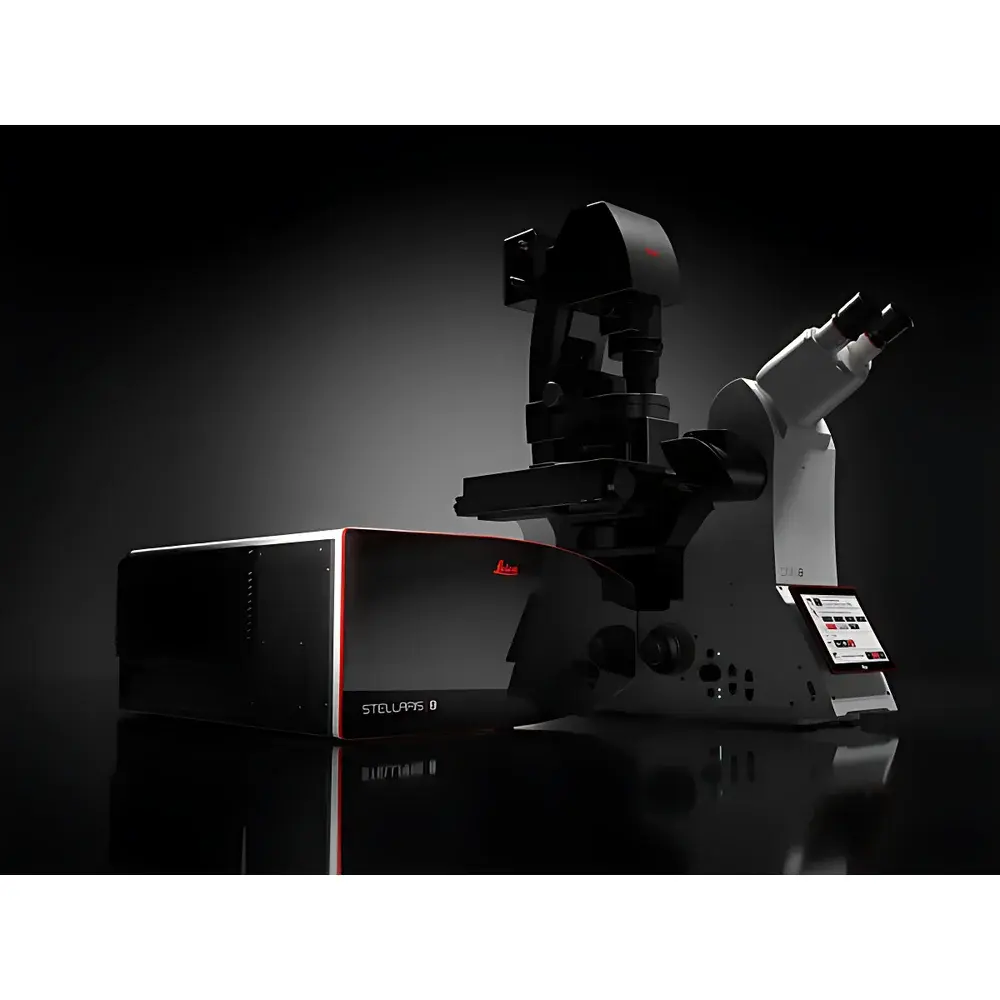
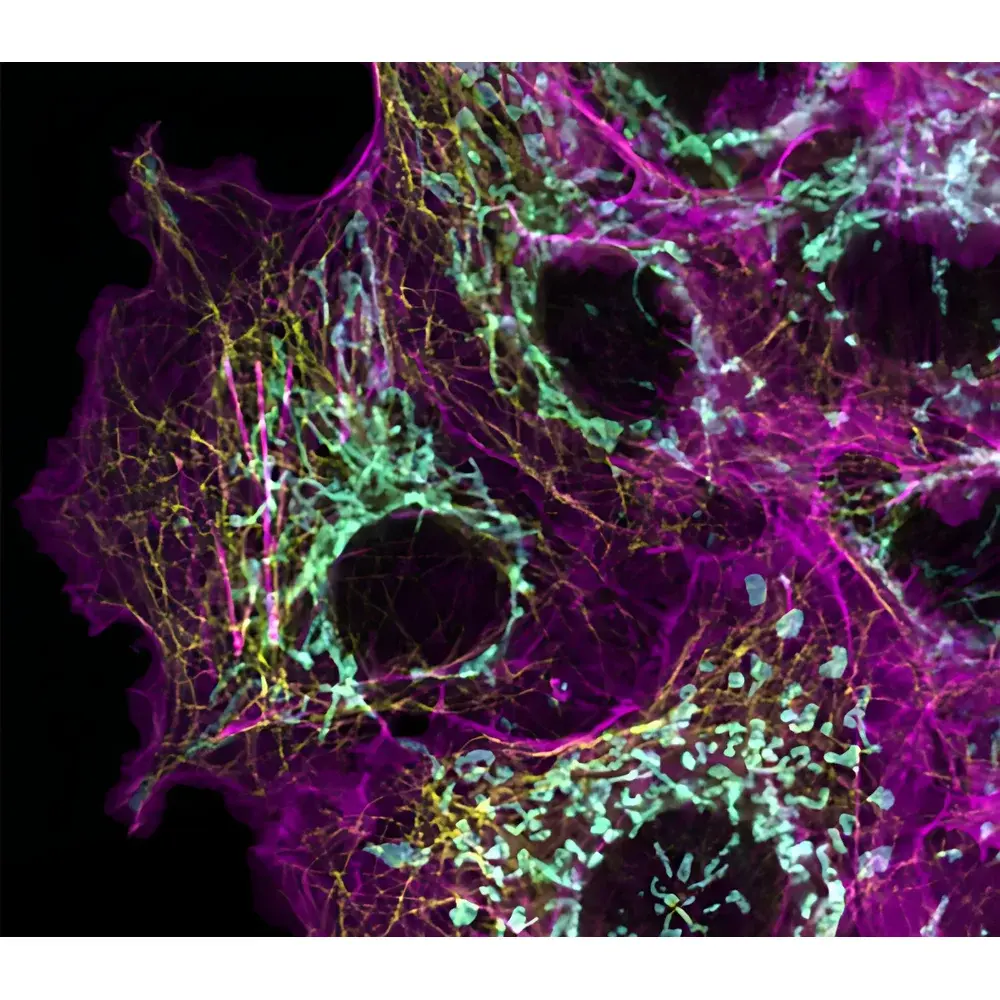
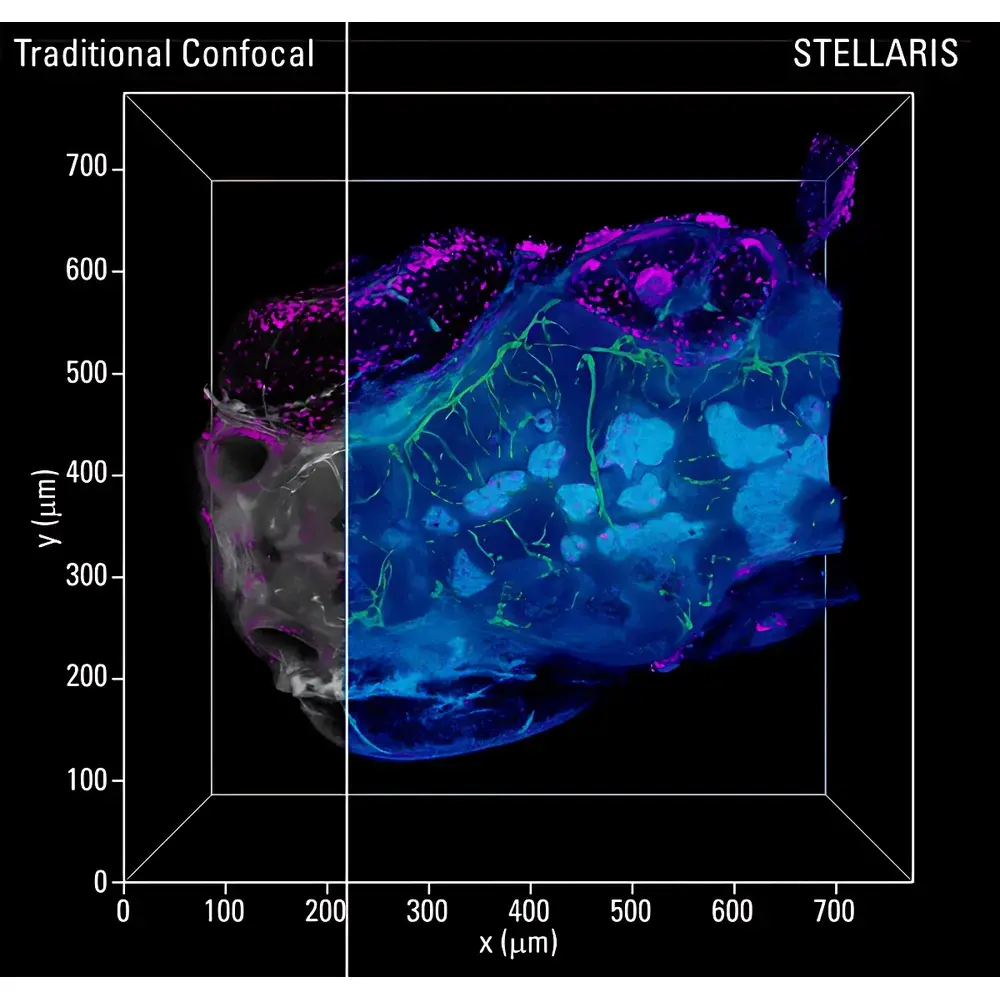
The Leica STELLARIS Confocal Microscopy Platform is a high-performance point-scanning confocal system engineered for quantitative, multimodal life science imaging. Built upon the principles of true confocal scanning (TCS), it employs diffraction-limited excitation and pinhole-based spatial filtering to reject out-of-focus fluorescence, enabling high-contrast optical sectioning without physical sample sectioning. Unlike widefield or spinning-disk systems, STELLARIS delivers inherently axial resolution improvement and quantitative signal fidelity essential for 3D reconstruction, time-lapse dynamics, and fluorescence lifetime-based functional assays. Its architecture supports seamless integration with advanced modalities—including stimulated emission depletion (STED) nanoscopy, multiphoton excitation via DIVE, light-sheet imaging (DLS), fluorescence correlation spectroscopy (FCS), fluorescence recovery after photobleaching (FRAP), and fluorescence lifetime imaging microscopy (FLIM)—making it a scalable platform for hypothesis-driven, correlative workflows in cell biology, neuroscience, and developmental research.
Key Features
- White Light Laser (WLL) Excitation: Delivers continuous, tunable output from 470–670 nm with discrete line selection—enabling up to eight simultaneous excitation wavelengths across the visible and near-infrared spectrum (up to 850 nm), eliminating spectral crosstalk and expanding multiplexing capacity beyond conventional laser lines.
- Power HyD Hybrid Detectors: Provide photon detection efficiency (PDE) up to 2× higher than conventional PMTs in the visible range and up to 3× higher in the NIR-I window (700–850 nm), coupled with sub-electron read noise and linear response across dynamic ranges—critical for low-light live-cell imaging and quantitative FLIM.
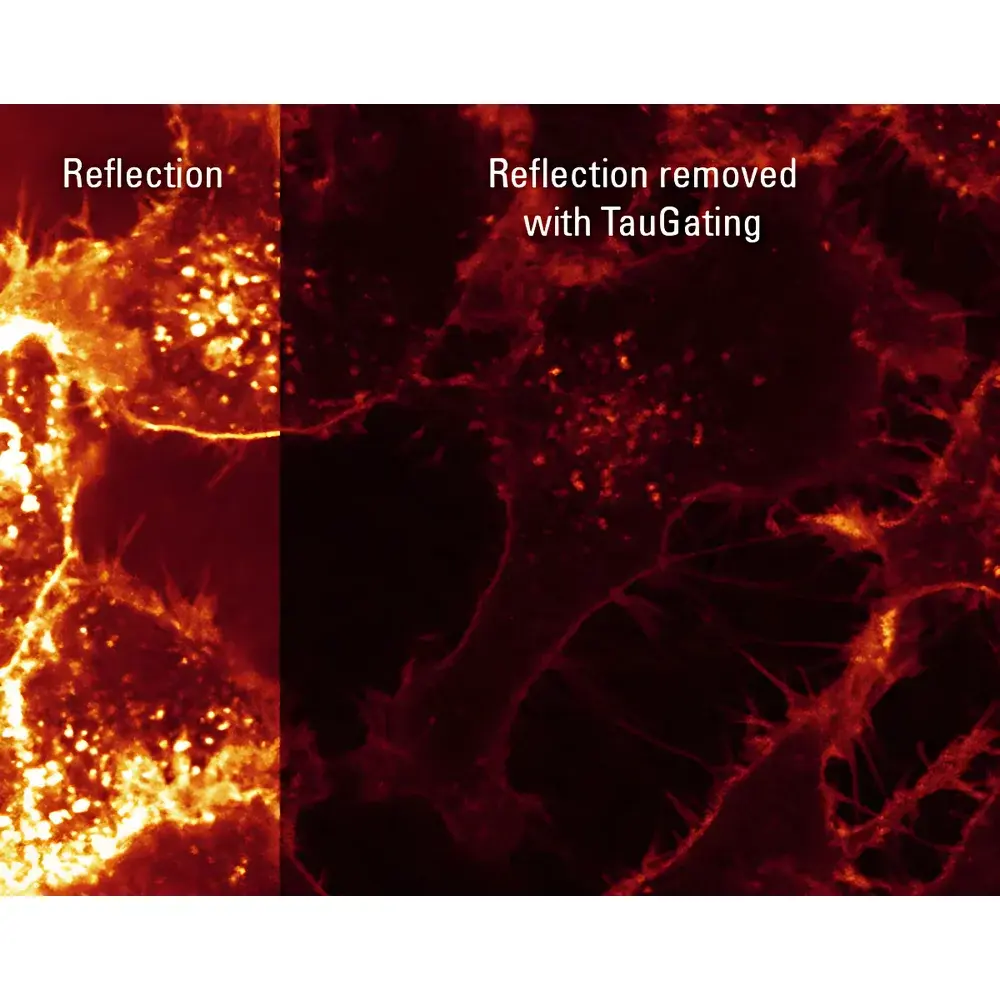
- TauSense Technology Suite: A set of fluorescence lifetime–based imaging tools embedded in the acquisition engine: TauContrast generates real-time functional maps (e.g., metabolic state, pH, ion concentration); TauGating suppresses autofluorescence or long-lifetime background; TauSeparation resolves spectrally overlapping fluorophores via lifetime unmixing; TauInteraction quantifies molecular proximity and interaction kinetics without FRET calibration.
- Aivia-Powered Autonomous Acquisition: Integrates deep learning–based object detection directly into the microscope control layer. The rare-event detection workflow identifies and records biologically relevant structures (e.g., mitotic figures, synaptic puncta, rare immune cells) with ≥90% sensitivity, reducing acquisition time by up to 70% and minimizing storage overhead without compromising statistical rigor.
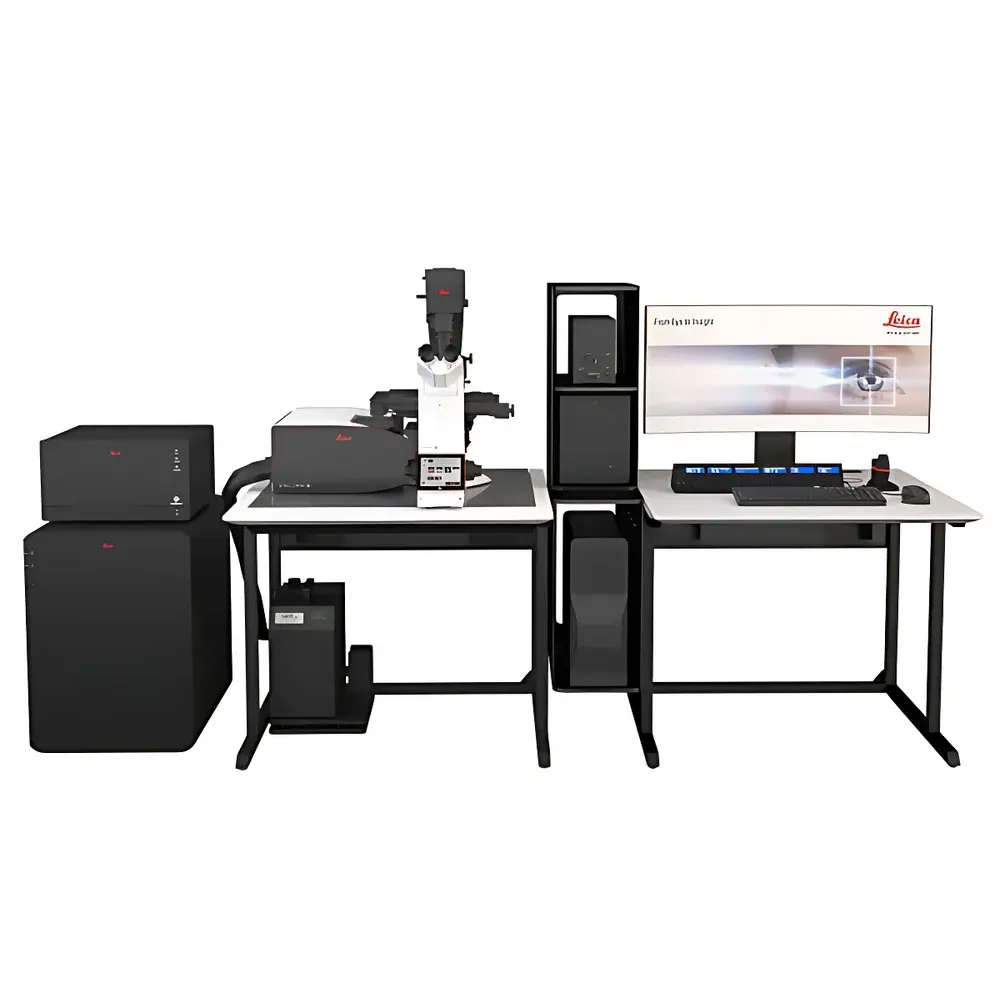
- Modular Expansion Architecture: STELLARIS 8 supports native coupling with Leica’s full ecosystem: DIVE for deep-tissue multiphoton imaging, STED for sub-50 nm resolution, DLS for rapid volumetric imaging of cleared tissues, FALCON for fast FLIM, and CARS for label-free chemical contrast—each module sharing common optics, software framework, and data format compliance.
Sample Compatibility & Compliance
STELLARIS is validated for use with fixed and live specimens—including adherent and suspension mammalian cells, organoids, zebrafish embryos, Drosophila tissues, and plant explants—under physiological conditions (37°C, 5% CO₂, humidity control). All hardware and firmware comply with IEC 61000-6-3 (EMC), IEC 60601-1 (medical electrical equipment safety), and ISO 13485–aligned manufacturing protocols. Data acquisition and storage workflows support audit trails, electronic signatures, and metadata tagging aligned with GLP/GMP and FDA 21 CFR Part 11 requirements when deployed with Aivia Enterprise and Leica LAS X LMS.
Software & Data Management
Acquisition, analysis, and visualization are unified under Leica LAS X software (v4.13+), featuring deterministic acquisition scripting, GPU-accelerated deconvolution, and native HDF5-based data containers compliant with the OME-NGFF standard. Aivia extends this foundation with trainable U-Net models for segmentation, 3D morphometric quantification, and time-resolved colocalization analysis. All raw and processed datasets retain complete provenance: instrument configuration, laser power history, detector gain settings, and TauSense parameter sets are embedded as machine-readable JSON metadata—ensuring reproducibility and FAIR data principles adherence.
Applications
- Quantitative subcellular trafficking studies using dual-channel FLIM-FRET and TauInteraction
- Long-term live-cell metabolic phenotyping via NAD(P)H and FAD lifetime dynamics (TauContrast)
- High-content screening of rare neuronal subtypes in human iPSC-derived cortical spheroids
- Correlative STED–confocal–light-sheet workflows for multiscale structural-functional mapping in brain tissue
- Label-free tissue characterization via CARS–confocal fusion in tumor margin assessment
FAQ
What distinguishes STELLARIS from conventional confocal platforms?
It integrates white-light laser excitation, hybrid detector physics, fluorescence lifetime–driven contrast generation (TauSense), and AI-native acquisition—all within a single, modular hardware/software architecture designed for quantitative, multimodal, and reproducible imaging.
Is STELLARIS compatible with existing Leica microscopes?
Yes—STELLARIS 8 shares optical train interfaces, motorized stages, and software APIs with DMi8 and THUNDER platforms, enabling staged upgrades and shared peripheral modules (e.g., environmental chambers, micromanipulators).
Does TauSense require specialized fluorophores?
No—TauSense operates on intrinsic lifetime signatures of standard fluorescent proteins (e.g., EGFP, mCherry), organic dyes (e.g., Alexa Fluor series), and endogenous molecules (e.g., NADH, collagen), eliminating the need for lifetime-optimized probes.
How is data integrity maintained during AI-assisted acquisition?
Aivia’s rare-event detection operates in inference-only mode during acquisition; all raw pixel data—including full spectral and temporal traces—is preserved unaltered. The AI model outputs only region-of-interest coordinates and classification confidence scores, logged alongside acquisition metadata.
Can STELLARIS meet regulatory requirements for preclinical imaging studies?
When configured with LAS X LMS and Aivia Enterprise, the system supports 21 CFR Part 11–compliant user access controls, electronic audit trails, versioned analysis pipelines, and encrypted dataset archiving—validated for use in GLP-compliant toxicology and biodistribution studies.





