
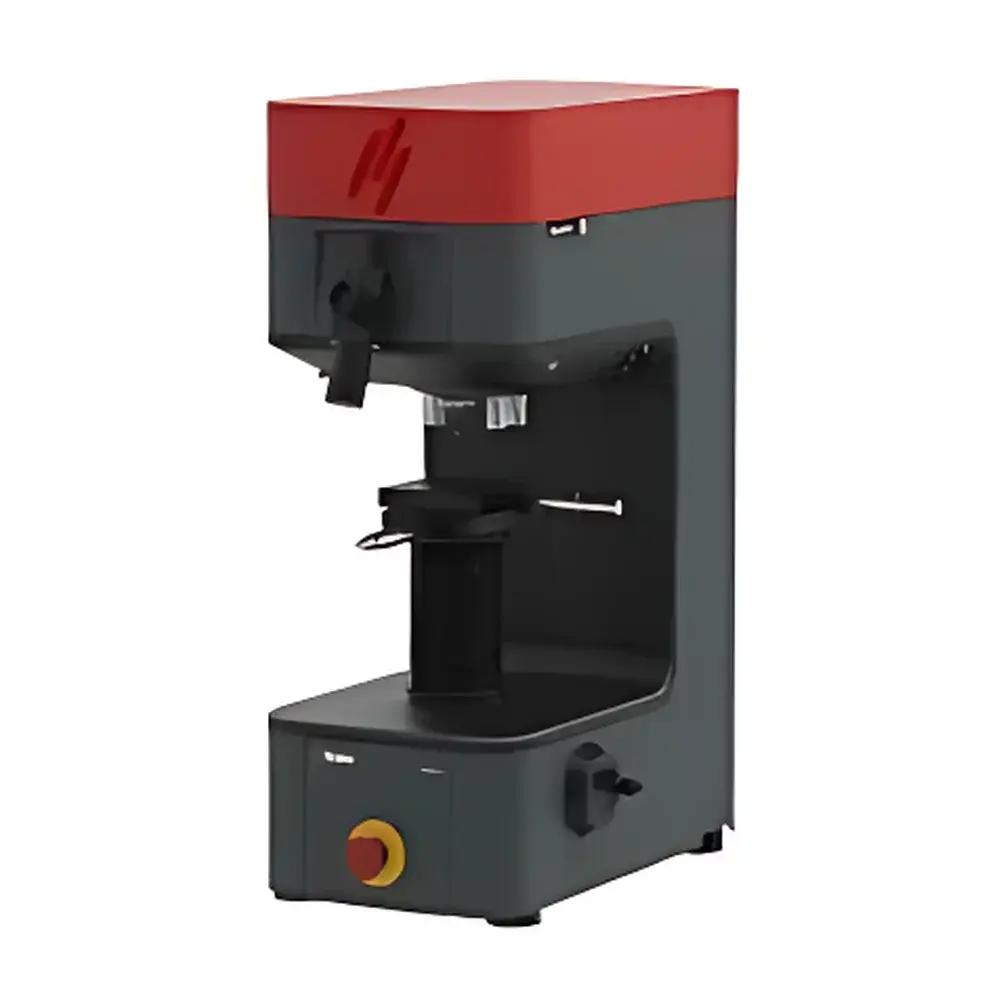
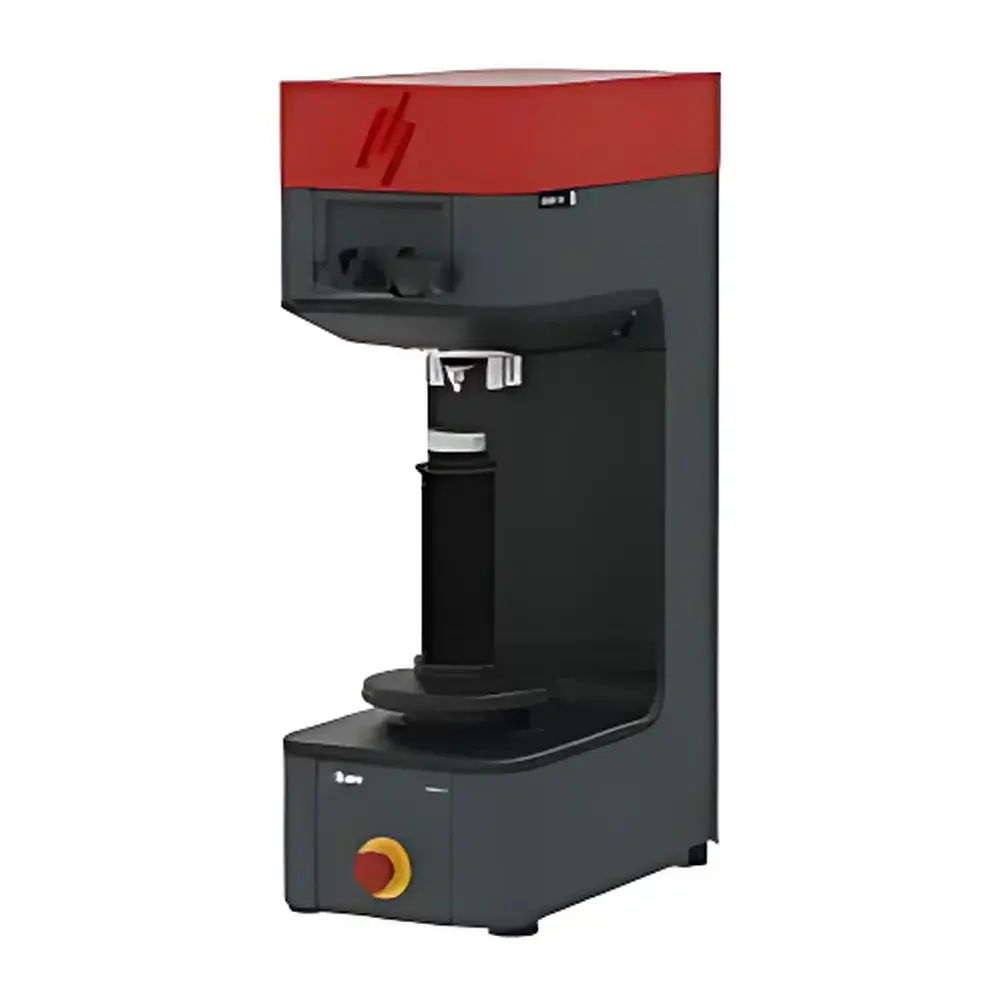
Struers Duramin-4 Manual Micro/Macro Hardness Tester
| Brand | Struers |
|---|---|
| Origin | Denmark |
| Model | Duramin-4 |
| Instrument Type | Microhardness Tester |
| Load Ranges | 0.0098–19.6 N (10 gf–2 kgf) and 9.81–613.1 N (1 kgf–62.5 kgf) |
| Test Height Range | 0–200 mm (M1), 0–400 mm (M2) |
| Measurement Method | Eyepiece-based manual indentation evaluation |
| Turret | Motorized 6-position |
| Stage | Manual XY stage (90 mm × 90 mm travel, 25 mm × 25 mm scratch area), manual Z-axis with micrometer adjustment |
| Display | 8-inch touchscreen interface |
| Compliance | Designed to meet ASTM E384, ISO 6507-1, ISO 6506-1, and EN ISO 2039-1 requirements for micro- and macro-hardness testing |
Overview
The Struers Duramin-4 is a manually operated micro/macro hardness tester engineered for precision, repeatability, and operational simplicity in both laboratory and industrial production environments. Based on the fundamental principles of static indentation hardness measurement—where a geometrically defined indenter (diamond pyramid for Vickers/Knoop, hardened steel or tungsten carbide ball for Brinell) is applied under controlled load for a specified dwell time—the Duramin-4 delivers traceable, standards-compliant hardness values across three major scales: Vickers (HV), Knoop (HK), and Brinell (HBW). Its dual-load architecture enables seamless transition between microhardness (10 gf–2 kgf) and macrohardness (1 kgf–62.5 kgf) regimes without mechanical recalibration. The system employs high-stability load cells—rather than traditional dead-weight mechanisms—to ensure linearity, hysteresis control, and long-term drift resistance across the full force range. This sensor-based loading system complies with ISO 14644-1 cleanliness class recommendations for metrology-grade instrumentation and supports GLP/GMP-aligned documentation workflows.
Key Features
- Motorized 6-position turret for rapid, repeatable indenter and objective lens switching—minimizing operator-induced variability during multi-scale testing.
- Manual XY stage with 90 mm × 90 mm travel and fine 25 mm × 25 mm scratch zone; Z-axis controlled via calibrated micrometer for precise focus and depth positioning.
- Integrated 8-inch resistive touchscreen display with intuitive icon-driven interface—designed for glove-compatible operation and resistant to dust, oil, and thermal fluctuations typical in workshop settings.
- Two standardized configurations: Duramin-4 M1 (microhardness optimized, 0.0098–19.6 N, max test height 200 mm) and Duramin-4 M2 (macrohardness capable, 9.81–613.1 N, max test height 400 mm).
- Optical path configured for direct eyepiece-based indentation measurement—eliminating reliance on digital image analysis software while maintaining ±0.5 µm measurement resolution per scale division.
- Rugged cast-aluminum frame with vibration-damped base plate, compliant with ISO 14644-1 Class 8 cleanroom ambient tolerance and suitable for integration into QC bays adjacent to machining or heat-treatment lines.
Sample Compatibility & Compliance
The Duramin-4 accommodates a broad spectrum of metallurgical, ceramic, and polymer specimens—including case-hardened steels, sintered carbides, thin coatings (<5 µm), and composite laminates—provided surface preparation meets ASTM E3-22 or ISO 1463 requirements (i.e., flatness ≤ 0.1 µm, roughness Ra < 0.05 µm for microhardness). Specimen height flexibility (up to 400 mm for M2) supports large forgings, turbine blades, and welded joints. All hardness measurements adhere to internationally recognized test standards: ASTM E384 (microindentation), ASTM E10 (Brinell), ISO 6507-1 (Vickers), ISO 6506-1 (Brinell), and ISO 6504-1 (Knoop). The instrument’s mechanical design and load-cell calibration protocol are fully compatible with internal audit requirements under ISO/IEC 17025 and support traceability to national metrology institutes (e.g., DTU Metrology, Denmark).
Software & Data Management
While the Duramin-4 operates without mandatory software dependency—enabling standalone use in regulated environments where IT validation overhead is prohibitive—it supports optional Struers Hardness Suite™ connectivity for data export (CSV, PDF, XML) and basic statistical reporting (mean, SD, CV%, min/max, histogram). When integrated, the suite enforces audit-trail functionality per FDA 21 CFR Part 11 requirements—including user authentication, electronic signatures, and immutable timestamped records of all test parameters, operator IDs, and result modifications. Raw measurement data remains stored locally on the device’s embedded flash memory (16 GB), with automatic backup to USB media upon session completion. No cloud synchronization or remote telemetry is enabled by default—ensuring full data sovereignty.
Applications
- Quality control of carburized, nitrided, or induction-hardened case depths in automotive transmission components.
- Verification of coating adhesion integrity and substrate hardness gradients in PVD/CVD-coated cutting tools.
- Microstructural hardness mapping of weld HAZ (heat-affected zones) in pressure vessel steels per ASME BPVC Section IX.
- Batch verification of sintered tungsten carbide grades used in mining and drilling inserts.
- Research-grade hardness profiling across grain boundaries in additively manufactured Inconel 718 and Ti-6Al-4V alloys.
- Teaching laboratories requiring ISO/ASTM-compliant hardness methodology training without automation complexity.
FAQ
Does the Duramin-4 require external PC connectivity to perform hardness measurements?
No. All core functions—including load application, dwell timing, indentation observation, and manual calculation—are fully self-contained within the instrument’s embedded controller and touchscreen interface.
Can the same indenter be used for both Vickers and Knoop testing?
Yes. The standard diamond pyramid indenter (136° included angle) is physically identical for both Vickers and Knoop tests; differentiation is achieved solely through applied load magnitude and dwell time per ASTM E384.
Is calibration certification included with delivery?
Each unit ships with a factory-issued calibration certificate traceable to DTU Metrology (Denmark), covering load cell linearity (±0.5% FS), indenter geometry verification (certified by SEM metrology), and optical magnification accuracy.
What maintenance intervals are recommended for routine operation?
Struers recommends quarterly verification of load cell zero stability and annual recalibration of the entire measurement chain—including indenter alignment, stage orthogonality, and optical magnification—per ISO 6507-2 Annex A guidelines.
Is the Duramin-4 compatible with automated sample changers or robotic handling systems?
Not natively. As a manually operated platform, it lacks I/O ports or API interfaces for external automation integration. For high-throughput automated workflows, Struers recommends the DuraScan series or Qness 300 models.
Related Products



