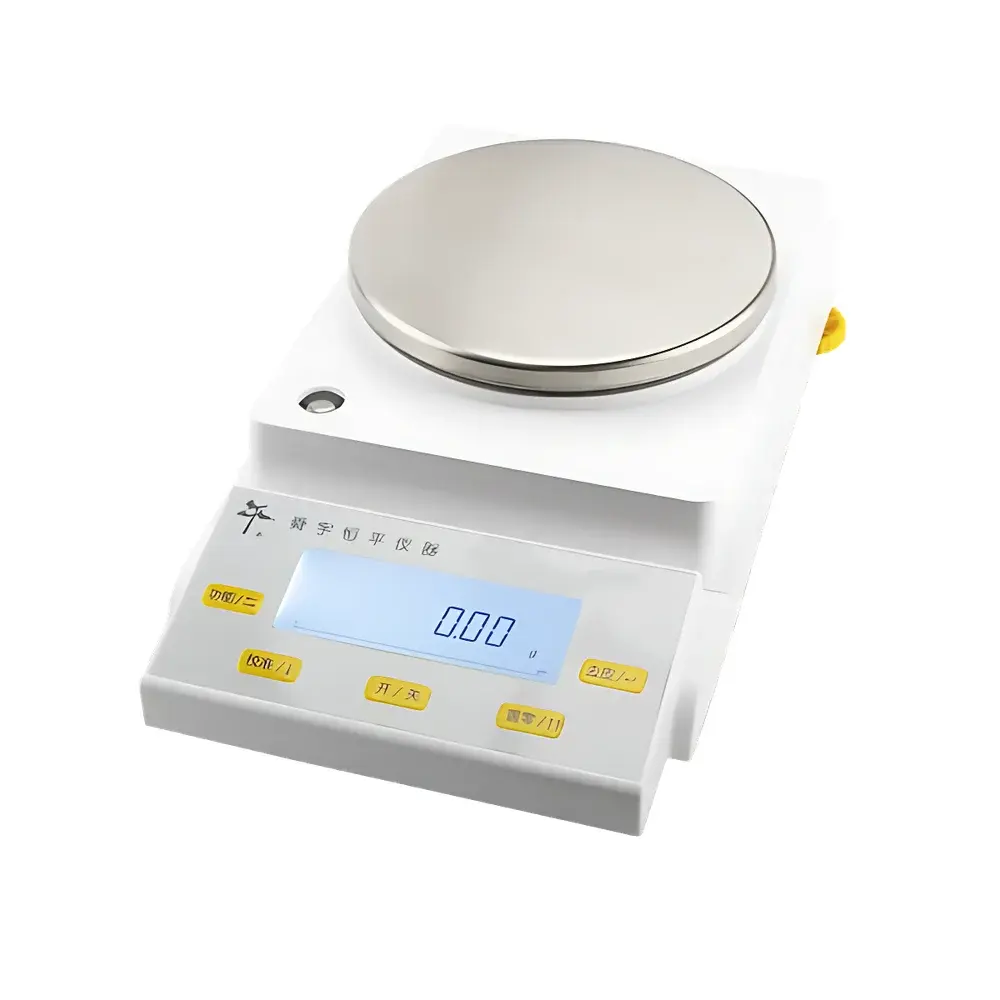
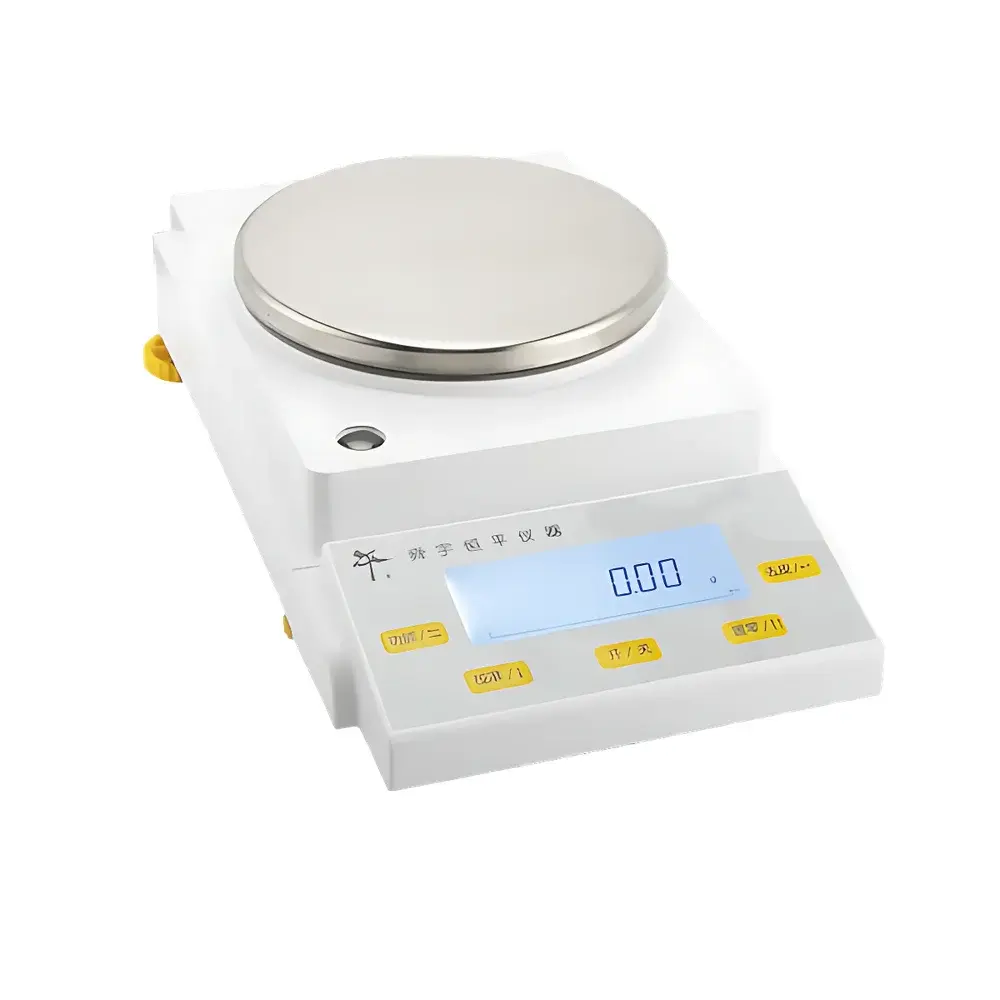
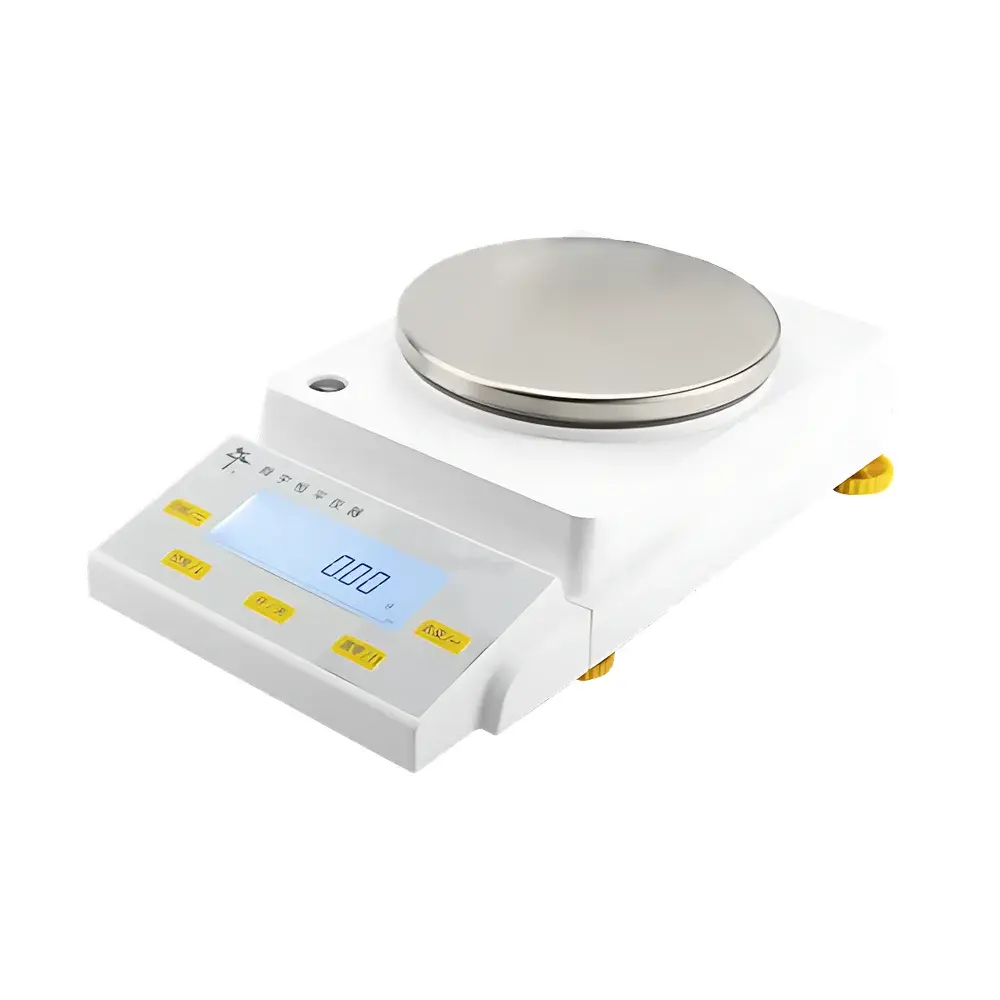
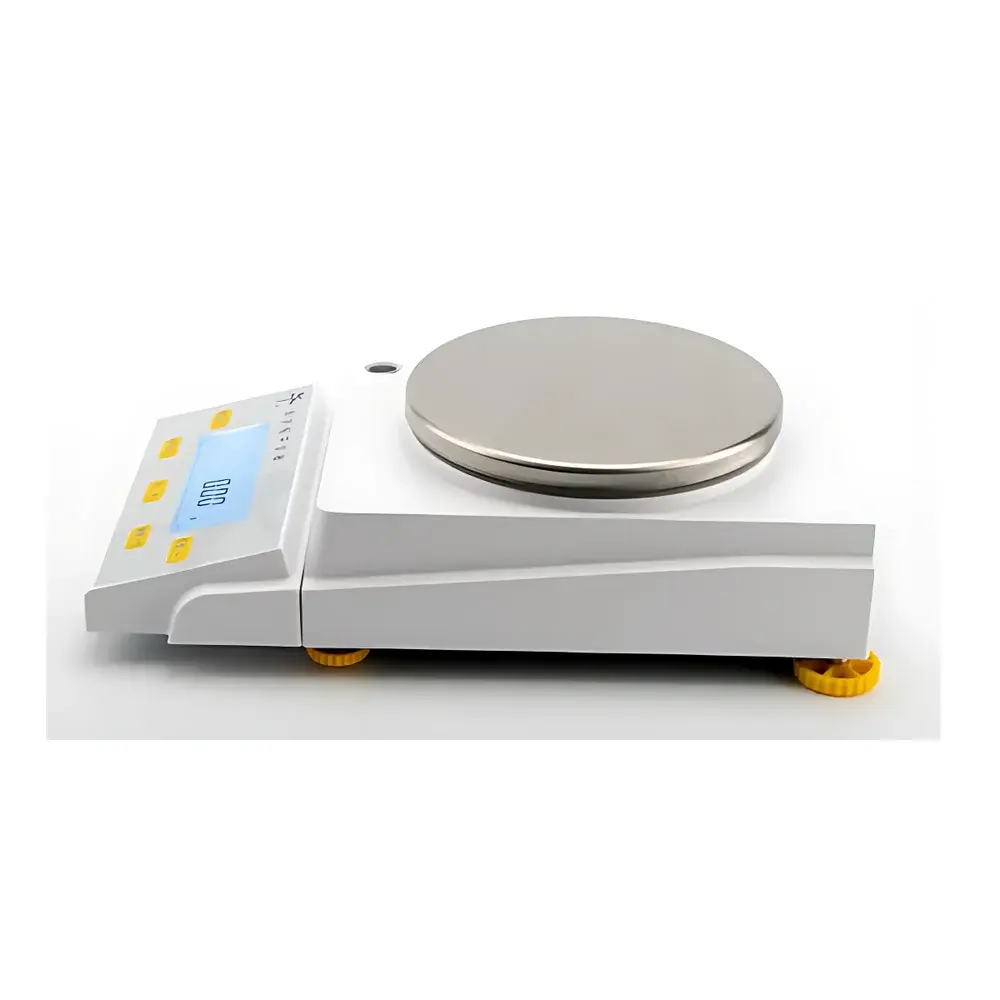
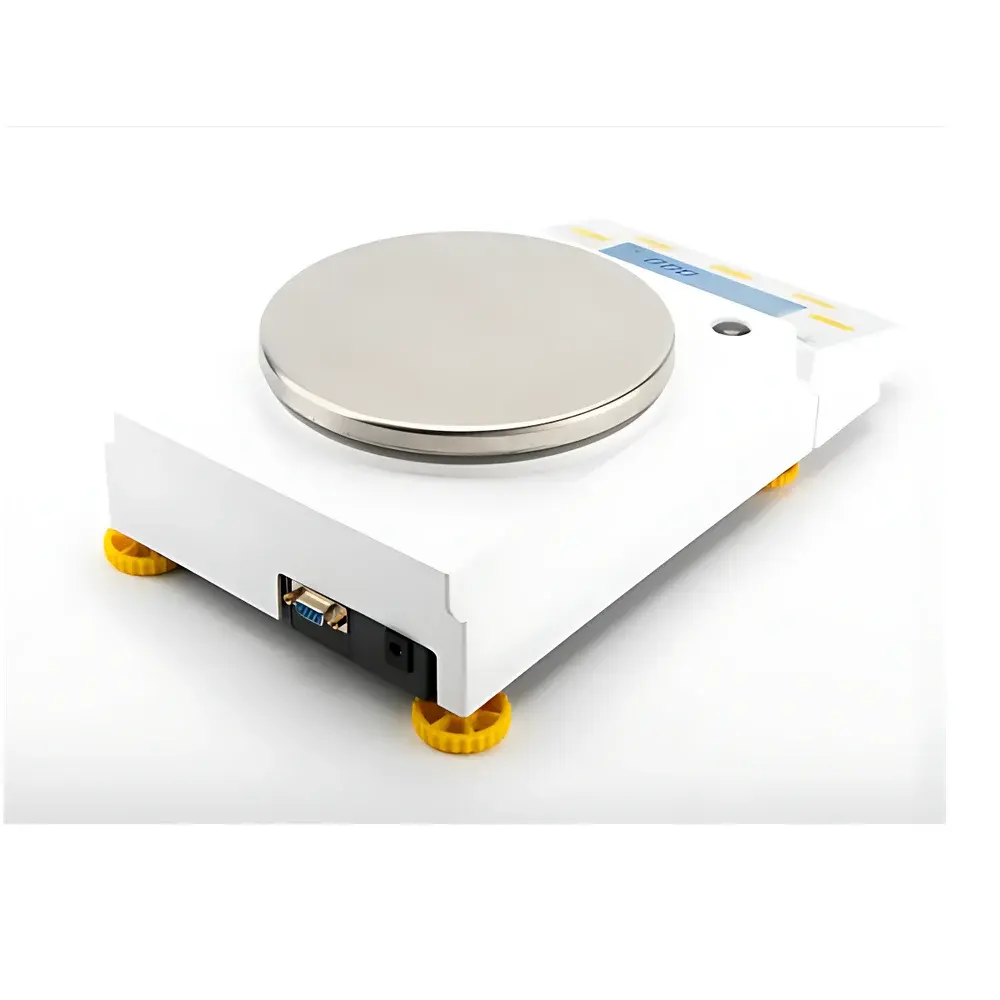
SUNNY HENGPING JA12002 Precision Balance
| Brand | SUNNY HENGPING INSTRUMENT |
|---|---|
| Origin | Shanghai, China |
| Manufacturer Type | Direct Manufacturer |
| Instrument Type | Precision Balance |
| Maximum Capacity | 5000 g |
| Readability | 0.01 g |
| Repeatability | ±0.01 g |
| Linearity | ±0.02 g |
| Calibration Method | External |
| Pan Diameter | Φ180 mm |
| Interface | RS232 |
| Power Supply | 220 V / 50 Hz |
| Operating Temperature | 5–40 °C |
| Relative Humidity | ≤85% RH |
| Dimensions (W×D×H) | 270 × 195 × 80 mm |
| Net Weight | 2.9 kg |
| Gross Weight | 4.0 kg |
| Packaging Dimensions | 450 × 310 × 220 mm |
Overview
The SUNNY HENGPING JA12002 Precision Balance is an entry-level analytical-grade weighing instrument engineered for reproducible mass determination in routine laboratory, quality control, and educational environments. Designed around electromagnetic force compensation (EMFC) transduction technology, it delivers stable, drift-compensated measurements under variable ambient conditions. Its 5000 g maximum capacity and 0.01 g readability meet the performance requirements of ISO/IEC 17025-compliant testing laboratories for non-critical mass verification tasks—including sample preparation, formulation checks, and bulk material dosing—where sub-10 mg resolution is sufficient but full analytical balance certification is not mandated. The unit operates with built-in temperature compensation algorithms and supports dual power input (AC mains or optional DC adapter), ensuring operational continuity across diverse facility infrastructures.
Key Features
- Five-button intuitive interface with dedicated function keys for tare, unit conversion, counting, and print/output control—minimizing operator training time and reducing input error risk.
- Three configurable data output modes: immediate transmission upon stabilization, manual trigger, or programmable auto-output at user-defined intervals—enabling seamless integration into LIMS or custom QC workflows.
- Robust mechanical architecture featuring reinforced stainless-steel weighing pan (Φ180 mm) and shock-absorbing load cell housing, certified to withstand repeated overloads up to 150% of rated capacity without recalibration.
- Full-range tare functionality supporting negative net weight display down to –5000 g, essential for sequential multi-step additions in compounding or gravimetric titration protocols.
- Integrated RS232 serial interface compliant with EIA/TIA-232-F standards, supporting ASCII-based command sets for remote parameter configuration, real-time weight streaming, and external printer or PC logging.
- Multi-unit conversion capability (g, oz, ct, dwt, grain, lb, kg) with automatic scaling—eliminating manual calculation errors during cross-system documentation.
- Counting mode with automatic average-piece-weight calculation and statistical validation (standard deviation reporting), validated per ASTM E177 for repeatability in discrete-part inventory management.
Sample Compatibility & Compliance
The JA12002 accommodates a wide range of sample forms—from powders and granules to small solid components—within its open-top chamber design. Its 180 mm diameter pan provides adequate surface area for standard weighing vessels (e.g., beakers up to 250 mL, crucibles, weigh boats). The balance complies with national metrological verification regulation JJG 1036–2008 (People’s Republic of China) for Class II precision balances and satisfies general-purpose accuracy criteria outlined in ISO 9001:2015 clause 7.1.5 (monitoring and measuring resources). While not certified to OIML R76 or NIST Handbook 44 for legal-for-trade applications, it meets internal calibration traceability requirements when used with accredited external weights (Class M2 or better). Environmental operating limits (5–40 °C, ≤85% RH non-condensing) align with typical ISO Class 8 cleanroom or general lab HVAC specifications.
Software & Data Management
Data acquisition is managed via native ASCII protocol over RS232, compatible with common laboratory software platforms including LabX (via third-party driver), Excel-based macros, and custom Python/Node.js serial listeners. All weight records include timestamp (system-generated upon output), stability flag (‘S’ for stable, ‘U’ for unstable), and unit identifier. The device supports GLP-relevant metadata tagging through host-side scripting—enabling audit-ready logs with operator ID, sample ID, and environmental condition annotations. Firmware does not store historical data internally; persistent storage is implemented externally per 21 CFR Part 11 principles when paired with validated software that enforces electronic signatures and audit trails.
Applications
- Raw material receipt inspection in pharmaceutical excipient handling and food ingredient batching.
- Gravimetric preparation of standard solutions for UV-Vis or ICP-OES calibration (where ±0.01 g uncertainty contributes <0.2% relative error at 5 g mass).
- QC release testing of packaged goods (e.g., tablet blister packs, sachets) requiring gross/net weight verification per USP <41> guidelines.
- Teaching laboratories performing stoichiometric experiments, density determinations, or moisture content analysis by loss-on-drying.
- Manufacturing line support for component counting, fill-level validation, and batch reconciliation prior to packaging.
FAQ
Is the JA12002 suitable for ISO/IEC 17025 accredited testing?
It may be used for non-critical weighing tasks within an accredited scope, provided calibration is performed using traceable standards and uncertainty budgets account for its ±0.01 g repeatability and ±0.02 g linearity.
Does it support internal calibration?
No—calibration is external only; users must apply certified weights meeting M2 or better tolerance per OIML R111.
Can the RS232 interface connect directly to a USB port?
Yes, via a certified USB-to-RS232 converter with proper null-modem wiring and driver support on Windows/macOS/Linux.
What is the warm-up time required before first use?
Minimum 30 minutes at stable ambient temperature to ensure thermal equilibrium of the EMFC sensor and internal reference circuitry.
Is the balance protected against electrostatic discharge (ESD)?
It includes basic ESD mitigation in the load cell shielding and grounding path, but operation in high-static environments requires supplemental ionization or humidity control per ANSI/ESD S20.20.