
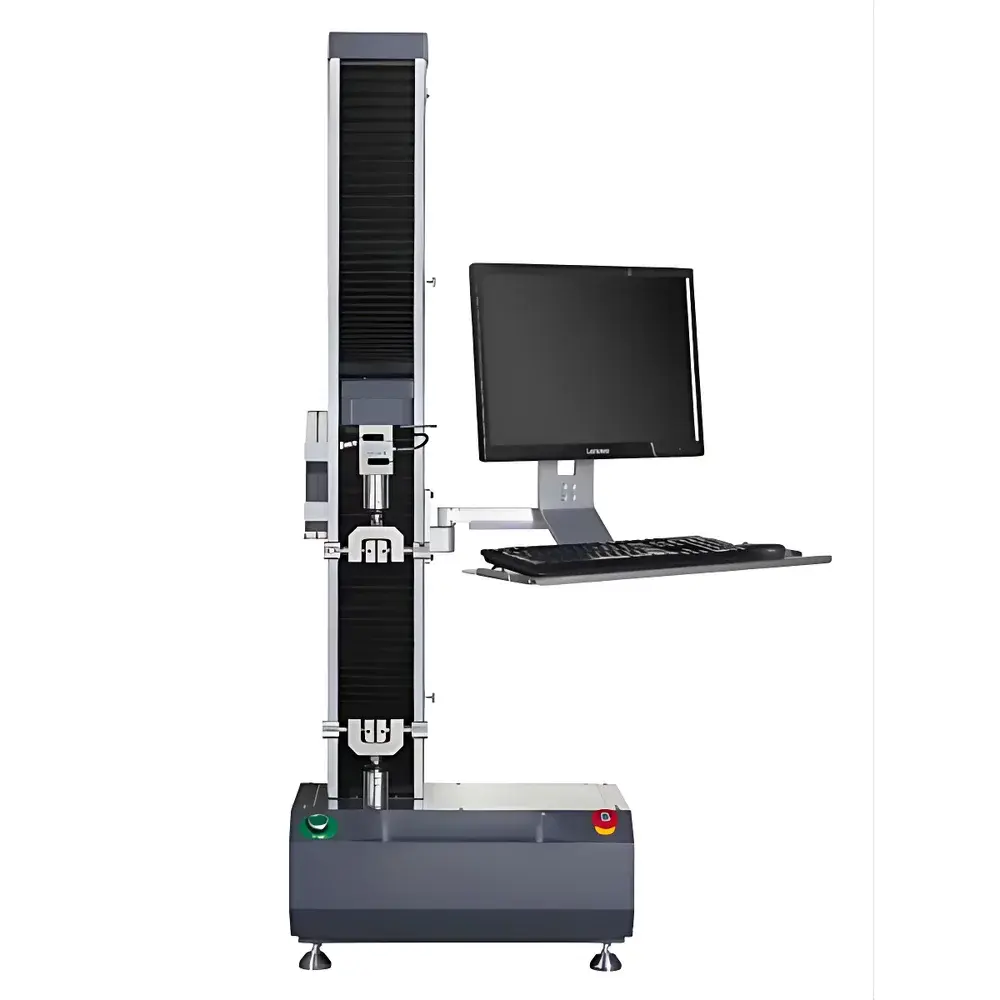
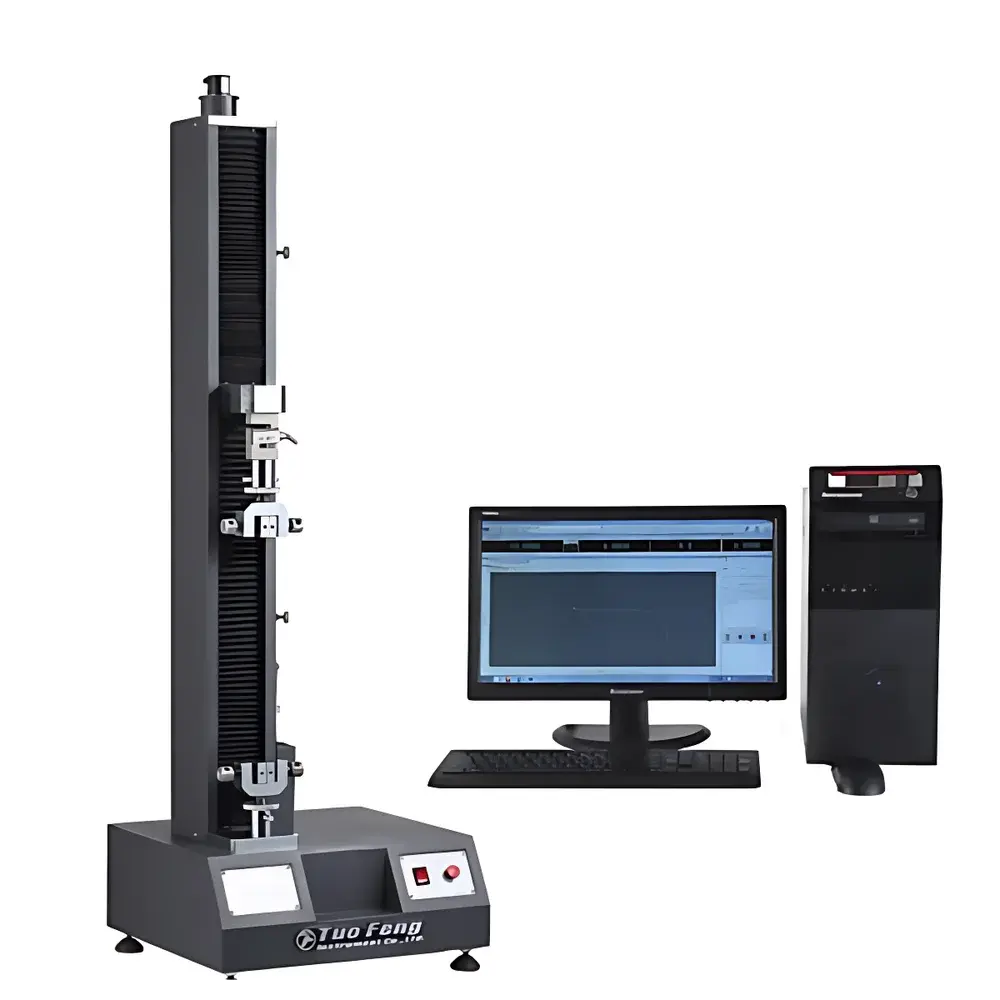
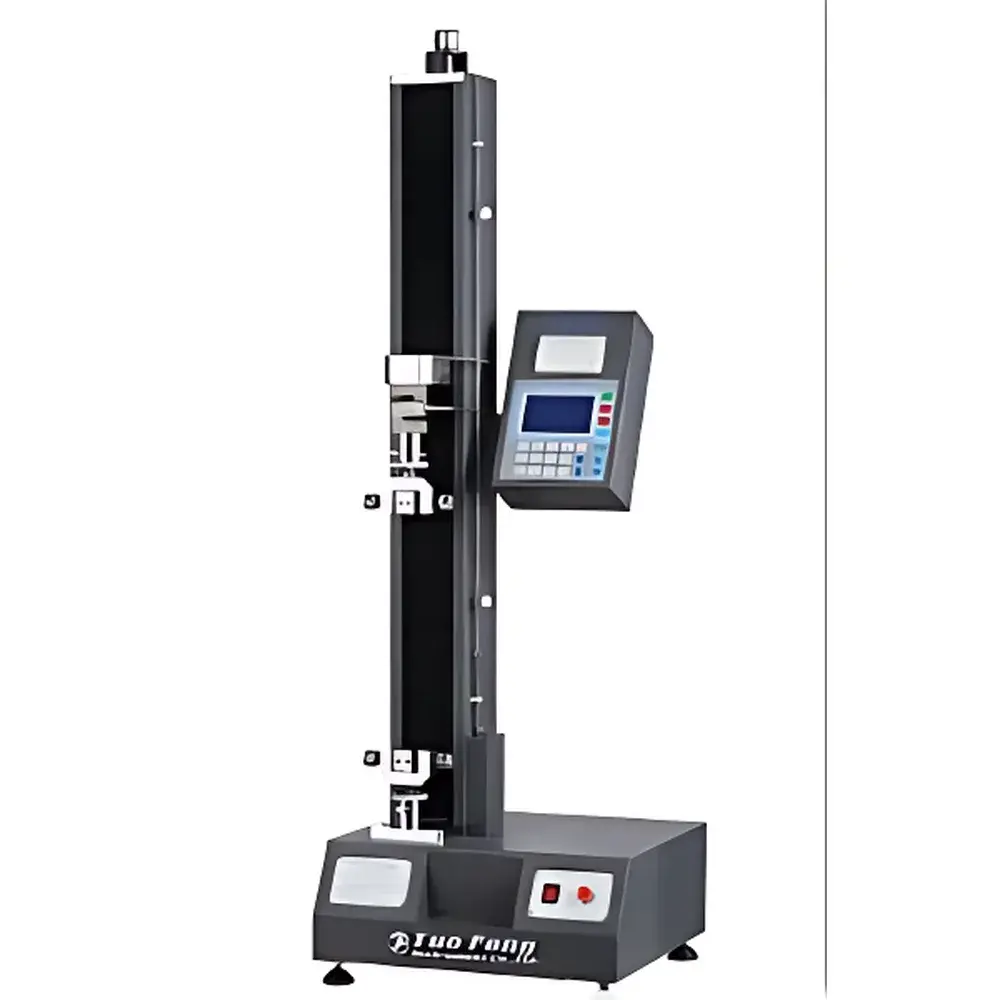
Tuofeng TFL-26S Computer-Controlled Electronic Tensile Testing Machine
| Brand | Tuofeng |
|---|---|
| Origin | Shanghai, China |
| Manufacturer Type | Direct Manufacturer |
| Product Category | Domestic |
| Model | TFL-26S |
| Price Range | USD 1,400 – 2,800 |
| Instrument Type | Electronic Tensile Testing Machine |
| Maximum Test Load | 5 kN |
| Force Measurement Range | 0.4%–100% of Full Scale (FS) |
| Force Accuracy | ±0.5% of reading |
| Crosshead Travel | 700 mm |
| Displacement Resolution | ±0.5% of reading |
Overview
The Tuofeng TFL-26S is a precision-engineered computer-controlled electronic tensile testing machine designed for static mechanical property evaluation of low-to-medium strength materials. It operates on the fundamental principle of uniaxial force application—applying controlled tensile, peel, tear, or shear loads to specimens while continuously measuring load and displacement in real time. The system conforms to standardized test methodologies defined in ISO 527, ASTM D638, ASTM D882, GB/T 1040, GB/T 2790, GB/T 2791, and JIS K7127, enabling traceable, repeatable, and auditable mechanical characterization across R&D, QC, and regulatory compliance workflows. Its robust dual-column frame, servo-controlled AC motor drive, and high-resolution encoder-based displacement feedback architecture ensure stable loading rates from 0.01 to 500 mm/min—fully adjustable without gear shifting—making it suitable for both brittle polymer films (e.g., PE, PP, PET) and ductile metallic foils, wires, and composite laminates.
Key Features
- High-fidelity load measurement via precision S-type load cell with 0.5-class accuracy (±0.5% of reading), calibrated across 0.4–100% FS—no range switching required.
- Fixed 700 mm crosshead travel with optional height extension; equipped with electronic limit switches and emergency stop circuitry compliant with IEC 60204-1 safety standards.
- Three-speed programmable crosshead movement (fast/medium/slow) with manual jog control and automatic return-to-start function post-test.
- Overload protection triggers at ≥110% of full-scale capacity, halting motion and preserving sensor integrity.
- Integrated optical encoder for displacement sensing with resolution better than ±0.5% of reading—traceable to NIST-traceable calibration protocols.
- Modular fixture interface supporting standardized grips (pneumatic, wedge, roller, peel blocks) and custom-designed holders for film strips, thin foils, adhesive tapes, and wire terminals.
Sample Compatibility & Compliance
The TFL-26S is optimized for specimens with thicknesses ranging from 12 µm to 2 mm and widths up to 100 mm—ideal for polyethylene (PE) films, BOPP packaging layers, aluminum foil laminates, textile yarns, medical tubing, and flexible printed circuit substrates. All test routines support dual-unit reporting (SI and imperial), automatic calculation of tensile strength (MPa), elongation at break (%), Young’s modulus (MPa), peel adhesion (N/25 mm), and tear resistance (kN/m). Data acquisition and report generation comply with GLP documentation requirements, including timestamped audit trails, user authentication logs, and electronic signature readiness per FDA 21 CFR Part 11 when deployed with validated software configuration.
Software & Data Management
The Windows-based TensileTest Pro v4.x software provides multi-mode control—including constant-rate-of-extension (CRE), constant-load hold, and displacement-targeted termination—and supports real-time plotting of force–time, force–displacement, stress–strain, and extension–time curves. Users may toggle between Simplified Chinese, Traditional Chinese, and English UI languages. All raw data are stored in encrypted .tdb binary format with metadata embedding (operator ID, sample ID, standard reference, environmental conditions). Export options include CSV, PDF, and XML for LIMS integration. Software modules support statistical batch analysis (max/min/mean/stdev), curve overlay comparison, and customizable report templates aligned with ISO/IEC 17025 laboratory accreditation criteria. Remote firmware updates and protocol library expansions are delivered free of charge for the lifetime of the instrument.
Applications
- Quantification of tensile properties of cast and blown PE films used in food packaging, agricultural mulch, and industrial liners.
- Evaluation of seal strength and peel resistance in heat-sealed pouches per ASTM F88 and ISO 11607-2.
- Mechanical validation of metallized PET/PE laminates under accelerated aging conditions.
- Quality assurance of medical-grade adhesive tapes and transdermal patch backings per USP .
- Interfacial bond strength assessment of coated aluminum foils in pharmaceutical blister packaging.
- Routine verification of wire insulation tensile integrity per UL 1581 and IEC 60811-501.
FAQ
What standards does the TFL-26S support out-of-the-box?
The system includes preloaded test methods for ASTM D882 (thin plastic sheeting), ISO 527-3 (plastics—tensile testing of films), GB/T 1040.3 (Chinese national standard for plastics), and JIS Z 1707 (Japanese standard for packaging films). Custom method templates can be imported via XML.
Can the machine perform creep or stress-relaxation tests?
Yes—when configured with optional closed-loop strain control and extended dwell timing, the TFL-26S supports ISO 899-1 creep and ISO 899-2 stress relaxation protocols with automated data logging at user-defined intervals.
Is third-party calibration certification available?
Tuofeng provides factory calibration certificates traceable to CNAS-accredited laboratories. Optional on-site calibration by ISO/IEC 17025-certified service providers is available upon request.
What is the minimum specimen width the standard grips accommodate?
Standard pneumatic film grips accept specimens as narrow as 5 mm wide; narrower samples (e.g., microfibers) require optional micro-grip kits with 1-mm jaw faces.
Does the software meet FDA 21 CFR Part 11 requirements?
Out-of-the-box functionality complies with electronic record and signature controls when deployed with password-protected user roles, audit trail activation, and digital certificate integration—subject to site-specific validation by the end user’s QA team.
Related Products



