
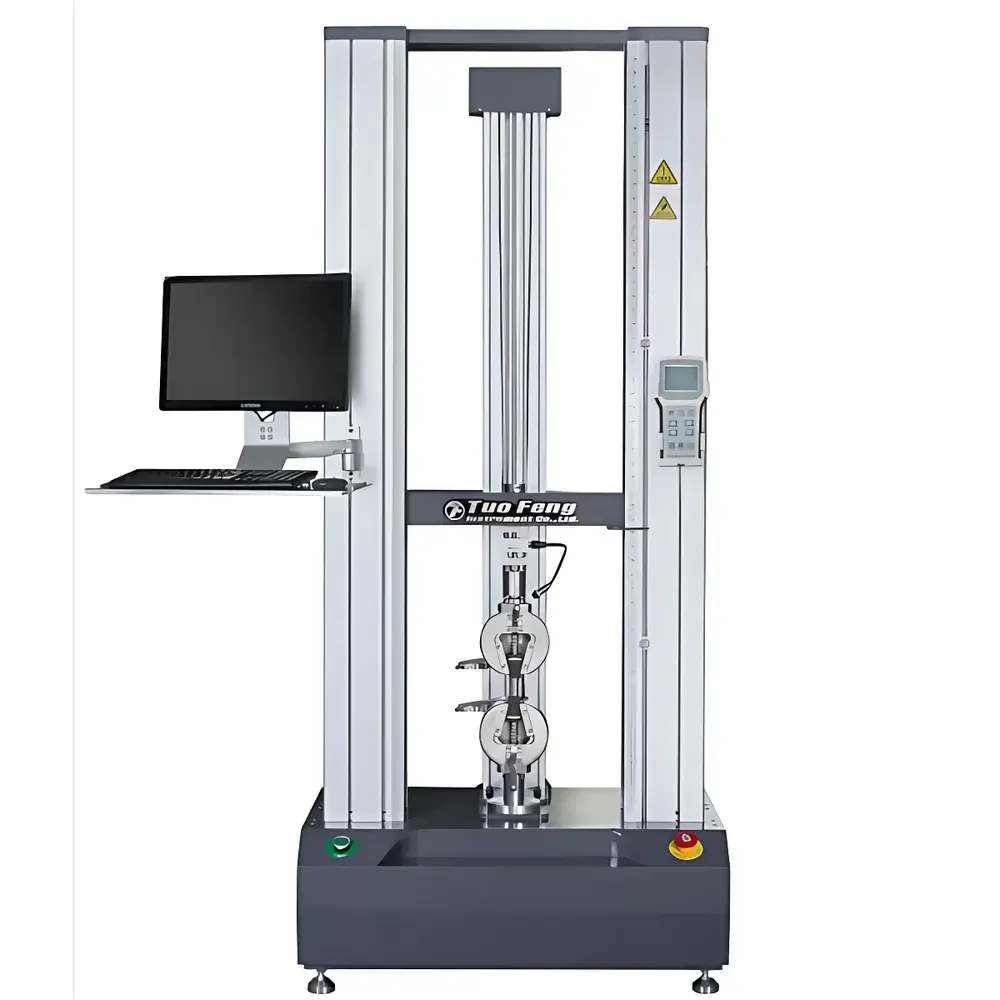
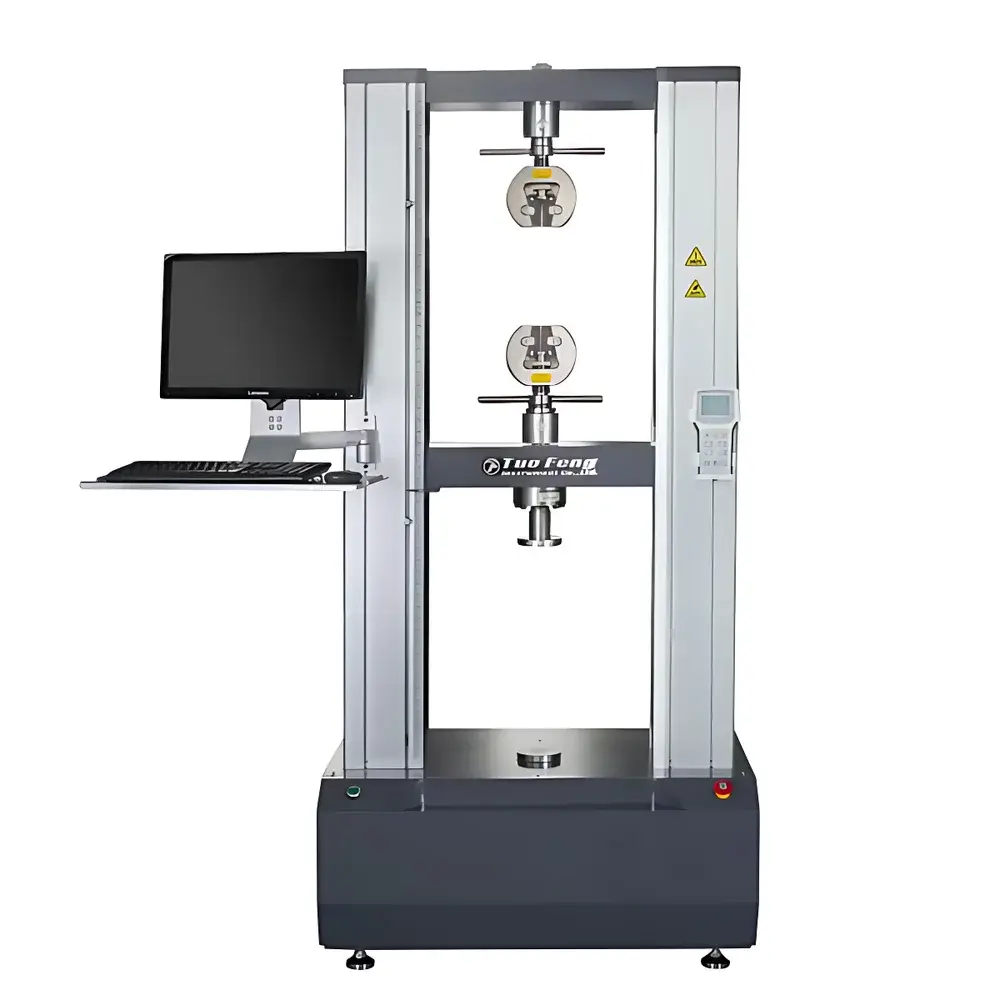
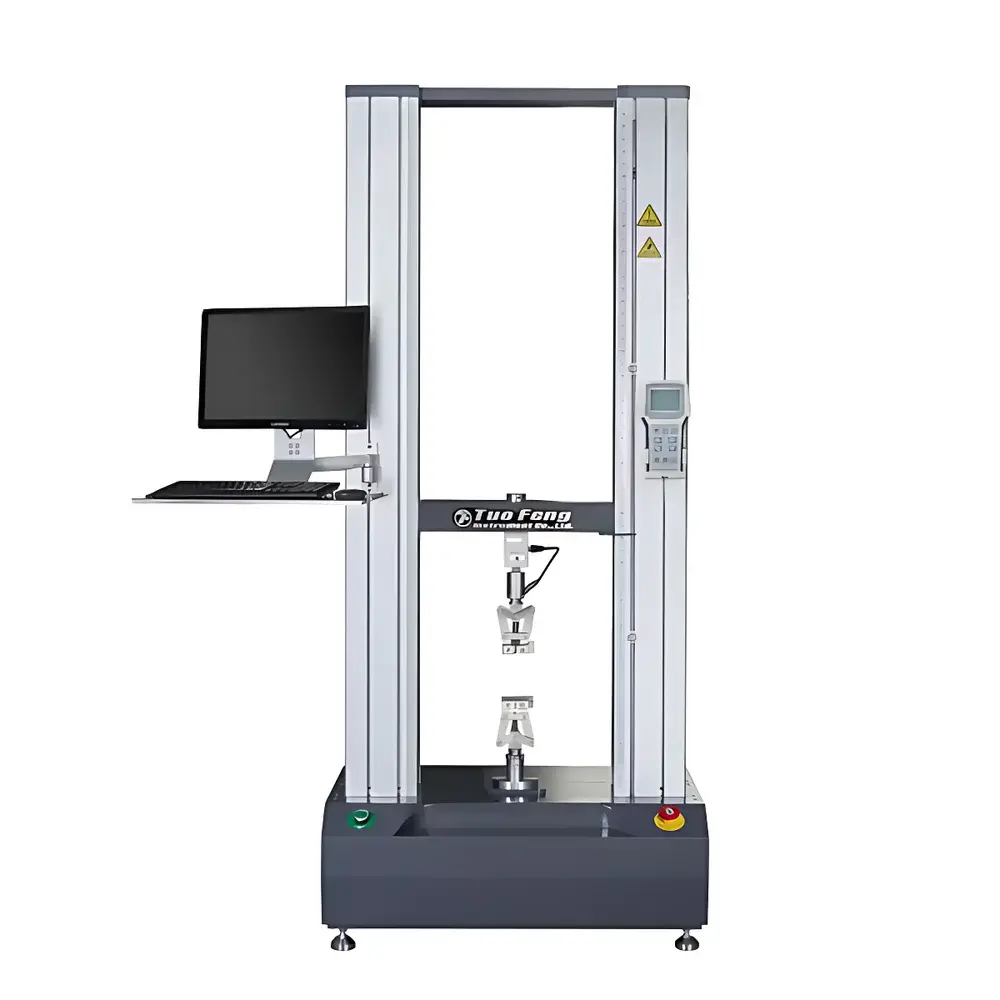
Tuofeng TFW-162 Microcomputer-Controlled Electronic Universal Testing Machine
| Brand | Tuofeng |
|---|---|
| Origin | Shanghai, China |
| Manufacturer Type | Direct Manufacturer |
| Instrument Type | Electronic Universal Testing Machine |
| Model | TFW-162 |
| Compliance | GB/T 16491–2008, JJG 475–2008 |
| Max Load Capacity | 160 kN (derived from TFW-162 nomenclature and series context: TFW-100S = 100 kN, TFW-200S = 200 kN) |
| Accuracy Class | 0.5 |
| Effective Force Range | 0.2%–100% of full scale |
| Force Measurement Accuracy | ±0.005% of reading |
| Force Resolution | 1 part in ±500,000 full-scale counts (single-range, no auto-ranging) |
| Drive System | Imported servo motor with precision worm-gear reducer |
| Lead Screw | High-precision preloaded ball screw |
| Effective Test Width | 600 mm (customizable up to 800 mm) |
| Stroke | 800 mm (extendable) |
| Speed Range | 0.001–500 mm/min (infinitely variable, closed-loop controlled) |
| Displacement Measurement | Optical encoder |
| Displacement Accuracy | ±0.005% of reading |
| Strain Measurement | Optional extensometer (clip-on or video-based) or large-deformation digital extensometer |
| Strain Accuracy | ±0.005% of reading |
| Safety Protection | Dual electronic limit switches, emergency stop button, overload cutoff (>110% FS), mechanical buffer |
| Crosshead Control | Dual-speed motorized up/down (fast/slow), jog mode, automatic return-to-start post-test |
| Overload Protection | Automatic shutdown at >110% of rated load |
| Fixture Customization | Application-specific grips (tensile, compression, bend, peel, shear, puncture) per ISO 527, ASTM D638/D3039/D7264/D1876, GB/T 2567/1040/1447 |
| Software | Windows-native, multi-language (EN/CN/TC), compliant with FDA 21 CFR Part 11 audit trail & electronic signature requirements (optional configuration), GLP/GMP-ready data management |
Overview
The Tuofeng TFW-162 Microcomputer-Controlled Electronic Universal Testing Machine is a high-precision static mechanical testing system engineered for the quantitative evaluation of tensile, compressive, flexural, shear, peel, tear, and puncture behavior in metallic, polymeric, composite, ceramic, and elastomeric materials. It operates on the fundamental principle of controlled displacement or load application via a closed-loop servo-driven electromechanical actuation system, enabling precise force–displacement–time data acquisition under standardized test conditions. Designed to meet international metrological and regulatory expectations, the TFW-162 conforms to GB/T 16491–2008 (Chinese national standard for electronic UTM performance), JJG 475–2008 (verification regulation), and supports full traceability to ISO/IEC 17025–compliant calibration protocols. Its modular architecture allows seamless integration into quality control laboratories, R&D centers, and third-party certification facilities requiring repeatable, auditable, and standards-aligned mechanical property characterization.
Key Features
- 0.5-class accuracy certified force measurement system with ±0.005% reading uncertainty across the full 0.2–100% FS range, eliminating range-switching artifacts
- Single-range, high-resolution force transducer (1:500,000 internal count resolution) ensuring consistent sensitivity from sub-newton to 160 kN loads
- Precision preloaded ball screw drive with imported servo motor and worm-gear reduction—optimized for low noise, zero backlash, and long-term positional stability
- Dual-speed crosshead actuation (jog/fast/slow modes) with programmable return-to-origin functionality for high-throughput batch testing
- Integrated safety triad: hardware-based emergency stop, dual electronic end-limit detection, and real-time overload cutoff (>110% FS)
- Modular fixture interface supporting ASTM, ISO, GB, DIN, and JIS-compliant grips—including wedge-action tensile clamps, compression platens, 3-/4-point bend fixtures, pneumatic peel jaws, and custom-designed tooling
- Optional strain measurement subsystems: contact extensometers (ASTM E83 Class B-1), non-contact video extensometry (ISO 9513 Class 1), or large-deformation digital tracking
Sample Compatibility & Compliance
The TFW-162 accommodates specimens ranging from thin films (<0.1 mm thickness) to structural metal coupons (up to 60 mm thick), fiber-reinforced laminates, rubber compounds, adhesives, textiles, and biomedical polymers. Its 600 mm effective test width and 800 mm vertical stroke support standard and extended geometry testing per ASTM D638 (tensile plastics), ASTM D3039 (composite tension), ISO 527 (plastics), ISO 6892–1 (metallic tensile), GB/T 228.1 (metal yield/tensile), ASTM D7264 (flexure), ASTM D1876 (peel), and ASTM D624 (tear). All mechanical and software functions are documented for GLP/GMP environments; optional 21 CFR Part 11 compliance includes role-based access control, electronic signatures, and immutable audit trails for all test method definitions, raw data, and report generations.
Software & Data Management
Tuofeng’s proprietary TensilePro™ software (v5.2+) runs natively on Windows 10/11 and delivers ISO 17025-aligned test automation. It supports seven closed-loop control modes: constant rate of extension (CRE), constant rate of loading (CRL), constant stress, constant strain, hold-load, hold-strain, and cyclic ramp-hold sequences. Real-time plotting includes synchronized force–time, stress–strain, displacement–time, and custom user-defined axes. Units are freely convertible (N/kN/lbf, MPa/psi, mm/in, %), and language switching (English, Simplified Chinese, Traditional Chinese) requires no reinstallation. Each test record embeds metadata: operator ID, environmental conditions (optional sensor input), calibration certificate IDs, and version-stamped test method parameters. Data exports comply with ASTM E1434 (ASCII tab-delimited) and ISO 80000–4 (SI unit formatting); raw files are stored in encrypted .TPX binary format with SHA-256 checksum verification. Software updates are provided free of charge for the instrument’s operational lifetime.
Applications
The TFW-162 serves as a primary mechanical characterization platform across regulated and industrial sectors. In aerospace composites labs, it quantifies interlaminar shear strength (ILSS) per ASTM D2344 and compression-after-impact (CAI) per ASTM D7137. Automotive Tier-1 suppliers use it for tensile testing of thermoplastic olefins (TPO), aluminum alloys (AA6061-T6), and battery electrode coatings per ISO 12107. In medical device R&D, it validates suture tensile strength (ISO 10555–1), balloon burst pressure (ISO 10555–4), and hydrogel elongation limits. Construction material labs apply it to cementitious composites (ASTM C109), geotextiles (ASTM D4595), and reinforcing steel (ASTM A615). Powder metallurgy QA teams rely on its compression modulus repeatability for sintered tungsten carbide parts (ISO 2738).
FAQ
What international standards does the TFW-162 support out-of-the-box?
The system ships with preconfigured test methods for ASTM D638, ISO 527, GB/T 1040, ASTM D3039, ISO 6892–1, and ASTM D7264. Additional standards can be loaded via method import or custom scripting.
Is the force sensor calibrated and traceable to national standards?
Yes—each unit includes a factory calibration certificate traceable to CNAS-accredited reference standards (equivalent to NIST/PTB), with optional on-site recalibration services available.
Can the system be integrated into an LIMS or MES environment?
Yes—TensilePro™ supports OPC UA and HL7-compatible data export; RESTful API access is available under enterprise licensing for automated result ingestion.
Does the software meet FDA 21 CFR Part 11 requirements for electronic records?
When configured with audit trail logging, electronic signatures, and role-based permissions, the system satisfies Part 11 requirements for regulated pharmaceutical and medical device testing.
What is the warranty and service coverage?
Standard coverage includes 24 months parts-and-labor warranty, remote diagnostics, and priority response for on-site technical support within 72 business hours in major Asia-Pacific hubs.



