
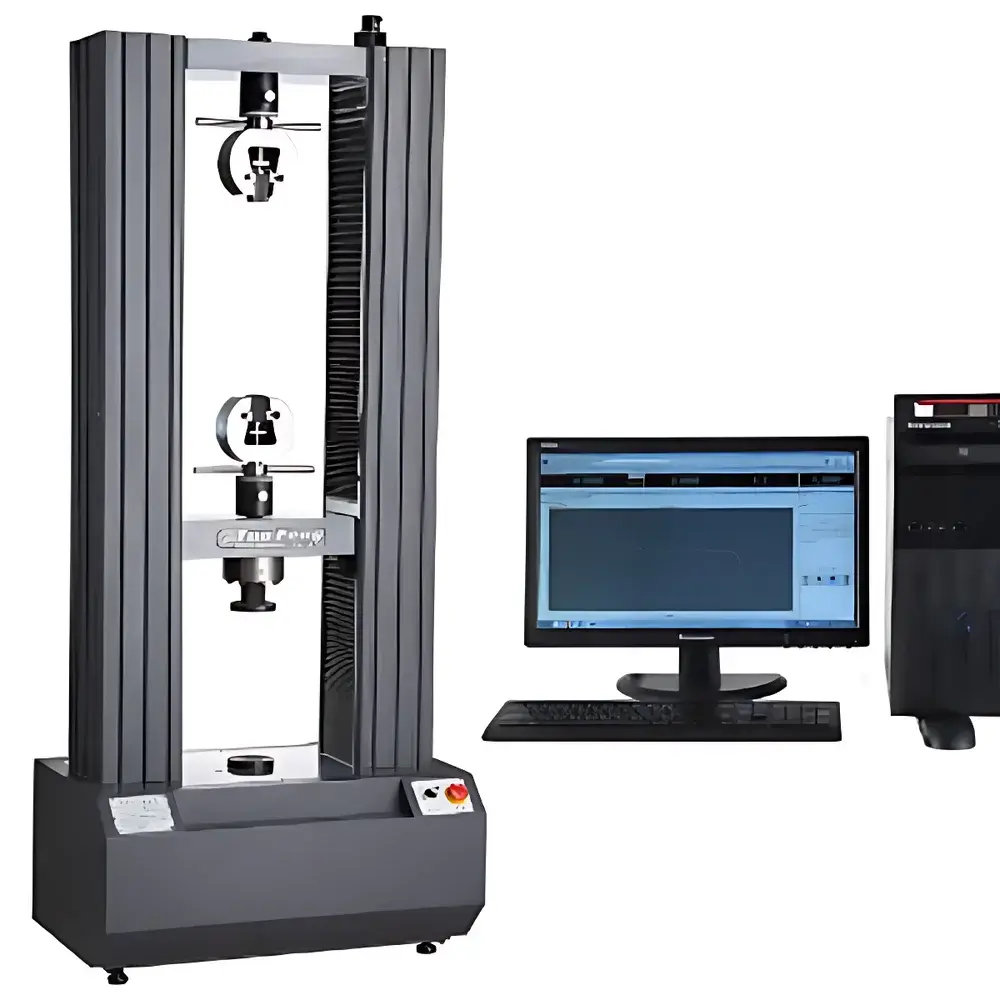
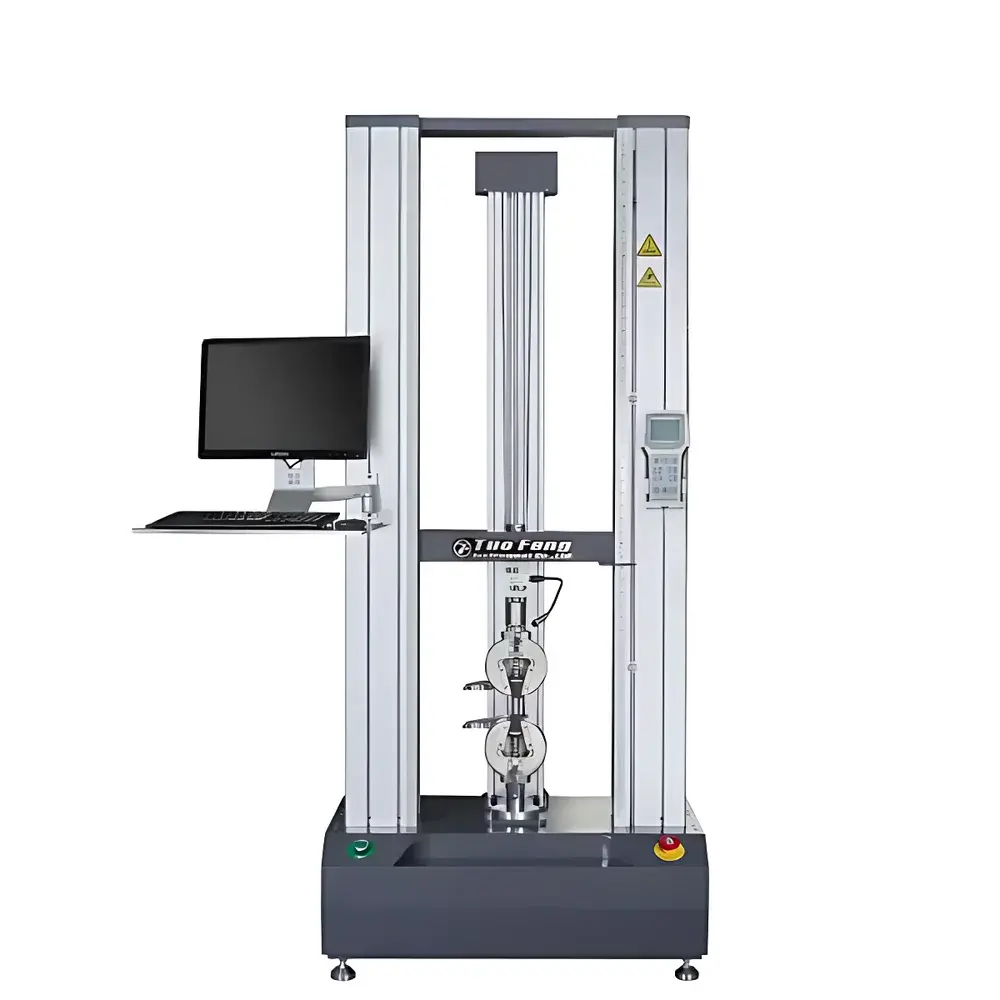
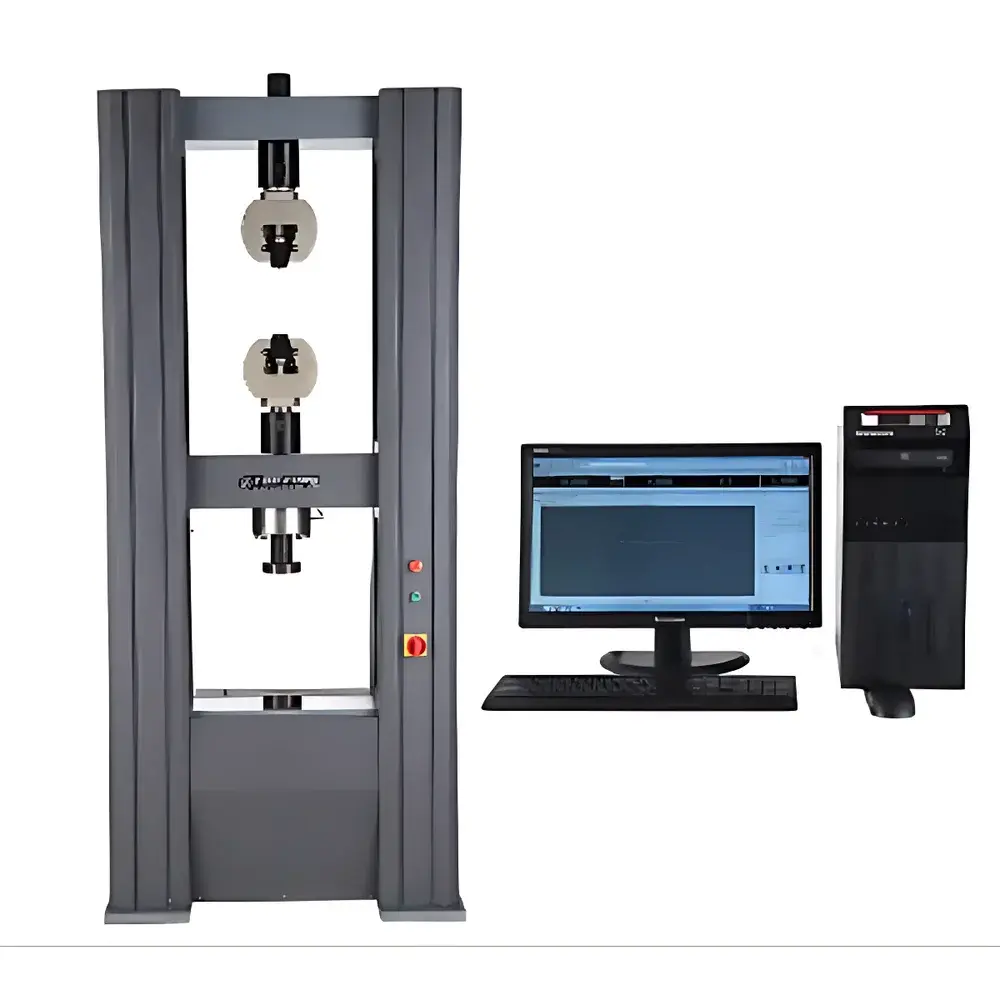
Tuofeng TFW-231 Microcomputer-Controlled Electromechanical Universal Testing Machine
| Brand | Tuofeng |
|---|---|
| Origin | Shanghai, China |
| Manufacturer Type | Direct Manufacturer |
| Instrument Type | Electromechanical Universal Testing Machine |
| Model | TFW-231 |
| Compliance | GB/T 16491–2008, JJG 475–2008 |
| Standards Support | ASTM, ISO, DIN, JIS, BS, GB |
| Max Test Load | 231 kN (configurable variants: 5–200 kN) |
| Accuracy Class | 0.5 |
| Effective Force Range | 0.2%–100% of full scale |
| Force Measurement Accuracy | ±0.005% of reading |
| Load Cell Resolution | 1 part in ±500,000 full-scale codes (single-range, no auto-ranging) |
| Drive System | Imported servo motor + precision worm-gear reducer |
| Lead Screw | High-precision preloaded ball screw |
| Effective Test Width | 600 mm (customizable up to 1100 mm) |
| Stroke | 800 mm (extendable) |
| Speed Range | 0.001–500 mm/min (infinitely variable, closed-loop controlled) |
| Displacement Measurement | Optical encoder, accuracy ±0.005% of reading |
| Strain Measurement | Optional extensometer (clip-on or video-based) or large-deformation transducer, accuracy ±0.005% of reading |
| Safety Systems | Dual electronic limit switches, emergency stop button, overload protection (>110% FS), automatic return-to-start |
| Crosshead Control | Dual-speed (fast/slow) motorized adjustment with jog function |
| Software | Windows-based, multi-language (EN/CN/TC), GLP-compliant audit trail, 21 CFR Part 11-ready configuration options |
| Power Supply | 220 V AC, 1.5 kW |
| Dimensions (W×D×H) | 1000 × 700 × 2000 mm |
| Weight | ~450 kg |
Overview
The Tuofeng TFW-231 is a microcomputer-controlled electromechanical universal testing machine engineered for high-fidelity static mechanical characterization of metallic, polymeric, composite, and ceramic materials. It operates on the principle of controlled displacement actuation via a precision servo-driven ball-screw system, enabling accurate force–displacement–time data acquisition under standardized quasi-static loading conditions. Designed in strict accordance with GB/T 16491–2008 and JJG 475–2008 metrological verification requirements, the TFW-231 delivers Class 0.5 accuracy across its full force range—meeting the traceability and repeatability demands of accredited laboratories, R&D centers, and quality assurance departments operating under ISO/IEC 17025, ASTM E4, ISO 7500-1, and USP <1041> frameworks.
Key Features
- High-resolution load measurement system with ±0.005% reading accuracy and 1:500,000 internal resolution—ensuring consistent sensitivity from 0.2% to 100% of full-scale capacity (231 kN standard configuration).
- Imported servo motor coupled with a backlash-free worm-gear reducer and preloaded recirculating ball screw—guaranteeing smooth, low-noise motion control and long-term mechanical stability.
- Dual-mode crosshead positioning: fast approach (up to 500 mm/min) for rapid specimen setup and fine-tuned slow-speed testing (0.001 mm/min minimum) for creep, relaxation, or low-strain-rate protocols.
- Integrated safety architecture including dual-channel electronic limit switches, hardware-based emergency stop circuitry, real-time overload detection (>110% FS), and programmable return-to-origin functionality post-test.
- Modular extensometry support: compatible with clip-on axial extensometers (ASTM E83 Class B-1), non-contact video extensometers (for brittle or high-temperature specimens), and large-deformation transducers for elastomers and foams.
- Robust structural frame with reinforced base plate and rigid column assembly—minimizing deflection during high-load compression or flexural testing (e.g., ASTM D695, ISO 604).
Sample Compatibility & Compliance
The TFW-231 accommodates a broad spectrum of specimen geometries and material classes—including sheet metal, extruded profiles, injection-molded plastics, fiber-reinforced laminates, elastomeric seals, geotextiles, and biomedical polymers. Standard test configurations cover tensile (ASTM D638, ISO 527), compression (ASTM D695, ISO 604), flexure (ASTM D790, ISO 178), shear (ASTM D5379), tear (ASTM D624), peel (ASTM D903), and puncture (ASTM D3787). All mechanical calibrations are traceable to national standards through third-party accredited calibration certificates. The system supports full compliance documentation packages for GLP/GMP environments, including instrument qualification (IQ/OQ/PQ), electronic audit trails, user access controls, and 21 CFR Part 11–compatible electronic signatures when configured with optional software modules.
Software & Data Management
Tuofeng’s proprietary TensilePro™ software runs natively on Windows 10/11 and provides fully configurable test sequences aligned with ASTM, ISO, and GB methodologies. Users can define multi-step protocols—including preload stabilization, ramp-hold cycles, strain-controlled loading, and stress relaxation—with real-time switching between force–time, stress–strain, displacement–time, and extension–load display modes. Raw data streams are recorded at ≥1 kHz sampling rate and stored in open-format .csv and .tdms files for downstream analysis in MATLAB, Python, or statistical packages. The software enforces data integrity via timestamped operator logs, version-controlled method templates, and immutable raw-data archiving. Optional modules enable automated report generation (PDF/Excel), SPC charting, batch comparison overlays, and integration with LIMS via OPC UA or REST API endpoints.
Applications
- Metallurgical QA/QC: Yield strength, ultimate tensile strength, elongation at break, and Young’s modulus determination per ASTM E8/E21 for aluminum alloys, stainless steels, and titanium grades.
- Automotive component validation: Tensile behavior of brake hoses, seatbelt webbing, gasket materials, and structural adhesives under elevated temperature conditions.
- Polymer R&D: Creep compliance mapping of thermoplastics (ISO 899-1), fracture toughness of engineering resins (ASTM D5045), and viscoelastic modeling of silicone elastomers.
- Aerospace composites: Interlaminar shear strength (ILSS) per ASTM D2344, compression-after-impact (CAI) per ASTM D7137, and sandwich core shear per ASTM C273.
- Medical device testing: Pull strength of suture anchors (ASTM F2193), burst pressure of catheter balloons (ISO 10555-1), and cyclic fatigue of orthopedic fixation plates (ISO 14801).
- Construction materials: Compressive strength of concrete cylinders (ASTM C39), flexural strength of asphalt beams (AASHTO T177), and bond strength of mortar–brick interfaces (ASTM C1072).
FAQ
What international standards does the TFW-231 support out-of-the-box?
The system includes preloaded test methods for ASTM D638, ISO 527, GB/T 228.1, ASTM D695, ISO 604, ASTM D790, and ASTM D3787. Custom method development is supported via the scriptable test sequence editor.
Is the force sensor calibrated and certified?
Yes—each unit ships with a NIST-traceable calibration certificate issued by an ILAC-accredited third-party lab, valid for 12 months under normal usage conditions.
Can the TFW-231 perform cyclic or fatigue testing?
While primarily designed for static and quasi-static tests, optional high-cycle add-ons (e.g., hydraulic servo upgrade, thermal chamber integration, and dedicated fatigue software module) extend capability to low-cycle fatigue (LCF) per ASTM E606 and strain-controlled cycling up to 5 Hz.
How is data security and regulatory compliance addressed?
TensilePro™ supports role-based user accounts, electronic signatures, audit trail logging (per 21 CFR Part 11 Annex 11), and encrypted database storage. Full validation documentation (URS, FRS, IQ/OQ/PQ) is available upon request.
What after-sales service and software update policies apply?
Tuofeng provides lifetime remote technical support, biannual firmware updates, and free minor-version software upgrades. Major version releases include optional on-site training and method transfer assistance.



