
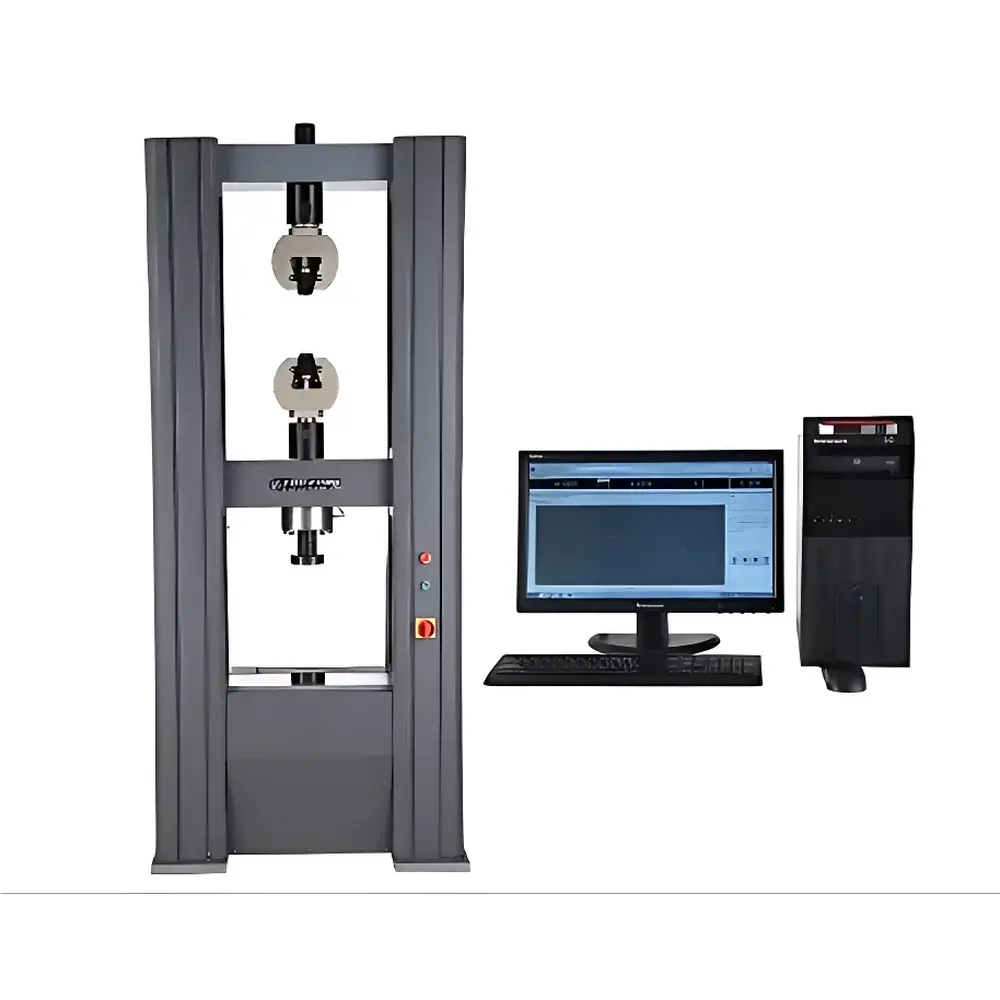
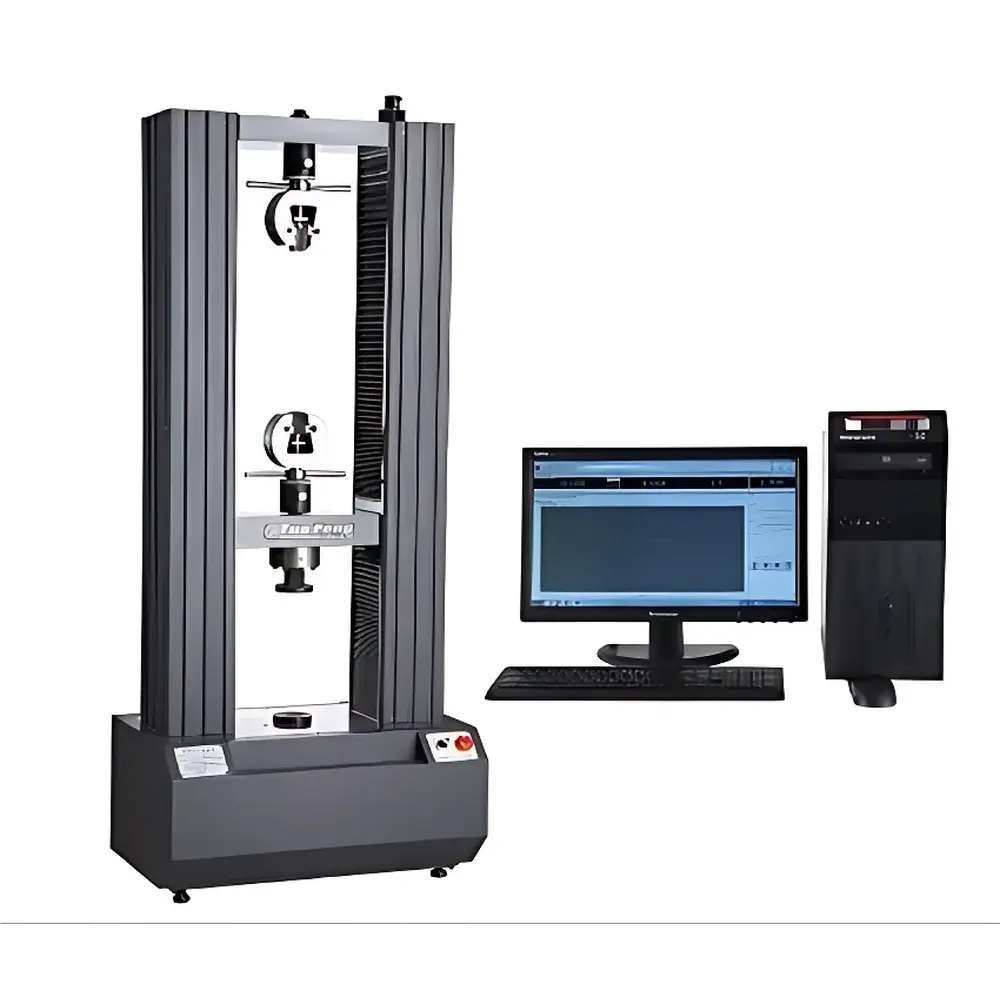
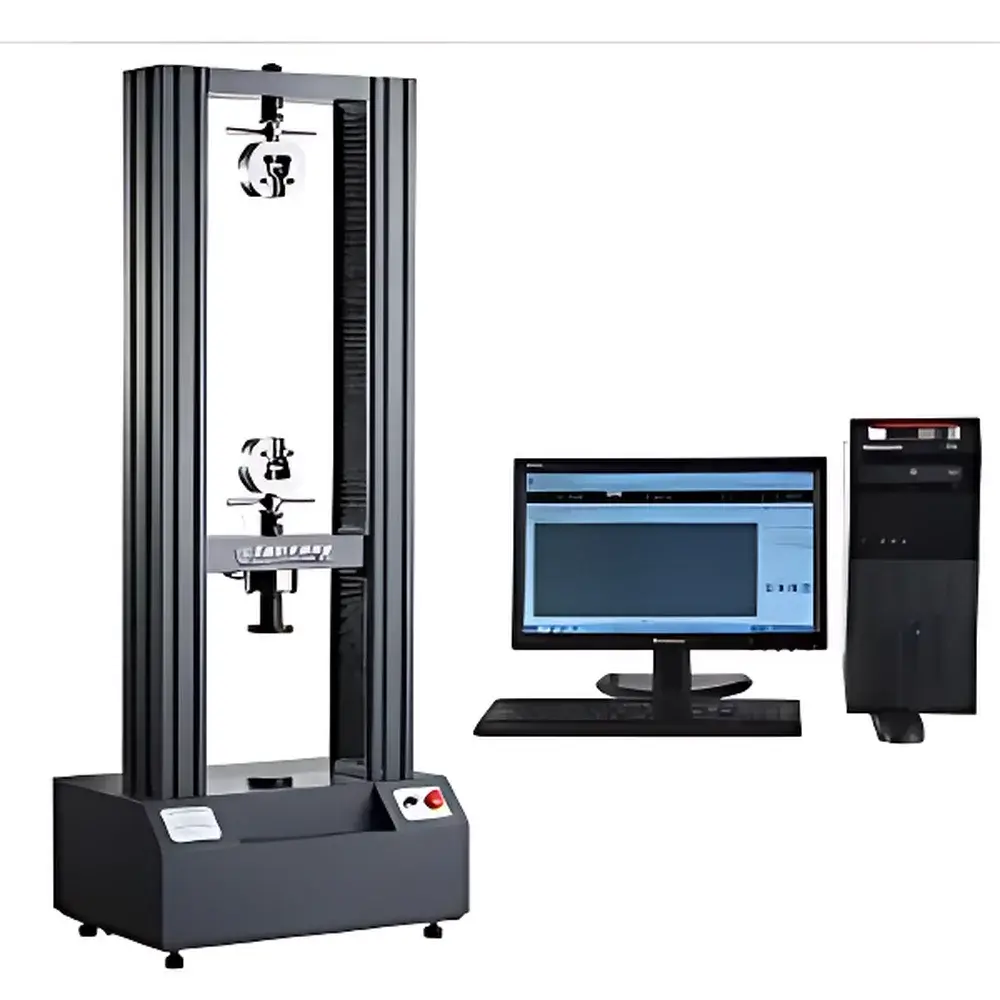
Tuofeng TFW-12 Photovoltaic Solder Ribbon Universal Testing Machine
| Brand | Tuofeng |
|---|---|
| Origin | Shanghai, China |
| Manufacturer Type | Direct Manufacturer |
| Product Category | Domestic |
| Model | TFW-12 |
| Instrument Type | Electromechanical Universal Testing Machine |
| Load Capacity | 12 kN (typical configuration within TFW series) |
| Accuracy Class | ISO 7500-1 / ASTM E4 Grade 0.5 |
| Compliance | GB/T 16491–2008, JJG 475–2008, ISO 6892-1, ASTM E8/E21, EN 10002-1 |
Overview
The Tuofeng TFW-12 Photovoltaic Solder Ribbon Universal Testing Machine is a high-precision, dual-column electromechanical universal testing system engineered specifically for mechanical characterization of photovoltaic interconnect materials—primarily tin-coated copper solder ribbons used in solar cell stringing and module assembly. Unlike general-purpose tensile testers, the TFW-12 integrates ribbon-specific fixture geometry, low-force high-resolution load measurement (down to 0.2% of full scale), and sub-micron displacement control to accurately quantify critical parameters including tensile strength, yield point, elongation at break, bending stiffness, peel adhesion (for coated substrates), and creep resistance under sustained load. Its modular architecture supports both standard ribbon widths (e.g., 1.5 mm, 2.0 mm, 3.0 mm) and variable thicknesses (0.15–0.35 mm), enabling compliance with IEC 61215-2 (MQT 17: Solder Bond Strength), IEC 62788-5-2 (Solder Joint Reliability), and UL 1703 Annex D requirements. The system operates on the principle of controlled uniaxial force application via precision ball-screw actuation, with real-time feedback from calibrated load cells and optical encoder-based position sensing.
Key Features
- Dual-column rigid frame with high-stiffness cast-iron base and reinforced aluminum crosshead—designed to minimize deflection during high-speed cyclic loading typical in ribbon fatigue evaluation.
- Imported servo motor coupled with worm-gear reduction and preloaded recirculating ball screw—ensuring smooth, backlash-free motion across the full speed range (0.001–500 mm/min).
- 0.5-class accuracy per ISO 7500-1: verified load measurement with ±0.005% FS linearity, repeatability, and hysteresis; resolution of 1 part in 500,000 full-scale codes, no internal range switching required.
- Integrated dual-mode extensometry: optional clip-on electronic extensometer (±0.5% strain accuracy, gauge lengths 10–50 mm) or non-contact video extensometer for brittle or coated ribbon specimens.
- Smart safety architecture: dual-channel electronic limit switches, emergency stop circuitry compliant with EN ISO 13850, overload protection at 110% of rated capacity, and automatic return-to-start after test completion.
- Motorized crosshead positioning with independent fast/slow jog modes—enabling rapid specimen setup without manual cranking or gear shifting.
Sample Compatibility & Compliance
The TFW-12 accommodates standard PV solder ribbons (flat, tinned Cu, Pb-free or SnPb alloys), as well as auxiliary samples such as busbars, tabbing wires, and laminated ribbon-substrate assemblies. Customizable pneumatic or wedge-action grips ensure slippage-free clamping without edge deformation. Fixture sets comply with IEC 61215-2 MQT 17 (solder bond pull test), JIS C 8992 (tensile testing of thin metallic foils), and ASTM B570 (tensile properties of copper strip). Full traceability is maintained through built-in calibration certificate logging and audit-ready metadata tagging. System design conforms to GLP and GMP-aligned documentation practices, supporting FDA 21 CFR Part 11 readiness when paired with optional electronic signature modules.
Software & Data Management
Tuofeng TestSuite™ v4.2 is a Windows-based, multi-language (English, Simplified/Traditional Chinese) testing platform compliant with ISO 17025 data integrity guidelines. It supports ASTM-defined test methods (E8, E21, D638), programmable ramp-hold cycles, and multi-step loading profiles—including constant-load creep tests up to 1,000 hours. Real-time plotting includes stress–strain, load–displacement, and time-dependent relaxation curves. All raw data (force, position, time, temperature if external sensor integrated) are stored in open-format CSV and proprietary .TFS binary files with embedded metadata (operator ID, calibration date, environmental conditions). Automated report generation includes customizable templates aligned with internal QA checklists and third-party certification submissions (TÜV, UL, CSA). Software updates are delivered via secure HTTPS channel with version-controlled changelogs and backward-compatible file handling.
Applications
- Quantification of tensile strength and ductility of PV solder ribbons before and after thermal cycling (IEC 61215-2 MQT 11) or damp heat exposure (MQT 10).
- Evaluation of solder joint integrity between ribbon and cell metallization using controlled peel or shear configurations.
- Creep behavior analysis under static loads simulating long-term module mounting stresses.
- Comparative assessment of alternative ribbon materials (e.g., Ni-coated Cu, Ag-coated Cu, or composite structures) against baseline tin-copper performance.
- Process validation for soldering equipment—correlating peak temperature profiles with resulting mechanical bond strength.
- Quality control in ribbon manufacturing: batch-to-batch consistency monitoring of yield offset, uniformity of elongation, and fracture morphology classification.
FAQ
What standards does the TFW-12 support for PV ribbon testing?
It natively supports IEC 61215-2 MQT 17 (solder bond strength), IEC 62788-5-2, ASTM E8/E21, ISO 6892-1, and JIS C 8992—with method templates preloaded in TestSuite™.
Can the system perform cyclic fatigue testing on solder ribbons?
Yes—via programmable load-controlled or displacement-controlled sine/triangular waveforms up to 5 Hz, with cycle counting, min/max tracking, and failure detection logic.
Is third-party calibration certification included?
Each unit ships with an ISO/IEC 17025-accredited calibration certificate traceable to NIM (China) or NIST (US), valid for 12 months.
How is data integrity ensured for regulatory submissions?
TestSuite™ provides full ALCOA+ compliance: attributable, legible, contemporaneous, original, accurate, complete, consistent, enduring, and available—with optional 21 CFR Part 11 user authentication and electronic signatures.
What maintenance intervals are recommended?
Ball screw lubrication every 6 months; load cell verification annually; full metrological recalibration every 24 months or after 10,000 test cycles—per JJG 475–2008 guidelines.
Related Products



