
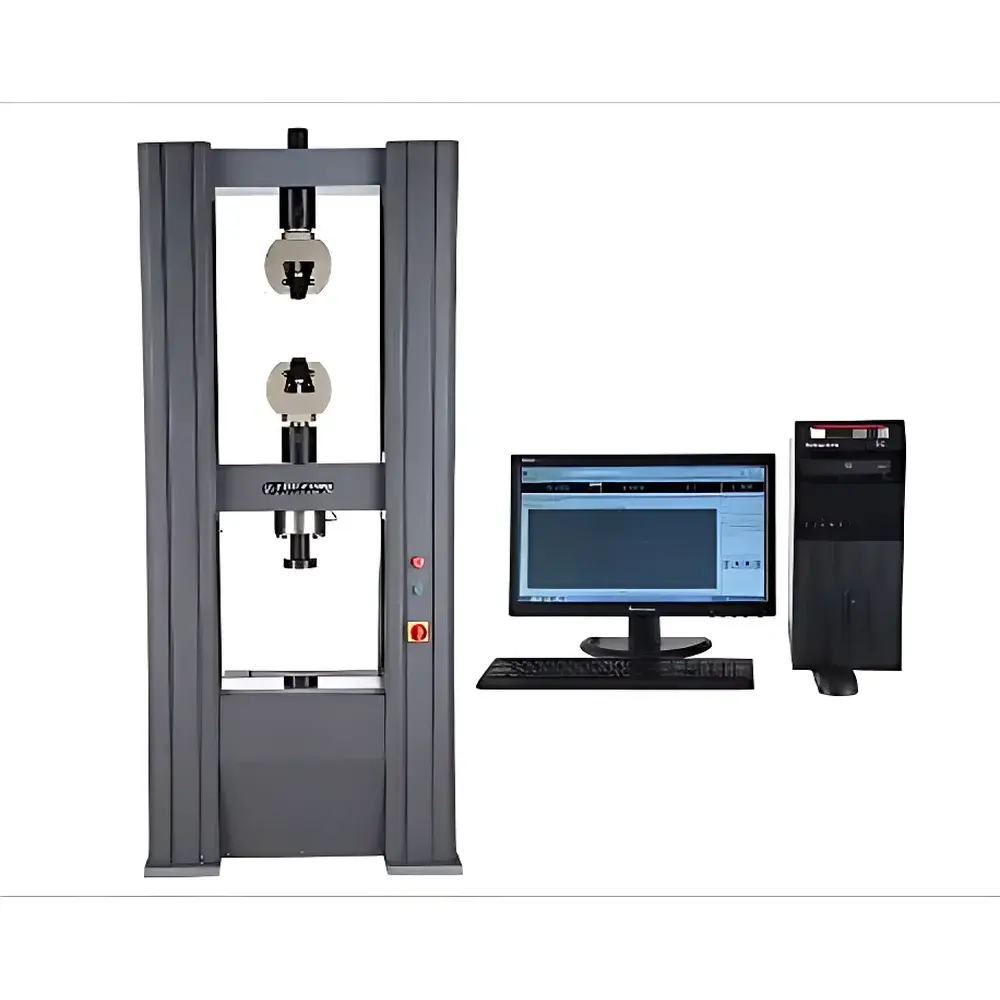
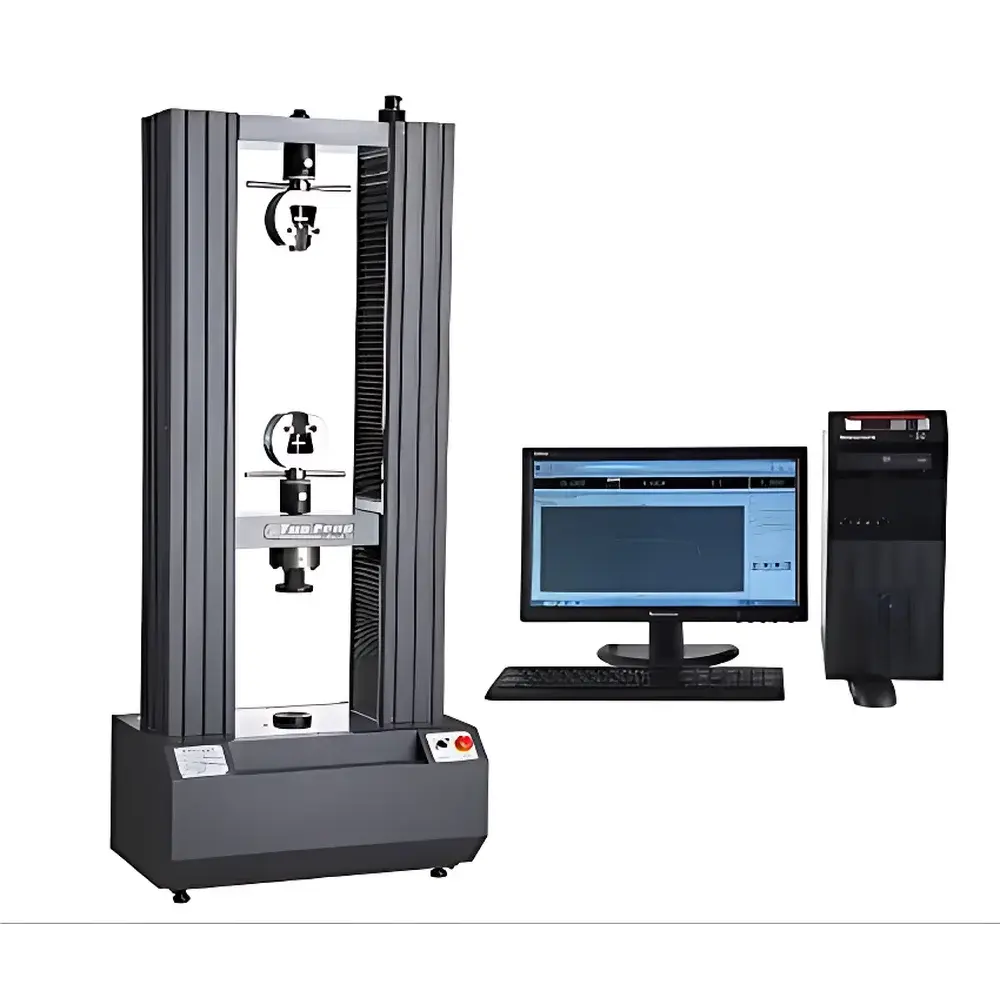
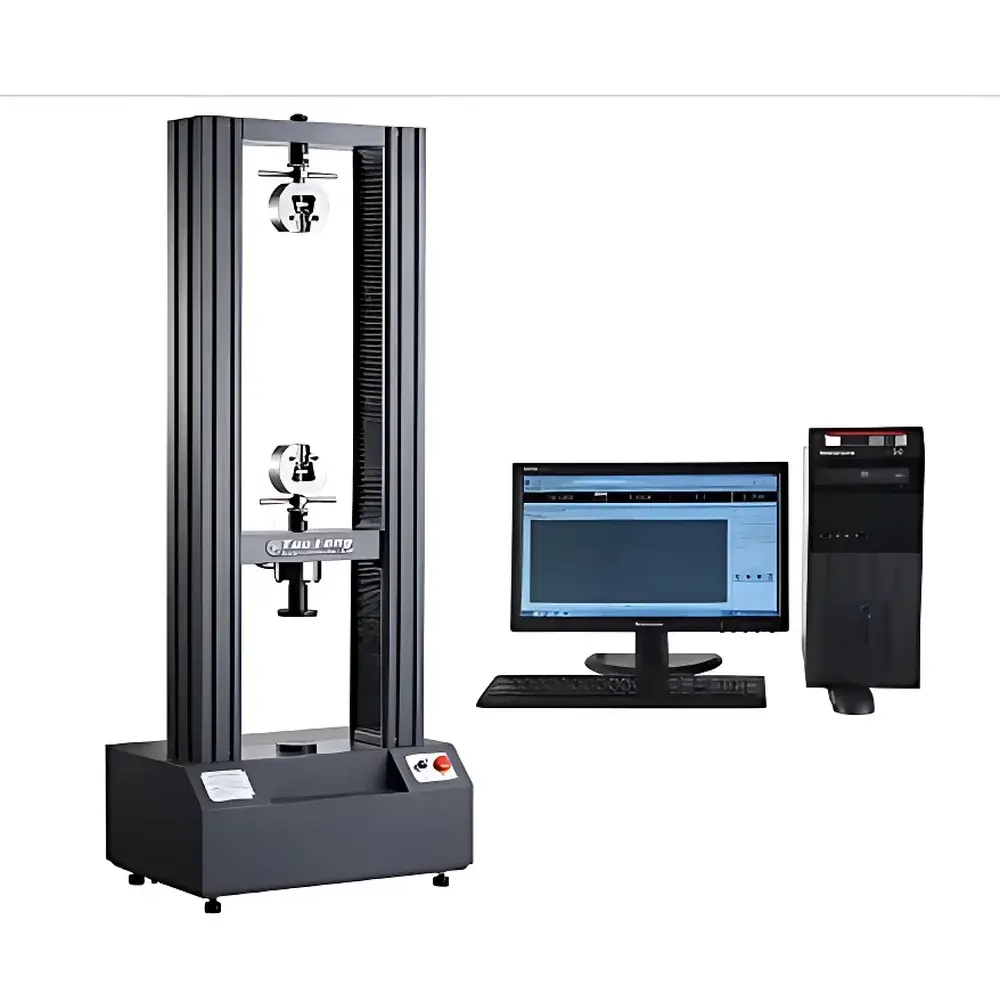
Tuofeng TFW-80 Advanced Electromechanical Universal Testing Machine
| Brand | Tuofeng |
|---|---|
| Origin | Shanghai, China |
| Manufacturer Type | Direct Manufacturer |
| Model | TFW-80 |
| Maximum Test Load | 200 kN |
| Force Measurement Range | 0.2%–100% of Full Scale |
| Force Accuracy | ±0.5% of reading |
| Crosshead Travel | 1000 mm |
| Displacement Resolution | 0.001 mm |
| Control System | PC-based with Windows OS |
| Compliance | GB/T 16491-2008, JJG 475-2008, ASTM E4, ISO 7500-1, DIN 51221, JIS B 7721 |
Overview
The Tuofeng TFW-80 Advanced Electromechanical Universal Testing Machine is a high-precision, servo-controlled static mechanical testing system engineered for standardized tensile, compression, flexure, shear, tear, peel, and puncture testing of metallic, polymeric, ceramic, composite, and elastomeric materials. Based on the fundamental principles of axial force application and displacement-controlled deformation measurement, the system adheres to internationally recognized mechanical metrology frameworks—including load cell calibration traceability to national standards (e.g., NIST-equivalent reference systems), high-resolution encoder-based crosshead positioning, and real-time closed-loop PID control of actuation velocity. Designed for laboratory-grade reproducibility and long-term stability, the TFW-80 integrates a rigid dual-column frame, preloaded precision ball screws, and a high-torque imported servo motor with planetary gear reduction—ensuring minimal backlash, thermal drift resistance, and consistent force delivery across its full 200 kN capacity. Its architecture meets the structural and metrological requirements defined in GB/T 16491-2008 (equivalent to ISO 7500-1 Class 0.5) and JJG 475-2008 verification protocols, making it suitable for accredited testing laboratories operating under GLP or ISO/IEC 17025 quality management systems.
Key Features
- Class 0.5 accuracy per ISO 7500-1 and GB/T 16491-2008: verified force measurement from 0.2% to 100% FS with ±0.5% uncertainty
- High-resolution displacement sensing: 0.001 mm resolution via optical encoder, with ±0.005% displacement accuracy
- Wide dynamic speed range: 0.001–500 mm/min, continuously variable and programmable without gear shifting
- Robust mechanical design: heavy-duty cast-iron base, hardened steel columns, and preloaded recirculating ball screws for minimal elastic deformation under load
- Dual-speed crosshead adjustment: independent fast/slow modes for rapid setup and fine positioning
- Comprehensive safety architecture: electronic limit switches, emergency stop circuitry, overload protection (>110% FS), and automatic return-to-start functionality
- Modular fixture interface: standardized T-slot table and quick-mount adapters for ASTM/ISO-compliant grips, bending jigs, and environmental chamber integration
Sample Compatibility & Compliance
The TFW-80 supports standardized test specimens per ASTM D638 (tensile plastics), ASTM D3039 (composite laminates), ASTM C39 (concrete compression), ISO 6892-1 (metal tensile), ISO 178 (flexural), ISO 1133 (melt flow index auxiliary), and GB/T 228.1 (metallic materials). It accommodates specimen widths up to 600 mm (customizable), thicknesses up to 100 mm, and lengths compatible with 1000 mm travel—enabling full-stroke testing of reinforced polymers, structural alloys, geotextiles, and biomedical scaffolds. All hardware and firmware comply with electromagnetic compatibility (EMC) directives (IEC 61326-1), electrical safety standards (IEC 61010-1), and data integrity requirements aligned with FDA 21 CFR Part 11 Annex 11 expectations when configured with audit-trail-enabled software options.
Software & Data Management
The embedded Windows-based testing software provides multi-mode control (load-controlled, displacement-controlled, strain-controlled, hold, ramp-hold, cyclic), real-time plotting of up to four synchronized curves (e.g., stress–strain, load–time, extension–time), and automated calculation of mechanical properties including ultimate tensile strength, yield strength (0.2% offset), Young’s modulus, elongation at break, compressive strength, flexural modulus, tear strength, and peel adhesion. Units are freely convertible between SI, imperial, and legacy metric systems. Test data are stored in structured .csv and .tdms formats with embedded metadata (operator ID, timestamp, standard reference, calibration certificate ID). The software supports user-defined report templates compliant with ISO/IEC 17025 documentation requirements, batch comparison overlays, statistical summary (min/max/mean/stdev), and encrypted local archiving. Optional modules enable integration with LIMS, digital signature workflows, and remote monitoring via secure TLS-encrypted HTTP API.
Applications
The TFW-80 serves as a primary mechanical characterization platform in R&D labs and QC departments across aerospace (e.g., titanium alloy sheet tensile validation per AMS 2344), automotive (polymer bumper impact simulation support, brake pad compression), construction (rebar yield verification per ASTM A615, concrete cylinder testing), medical device manufacturing (suture tensile strength per ISO 10993-12), and advanced materials development (carbon fiber prepreg interlaminar shear per ASTM D2344). Its versatility extends to failure analysis investigations, process optimization studies (e.g., heat treatment effect on yield ratio), and regulatory submission packages requiring traceable, auditable mechanical data per ISO 13485 or AS9100.
FAQ
What international standards does the TFW-80 support out-of-the-box?
The system includes preconfigured test methods for ASTM E4, ISO 7500-1, GB/T 16491-2008, JJG 475-2008, DIN 51221, and JIS B 7721—with additional method templates available upon request.
Can the TFW-80 be integrated into an existing LIMS or MES environment?
Yes—via optional OPC UA or RESTful API interfaces, supporting bidirectional data exchange, electronic signatures, and audit-trail synchronization.
Is third-party calibration certification included with delivery?
A factory-issued calibration certificate traceable to CNAS-accredited reference standards is provided; on-site verification by ISO/IEC 17025-accredited providers is available as a service.
What is the recommended maintenance schedule?
Biannual inspection of load cell linearity, screw lubrication, encoder alignment, and safety interlock function is advised; full recalibration every 12 months or after 10,000 cycles.
Does the system support extensometry for strain-critical tests?
Yes—both clip-on electronic extensometers (ASTM E83 Class B-1) and non-contact video extensometry modules can be integrated and software-synchronized.



