
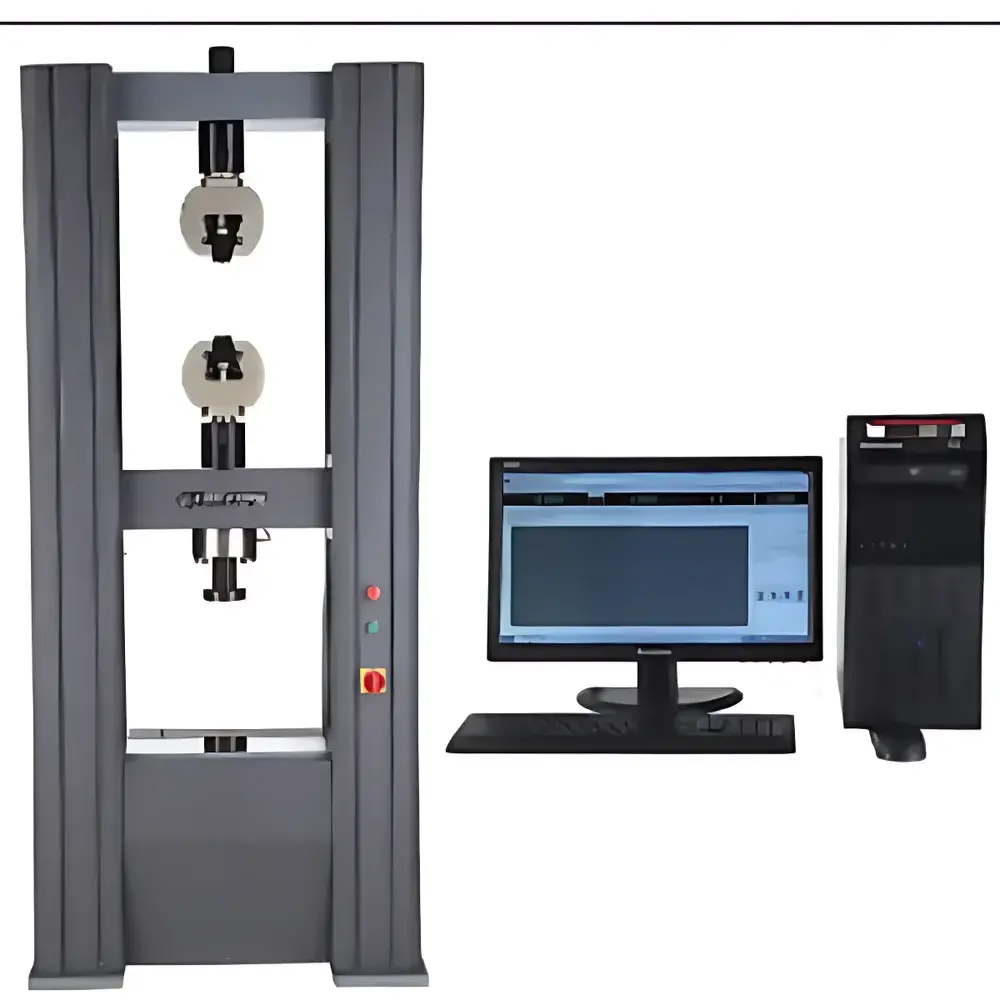
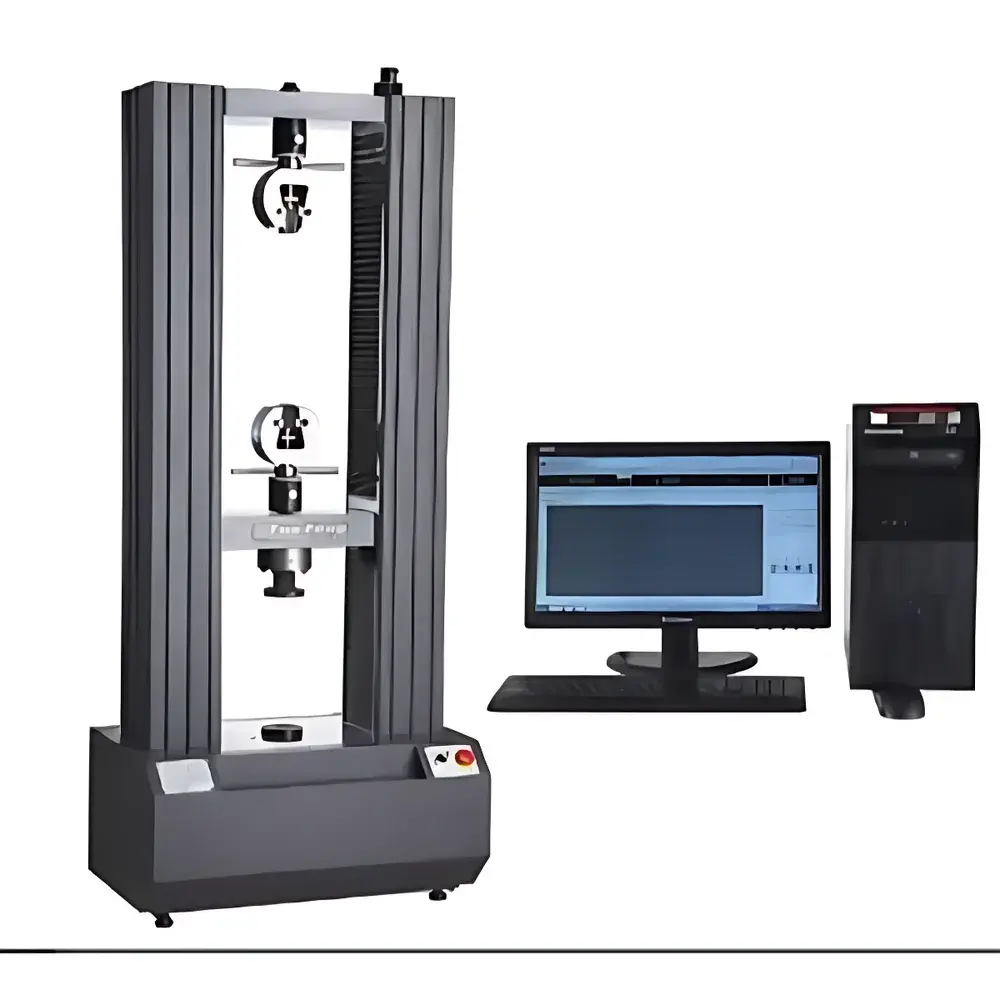
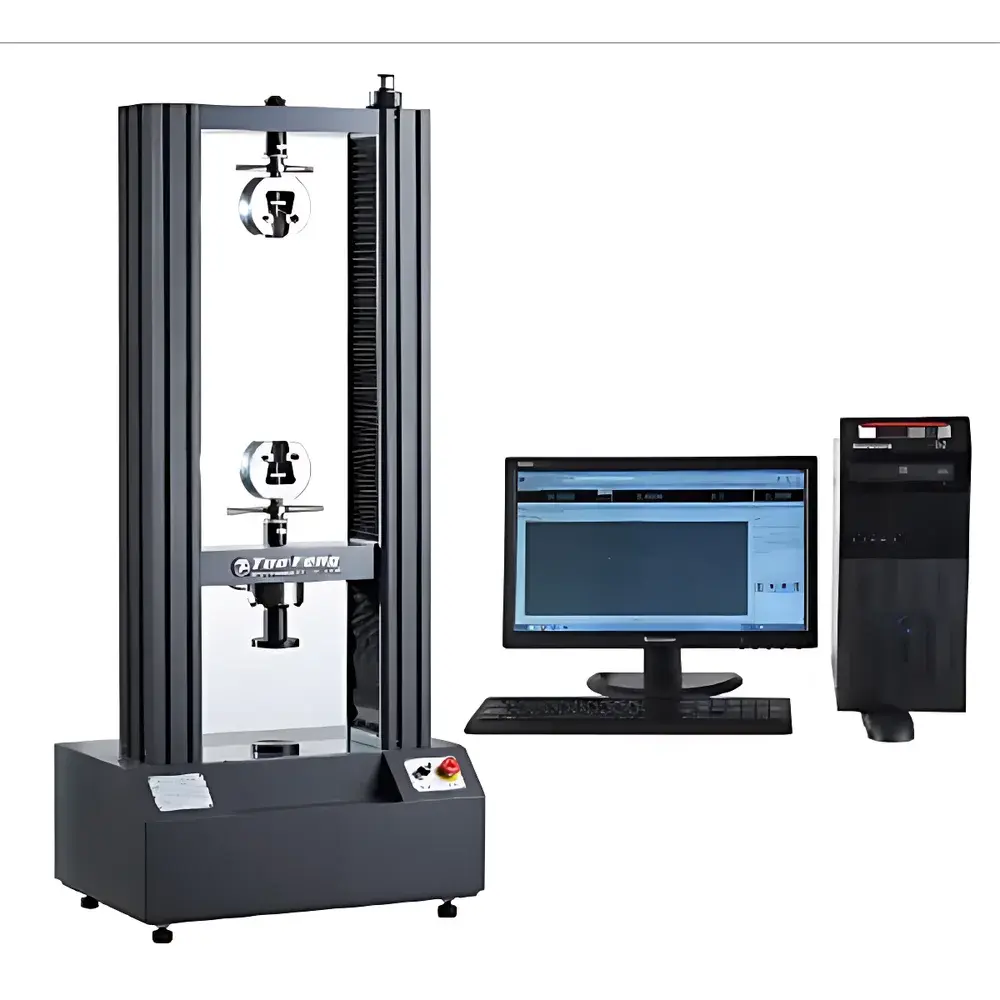
Tuofeng TFW-289 Universal Testing Machine for Steel Pipes
| Brand | Tuofeng |
|---|---|
| Origin | Shanghai, China |
| Manufacturer Type | Direct Manufacturer |
| Instrument Type | Electromechanical Universal Testing Machine |
| Model | TFW-289 |
| Load Capacity | 300 kN |
| Load Accuracy | ±0.5% |
| Compliance | GB/T 16491–2008, JJG 475–2008, ASTM E4, ISO 7500-1, DIN 51221, JIS B 7721 |
Overview
The Tuofeng TFW-289 Universal Testing Machine is a high-precision electromechanical system engineered for static mechanical property evaluation of structural metallic materials—particularly seamless and welded steel pipes used in oil & gas transmission, pressure vessel fabrication, infrastructure, and pipeline integrity assurance. Based on the principle of controlled axial force application through servo-driven ball-screw actuation, the machine delivers traceable, repeatable load-displacement data under tensile, compressive, bending, and shear loading configurations. Its dual-column rigid frame architecture ensures minimal deflection during high-load testing (up to 300 kN), while integrated real-time feedback loops maintain crosshead velocity stability within ±0.5% of setpoint across the full speed range (0.001–500 mm/min). Designed in strict adherence to GB/T 16491–2008 and JJG 475–2008 metrological verification requirements, the TFW-289 meets Class 0.5 accuracy per ISO 7500-1 and supports full traceability for GLP/GMP-aligned quality control environments.
Key Features
- High-rigidity dual-column steel frame with reinforced base and crosshead, optimized for pipe specimen stability during axial tension/compression tests
- Precision-ground ball-screw transmission system coupled with imported servo motor and planetary gear reducer for smooth, low-backlash motion control
- Load cell calibrated to ±0.5% accuracy over 0.2–100% of full scale (300 kN), with internal resolution of 1 part in 500,000 counts—no range switching required
- Optical encoder-based displacement measurement system with ±0.005% FS accuracy; compatible with clip-on extensometers (ASTM E83 Class B-1) and large-deformation video extensometry
- Dual-speed motorized crosshead adjustment (fast jog + fine positioning) and programmable return-to-start function for high-throughput lab workflows
- Comprehensive safety architecture: electronic limit switches, emergency stop circuit, overload cutoff (>110% rated load), and mechanical overload buffer
Sample Compatibility & Compliance
The TFW-289 accommodates standard and custom pipe specimens up to Ø350 mm OD and 1200 mm length (with optional extended test space). Standard fixtures include wedge-action tensile grips for pipe ends, compression platens with self-aligning spherical seats, and three-point bending fixtures conforming to ASTM E290 and ISO 15630-2. The system fully supports international test standards including ASTM A370 (steel products), ASTM E8/E9 (tension/compression), ISO 6892-1 (metallic tensile testing), EN 10002-1, and GB/T 228.1. All calibration certificates are NIST-traceable, and the machine’s software audit trail complies with FDA 21 CFR Part 11 requirements for electronic records and signatures when configured with user access controls and event logging.
Software & Data Management
The Windows-based testing software provides multi-mode control (load-controlled, displacement-controlled, strain-controlled, hold-to-load, hold-to-displacement) and real-time visualization of up to four synchronized curves: Force vs. Time, Force vs. Displacement, Stress vs. Strain, and Displacement vs. Time. Units are freely convertible between SI, imperial, and legacy metric systems. Test reports automatically calculate and export standardized parameters—including ultimate tensile strength (Rm), yield strength (Rp0.2), elongation at break (A50, A80), reduction of area (Z), Young’s modulus (E), and proof strength—per ISO 6892-1 Annex A. Raw data is saved in CSV and proprietary binary formats; report templates adhere to ASTM E4 format and support batch printing, curve overlay comparison, statistical summary (min/max/mean/std dev), and digital signature embedding. Software updates are provided free of charge for the instrument’s operational lifetime.
Applications
- Qualification testing of API 5L X65/X70/X80 line pipe welds and base metal under tensile and flattening conditions
- Mechanical validation of ASTM A106/A53 seamless carbon steel pipes for boiler and pressure vessel service
- Compression testing of pipe columns per EN 1993-1-1 for structural engineering design verification
- Bending stiffness assessment of thin-walled stainless steel tubing (e.g., ASTM A269) using three-point flexure
- Interlaminar shear strength (ILSS) determination of fiber-reinforced composite pipes via short-beam shear (ASTM D2344)
- Quality conformance checks in ISO/IEC 17025-accredited laboratories performing third-party pipe certification
FAQ
What standards does the TFW-289 comply with for pipe-specific testing?
It supports ASTM A370, API RP 5L, ISO 1143, GB/T 228.2, and EN 10213 for metallic pipe mechanical testing, with fixture geometry and alignment verified per ISO 7500-1 Annex C.
Can the system perform constant-rate-of-extension (CRE) tests per ISO 527-2?
Yes—the software enables displacement-controlled ramp-and-hold profiles with programmable strain rates from 0.0001 to 0.1 s⁻¹, validated using certified extensometers.
Is remote calibration and verification supported?
While physical load cell calibration requires accredited lab intervention, the system includes built-in zero-balance diagnostics, sensitivity drift monitoring, and digital calibration coefficient storage compliant with ISO/IEC 17025 Clause 6.5.
What data security protocols are implemented for regulated industries?
Role-based user authentication, encrypted audit trails, electronic signature capture, and immutable raw-data archiving satisfy FDA 21 CFR Part 11 Subpart B requirements when deployed on domain-managed Windows environments.
Are custom grips available for non-standard pipe geometries?
Yes—Tuofeng offers OEM-designed hydraulic wedge grips, split-collar compression fixtures, and mandrel-based internal expansion clamps upon technical specification submission.
Related Products



