
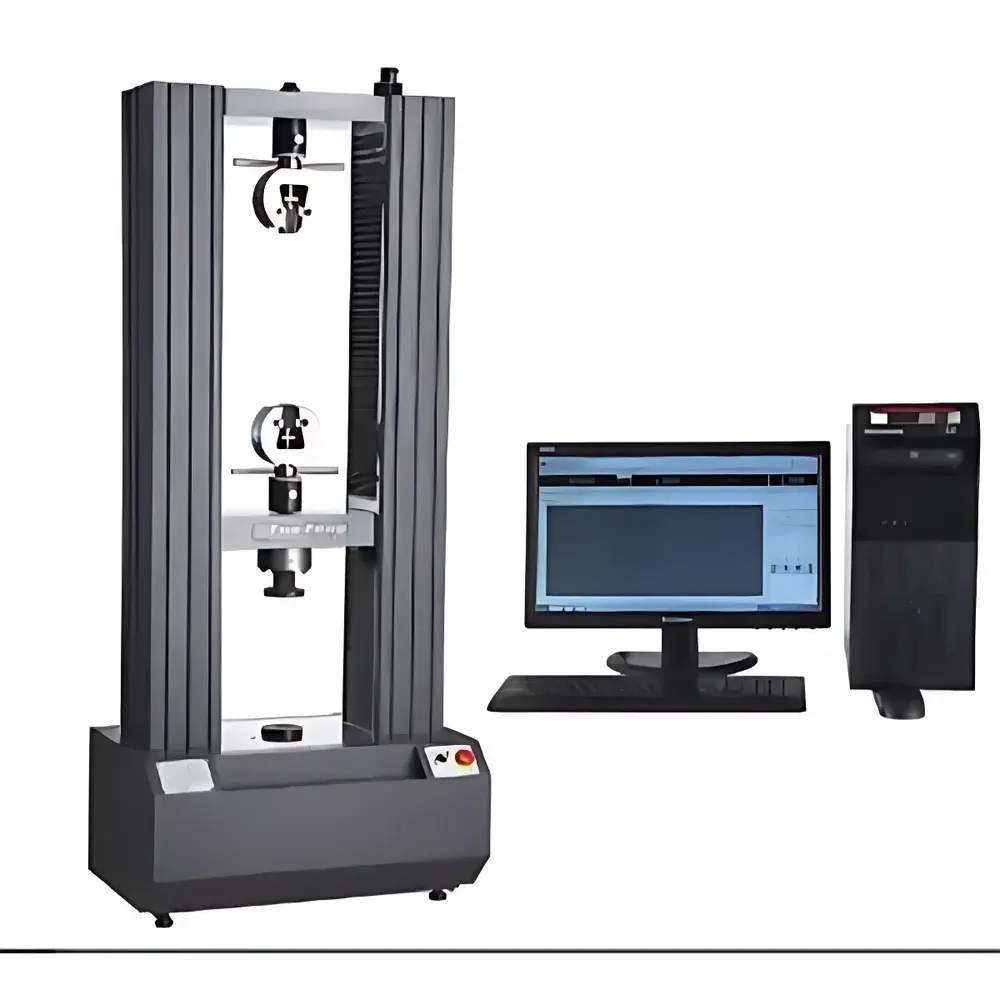
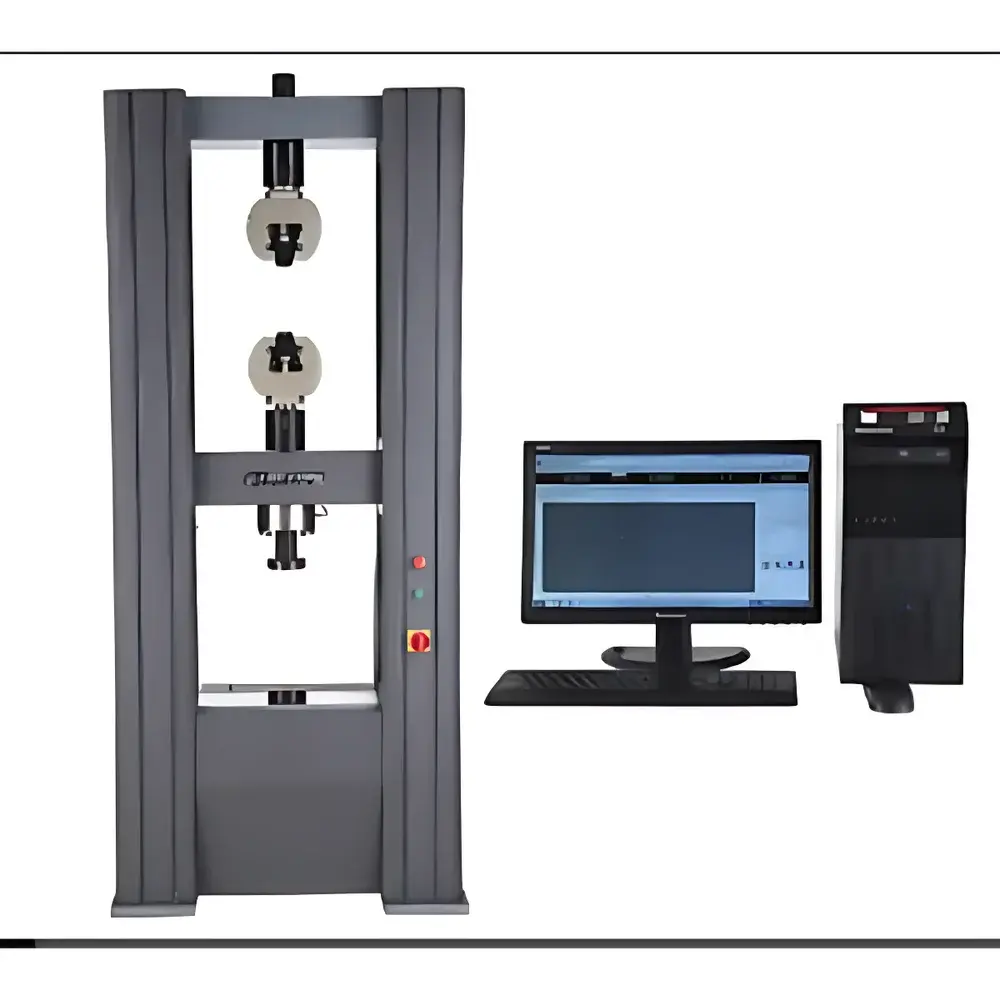
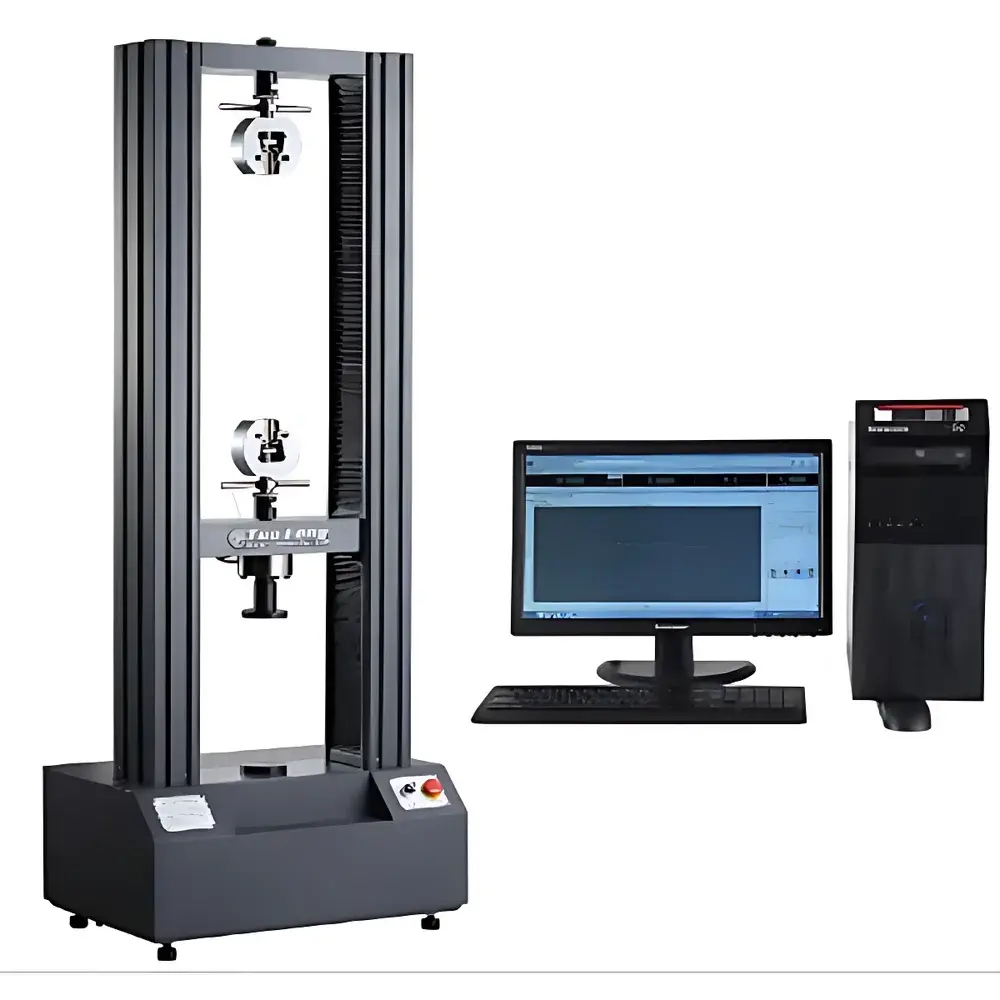
Tuofeng TFW-253 Microcomputer-Controlled Electronic Universal Testing Machine for Wire Harness Terminal Pull-Off Force Testing
| Brand | Tuofeng |
|---|---|
| Origin | Shanghai, China |
| Manufacturer Type | OEM Manufacturer |
| Product Category | Domestic |
| Model | TFW-253 |
| Instrument Type | Electromechanical Universal Testing Machine |
| Max Test Load | 25 kN |
| Accuracy Class | 0.5 |
| Effective Force Range | 0.2–100% of full scale |
| Force Measurement Accuracy | ±0.005% of reading |
| Resolution | 1/500,000 FS (full-scale), single-range, constant resolution |
| Drive System | Imported servo motor with precision worm-gear reducer |
| Lead Screw | High-precision preloaded ball screw |
| Effective Test Width | 400 mm (customizable up to 600 mm) |
| Stroke | 800 mm (extendable) |
| Speed Range | 0.001–500 mm/min (infinitely variable) |
| Displacement Measurement | Optical encoder |
| Displacement Accuracy | ±0.005% of reading |
| Strain Measurement | Optional extensometer or large-deformation sensor |
| Safety Protection | Dual-limit electronic positioning, emergency stop, overload cutoff (110% FS), automatic return after test |
| Power Supply | 220 V AC, 1.0 kW |
| Net Weight | ~450 kg |
| Compliance | GB/T 16491–2008, JJG 475–2008, ASTM E4, ISO 7500-1, DIN 51221 |
Overview
The Tuofeng TFW-253 is a microcomputer-controlled electromechanical universal testing machine engineered specifically for high-reproducibility pull-off force evaluation of wire harness terminals, crimped connectors, and soldered joints in automotive, aerospace, and electronics manufacturing. It operates on the fundamental principle of controlled uniaxial tensile loading, where a precisely regulated servo-driven actuator applies axial force to a specimen clamped between upper and lower grips. Force is measured via a high-stability load cell calibrated to 0.5-class accuracy per GB/T 16491–2008 and traceable to national metrological standards; displacement is resolved at sub-micron level using an optical encoder system synchronized with real-time data acquisition. The machine’s rigid frame, preloaded ball-screw transmission, and low-backlash gear reduction ensure minimal mechanical hysteresis and long-term dimensional stability—critical for detecting subtle interfacial failures such as crimp slippage, insulation pull-through, or terminal barrel deformation during ramp-hold or cyclic loading protocols.
Key Features
- High-resolution force measurement system with ±0.005% reading accuracy and 1/500,000 full-scale digital resolution—enabling detection of sub-newton deviations in terminal retention force.
- Infinitely variable crosshead speed control from 0.001 to 500 mm/min, supporting both quasi-static pull tests (per USCAR-21, SAE J1798) and dynamic ramp-to-failure protocols.
- Dual-mode safety architecture: hardware-based electronic limit switches plus software-enforced overload cutoff at 110% of rated capacity (25 kN), preventing damage during operator error or fixture misalignment.
- Fast/slow dual-speed motorized crosshead adjustment with programmable point-to-point positioning—reducing setup time between sequential terminal batches.
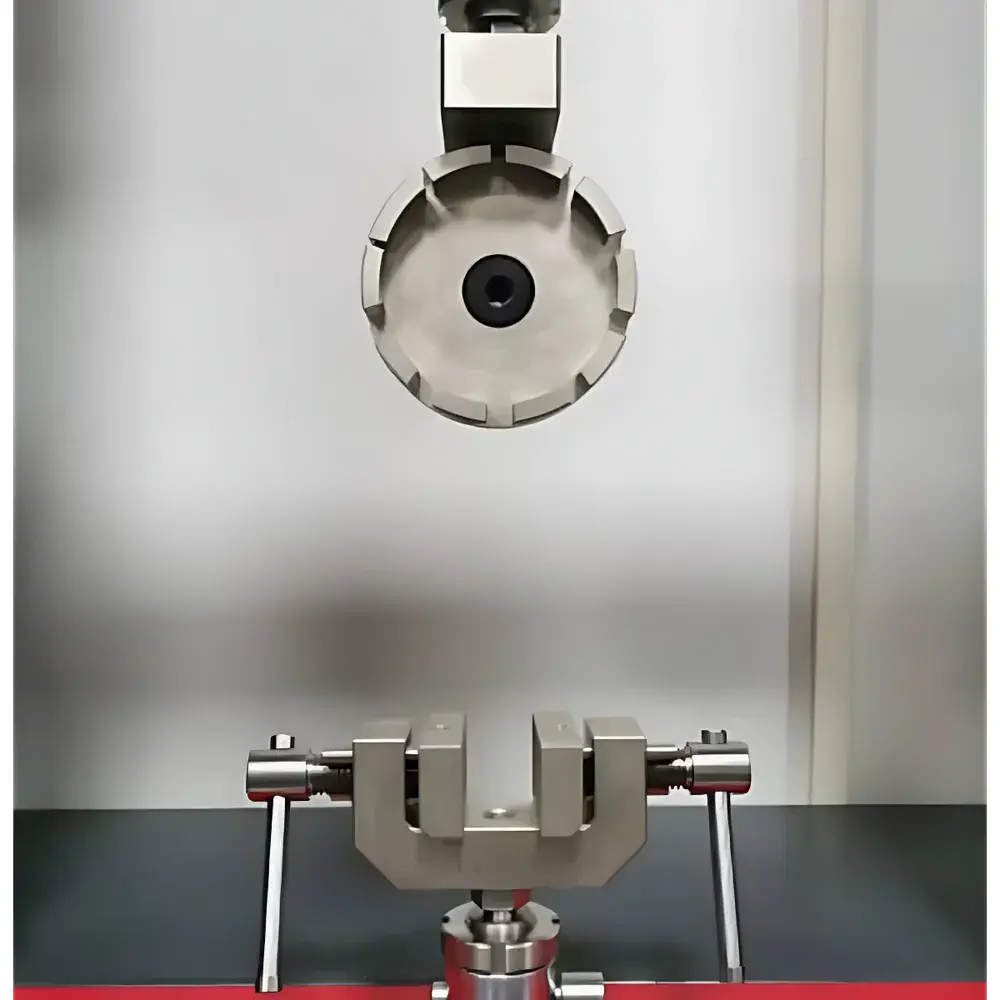
- Modular grip interface accommodating standardized terminal test fixtures (e.g., IEC 60512-2-1 compliant jaws, custom crimp retention adapters) without tooling changeover.
- Integrated thermal management for continuous operation under extended duty cycles, validated per IEC 60068-2-2 temperature stability requirements.
Sample Compatibility & Compliance
The TFW-253 supports mechanical testing of discrete wire harness components—including insulated and bare terminals (Fakra, USCAR, Mini-USB, LVDS), crimped pin/socket assemblies, ribbon cable connectors, and PCB-mounted headers—across cross-sectional areas from 0.13 mm² to 6.0 mm². Specimen mounting complies with ASTM D3043 (standard practice for tension testing of structural composites), ISO 15112 (wire harness mechanical integrity), and UL 1277 (electrical equipment wiring harnesses). All test procedures adhere to GLP-aligned documentation workflows, with audit-ready calibration records traceable to CNAS-accredited laboratories. The system meets electromagnetic compatibility (EMC) requirements per EN 61326-1 and is certified for CE marking under Machinery Directive 2006/42/EC.
Software & Data Management
The embedded Windows-based control software provides fully configurable test sequences compliant with 21 CFR Part 11 requirements—including electronic signatures, audit trails, and immutable raw-data archiving. Users may define multi-step profiles (e.g., preload → ramp → hold → unload) with real-time monitoring of force–displacement, stress–strain, or force–time curves. Units are freely convertible across SI, imperial, and industry-specific conventions (e.g., N, lbf, kgf, MPa, psi). Test reports include metadata (operator ID, timestamp, environmental conditions), statistical summaries (mean, SD, CV%), and overlay-capable curve comparison for lot-to-lot consistency analysis. Data export supports CSV, PDF, and XML formats; optional API integration enables direct ingestion into MES or QMS platforms (e.g., Siemens Opcenter, ETQ Reliance).
Applications
- Quantitative validation of crimp joint integrity per USCAR-21 Section 5.2 (pull-off force acceptance thresholds).
- Comparative analysis of terminal plating adhesion (tin, silver, gold) under accelerated aging conditions.
- Process capability studies (Cp/Cpk) for automated crimping stations using SPC-enabled batch reporting.
- Fatigue life assessment of multi-cycle terminal insertion/removal per IEC 60512-5-1.
- Root cause investigation of field failures involving insulation displacement or barrel collapse.
- Qualification testing of new connector designs against OEM-specific mechanical specifications (e.g., GMW3172, Ford WSS-M99P1111-A).
FAQ
What standards does the TFW-253 support out-of-the-box?
Preconfigured test methods include ASTM D3043, ISO 15112, USCAR-21, IEC 60512-2-1, and GB/T 28289–2012 for aluminum alloy terminal testing.
Can the system be integrated into an automated production line?
Yes—RS-232, Ethernet TCP/IP, and optional PLC-compatible digital I/O enable seamless communication with SCADA systems and robotic handling cells.
Is third-party calibration certification available?
Tuofeng provides factory calibration certificates traceable to NIM (National Institute of Metrology, China); CNAS-accredited field calibration services are offered globally.
How is data integrity ensured during long-duration tests?
The controller employs non-volatile memory buffering and auto-save intervals ≤100 ms, preventing data loss during power interruption or software reset.
What maintenance schedule is recommended for sustained 0.5-class accuracy?
Annual verification of load cell linearity, encoder calibration, and mechanical alignment is advised; all procedures follow JJG 475–2008 guidelines.



