
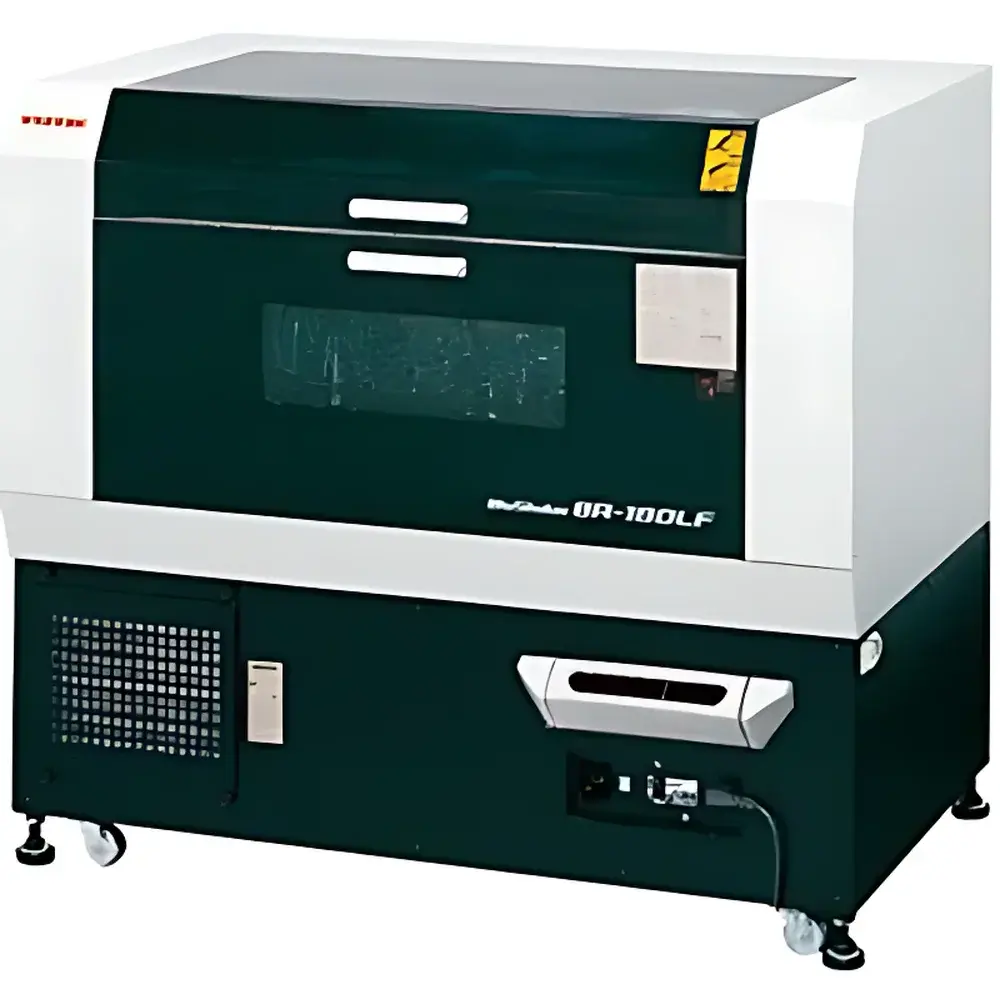
TAITEC BR-180LF Large-Scale Temperature-Controlled Orbital Shaking Incubator
| Brand | TAITEC |
|---|---|
| Origin | Japan |
| Model | BR-180LF / BR-180LF-Light / BR-180LF-70RT |
| Oscillation Mode | Orbital & Reciprocal (switchable) |
| Speed Range | 25–400 rpm |
| Amplitude | 25 mm / 50 mm (BR-180LF), 70 mm (BR-180LF-70RT) |
| Temperature Range | +4°C to +70°C (standard & 70RT), +15°C to +70°C (Light model) |
| Temp. Accuracy | ±0.3°C to ±1.0°C |
| Platform Size | 700 × 500 mm |
| Max. Load Capacity | 10 kg (excl. platform) |
| Illumination | Up to 11,000 lux (adjustable, 6 × 20 W daylight lamps) |
| Door Design | Dual-hinged clamshell (top + front access) |
| Cooling | Compressor-based (125 W) |
| Heating | 700 W resistive heater |
| Power Supply | AC 100 V, 12 A (50/60 Hz) |
| Dimensions (W×D×H) | 1110 × 716 × 990 mm (BR-180LF), 1110 × 716 × 1075 mm (Light), 1110 × 716 × 930 mm (70RT) |
| Weight | ~180 kg (BR-180LF), ~205 kg (Light), ~190 kg (70RT) |
| Compliance | Designed for GLP-compliant microbial, cell, and photobiological cultivation |
Overview
The TAITEC BR-180LF is a large-format, refrigerated orbital shaking incubator engineered for high-reproducibility cultivation of microorganisms, mammalian/insect cells, algae, and plant suspension cultures under tightly controlled thermal and mechanical conditions. Its dual-mode oscillation system—switchable between orbital and reciprocal motion—enables precise adaptation to diverse biological requirements: orbital mode delivers uniform mixing at speeds up to 400 rpm (with 25 mm amplitude) or 250 rpm (with 50 mm amplitude), while the dedicated BR-180LF-70RT variant employs a robust 70 mm amplitude optimized for high-shear applications such as actinomycete fermentation. The BR-180LF-Light configuration integrates six adjustable-intensity daylight lamps (20 W each), providing up to 11,000 lux at 230 mm above the platform—meeting ISO 8573-1 and ASTM E3081 photobioreactor illumination standards for photosynthetic culture systems. All variants feature compressor-assisted cooling (125 W), PID-controlled heating (700 W), and a temperature stability envelope of ±0.3°C to ±1.0°C across the operational range (+4°C to +70°C). The unit operates within ambient conditions of +5°C to +30°C and includes integrated frost management logic to maintain calibration integrity during extended low-temperature operation.
Key Features
- Dual-hinged clamshell door design: Top and front sections open independently, enabling ergonomic loading/unloading of large-volume vessels—including 5 L flasks (up to 4 per run) and 500 mL flasks (24 per run)—without platform retraction or operator stooping.
- Modular oscillation platform: Standard MT-7050 platform (700 × 500 mm) accepts interchangeable fixtures—including claw-type clamps (CF-series), angular racks (AT-series), and spring-mesh trays (MR-4030L)—supporting >20 vessel configurations from 12 mm test tubes to 5 L disposable bioreactors.
- Programmable multi-step protocol engine: Stores up to 4 independent programs, each with 9 user-defined steps; each step specifies temperature, speed, amplitude (where applicable), duration (00h00m–99h59m), and optional temperature ramping (gradient function).
- Comprehensive safety architecture: Includes dual-stage overtemperature cutoff (compressor and chamber sensors), motor stall detection, door-open interlock, non-volatile memory error logging, current leakage protection, and configurable high/low temperature alarms with setpoint override lockout.
- Mobility and leveling system: Integrated casters with locking brakes and height-adjustable leveling feet ensure stable placement on uneven laboratory flooring—critical for long-term rotational stability and vibration isolation.
Sample Compatibility & Compliance
The BR-180LF series accommodates standard microbiological and bioprocess containers—including Erlenmeyer flasks (50 mL to 5 L), round-bottom flasks, disposable bioreactors (Corning 3 L, Thomson 5 L), and centrifuge tubes—via application-specific mounting accessories. The BR-180LF-70RT’s 70 mm amplitude generates enhanced gas–liquid mass transfer in viscous or filamentous cultures, aligning with USP and ISO 13408-2 recommendations for aerobic microbial growth validation. The Light variant satisfies ASTM D4169 photoperiod testing requirements for algal biomass production and supports OECD 201 compliance in aquatic toxicity assays. All models meet IEC 61010-1:2010 safety standards for laboratory equipment and incorporate hardware-level safeguards compliant with FDA 21 CFR Part 11 for electronic record integrity when paired with TAITEC’s optional OD-Monitor data acquisition software.
Software & Data Management
While the BR-180LF operates via an intuitive front-panel interface with real-time digital display of temperature, speed, elapsed time, and alarm status, full traceability is achieved through integration with TAITEC’s OD-Monitor suite (sold separately). This Windows-based application enables remote monitoring, automated CSV export of time-stamped sensor logs (temperature, RPM, lamp intensity), and GLP/GMP-compliant audit trails—including user login metadata, parameter change history, and system event timestamps. All internal program memories retain settings after power loss via embedded EEPROM, and critical fault events (e.g., sensor drift, compressor overtemp) are timestamped and stored in non-volatile memory for root-cause analysis. Optional RS-232 or Ethernet connectivity supports centralized lab equipment management platforms.
Applications
- Microbial fermentation: High-yield E. coli, Bacillus, and Streptomyces cultivations leveraging 70 mm amplitude-induced shear stress for improved oxygen transfer in viscous media.
- Photobiological research: Controlled-light algal growth (e.g., Chlamydomonas, Nannochloropsis) with spectrally stable daylight simulation and programmable photoperiod scheduling.
- Cell culture scalability: Suspension adaptation of insect (Sf9, Sf21) and yeast (Pichia pastoris) systems prior to bioreactor transfer—validated using ISO 20957-3 mechanical stress profiles.
- Plant tissue culture: Hormone-responsive callus proliferation and protoplast regeneration under tunable light intensities and gentle orbital agitation.
- Method development & QC: ISO/IEC 17025-accredited laboratories utilize the BR-180LF’s temperature ramping and multi-step programming for standardized growth curve generation and antimicrobial susceptibility testing (ASTM E2645).
FAQ
What is the maximum flask size supported without accessory modification?
The standard MT-7050 platform accommodates four 5 L Erlenmeyer flasks or twenty-four 500 mL flasks simultaneously. Larger custom vessels require evaluation against platform load distribution limits (10 kg max, excluding platform mass).
Can the BR-180LF-Light operate below 15°C?
No—the light module’s thermal management restricts its operational minimum to +15°C. For sub-ambient photobiological work, the standard BR-180LF or BR-180LF-70RT must be used with external lighting.
Is CO₂ supplementation supported natively?
The base unit does not include gas ports, but TAITEC offers certified retrofit kits for forced CO₂ sparging—compliant with ISO 14644-1 Class 5 cleanroom integration protocols.
How is temperature uniformity validated across the chamber?
TAITEC provides factory calibration certificates documenting 9-point spatial mapping (per ISO/IEC 17025 Annex A.4) at three setpoints (+25°C, +37°C, +55°C); users may perform in-house verification using NIST-traceable PT100 probes.
Are firmware updates available for legacy units?
Yes—TAITEC releases periodic firmware revisions addressing sensor calibration drift compensation, USB communication stability, and expanded protocol memory; updates require authorized service technician installation.



