
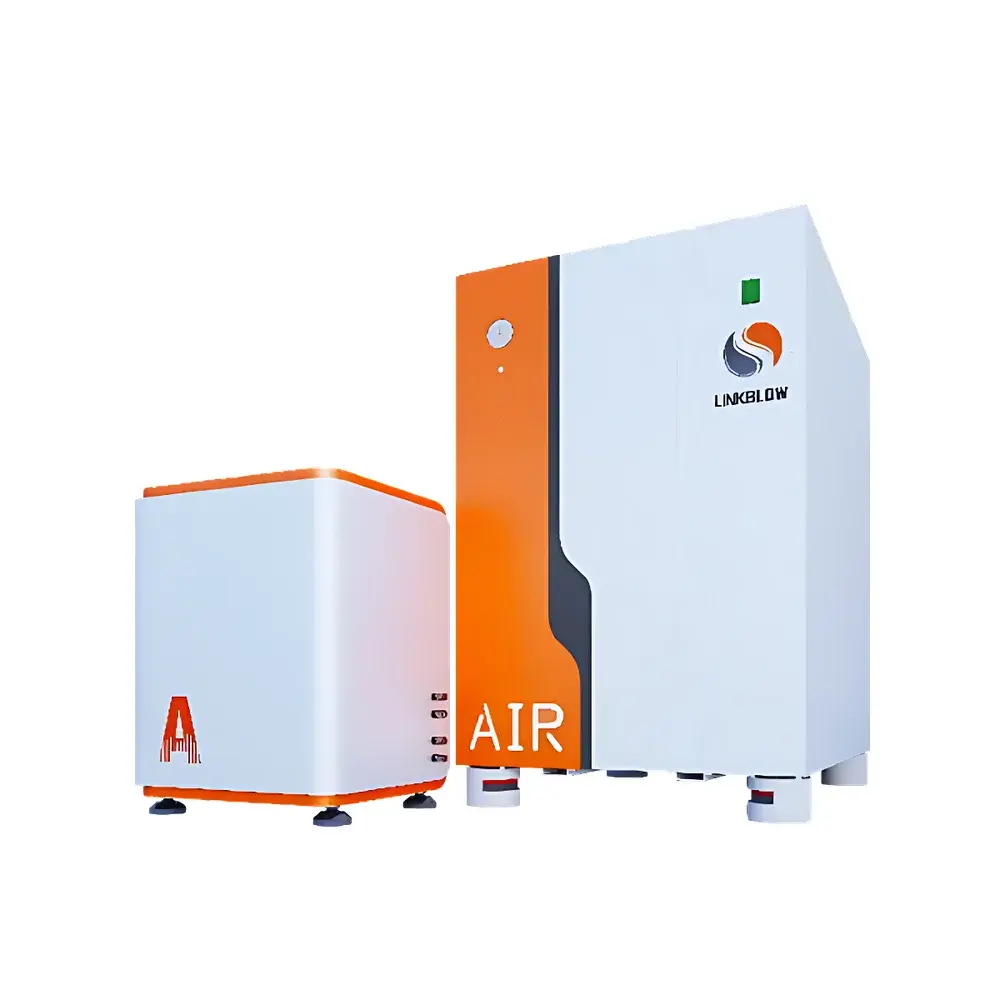
RUNRONG INSTRUMENT A-Series Silent High-Flow Clean Air Generator
| Brand | RUNRONG INSTRUMENT |
|---|---|
| Origin | Shanghai, China |
| Manufacturer Type | Authorized Distributor |
| Product Origin | Domestic (China) |
| Model | A-Series |
| Pricing | Upon Request |
| Hydrocarbon Removal Principle | Multi-Stage Composite Drying Technology |
| Output Flow Rate | 0–320 L/min |
| Output Pressure | 0–0.7 MPa |
| Dew Point | −80 °C |
Overview
The RUNRONG INSTRUMENT A-Series Silent High-Flow Clean Air Generator is an engineered solution for laboratories requiring continuous, oil-free, ultra-dry compressed air with acoustic optimization and structural robustness. Designed specifically to support high-demand analytical instrumentation—including gas chromatography (GC), atomic absorption spectroscopy (AAS), mass spectrometry (MS), and inductively coupled plasma (ICP) systems—the generator employs a closed-loop, sealed cabinet architecture integrating an oil-free scroll compressor, multi-stage desiccant-based drying, and proprietary electronic refrigerated drying. Its core measurement and control paradigm centers on maintaining stable pressure and flow delivery while achieving trace-level hydrocarbon removal and sub-ambient dew point performance. Unlike conventional standalone compressors, the A-Series eliminates lubricant-derived aerosols and volatile organic compounds (VOCs), thereby preventing column contamination, detector fouling, and baseline drift in sensitive detection workflows.
Key Features
- Sealed box-type enclosure with integrated acoustic damping materials—reduces operational noise by 15–20 dB(A) compared to standard industrial compressors, meeting ISO 15714:2021 ambient noise requirements for analytical laboratories.
- Oil-free scroll compressor certified to ISO 8573-1 Class 0 (2010) for total oil content (<0.01 mg/m³), ensuring zero risk of hydrocarbon carryover into instrument gas lines.
- Multi-stage purification train comprising coalescing pre-filters, activated carbon beds, and high-capacity molecular sieve modules—removes particulates (>0.01 µm), water vapor, CO₂, and non-methane hydrocarbons to <1 ppb levels.
- Proprietary thermoelectric refrigerated drying unit—operates without refrigerants or condensate pumps—delivers consistent dew point stability at −80 °C (measured per ISO 8573-3:2019 using chilled mirror hygrometry).
- Independent thermal management system with forced-air convection and structural frame reinforcement—enhances long-term reliability under continuous 24/7 operation and ambient temperatures up to 35 °C.
- Onboard digital interface with real-time monitoring of outlet pressure, flow rate, dew point, and filter service life—supports manual setpoint adjustment and alarm-triggered shutdown protocols.
Sample Compatibility & Compliance
The A-Series is validated for compatibility with all major laboratory gas-dependent instruments requiring Grade 1 or Grade 2 compressed air per ISO 8573-1:2010 (Class 1.2.1 or better). It meets the air purity specifications outlined in ASTM D6352–22 (Standard Practice for Compressed Air Quality in Analytical Laboratories) and supports GLP/GMP-compliant environments through audit-ready operational logs. While not intrinsically rated for hazardous locations, its electrical design complies with IEC 61000-6-3 (EMC Emission Standard) and IEC 61000-6-2 (Immunity Standard). Optional factory-installed pressure regulators and flow meters are available for integration into ISO/IEC 17025-accredited calibration workflows.
Software & Data Management
The generator includes embedded firmware supporting RS-485 Modbus RTU communication for integration into centralized lab infrastructure monitoring platforms (e.g., LabVantage, Thermo Fisher SampleManager). Data logging records timestamped values for pressure, flow, dew point, and cumulative runtime—exportable via USB-C as CSV files for traceability. All firmware updates follow secure signed-package protocols; no cloud connectivity is implemented by default, preserving data sovereignty. Audit trail functionality complies with FDA 21 CFR Part 11 requirements when deployed with validated third-party LIMS interfaces and electronic signature modules.
Applications
- Carrier and auxiliary gas supply for GC-FID, GC-TCD, and GC-MS systems where hydrocarbon-free air prevents ghost peaks and detector saturation.
- Plasma gas source for ICP-OES and ICP-MS—eliminates carbon deposition on torches and cones, extending component lifetime and reducing recalibration frequency.
- Combustion air for flame AAS and hydride generation systems—ensures stoichiometric consistency and minimizes oxide interference.
- Instrument purge and enclosure pressurization in cleanroom-adjacent analytical suites—maintains positive differential pressure without introducing particulate or moisture ingress.
- Backup air source for nitrogen generators or zero-air systems during maintenance cycles—enabling uninterrupted method execution in regulated QC/QA labs.
FAQ
What is the maximum allowable ambient temperature for continuous operation?
The unit is rated for continuous duty at ambient temperatures between 5 °C and 35 °C, with relative humidity ≤80% non-condensing, per IEC 60068-2-1 and IEC 60068-2-2 environmental testing standards.
Can the dew point be verified independently after installation?
Yes—integrated dew point sensor output is accessible via Modbus register mapping; users may cross-validate using a NIST-traceable chilled-mirror hygrometer (e.g., Michell Opti-Dew) connected to the outlet manifold.
Is the A-Series compatible with existing lab gas distribution piping?
It features standard 1/2″ NPT male inlet/outlet ports and supports connection to stainless steel or electropolished 316L tubing systems compliant with ASTM B861 and SEMI F57 specifications.
How often must the filtration modules be replaced?
Filter service intervals are condition-based: coalescing filters every 6,000 hours, activated carbon every 12 months or 8,000 hours (whichever occurs first), and molecular sieves every 24 months—tracked automatically via onboard counter.
Does the unit support remote diagnostics?
Remote access requires external gateway hardware (e.g., Siemens Desigo CC or Ignition SCADA); the generator itself provides only local serial/Modbus telemetry without embedded web server or Wi-Fi capability.



