
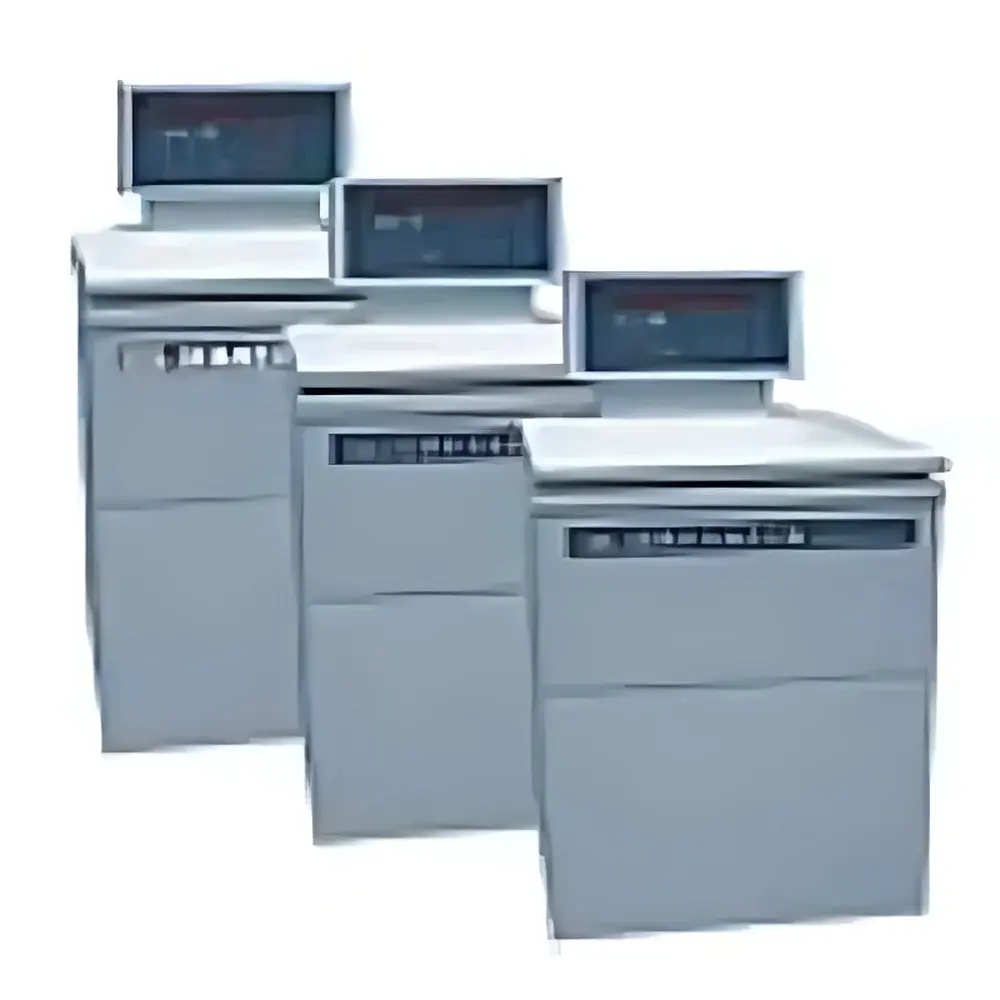
Low-Speed Refrigerated Centrifuge DDL-5M / DD-5M
| Origin | Shanghai, China |
|---|---|
| Manufacturer Type | Authorized Distributor |
| Origin Category | Domestic (PRC) |
| Model | DDL-5M / DD-5M |
| Max Speed | 5000 rpm |
| Max RCF | 3780 × g |
| Max Capacity | 750 mL × 4 (swinging bucket) or 50 mL × 6 (angle rotor) |
| Speed Accuracy | ±50 rpm |
| Temperature Range | −20 °C to +40 °C |
| Temp. Accuracy | ±1 °C |
| Timer Range | 0–99 h 59 min |
| Power Supply | AC 220 V, 50 Hz, 20 A (DDL-5M) / 10 A (DD-5M) |
| Dimensions (L×W×H) | 620 × 710 × 1100 mm |
| Weight | 180 kg |
Overview
The DDL-5M and DD-5M Low-Speed Refrigerated Centrifuges are engineered for precision sedimentation and separation of biological suspensions under controlled thermal conditions. Designed around a brushless DC inverter motor and microprocessor-based control architecture, these instruments operate on the principle of sedimentation centrifugation—applying gravitational forces (expressed as relative centrifugal force, RCF) to separate particles based on density, size, and shape in liquid media. Their operational range (up to 5000 rpm and 3780 × g) places them within the low-speed centrifugation category, making them especially suitable for routine clinical, blood banking, and cell culture applications where gentle yet reproducible pelleting is required—such as platelet-rich plasma (PRP) preparation, whole blood fractionation, lymphocyte isolation, and large-volume sample processing (e.g., 750 mL per rotor). The integrated dual-path temperature control system—capable of active cooling down to −20 °C and heating up to +40 °C—ensures thermally stable environments critical for preserving labile biomolecules and maintaining hematocrit integrity during component separation.
Key Features
- Microprocessor-controlled inverter drive enabling precise speed regulation (±50 rpm accuracy) and programmable acceleration/deceleration across 0–9 selectable ramps
- Intuitive capacitive touch panel interface with real-time display of speed, RCF, time, temperature, and rotor identification
- Auto-RCF calculation and direct RCF setpoint input—eliminating manual conversion errors between rpm and g-force
- Dual-mode thermal management: independent refrigeration and heating circuits ensure stable chamber temperatures across ambient fluctuations, validated to ±1 °C accuracy
- Comprehensive safety architecture: electronic door lock with interlock verification, imbalance detection with automatic shutdown, overspeed cutoff, overtemperature protection, and lid-sensor monitoring
- Three rotor configurations supported: No.1 swinging-bucket rotor (7 mL × 148, max 4000 rpm), No.2 fixed-angle rotor (50 mL × 6, max 5000 rpm), and No.3 high-capacity swinging-bucket rotor (750 mL × 4, max 4000 rpm)
- Extended timer range (0–99 h 59 min) enables unattended overnight or multi-shift protocols without interruption
Sample Compatibility & Compliance
These centrifuges accommodate standard clinical and research sample formats—including polypropylene conical tubes (15–50 mL), blood collection tubes (EDTA, heparin, serum separator), and custom-designed 750 mL bottles—without requiring adapter modifications. All rotors are dynamically balanced and certified to ISO 15195:2018 (requirements for centrifuge calibration) and conform to IEC 61010-1:2010 (safety requirements for electrical equipment for measurement, control, and laboratory use). The temperature control system meets CLSI GP44-A4 specifications for thermal stability in blood bank centrifugation. Data logging and parameter traceability support GLP-compliant workflows; optional audit trail modules (when integrated with external LIMS) facilitate alignment with FDA 21 CFR Part 11 requirements for electronic records.
Software & Data Management
While standalone operation is fully functional via the onboard interface, both models support RS-232 serial output for connection to laboratory information systems (LIS) or centralized monitoring platforms. Protocol parameters—including speed, RCF, temperature setpoint, ramp profiles, and run duration—are stored in non-volatile memory (up to 99 user-defined programs). Event logs record timestamps for all critical operations (start/stop, error triggers, door cycles, temperature deviations), accessible via USB export for QA review. No proprietary software installation is required; exported CSV files are compatible with common data analysis tools (e.g., Excel, GraphPad Prism, LabArchives).
Applications
- Clinical hematology: Separation of packed red blood cells (RBCs), white blood cells (WBCs), and platelets from whole blood at defined g-forces and temperatures
- Blood banking: Preparation of cryoprecipitate, fresh frozen plasma (FFP), and washed RBC units per AABB standards
- Cell culture labs: Harvesting adherent and suspension cells prior to lysis or cryopreservation
- Biopharma QC: Clarification of microbial fermentation broths and clarification of monoclonal antibody harvest streams
- Veterinary diagnostics: Processing serum, plasma, and synovial fluid samples from large-animal specimens
- Environmental microbiology: Concentration of waterborne pathogens (e.g., Giardia cysts, Cryptosporidium oocysts) prior to microscopy or PCR
FAQ
What is the difference between the DDL-5M and DD-5M models?
The DDL-5M includes an enhanced power supply (20 A) and is optimized for continuous high-load operation with the 750 mL swinging-bucket rotor, whereas the DD-5M (10 A) is configured for standard-angle and smaller-capacity swinging-bucket applications.
Can these centrifuges maintain −20 °C during extended runs?
Yes—the compressor-based refrigeration system is rated for sustained operation at −20 °C for up to 99 hours, provided ambient room temperature remains ≤25 °C and ventilation clearances are maintained.
Are rotor certifications included with purchase?
Each rotor ships with a factory-issued calibration certificate referencing ISO 15195 and includes dynamic balance verification data traceable to national metrology institutes.
Is remote monitoring possible?
RS-232 connectivity supports basic status polling and parameter readout; integration with SCADA or building management systems requires third-party protocol translation hardware.
Does the instrument comply with electromagnetic compatibility (EMC) directives?
Yes—both models meet EN 61326-1:2013 (industrial, scientific, and medical equipment – EMC requirements) and carry CE marking for the European Economic Area.



