
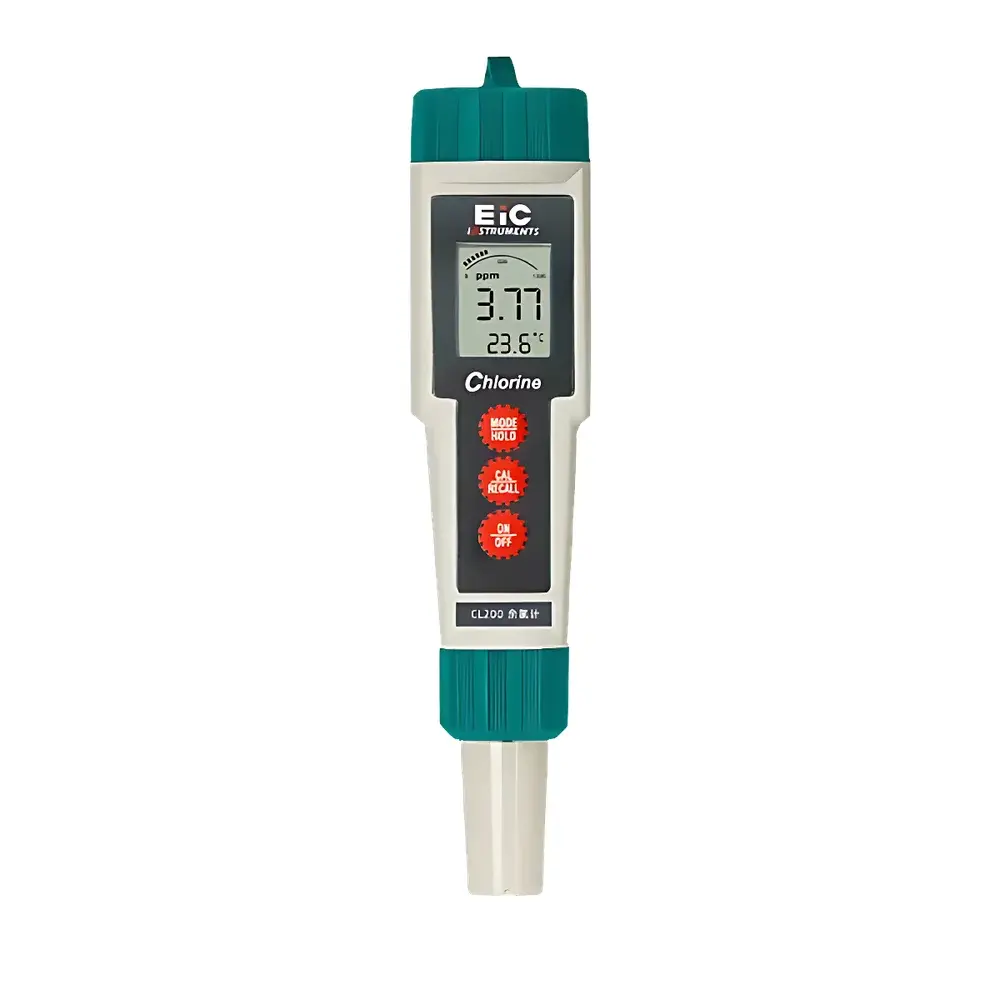
ExStik CL200 Portable Residual Chlorine Meter
| Brand | ExStik |
|---|---|
| Origin | Shanghai, China |
| Model | CL200 |
| Instrument Type | Portable |
| Measurement Principle | Electrochemical Amperometric Sensor |
| Measured Parameter | Total Residual Chlorine |
| Range | 0.01–10.00 ppm |
| Accuracy | ±10% of reading or ±0.01 ppm (0.05–5.00 ppm) |
| Repeatability | ±0.01 ppm |
| Resolution | 0.01 ppm |
| LOD | 0.05 ppm |
| Temperature Range | −5 to 90 °C |
| Temp. Resolution | 0.1 °C/°F |
| Temp. Accuracy | ±1 °C (−5 to 50 °C) |
| Data Storage | 15 readings |
| Power | 4 × CR2032 (1.5 V) |
| Auto-off | After 10 min idle |
| IP Rating | IP57 |
Overview
The ExStik CL200 Portable Residual Chlorine Meter is a compact, field-deployable electrochemical amperometric sensor-based instrument engineered for rapid, on-site quantification of total residual chlorine in aqueous matrices. Unlike colorimetric or DPD-based methods—which are susceptible to interferences from sample turbidity, coloration, or oxidant cross-reactivity—the CL200 employs a membrane-covered amperometric chlorine-specific electrode that selectively detects dissolved hypochlorous acid (HOCl), hypochlorite ion (OCl⁻), and chloramines (e.g., monochloramine) in equilibrium with free chlorine species. This principle ensures high specificity and robustness across diverse water types, including potable water, swimming pool water, cooling tower recirculation systems, wastewater effluents, and food-grade process rinses. The device complies with U.S. EPA Method 334.0 for amperometric residual chlorine measurement and supports routine verification of disinfection efficacy in accordance with NSF/ANSI Standard 50 (for aquatic facilities) and WHO Guidelines for Drinking-water Quality.
Key Features
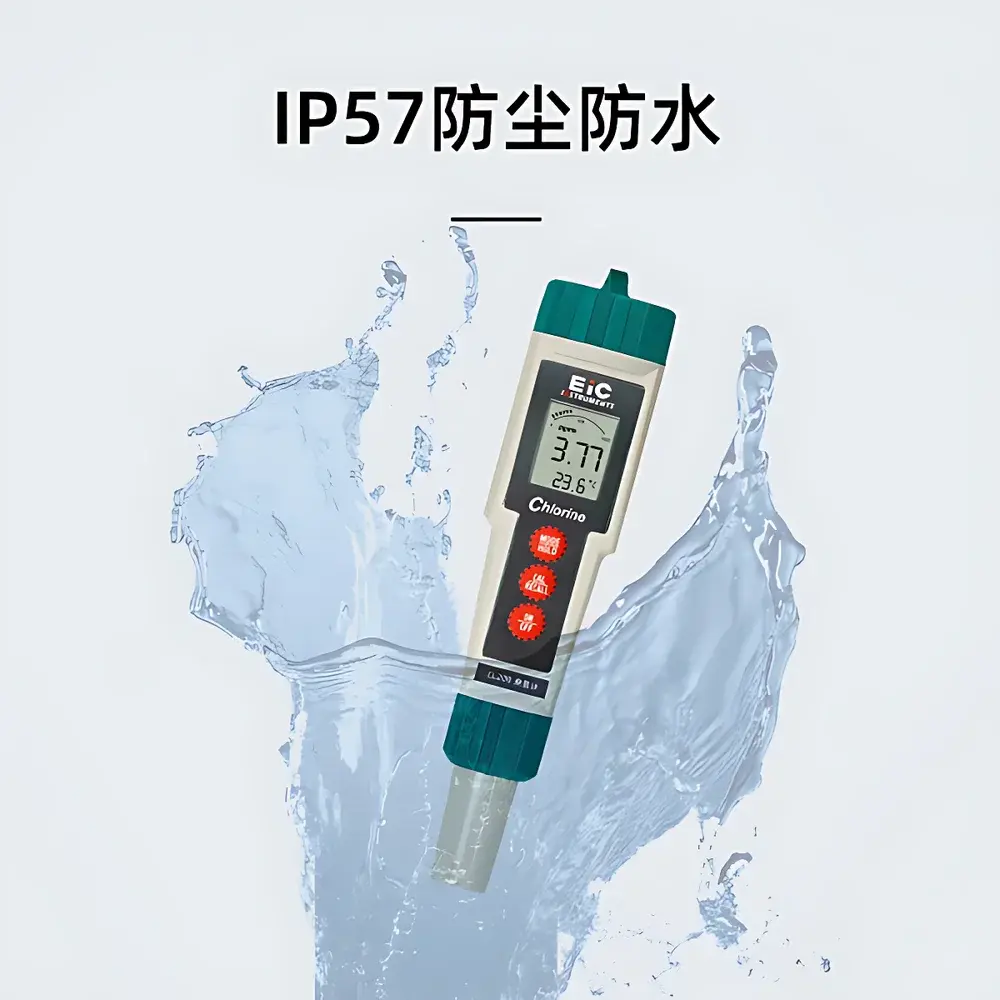
- IP57-rated waterproof housing enables submersion up to 1 m for 30 minutes—ideal for direct immersion in tanks, pipes, or open reservoirs without risk of ingress-related failure.
- Integrated electrode status indicator provides real-time feedback on sensor membrane integrity and electrolyte saturation, reducing calibration drift and supporting predictive maintenance.
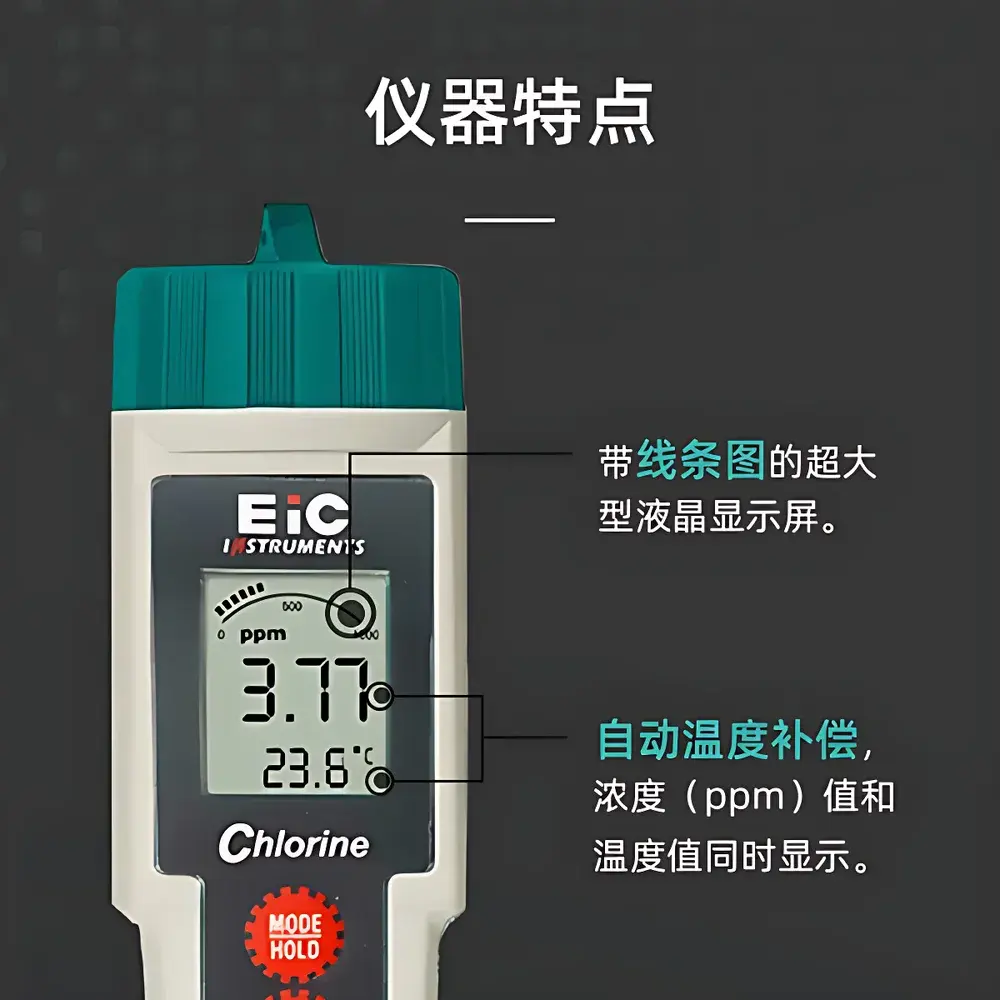
- Auto-ranging display with 0.01 ppm resolution delivers stable, low-noise output across the full 0.01–10.00 ppm measurement span; optimized for regulatory thresholds (e.g., EPA’s 0.2–4.0 ppm residual chlorine range for drinking water).
- Temperature-compensated measurement algorithm corrects for kinetic effects of temperature on chlorine diffusion rate and sensor response, using built-in thermistor (±1 °C accuracy from −5 to 50 °C).
- Low-power architecture with auto-shutdown after 10 minutes of inactivity extends battery life to >2,000 measurements per set of four CR2032 cells.
- On-device memory stores up to 15 timestamped readings with manual recall—sufficient for spot-check documentation during GLP-compliant field audits or shift handovers.
Sample Compatibility & Compliance
The CL200 is validated for use with clarified and turbid aqueous samples, including those containing suspended solids ≤100 mg/L, organic load (COD) ≤50 mg/L, and pH 4.0–8.5. It exhibits negligible interference from common ions (e.g., Cl⁻ ≤5,000 mg/L, NO₃⁻ ≤100 mg/L, SO₄²⁻ ≤200 mg/L) and is unaffected by chromaticity or UV-absorbing compounds. The instrument meets IEC 60529 for IP57 ingress protection and conforms to CE marking requirements for portable electrochemical analyzers. While not certified under FDA 21 CFR Part 11, its data logging capability supports traceable record-keeping aligned with ISO/IEC 17025 laboratory quality management systems and EPA-approved field testing protocols.
Software & Data Management
The CL200 operates as a standalone field instrument with no proprietary software dependency. All stored readings are viewable directly on the LCD interface via sequential scroll navigation. For integration into digital workflows, users may manually transcribe values into LIMS-compatible spreadsheets or audit logs. The absence of Bluetooth, USB, or cloud connectivity reflects its design intent: simplicity, reliability, and immunity to firmware vulnerabilities or wireless signal dropout in electromagnetically noisy industrial environments (e.g., pump stations, HVAC mechanical rooms). Calibration records—including date, standard concentration, and slope value—must be maintained externally per ISO 17025 clause 7.7.
Applications
- Verification of residual chlorine residuals in municipal drinking water distribution networks prior to consumer delivery.
- Real-time monitoring of chlorination dosing efficiency in swimming pool and spa recirculation systems per CDC Model Aquatic Health Code (MAHC) recommendations.
- Process control of chlorine contact time and dose in food processing rinse water, dairy sanitation loops, and beverage bottling lines.
- Field validation of dechlorination performance in wastewater treatment plant outfalls prior to environmental discharge.
- Emergency response screening during natural disasters or infrastructure failures where rapid assessment of disinfectant residual is critical to public health decision-making.
FAQ
Does the CL200 measure free chlorine separately from combined chlorine?
No—the CL200 reports total residual chlorine only. Free and combined chlorine speciation requires either DPD titration or dual-sensor amperometric instrumentation.
What is the recommended calibration frequency?
Calibrate before each use session or at least once per day when conducting multiple measurements; use NIST-traceable chlorine standards (e.g., 1.0 ppm and 5.0 ppm HOCl solutions).
Can the electrode be cleaned if fouled by biofilm or scale?
Yes—gently wipe the sensor membrane with lint-free tissue moistened with dilute acetic acid (1%), then rinse with deionized water; avoid abrasive scrubbing or organic solvents.
Is temperature compensation automatic or manual?
Fully automatic—internal thermistor continuously measures sample temperature and applies correction in real time using the Clark-type electrode temperature coefficient.
How does the IP57 rating impact operational safety in wet environments?
It permits safe operation in rain, splashing zones, and temporary submersion—eliminating need for protective enclosures during tank entry or open-channel sampling.
Related Products







