
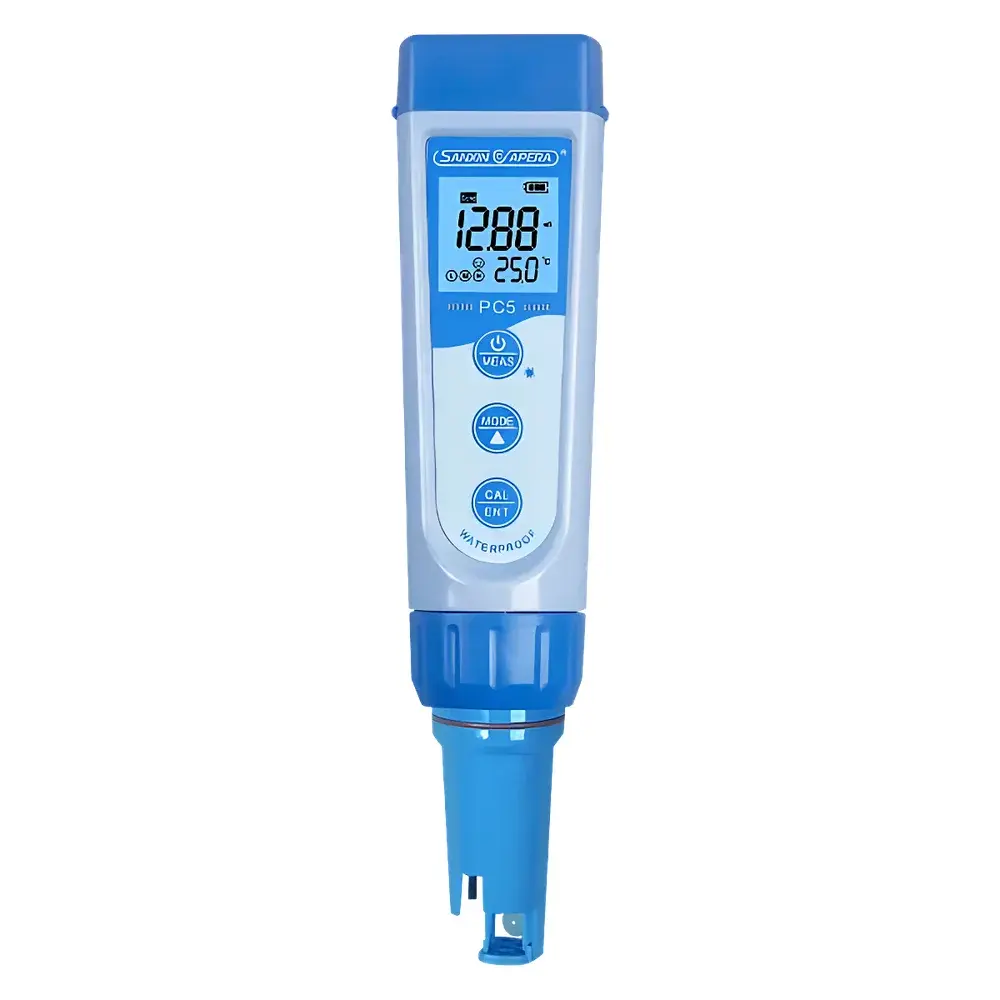
Sanxin PC5 Pen-Type pH/Conductivity Meter
| Brand | Sanxin Peirui |
|---|---|
| Origin | Shanghai, China |
| Manufacturer Type | Manufacturer |
| Product Category | Domestic |
| Model | PC5 |
| Price | ¥1,150 |
| Measured Parameters | pH, Conductivity, TDS, Salinity, Temperature |
| Portability | Pen-Style |
| Application Environment | Field & On-Site Use |
| Conductivity Ranges | 0–200.0 µS/cm, 0–2,000 µS/cm, 0–20.00 mS/cm |
| TDS Range | 0–10 ppt |
| Resistivity Range | Not Supported |
| Salinity Range | 0–10 ppt |
| Temperature Range | 0–50 °C |
| Accuracy | ±1% FS (Conductivity), ±0.01 pH |
| Minimum Resolution | 1 µS/cm (in 0–2,000 µS/cm range) |
Overview
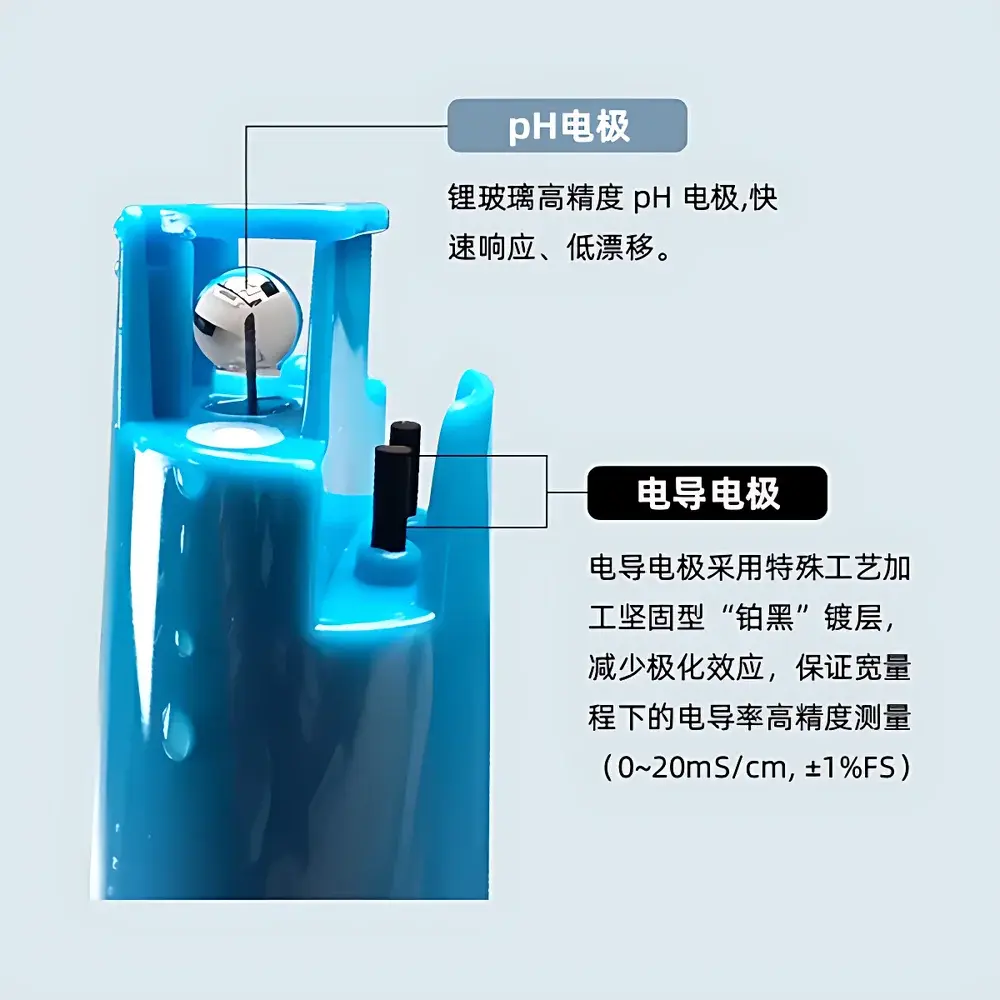
The Sanxin PC5 Pen-Type pH/Conductivity Meter is an integrated electrochemical field instrument engineered for rapid, reliable measurement of pH, electrical conductivity (EC), total dissolved solids (TDS), salinity, and temperature in aqueous solutions. Based on potentiometric pH sensing and four-electrode (or two-electrode) conductometric principles, the PC5 delivers laboratory-grade traceability in a rugged, handheld form factor. Its dual-sensor architecture—combining a replaceable combination pH/conductivity electrode with built-in temperature compensation—enables simultaneous multi-parameter acquisition without cross-interference. Designed for real-time decision-making in non-laboratory environments, the PC5 adheres to fundamental metrological requirements defined in ISO 7888 (conductivity of water) and ASTM D1125 (electrical conductivity of water), supporting routine verification against NIST-traceable calibration standards.
Key Features
- Replaceable combination electrode with integrated temperature sensor for stable, reproducible readings across varying thermal conditions
- Auto-ranging conductivity measurement across three scalable ranges (0–200.0 µS/cm, 0–2,000 µS/cm, 0–20.00 mS/cm), minimizing manual range selection errors
- Two-color backlit LCD display with programmable auto-off backlight and data hold functionality for low-light or high-glare field conditions
- Intelligent microprocessor control enabling 1–3 point automatic pH calibration, auto-temperature compensation (0–50 °C), and real-time diagnostic alerts for electrode status or calibration drift
- IP67-rated enclosure providing full dust ingress protection and immersion resistance up to 1 m for 30 minutes—validated per IEC 60529
- Low-power design powered by two AAA alkaline batteries (included), delivering >200 hours of continuous operation under typical field use
- Integrated auto-shutdown (after 10 min inactivity) and battery voltage monitoring to prevent data loss during extended deployments
Sample Compatibility & Compliance
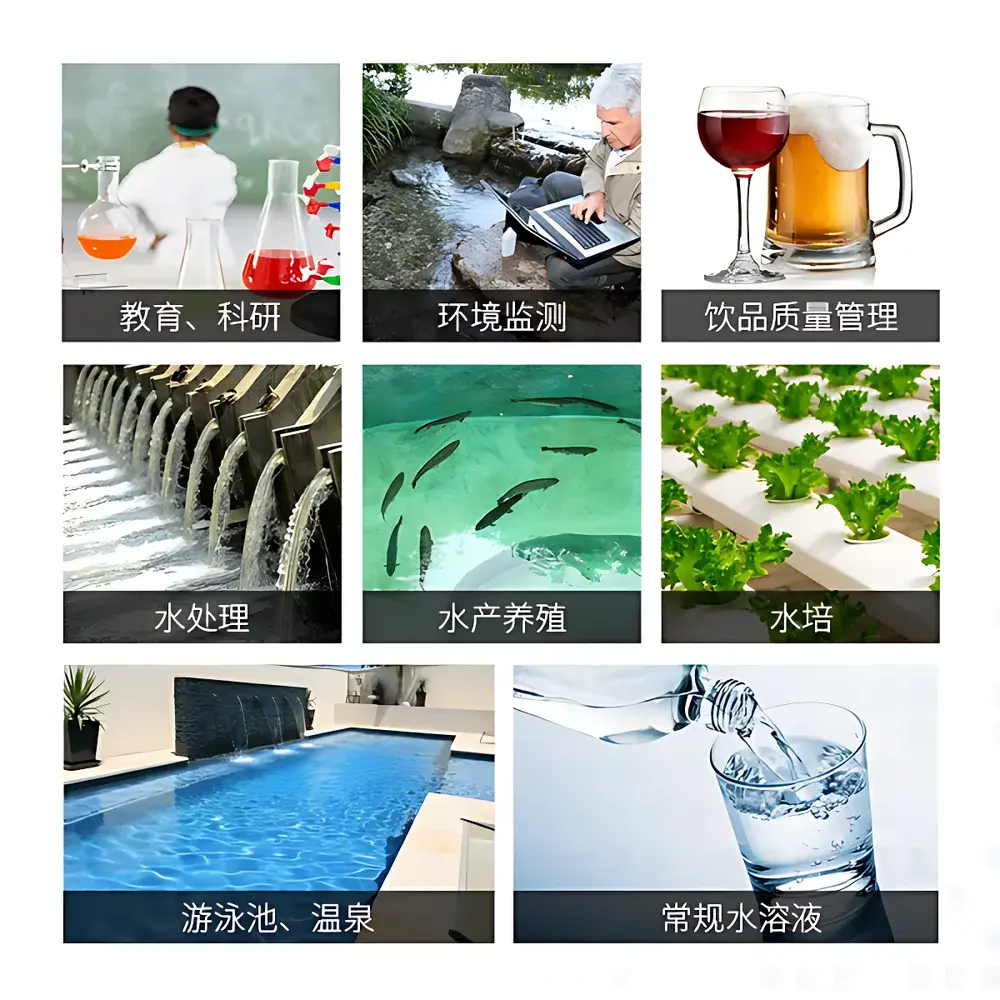
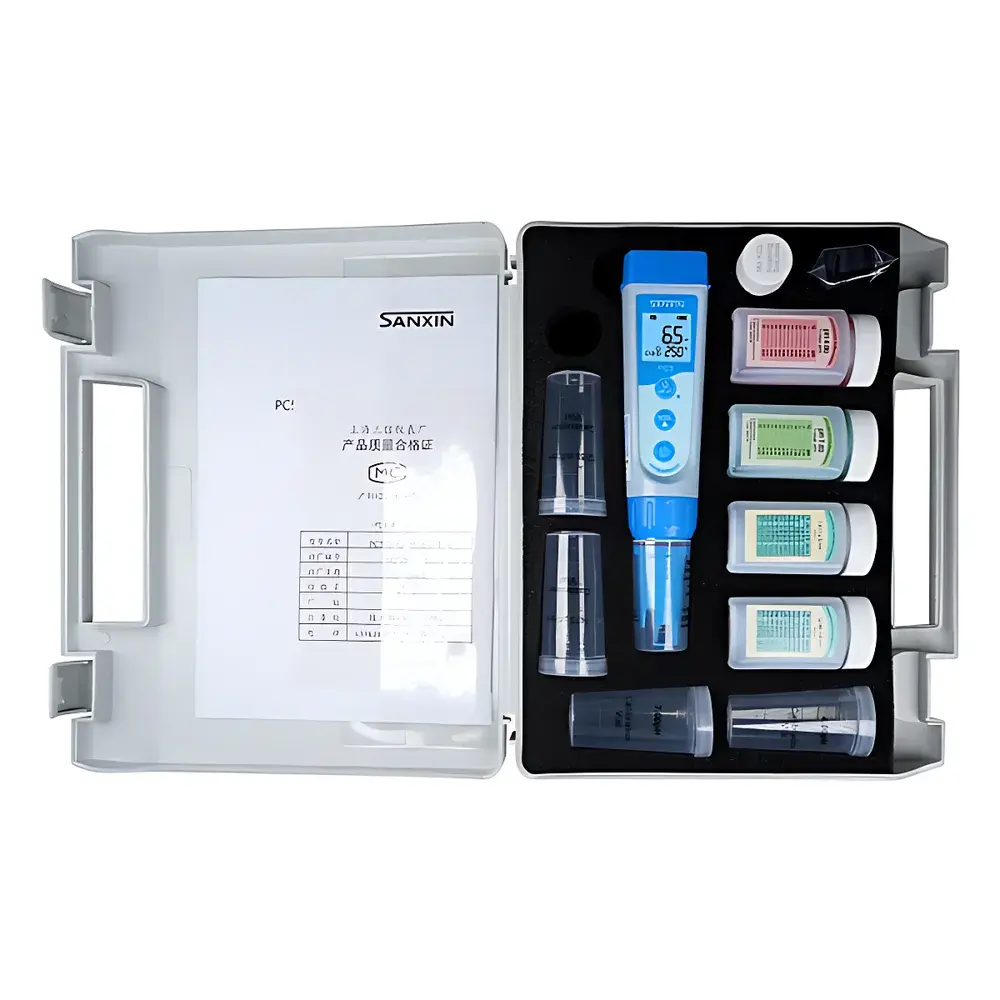
The PC5 is optimized for use with freshwater, brackish water, nutrient solutions, swimming pool water, spa water, cooling tower blowdown, and municipal pre-treatment streams. It is not intended for highly viscous, suspended-solid-rich, or organic solvent-based samples. All measurements comply with standard operating procedures aligned with GLP principles, including timestamped calibration logging and user-defined parameter storage. While the device itself does not provide FDA 21 CFR Part 11-compliant audit trails, its calibration history and measurement records support traceable documentation workflows when paired with external lab notebooks or validated LIMS integration. The included calibration kits contain pH 4.01, 7.00, and 10.01 buffers (certified to ±0.01 pH at 25 °C) and 1413 µS/cm KCl conductivity standard (traceable to NIST SRM 3194).
Software & Data Management
The PC5 operates as a standalone instrument with no proprietary software dependency. All configuration, calibration, and measurement data are managed directly via front-panel controls and stored in non-volatile memory. Calibration parameters—including slope, offset, and temperature coefficient—are retained after power cycling. Measurement results can be manually recorded or exported via optional RS-232 or USB-to-serial adapters (sold separately), enabling compatibility with third-party data acquisition platforms such as LabVIEW, MATLAB, or custom Python-based logging scripts. Firmware updates are not supported; however, hardware revision logs and calibration certificate templates are available upon request from Sanxin technical support for quality assurance documentation.
Applications
- Aquaculture and hydroponics: Monitoring pH stability and EC-driven nutrient availability in recirculating aquaculture systems (RAS) and deep water culture (DWC) setups
- Recreational water management: Routine verification of disinfection efficacy via pH–chlorine equilibrium assessment and conductivity-based total ion concentration estimation in pools and spas
- Industrial water treatment: Tracking scaling potential through conductivity–TDS correlation and detecting coolant degradation in HVAC cooling towers
- Environmental field screening: Rapid assessment of surface water quality indicators during watershed surveys or emergency response scenarios
- Educational laboratories: Teaching core electrochemical concepts—including Nernst equation application, cell constant determination, and temperature compensation algorithms—in undergraduate chemistry and environmental science curricula
FAQ
Does the PC5 support ORP measurement?
Yes—the instrument firmware includes ORP mode, but requires a dedicated ORP electrode (sold separately). The default combination electrode does not provide redox potential sensing capability.
What calibration standards are included with the PC5?
The standard kit contains three pH buffer solutions (4.01, 7.00, and 10.01 at 25 °C) and one 1413 µS/cm KCl conductivity standard, all supplied in single-use sachets with lot-specific certification.
Is the PC5 suitable for seawater analysis?
It can measure salinity up to 10 ppt, which covers brackish estuarine conditions but not full-strength seawater (~35 ppt). For marine applications, a dedicated high-range salinity meter with appropriate cell constant and temperature compensation is recommended.
How often should the electrode be recalibrated?
Calibration frequency depends on usage intensity and sample matrix. For routine field use, daily two-point pH calibration and single-point conductivity verification are advised. Electrodes exposed to fouling agents (e.g., algae, oils, heavy metals) require cleaning and recalibration before each measurement session.
Can the PC5 be used in sub-zero ambient temperatures?
No—the specified operating temperature range is 0–50 °C. Battery performance degrades below 5 °C, and liquid-filled electrodes risk freezing-induced diaphragm damage below 0 °C.
Related Products




