
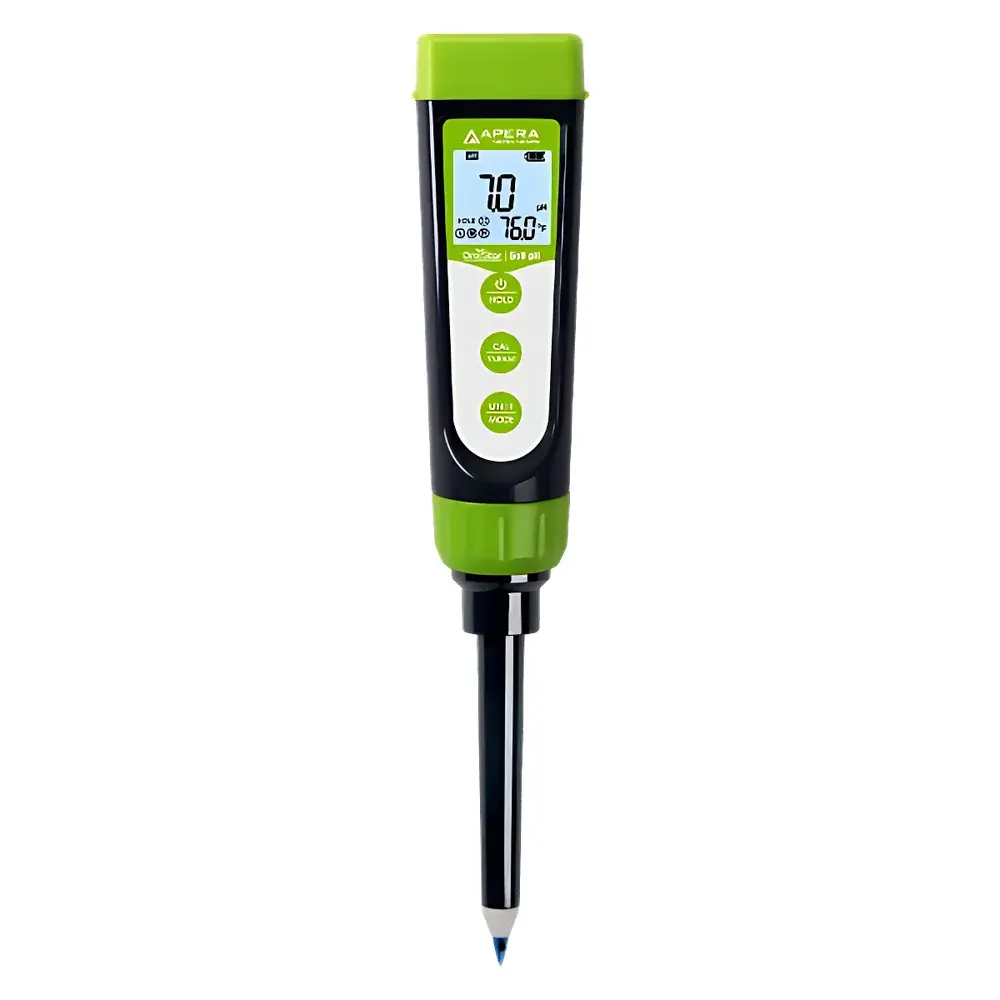
Apera Instruments GS2 GroStar Soil Penetration pH Meter
| Brand | Apera |
|---|---|
| Origin | Shanghai, China |
| Model | GS2 |
| Instrument Type | Pen-style pH Meter |
| Parameter Type | Single-parameter (pH) |
| Measurement Range | 0–14 pH |
| Resolution | 0.1 pH |
| Accuracy | ±0.1 pH |
| Calibration Solutions | pH 4.00, pH 7.00, pH 10.01 |
| Temperature Compensation | Automatic (0–50 °C) |
| ORP Range | ±1000 mV |
| ORP Resolution | 1 mV |
| ORP Accuracy | ±0.2% FS |
| Temperature Range | 0–50 °C |
| Temp. Resolution | 0.1 °C |
| Temp. Accuracy | ±0.5 °C |
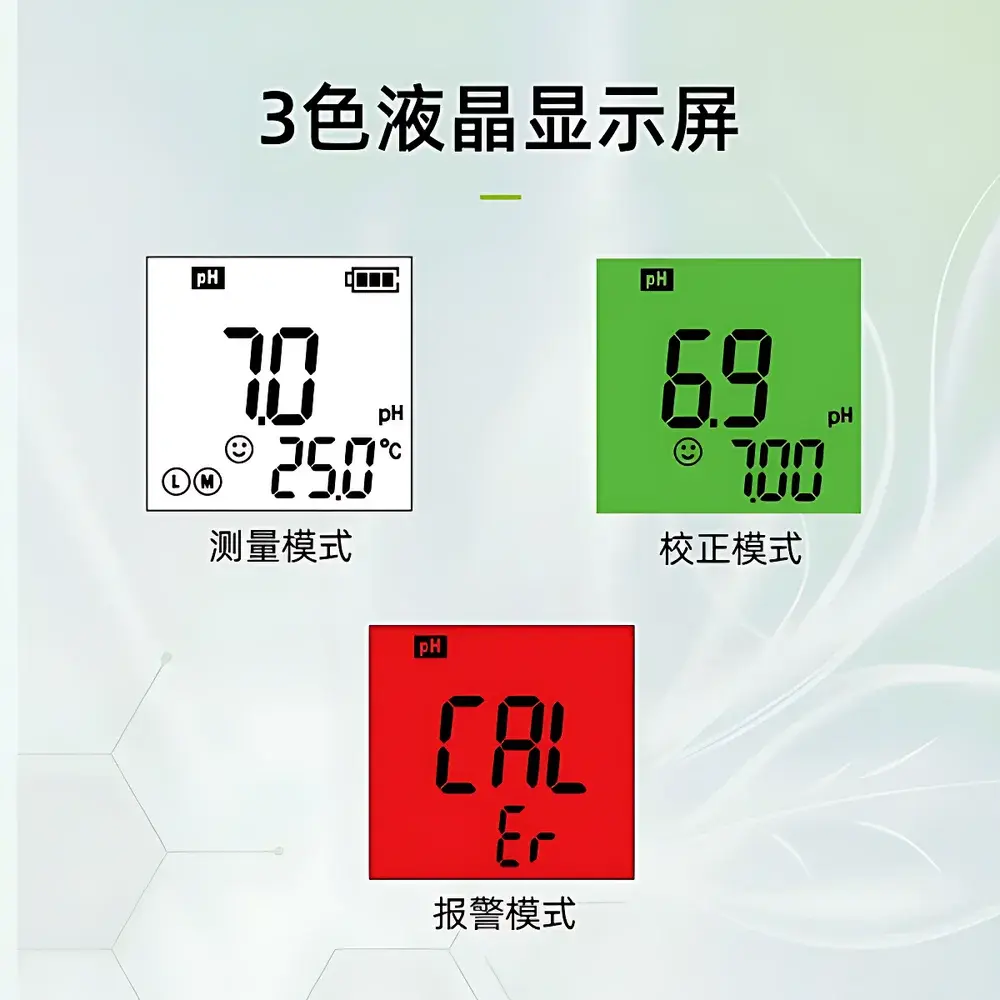
| Display | STN LCD with tri-color backlight (white/green/red) |
| Power | 4 × AAA alkaline batteries (DC 3 V) |
| Battery Life | >200 hours continuous use |
| Auto-Off | 8 minutes |
| Dimensions (meter) | 40 × 40 × 178 mm |
| Weight (meter) | 133 g |
| Kit Includes | GS2 meter, 50 mL pH 4.00 & pH 7.00 buffer solutions, 10 mL 3 M KCl storage solution, soil auger, electrode cleaning brush, lanyard, user manual, carrying case (255 × 210 × 50 mm, 438 g) |
Overview
The Apera Instruments GS2 GroStar Soil Penetration pH Meter is a purpose-built, field-deployable electrochemical sensor engineered for precision pH measurement directly in heterogeneous solid and semi-solid growing media—including native soil, coco coir, rockwool, peat-based substrates, and hydroponic nutrient solutions. Unlike conventional benchtop or handheld pH meters requiring sample extraction and suspension, the GS2 integrates a specialized LabSen® Spear-type combination pH electrode with a rigid, tapered stainless-steel probe tip designed to penetrate compacted media while maintaining electrochemical stability. Its measurement principle relies on the Nernstian response of a glass pH sensing membrane coupled with a stable Ag/AgCl reference system housed within a porous polytetrafluoroethylene (PTFE) liquid junction. This architecture minimizes clogging by particulate matter and ensures reproducible potential development across variable ionic strength environments typical of agricultural and horticultural substrates. The instrument operates under potentiometric principles compliant with ISO 3696 (water for analytical use) and ASTM D1293 (standard test method for pH of water), adapted for non-aqueous and high-suspended-solid matrices through empirical calibration traceability.
Key Features
- LabSen® Spear pH electrode with PTFE liquid junction—resists clogging from soil particles and organic debris, extending operational lifetime without frequent maintenance.
- Tri-color backlit STN LCD display: white for measurement mode, green for calibration status, red for diagnostic alerts—enabling rapid visual interpretation under low-light greenhouse or field conditions.
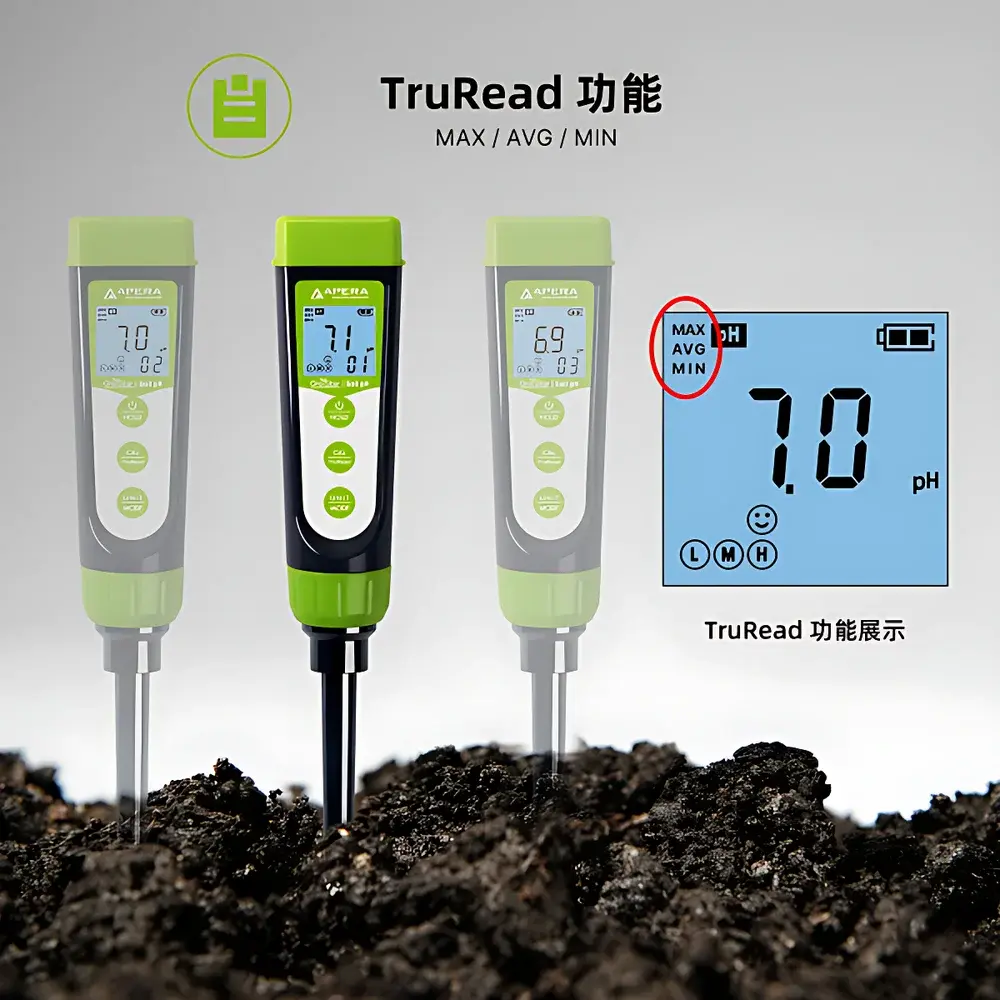
- TruRead statistical acquisition mode: captures sequential readings at multiple insertion points and automatically computes mean, minimum, and maximum pH values—supporting spatial heterogeneity assessment in root zones.
- Two- or three-point automatic calibration using certified NIST-traceable buffers (pH 4.00, 7.00, 10.01) with real-time electrode condition monitoring and slope calculation.
- Integrated automatic temperature compensation (ATC) across 0–50 °C, referenced to a built-in thermistor for accurate thermal correction without external probes.
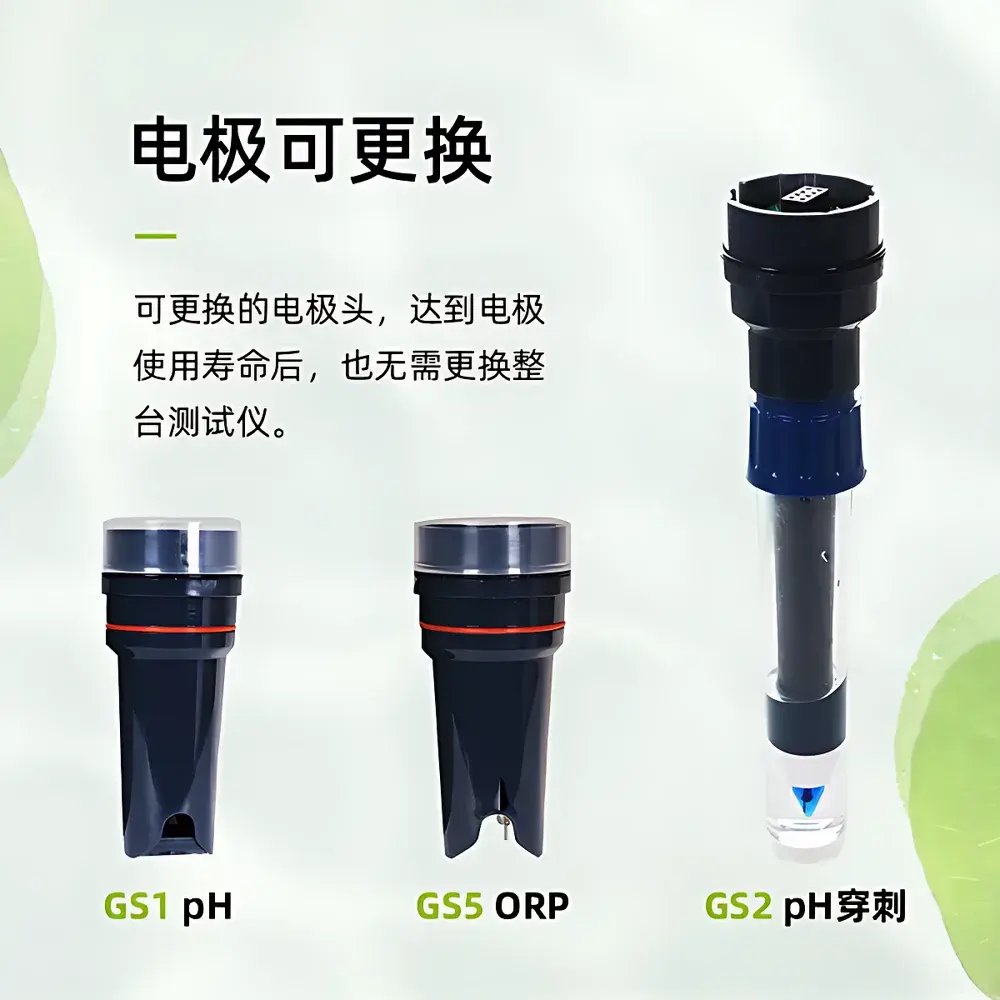
- Replaceable electrode module—eliminates full-unit replacement upon sensor degradation; reduces long-term TCO (total cost of ownership) for commercial growers and research stations.
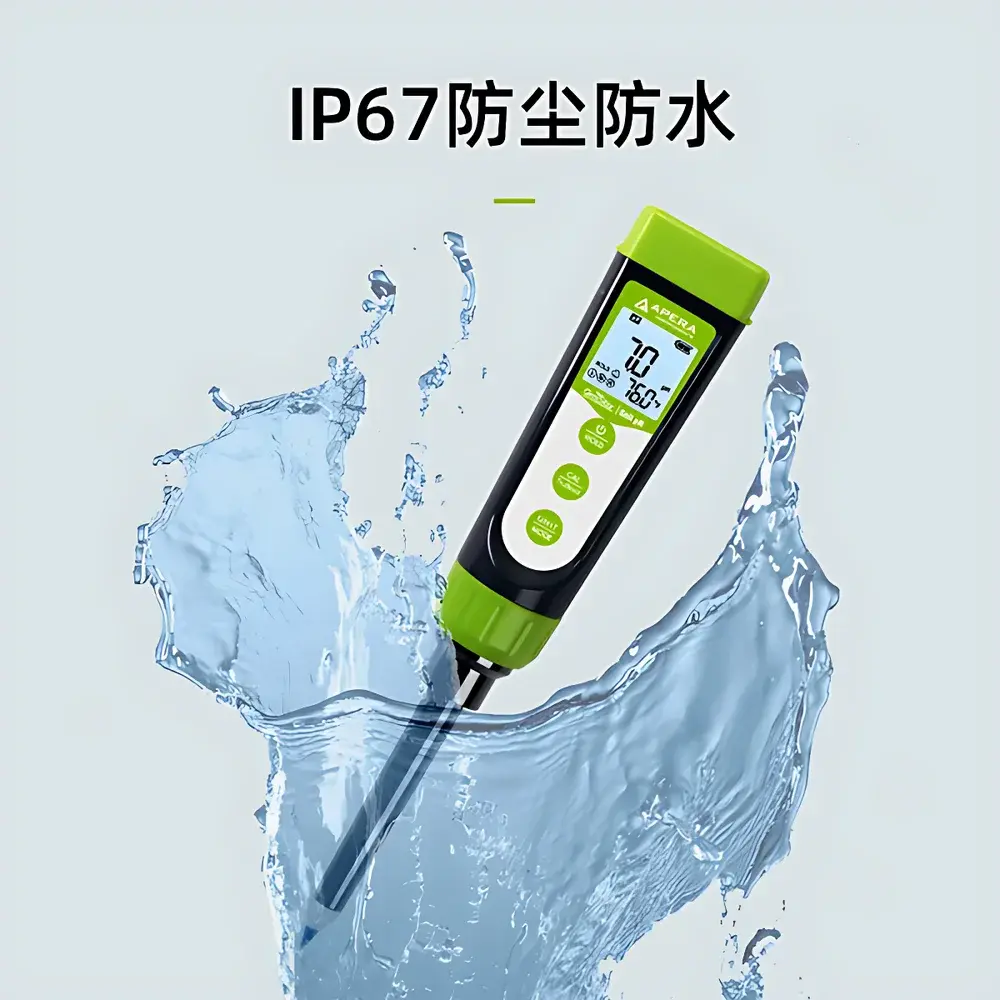
- IP67-rated enclosure—fully dust-tight and submersible up to 1 m for 30 minutes; floats on water surface for accidental drop recovery in irrigation channels or reservoirs.
Sample Compatibility & Compliance
The GS2 is validated for direct insertion into soils with texture ranging from sandy loam to clay-rich profiles (USDA soil taxonomy), as well as inert substrates including expanded clay pellets, perlite, vermiculite, and phenolic foam. It meets functional equivalence to ISO 10390:2022 (soil quality — determination of pH) when used with standardized insertion depth (5–8 cm) and pre-moistening protocols. While not a certified GLP/GMP instrument per se, its data output supports audit-ready documentation when paired with calibrated buffers traceable to national metrology institutes (e.g., NIST SRM 186, BAM BCR-144R). The device complies with IEC 61010-1:2010 for electrical safety in laboratory and field environments and conforms to RoHS Directive 2011/65/EU for hazardous substance restrictions.
Software & Data Management
The GS2 operates as a standalone, battery-powered field instrument with no Bluetooth, USB, or cloud connectivity. All measurements are displayed in real time and retained only in volatile memory during active use. However, its TruRead statistical outputs (mean/min/max) serve as primary data points suitable for manual transcription into LIMS-compatible spreadsheets or farm management platforms (e.g., Climate FieldView™, Granular™). For regulatory traceability, users are advised to log calibration timestamps, buffer lot numbers, ambient temperature, and substrate type alongside each measurement session. The included user manual provides guidance on maintaining calibration records aligned with ISO/IEC 17025:2017 clause 7.7 (ensuring validity of results) and FDA 21 CFR Part 11 Annex A considerations for handwritten electronic equivalents.
Applications
- Real-time pH monitoring during soil amendment application (e.g., lime, sulfur, compost teas) to verify target buffering capacity adjustments.
- Routine quality control of hydroponic and aeroponic nutrient reservoirs—detecting acidification drift or microbial metabolite accumulation before symptom onset.
- Root-zone pH profiling across vertical stratification layers in containerized production (e.g., nursery stock, cannabis cultivation).
- Validation of substrate pH stabilization post-sterilization (steam, solarization) or pre-planting conditioning.
- Educational use in agronomy and horticulture curricula for demonstrating pH–nutrient availability relationships (e.g., Fe/Mn solubility vs. pH 5.5–6.5).
FAQ
Can the GS2 measure pH in dry or highly compacted soil?
Optimal performance requires soil moisture content ≥20% v/v. Pre-moisten dry samples or use the included soil auger to create pilot holes prior to insertion.
Is the electrode compatible with acidic fertilizer solutions containing chelates?
Yes—the LabSen® Spear electrode’s glass membrane and PTFE junction resist fouling from EDTA, DTPA, and humic acid derivatives common in specialty nutrient formulations.
How often should calibration be performed in continuous field use?
Calibrate before each daily session and recheck mid-day if ambient temperature fluctuates >10 °C or after testing >10 distinct substrate zones.
Does the GS2 support GLP-compliant electronic record keeping?
No—data must be manually transcribed. For full 21 CFR Part 11 compliance, pair with a validated digital logging system or use Apera’s PC-connected models (e.g., AI209 series) with audit trail export.
What is the expected service life of the replaceable electrode under typical greenhouse use?
With proper storage in 3 M KCl and monthly cleaning using the provided brush, the electrode maintains ±0.1 pH accuracy for ≥18 months of weekly field deployment.






