
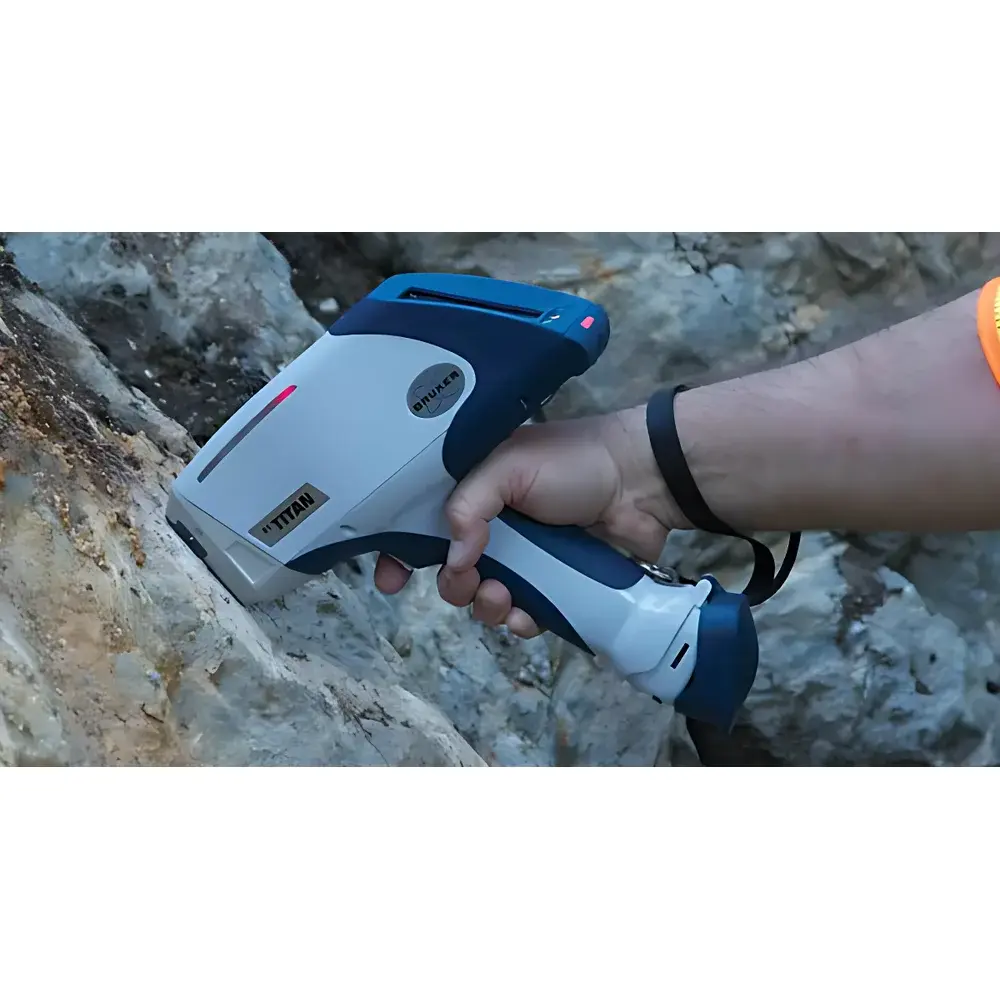
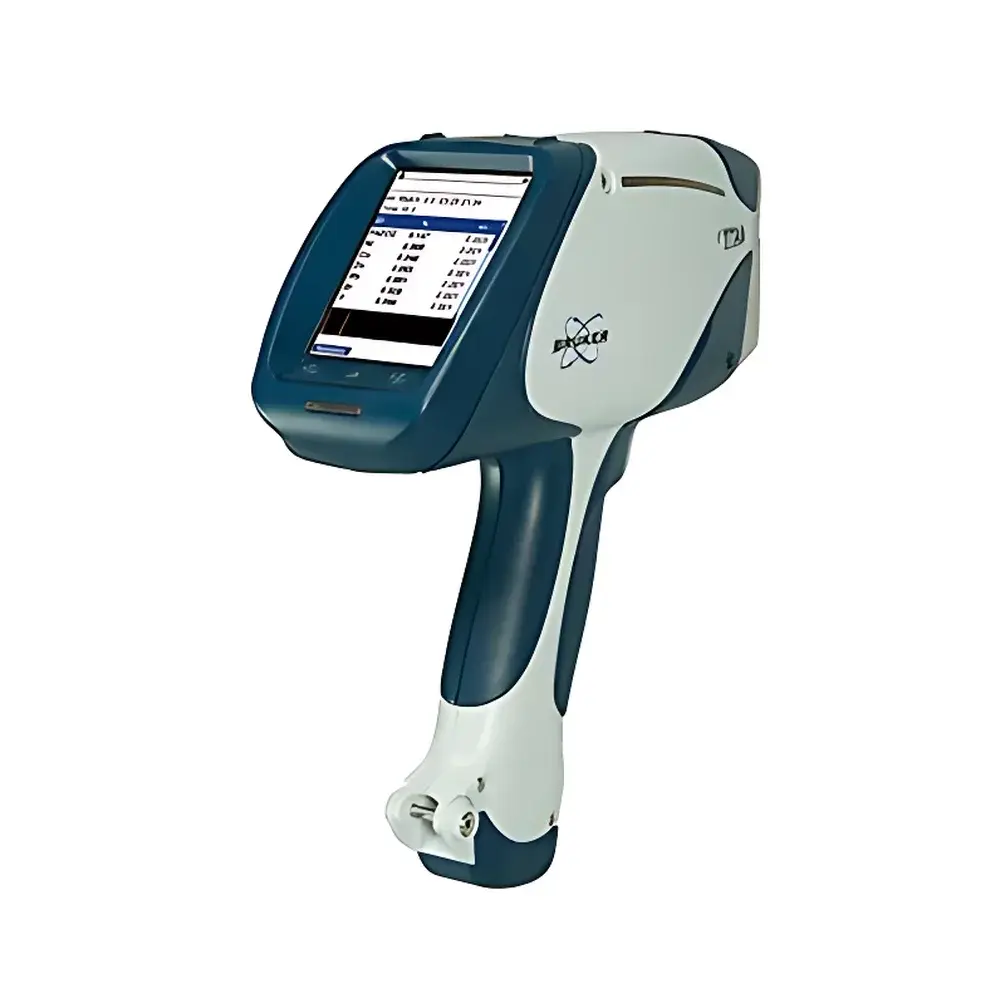
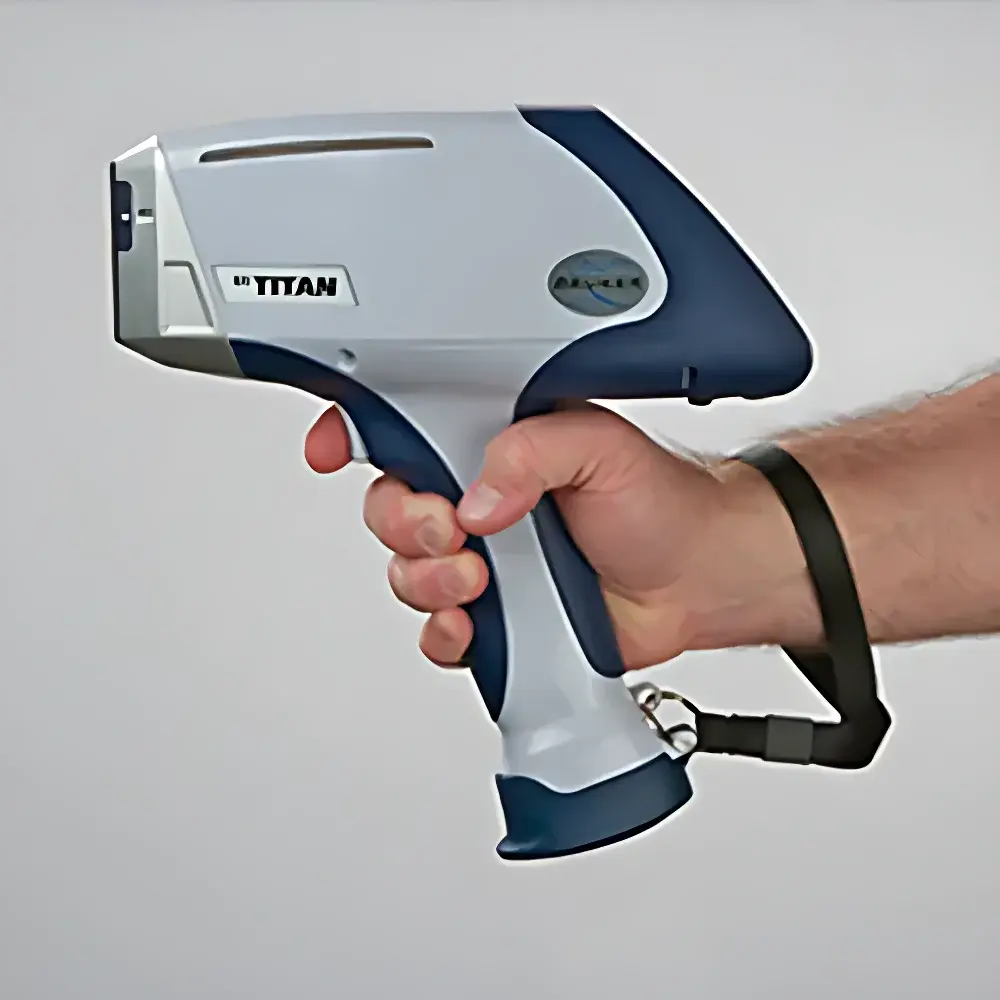
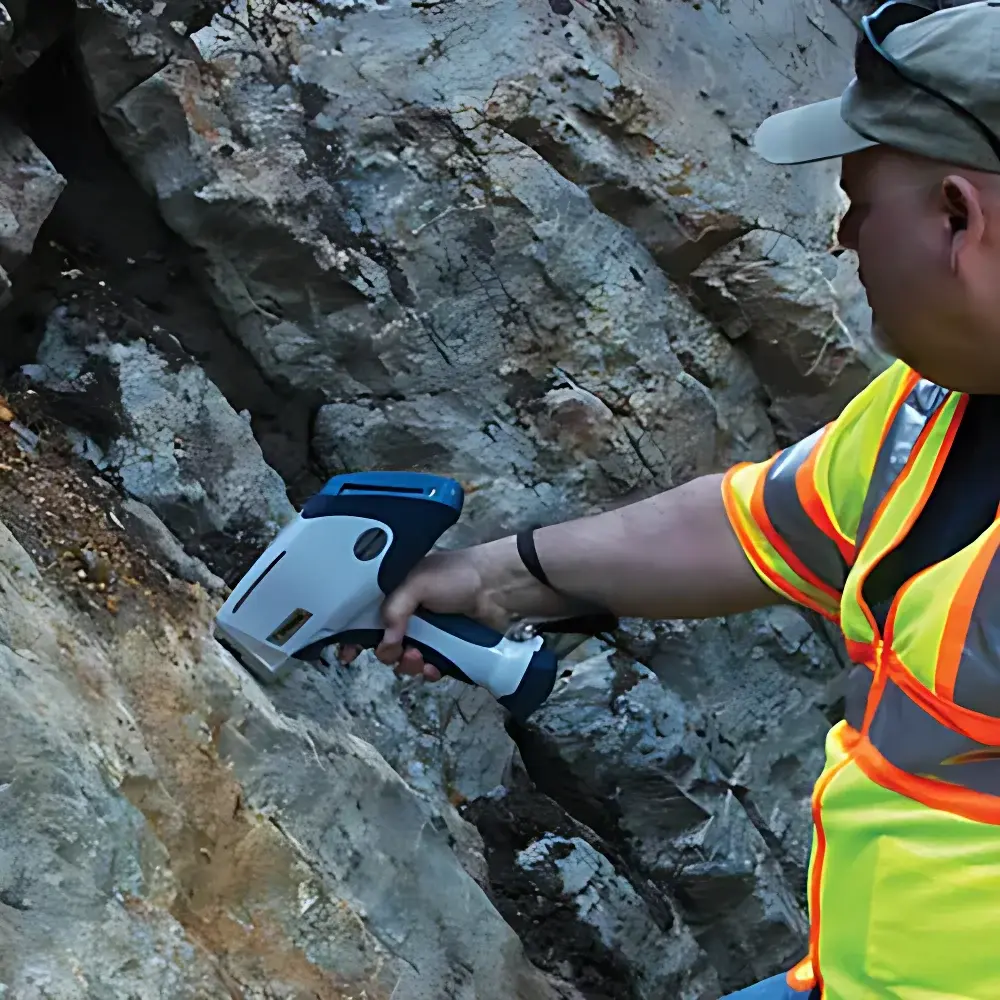
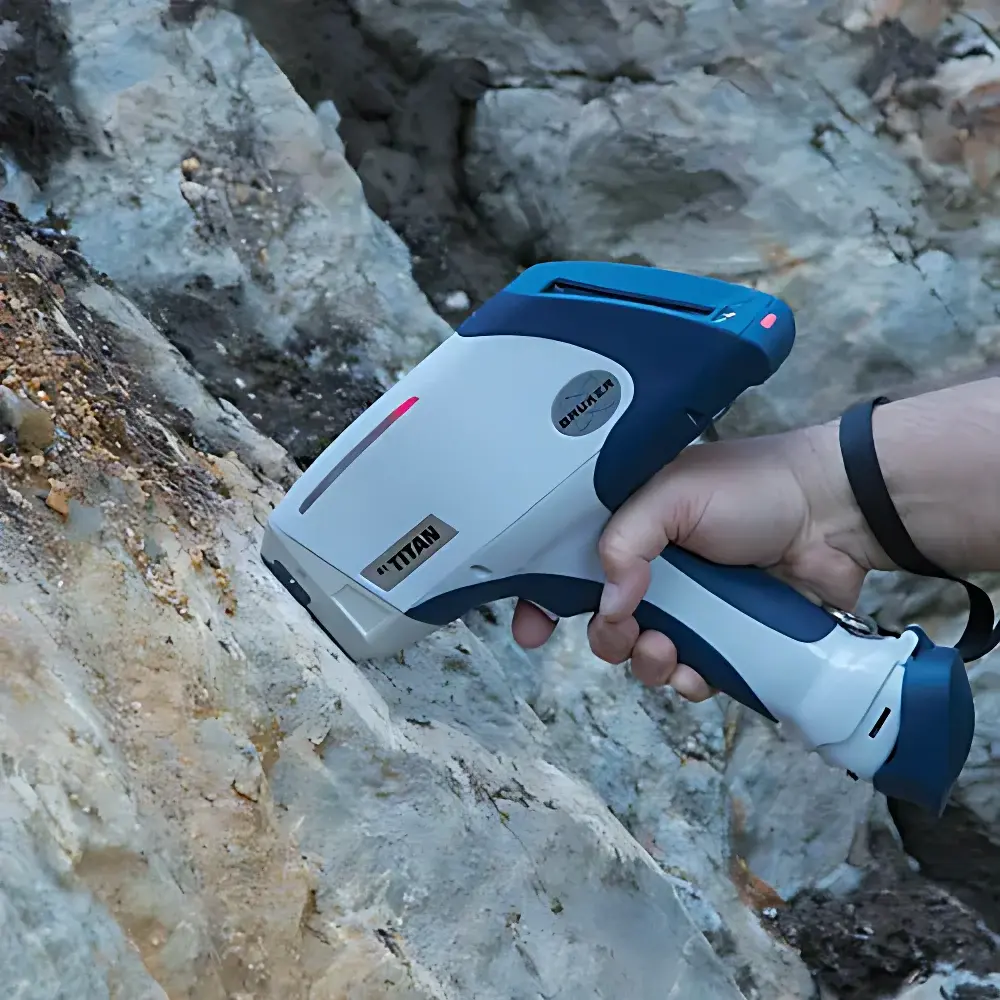
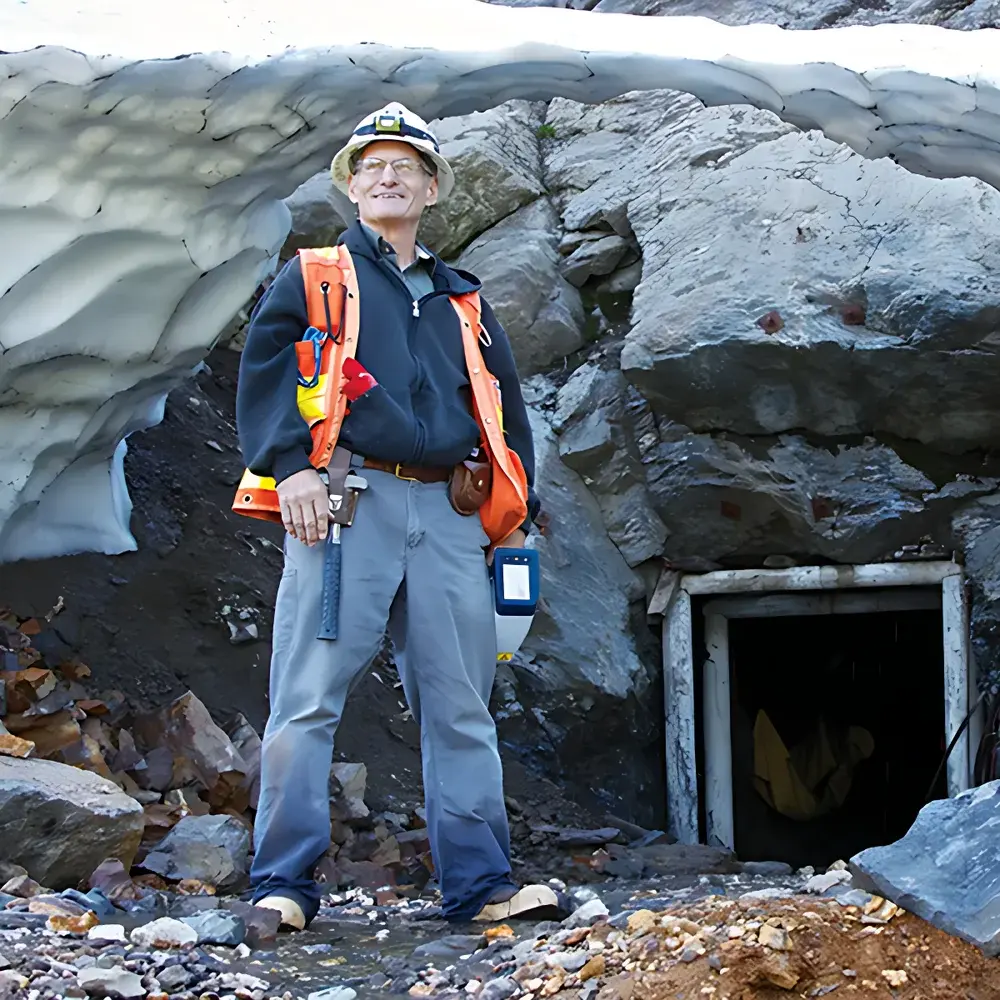
Bruker S1 TITAN Handheld Energy Dispersive X-Ray Fluorescence (ED-XRF) Spectrometer for Ore and Geological Analysis
| Brand | Bruker |
|---|---|
| Origin | Germany |
| Model | S1 TITAN Ore |
| Element Range | Mg–U |
| Detection Limit | 1 ppm |
| Analytical Range | 1 ppm – 99.99% |
| Energy Resolution | <140 eV (Mn Kα) |
| Detector | Silicon Drift Detector (SDD) with Graphene Window |
| Portability | Handheld |
| Compliance | IP64-rated enclosure |
| Application Domain | Geological exploration, core logging, mine site assay, geochemical surveying |
Overview
The Bruker S1 TITAN is a field-deployable, handheld energy dispersive X-ray fluorescence (ED-XRF) spectrometer engineered for rapid, non-destructive elemental analysis of geological materials in situ. Unlike benchtop or vacuum-dependent XRF systems, the S1 TITAN operates under ambient atmospheric conditions—enabling direct quantification of light elements including magnesium (Mg), aluminum (Al), silicon (Si), phosphorus (P), and sulfur (S) without helium purging or vacuum pumping. Its analytical capability spans atomic number 12 (Mg) to 92 (U), covering all major rock-forming elements, base metals, precious metals, rare earth elements (REEs), and critical raw materials. The instrument leverages fundamental parameter (FP)-based quantification algorithms calibrated against certified reference materials (CRMs) traceable to NIST and ISO standards, ensuring compliance with ISO 18503, ASTM E2795, and USP for elemental impurity testing where applicable. Designed for rugged field use, it delivers laboratory-grade precision at the point of sample contact—reducing reliance on off-site lab turnaround and enabling real-time decision-making during exploration, grade control, and resource delineation.
Key Features
- Graphene-window SDD detector: Enables high-count-rate detection with enhanced sensitivity for light elements (Mg–P), achieving sub-140 eV Mn Kα resolution and improved peak-to-background ratios.
- SharpBeam™ optimized X-ray geometry: Focuses excitation onto a defined measurement spot (standard 8 mm, optional 3 mm collimation), minimizing scatter radiation, improving spatial resolution, and extending tube lifetime.
- TITAN Detector Shield™ (TDS): A mechanically robust, analytically transparent protective layer over the SDD window—resistant to abrasion, impact, and particulate contamination from rough or fractured ore surfaces.
- Integrated high-resolution camera & micro-spot collimator: Provides real-time visual confirmation of measurement location; supports precise targeting of veins, inclusions, or heterogeneous textures.
- IP64-rated magnesium alloy housing: Dust-tight and protected against water splashing from any direction—validated for continuous operation in humid, dusty, or rain-exposed field environments.
- SmartGrade™ adaptive analysis: Automatically selects optimal acquisition parameters (voltage, current, filter, time) based on sample composition and matrix type—minimizing user intervention while maintaining accuracy across diverse lithologies.
- Onboard self-calibration: Performs automatic spectral calibration at startup using internal reference sources—eliminating warm-up delays and ensuring measurement consistency across shifts and operators.
Sample Compatibility & Compliance
The S1 TITAN is validated for direct analysis of unprepared solid samples including drill cores, rock chips, soil grabs, tailings, and bulk ore fragments. It complies with IEC 62471 for photobiological safety and meets EU RoHS Directive requirements for restricted substances. Its software architecture supports audit trails, electronic signatures, and data integrity controls aligned with FDA 21 CFR Part 11 principles—facilitating GLP/GMP-aligned workflows in regulated exploration programs. All calibrations are traceable to CRM libraries certified per ISO/IEC 17025-accredited laboratories. The instrument’s light-element performance has been verified against ISO 20053:2019 (XRF analysis of soils and sediments) and ASTM D7292 (XRF analysis of iron ores).
Software & Data Management
Powered by Bruker’s proprietary S1 PXRF software, the S1 TITAN provides intuitive touchscreen navigation with multilingual UI (including English, Spanish, Chinese, Russian). Spectral acquisition, qualitative screening, quantitative reporting, and statistical batch processing occur onboard. Data export supports CSV, PDF, and Bruker’s native .spx format; reports include full spectra, net intensity tables, uncertainty estimates (k=2), and matrix-matched calibration diagnostics. Bluetooth 5.0, USB-C, and Wi-Fi connectivity enable seamless transfer to LIMS or GIS platforms. Optional integration with ESRI ArcGIS via GeoPDF export allows georeferenced elemental mapping—supporting Ni-, Cu-, or REE-concentration contour generation directly from field-collected spectra.
Applications
- Field-based grade control: Real-time estimation of Fe, Cu, Zn, Pb, Ni, and Mo content in run-of-mine material—informing stockpile segregation and blending strategies.
- Core logging & lithological discrimination: Rapid classification of igneous, metamorphic, and sedimentary units based on major oxide ratios (e.g., SiO₂/Al₂O₃, MgO/FeO).
- Rare earth element (REE) profiling: Quantitative analysis of La, Ce, Nd, Y, and other REEs using Bruker’s pre-optimized REE application packages—calibrated against monazite, bastnäsite, and xenotime CRMs.
- Environmental geochemistry: Screening for As, Cd, Cr, Hg, Pb, and U in overburden and waste rock—supporting early-stage environmental baseline studies.
- Mineral system targeting: Identification of pathfinder elements (e.g., Bi, Te, Se) associated with porphyry Cu-Mo or orogenic gold systems.
FAQ
Does the S1 TITAN require external gas purge or vacuum for light-element analysis?
No. Its graphene-window SDD and optimized low-energy excitation allow reliable Mg–P detection in air.
Can it quantify rare earth elements in complex matrices like laterites or carbonatites?
Yes—when configured with Bruker’s REE-specific calibration suite and appropriate matrix-matched standards.
What is the typical measurement time for a statistically robust result?
Standard assays range from 1–10 seconds for high-grade ores to 30–60 seconds for low-concentration elements in silicate-rich matrices.
Is GPS data embedded in exported spectra?
Yes—geotagged measurements include latitude, longitude, altitude, timestamp, and heading, stored in EXIF-compatible metadata.
How is data security maintained during field deployment?
All user accounts, method files, and spectra are encrypted at rest using AES-256; password policies and role-based access control align with ISO 27001 practices.




