
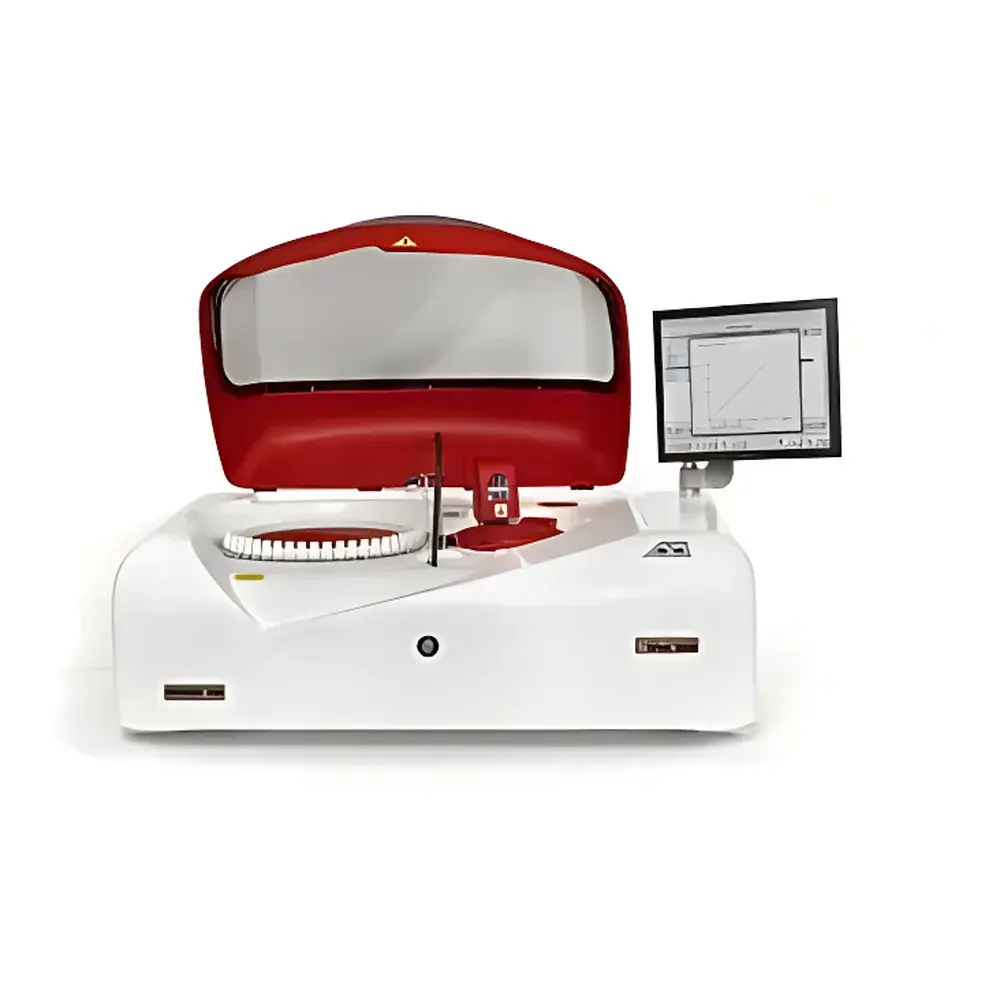
DeChem-Tech CleverChem 380 Automated Discrete Analyzer
| Brand | DeChem-Tech |
|---|---|
| Origin | Germany |
| Model | CleverChem 380 |
| Product Type | Discrete Analyzer |
| Wavelength Range | 400–900 nm |
| Sample Volume per Vial | 5 mL |
| Reagent Positions | 49 |
| Cuvette Path Length | 10 mm |
| Light Source | Tungsten-Halogen Lamp |
Overview
The DeChem-Tech CleverChem 380 Automated Discrete Analyzer is a high-precision, laboratory-grade discrete chemistry analyzer engineered for trace-level colorimetric and photometric determination of inorganic and low-molecular-weight organic analytes in environmental, agricultural, food, and industrial matrices. Unlike continuous-flow or flow-injection systems, the CleverChem 380 implements true discrete analysis—mimicking manual wet-chemistry protocols by dispensing precise microliter volumes of sample, reagents, and color-developing agents into individual quartz cuvettes, followed by controlled incubation, mixing, and spectrophotometric measurement. This architecture eliminates cross-contamination, ensures full reaction control (including variable incubation times and temperatures), and delivers analytical rigor comparable to reference laboratory methods. The system operates on Beer-Lambert principle-based quantification, where analyte concentration is linearly proportional to absorbance measured across a calibrated 400–900 nm spectral range using a stable tungsten-halogen light source and high-fidelity optical detection.
Key Features
- High-throughput discrete analysis: Up to 350 determinations per hour, with capacity for 119 sample positions and simultaneous multi-parameter analysis per sample (e.g., NO₃⁻, NH₄⁺, PO₄³⁻, SiO₂, SO₄²⁻ in a single run)
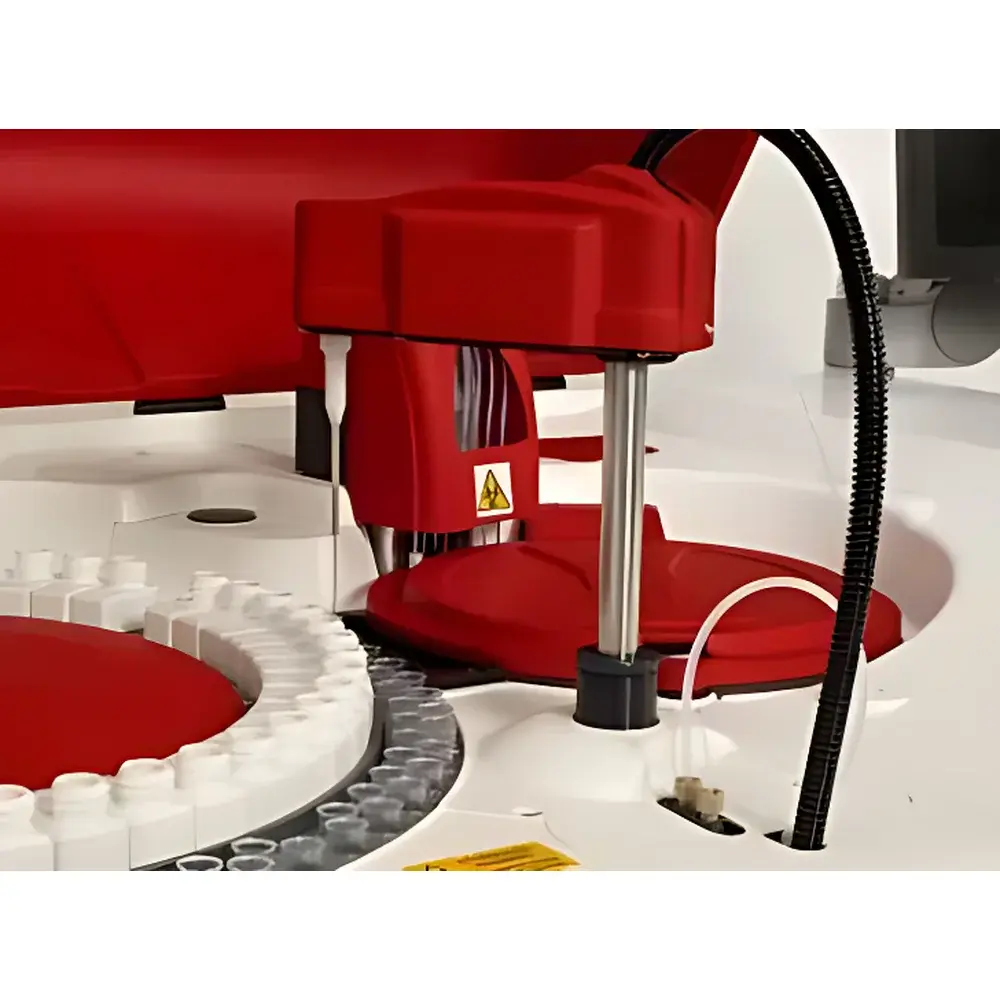
- Reagent efficiency: Microliter-range dispensing (1–450 µL reagent; 1–900 µL sample) reduces reagent consumption to 3–5% of conventional manual methods—enabling full compatibility with certified domestic reagents without performance compromise
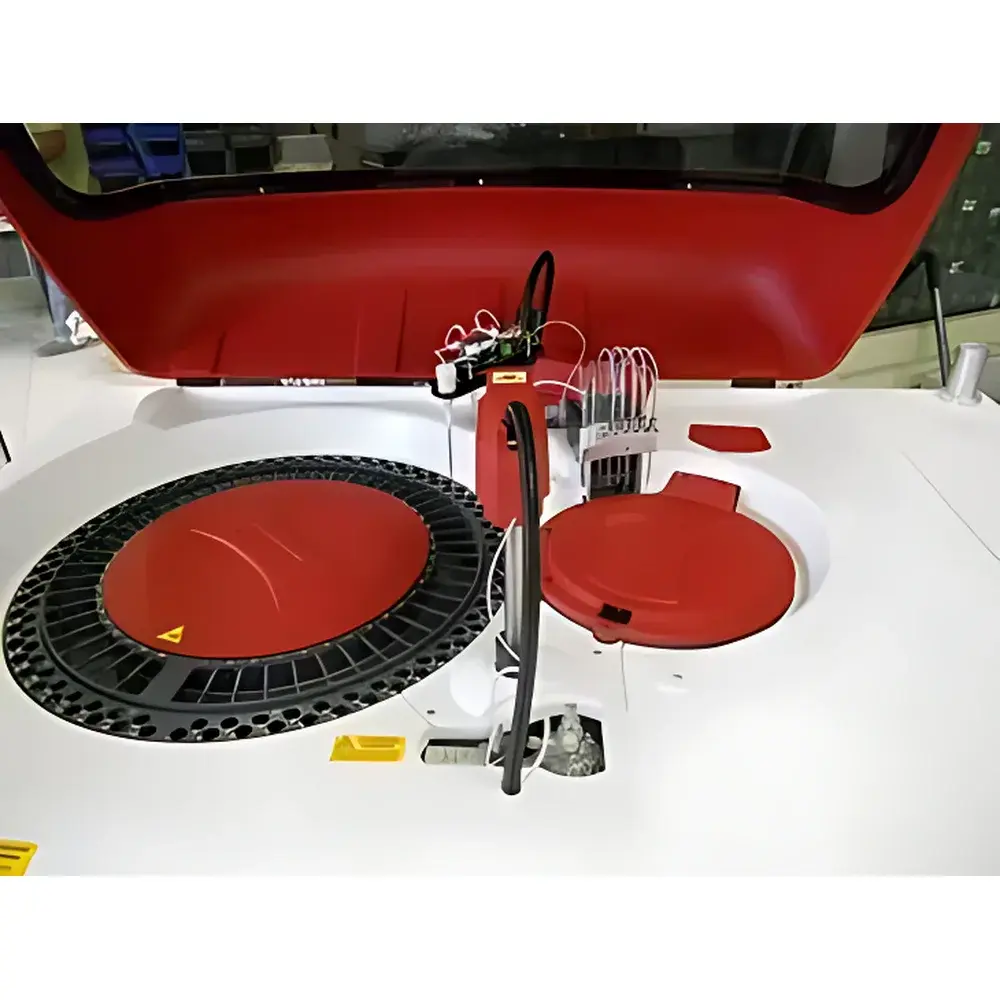
- Reusable optical cuvettes: 64-position quartz cuvette carousel with integrated 8-step ultrasonic cleaning station; each cuvette undergoes optical integrity verification prior to reuse, ensuring long-term photometric stability and minimizing consumable cost
- Intelligent dilution & calibration: On-cuvette dilution up to 100×; fully automated standard curve generation including blank correction (sample blank + reagent blank), slope/intercept validation, and outlier rejection per ICH Q2(R2) guidelines
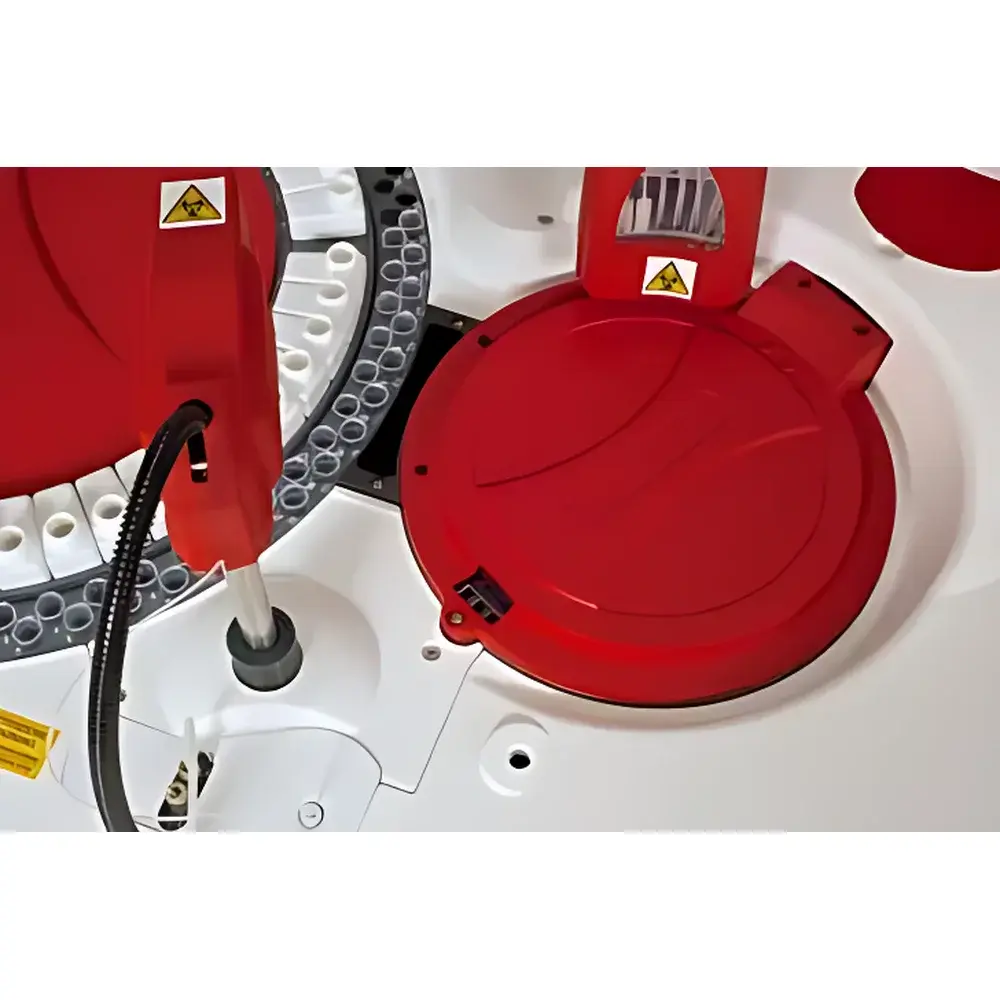
- Environmental safety architecture: Sealed waste collection with level-sensing; refrigerated 49-position reagent carousel (optional cooling activation); enclosed reaction zone with vapor containment—designed to meet OSHA HCS and EU CLP requirements for hazardous chemical handling
- Fault-resilient automation: Real-time monitoring of sample/reagent volume, wash solution level, waste fill status, and mechanical actuator performance; self-diagnostic error logging with actionable event codes aligned with ISO/IEC 17025 root-cause documentation
Sample Compatibility & Compliance
The CleverChem 380 supports aqueous liquid samples (e.g., filtered surface water, digested soil extracts, fertilizer solutions, wine filtrates, tobacco leachates) and accommodates suspended solids up to 50 mg/L via optional centrifugation integration. It complies with over 120 standardized methods—including ISO 11905-1 (NH₄⁺), ISO 15681-1 (PO₄³⁻), EPA Methods 353.2, 365.2, and 365.3, as well as China’s GB/T 5750 series (drinking water) and HJ series (wastewater). Its design satisfies GLP audit requirements: electronic signatures, full audit trail (per FDA 21 CFR Part 11), method version control, and data immutability with timestamped metadata. All calibrations and QC checks are traceable to NIST-traceable standards.
Software & Data Management
The embedded 64-bit Windows-based software provides bilingual (English/Chinese) GUI with role-based access control, method template library, and customizable reporting (PDF/CSV/XLSX). It supports LIMS integration via ASTM E1384-compliant HL7 or direct SQL export. Raw absorbance data, kinetic reaction curves, and intermediate calculation steps are stored with SHA-256 hashing for integrity verification. Software modules include QC Trend Analysis (Westgard rules), automatic limit checking against regulatory thresholds (e.g., WHO drinking water guidelines), and batch-wise statistical summary per ISO 5725-2 precision criteria.
Applications
- Water & Wastewater: Total nitrogen (TN), total phosphorus (TP), ammonia-N, nitrate-N, nitrite-N, orthophosphate, silicate, sulfate, sulfide, chloride, Cr(VI), alkalinity, hardness, Fe/Mn/Al/Cu/Zn/Mg, cyanide, phenols
- Soil & Plant Tissue: Ammonium-N, nitrate-N, available P/K, boron, total N/P, exchangeable cations (via extract digestion)
- Fertilizers & Agrochemicals: Nutrient content (N-P-K), chloride, sulfate, heavy metals (after acid digestion)
- Food & Beverage: SO₂, NO₂⁻, NO₃⁻, total acidity, reducing sugars, citric/tartaric/malic acids (via enzymatic or colorimetric endpoints)
- Tobacco & Fermented Products: Nicotine, hydrogen cyanide, volatile alkali, reducing sugars, nitrate, phosphate
FAQ
What regulatory standards does the CleverChem 380 support for method validation?
It supports method validation per ISO/IEC 17025:2017 Annex B, EPA SW-846 Chapter 2, and USP <1225>, including linearity, LOD/LOQ, precision (repeatability & intermediate precision), accuracy (spike recovery), and robustness testing.
Can the system be integrated into an existing laboratory informatics infrastructure?
Yes—via ASTM E1384-compliant HL7 messaging, ODBC/JDBC database connectors, or RESTful API for custom middleware integration.
Is operator training required for routine operation?
Basic operation requires under 4 hours of hands-on training; method development and validation support are provided by DeChem-Tech-certified application specialists under service contract.
How is optical drift compensated during extended runs?
The system performs automatic zero-reference correction before each measurement cycle using a dedicated blank cuvette position and real-time lamp intensity monitoring with feedback-controlled current regulation.
What maintenance intervals are recommended for optimal performance?
Daily: Waste container emptying, wash solution replenishment. Weekly: Cuvette optical inspection and ultrasonic bath cleaning verification. Annually: Photometer calibration with NIST-traceable filters and fluidic path pressure testing per manufacturer SOP-CC380-MNT-01.
Related Products





