
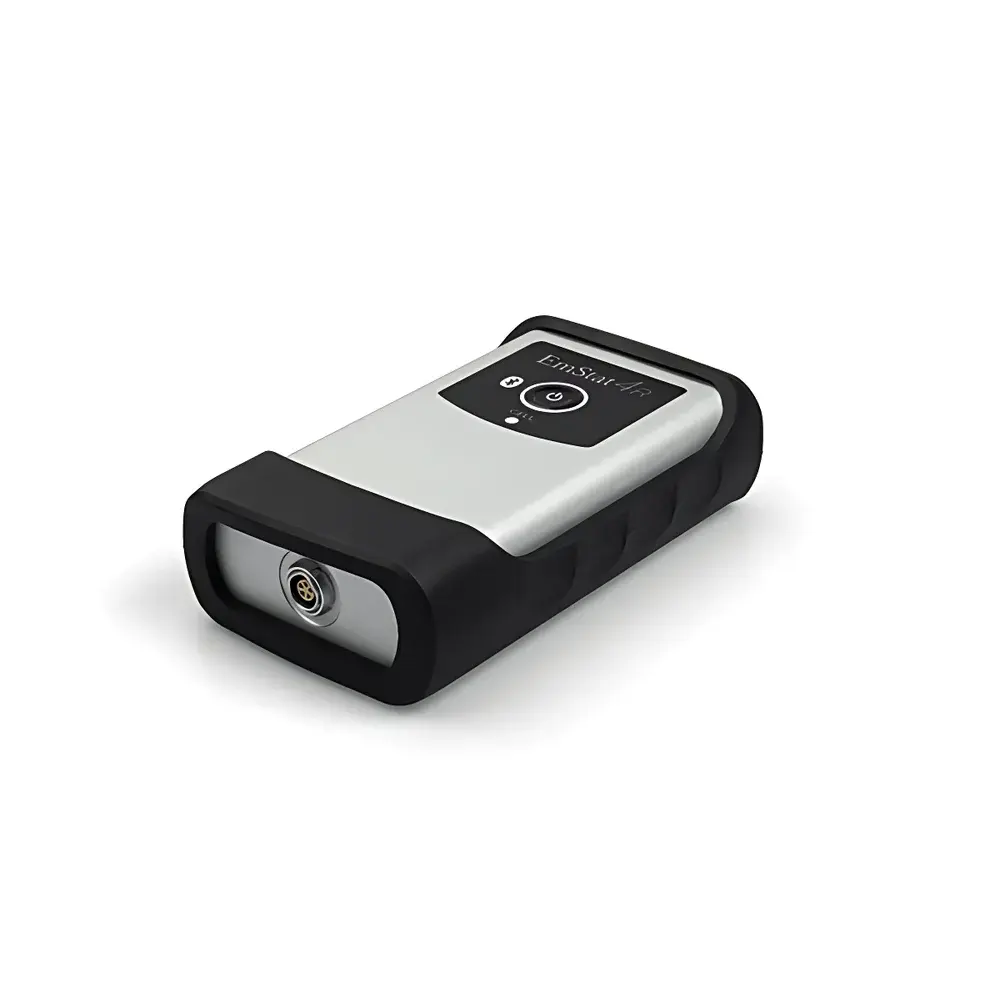
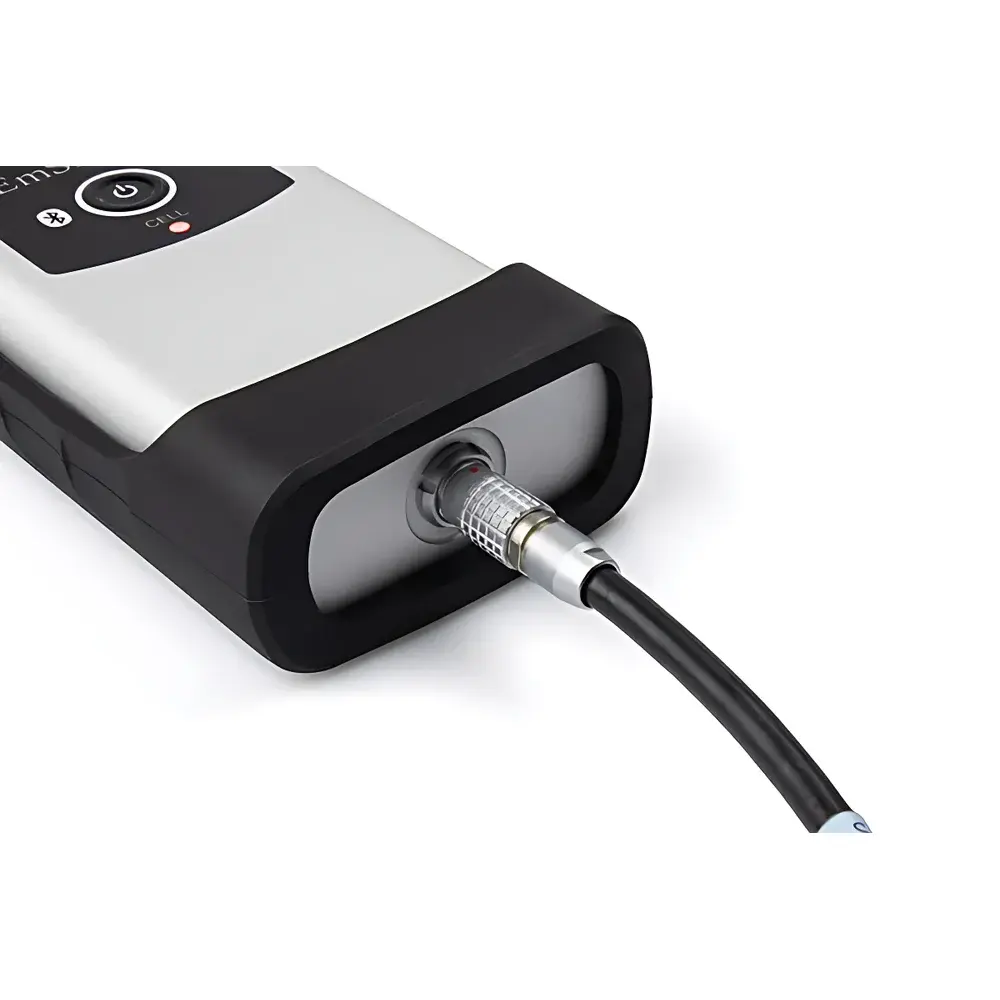
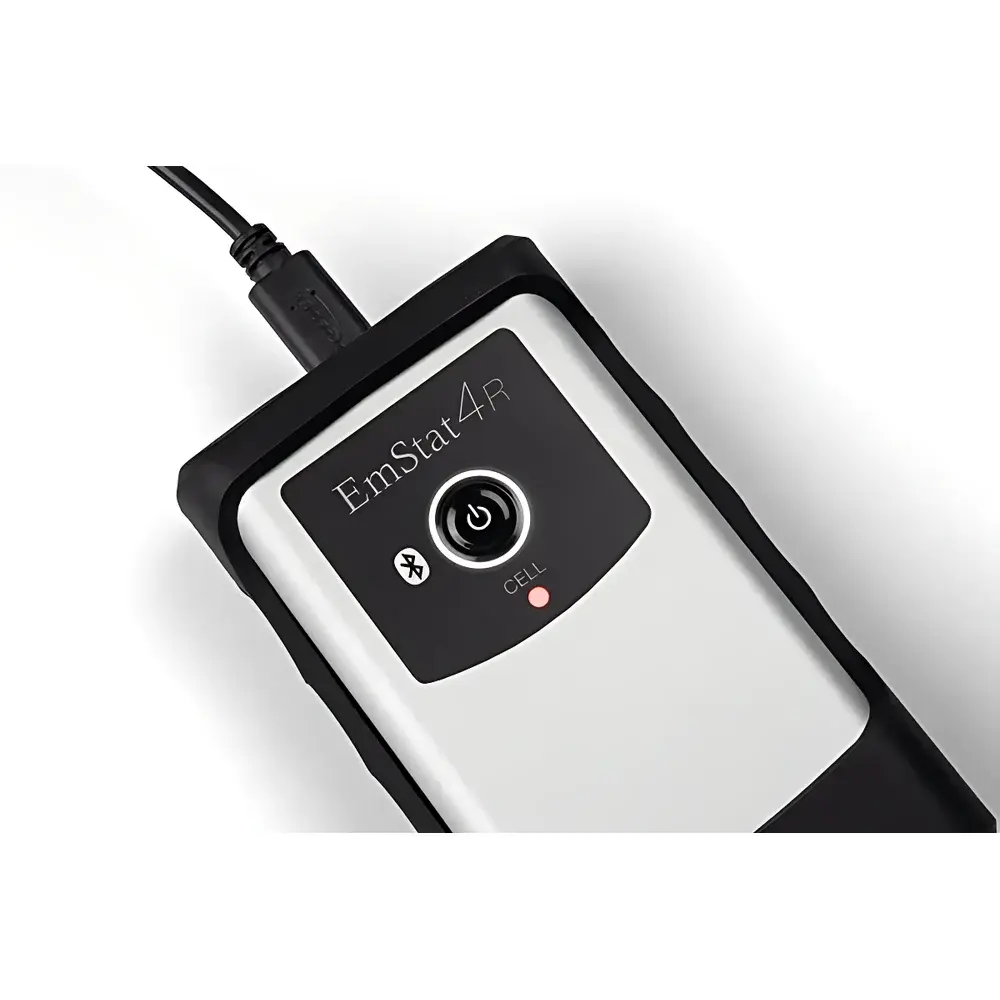
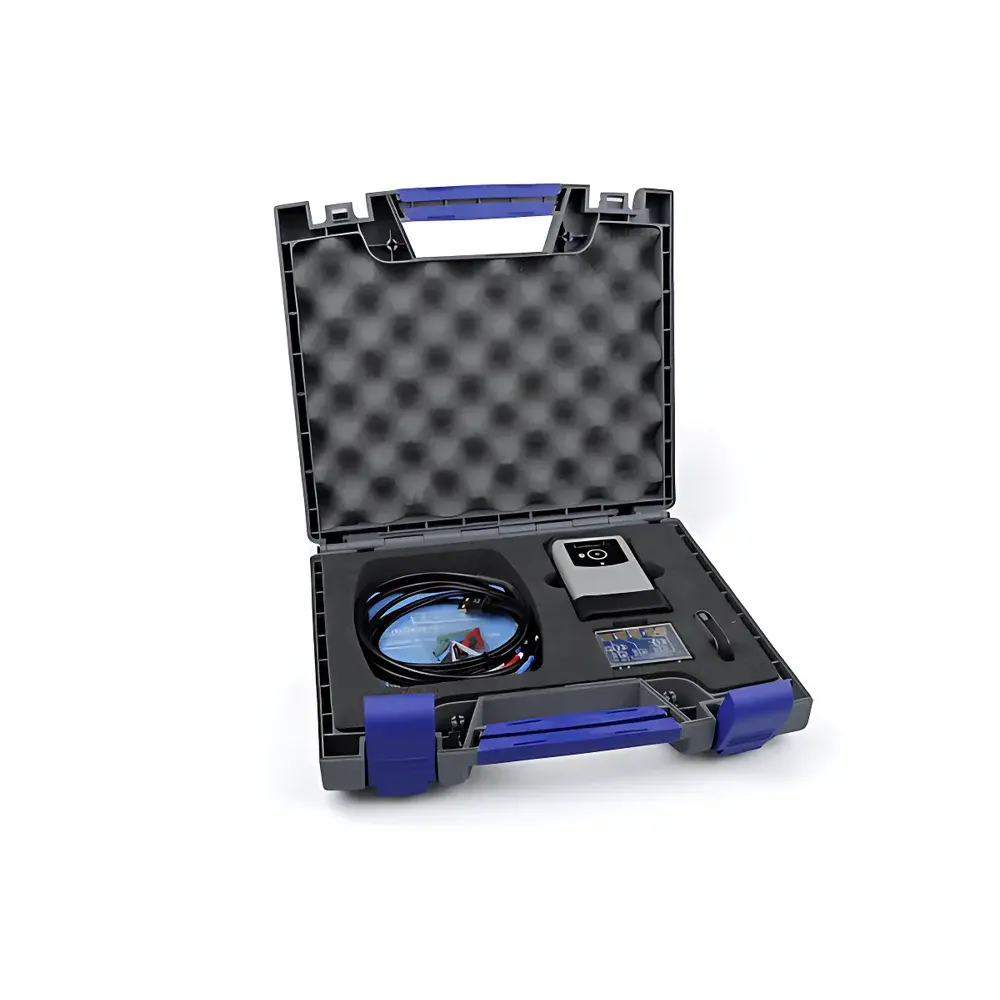
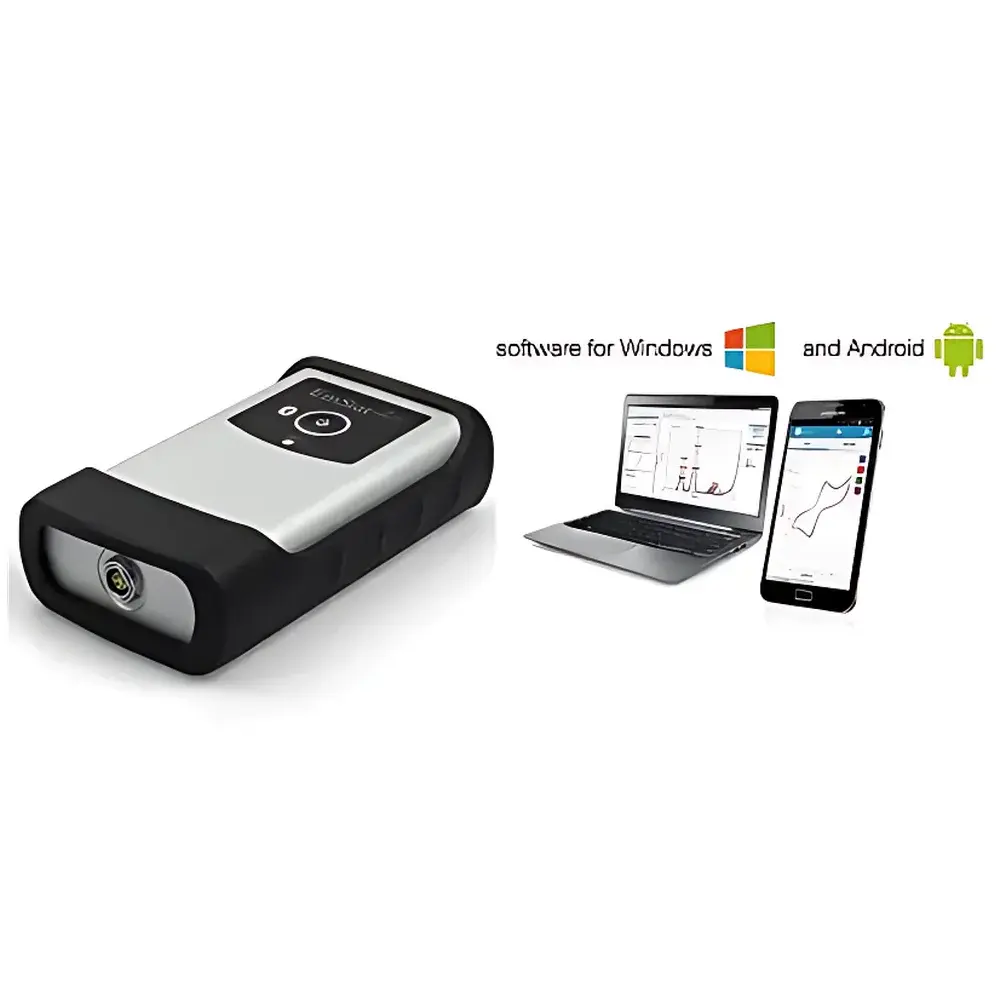
PalmSens EmStat4R Portable Electrochemical Workstation with Integrated Bluetooth and EIS Capability
| Brand | PalmSens |
|---|---|
| Origin | Netherlands |
| Model | EmStat4R |
| Instrument Type | Portable Electrochemical Workstation |
| Channel Count | Single-Channel |
| Current Range | ±30 mA |
| Current Accuracy | ≤ 0.2% |
| Potential Accuracy | ≤ 0.2% |
| Potentiostatic Range | ±3 V |
| EIS Frequency Range | 10 µHz to 200 kHz |
Overview
The PalmSens EmStat4R is a compact, handheld potentiostat/galvanostat with integrated electrochemical impedance spectroscopy (EIS) capability, engineered for high-fidelity electrochemical measurements in field-deployable, benchtop, or teaching-lab environments. Built upon a low-noise, high-stability analog front-end architecture, the EmStat4R implements classical three-electrode potentiostatic control using digital signal processing and precision voltage/current feedback loops. Its core measurement principle relies on real-time closed-loop control of electrode potential (vs. reference) while monitoring faradaic current response — enabling quantitative analysis of redox kinetics, interfacial charge transfer resistance, double-layer capacitance, and diffusion-controlled processes. The inclusion of wideband EIS (10 µHz–200 kHz) supports rigorous characterization of electrode/electrolyte interfaces, corrosion mechanisms, battery electrode degradation, and biosensor binding events under both open-circuit and biased conditions.
Key Features
- True portable form factor: palm-sized housing with integrated rechargeable Li-ion battery (optional USB-powered operation)
- Dual communication interface: native Bluetooth 5.0 (BLE) for wireless connection to Windows/macOS/iOS/Android devices + micro-USB for wired control and firmware updates
- Onboard microSD card slot: stores all raw measurement data (including timestamps, method parameters, and metadata) independently of host PC
- Single-channel architecture optimized for reproducibility: low-input-bias-current design enables reliable sub-nA current resolution (down to 1 nA full-scale sensitivity)
- Full compliance with ASTM G102 and ISO 16773-2 standards for impedance measurement uncertainty estimation
- Real-time digital filtering and adaptive sampling rate selection to minimize noise without compromising transient response
Sample Compatibility & Compliance
The EmStat4R supports standard three-electrode configurations (working, counter, reference) and is compatible with screen-printed electrodes (SPEs), carbon paste, gold, platinum, and glassy carbon working electrodes. It meets essential regulatory expectations for laboratory instrumentation: CE marking per EU Directive 2014/30/EU (EMC) and 2014/35/EU (LVD); RoHS 2011/65/EU compliant; designed to support GLP/GMP-aligned workflows via audit-trail-capable software logging (PSTrace 5). While not FDA 21 CFR Part 11 certified out-of-the-box, its data export structure (CSV, TXT, binary .pstat) and method parameter traceability enable integration into validated analytical systems when deployed with appropriate procedural controls.
Software & Data Management
PSTrace 5 — the official cross-platform application — provides full instrument control, real-time visualization, and post-processing. It supports method scripting (via Python-compatible syntax), automated batch execution, and unattended long-term monitoring (e.g., corrosion potential drift over 72 h). All acquired datasets include embedded metadata: timestamp, applied waveform parameters, hardware calibration IDs, and environmental context tags. EIS data are exportable in ZView-compatible format (.z) and support nonlinear least-squares fitting using built-in equivalent circuit models (Randles, modified Randles, transmission line). Raw voltammetric curves and impedance spectra can be exported directly to OriginLab (.opj), Microsoft Excel (.xlsx), or MATLAB (.mat) without loss of precision.
Applications
- Field-deployable environmental monitoring: heavy metal detection (Cd²⁺, Pb²⁺, Hg²⁺) via anodic stripping voltammetry (ASV) using disposable SPEs
- Academic electrochemistry education: hands-on CV, LSV, DPV, SWV, and EIS experiments with immediate spectral feedback
- Biosensor development: label-free detection of DNA hybridization or antibody-antigen binding through interfacial capacitance shifts
- Corrosion science: evaluation of inhibitor efficiency via polarization resistance (Rp) and EIS-derived pore resistance (Rpo)
- Battery R&D: half-cell characterization of cathode/anode materials using galvanostatic intermittent titration technique (GITT) and multi-frequency EIS
- Quality control in electroplating baths: real-time monitoring of metal ion concentration via controlled-potential coulometry
FAQ
Does the EmStat4R support bipotentiostat or dual-working-electrode configurations?
No — it is a single-channel potentiostat/galvanostat with fixed three-electrode topology. Dual-channel functionality requires the EmStat4 Multi or PalmSens4 platforms.
Can EIS measurements be performed without a reference electrode?
No — all potentiostatic modes, including EIS, require a stable reference electrode to maintain precise potential control relative to the working electrode.
Is firmware upgrade possible in the field?
Yes — firmware updates are delivered via PSTrace 5 over USB or Bluetooth and retain all user calibration settings and stored methods.
What is the maximum recommended cable length between the EmStat4R and electrodes?
For optimal signal integrity and noise immunity, use shielded coaxial cables ≤ 1 m in length; longer runs require active guarding or Faraday cage shielding.
How does the internal SD card handle data corruption during power loss?
The device implements wear-leveling FAT32 file system with journaling; abrupt disconnection triggers automatic metadata rollback to preserve last valid measurement block.





