
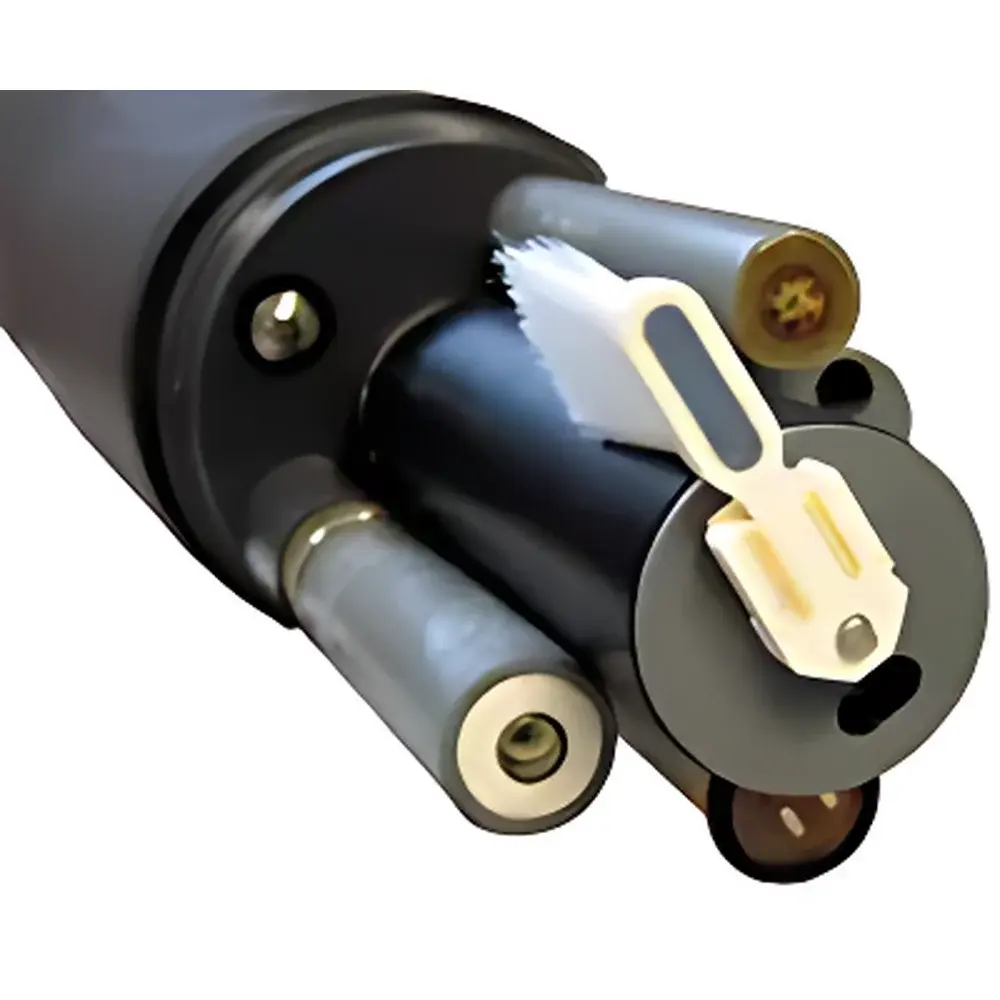
YSI 6820EDS / 6920EDS Multi-Parameter Water Quality Monitoring System
| Brand | YSI |
|---|---|
| Origin | USA |
| Model | 6820EDS / 6920EDS |
| Instrument Type | In-situ Online Water Quality Analyzer |
| DO (% air saturation) | 0–500%, ±2% or ±2% air saturation (0–200%), ±6% (200–500%) |
| DO (mg/L) | 0–50 mg/L, ±2% or ±0.2 mg/L (0–20 mg/L), ±6% (20–50 mg/L) |
| Conductivity | 0–100 mS/cm, ±0.5% + 0.001 mS/cm |
| Temperature | −5 to 50 °C, ±0.15 °C |
| pH | 0–14, ±0.2 |
| ORP | −999 to +999 mV, ±20 mV |
| Salinity | 0–70 ppt, ±1.0% or ±0.1 ppt |
| Depth (shallow) | 0–9 m, ±0.018 m |
| Depth (mid-depth) | 0–61 m, ±0.12 m |
| Barometrically Compensated Water Level | 0–9 m, ±0.003 m |
| Turbidity | 0–1000 NTU, ±2% or ±0.3 NTU |
| Rhodamine WT | 0–200 µg/L, ±1.0 µg/L or ±5% |
| Chlorophyll-a | 0–400 µg/L, LOD 0.1 µg/L, R² > 0.9999 |
| Ammonia-N / Nitrate-N / Chloride (freshwater only) | 0–200 mg N/L, ±10% or ±2 mg N/L |
| Sensor Cleaning | Integrated YSI Patented Auto-Cleaning Brush (for turbidity, DO, pH) |
Overview
The YSI 6820EDS and 6920EDS are rugged, in-situ multi-parameter water quality monitoring systems engineered for long-term, unattended deployment in rivers, lakes, reservoirs, estuaries, and wastewater outfalls. Unlike traditional grab sampling or pumped-loop analyzers, these instruments operate directly in the water column—eliminating flow-induced artifacts, pressure-related calibration drift, and sample degradation during transport. The core measurement architecture employs electrochemical, optical, and pressure-based transduction principles validated per Standard Methods for the Examination of Water and Wastewater (23rd ed.) and aligned with ASTM D1129 (conductivity), ASTM D888 (dissolved oxygen), and ISO 5814 (electrochemical DO). Each sensor is factory-calibrated and traceable to NIST standards. The EDS platform integrates real-time environmental compensation—including temperature, barometric pressure, and salinity—for accurate conversion between raw signals and standardized units (e.g., specific conductance at 25 °C, TDS, resistivity).
Key Features
- In-situ Deployment Architecture: Fully submersible housing rated to 61 m (200 ft) depth; titanium and marine-grade stainless-steel construction ensures corrosion resistance in brackish and saline environments.
- YSI Patented Auto-Cleaning Brush System: Mechanically actuated brush sweeps across turbidity, dissolved oxygen, and pH sensors at user-defined intervals (e.g., hourly or daily), mitigating biofouling and sediment accumulation—extending maintenance-free deployment from typical 28 days to up to 90 days under moderate fouling conditions.
- Flow-Independent Dissolved Oxygen Sensing: Utilizes YSI’s Fast-Pulse Polarographic DO sensor with zero-flow dependency, enabling reliable measurement in stagnant or low-velocity waters—including supersaturated zones common in photosynthetically active surface layers.
- Modular Sensor Bay Design: Supports field-replaceable probes without disassembly; includes dedicated ports for optional ion-selective electrodes (ammonium-N, nitrate-N, chloride), redox (ORP), and barometric pressure compensation.
- Non-Volatile Data Storage: Internal memory retains up to 150,000 timestamped records with full metadata (sensor ID, calibration date, diagnostic flags); data integrity preserved during power loss or communication interruption.
- Dual Communication Protocols: Native RS-232 and SDI-12 interfaces enable direct integration with SCADA systems, telemetry radios (e.g., cellular, satellite), Campbell Scientific CR-series loggers, and EPA-compliant automated monitoring stations.
Sample Compatibility & Compliance
The 6820EDS/6920EDS is optimized for continuous operation in natural freshwater, estuarine, and treated wastewater matrices. All sensors comply with U.S. EPA guidance for ambient water monitoring (EPA 40 CFR Part 136), and data outputs meet GLP documentation requirements when used with EcoWatch software’s audit-trail-enabled logging. Ion-selective modules (NH₄⁺-N, NO₃⁻-N, Cl⁻) are restricted to freshwater applications (< 5 ppt salinity) per manufacturer specifications. Conductivity-derived parameters (TDS, resistivity, specific conductance) are calculated using Standard Methods equations (2510B, 2520B) and automatically temperature-compensated. The system supports 21 CFR Part 11–compliant electronic signatures and user-access controls when deployed with validated EcoWatch configurations.
Software & Data Management
EcoWatch Desktop Software (v5.x, included free with English and Chinese language packs) provides full lifecycle data management: real-time telemetry visualization, sensor diagnostics (e.g., membrane integrity checks, signal noise analysis), batch calibration import/export, statistical summary generation (min/max/mean/std dev), and customizable report templates compliant with ISO/IEC 17025 reporting conventions. Raw binary files (.ysd) are convertible to CSV, Excel, and NetCDF formats. Firmware updates and configuration backups are performed over serial or USB connection. Field technicians may perform on-site probe verification using built-in sensor health diagnostics and reference-check routines—no lab-grade standards required for routine validation.
Applications
- Regulatory compliance monitoring for NPDES permits and TMDL implementation
- Algal bloom forecasting via high-frequency chlorophyll-a and rhodamine WT tracer tracking
- Wastewater effluent characterization with simultaneous NH₄⁺-N, NO₃⁻-N, and Cl⁻ quantification
- Reservoir stratification profiling using synchronized temperature, DO, and conductivity vertical profiles
- Stormwater runoff event detection through rapid turbidity and conductivity transients
- Long-term trend analysis for climate-driven water quality shifts (e.g., hypolimnetic DO depletion, salinization)
FAQ
Can the 6820EDS/6920EDS be deployed in seawater?
Yes—the main housing, depth sensor, and optical/turbidity modules are rated for full marine exposure. However, ion-selective sensors (NH₄⁺-N, NO₃⁻-N, Cl⁻) are validated only for freshwater use per YSI specification.
Is barometric compensation mandatory for accurate water level measurement?
Yes—barometric pressure input is required for absolute water level calculation. The system supports external barometer input or internal pressure sensor (with optional vented cable) for atmospheric reference.
How frequently must the auto-cleaning brush be serviced?
The brush mechanism requires no scheduled maintenance; it is sealed and lubricated for the instrument’s operational lifetime. Brush wear is monitored via diagnostic counters accessible in EcoWatch.
Does the system support remote firmware updates?
Firmware updates require physical serial/USB connection; however, configuration changes (sampling interval, cleaning schedule, alarm thresholds) can be pushed remotely via SDI-12 or ASCII command sets.
Are calibration certificates NIST-traceable?
Yes—each sensor ships with a factory calibration certificate referencing NIST-traceable standards; field recalibration kits and certified buffer solutions are available through YSI authorized distributors.







