
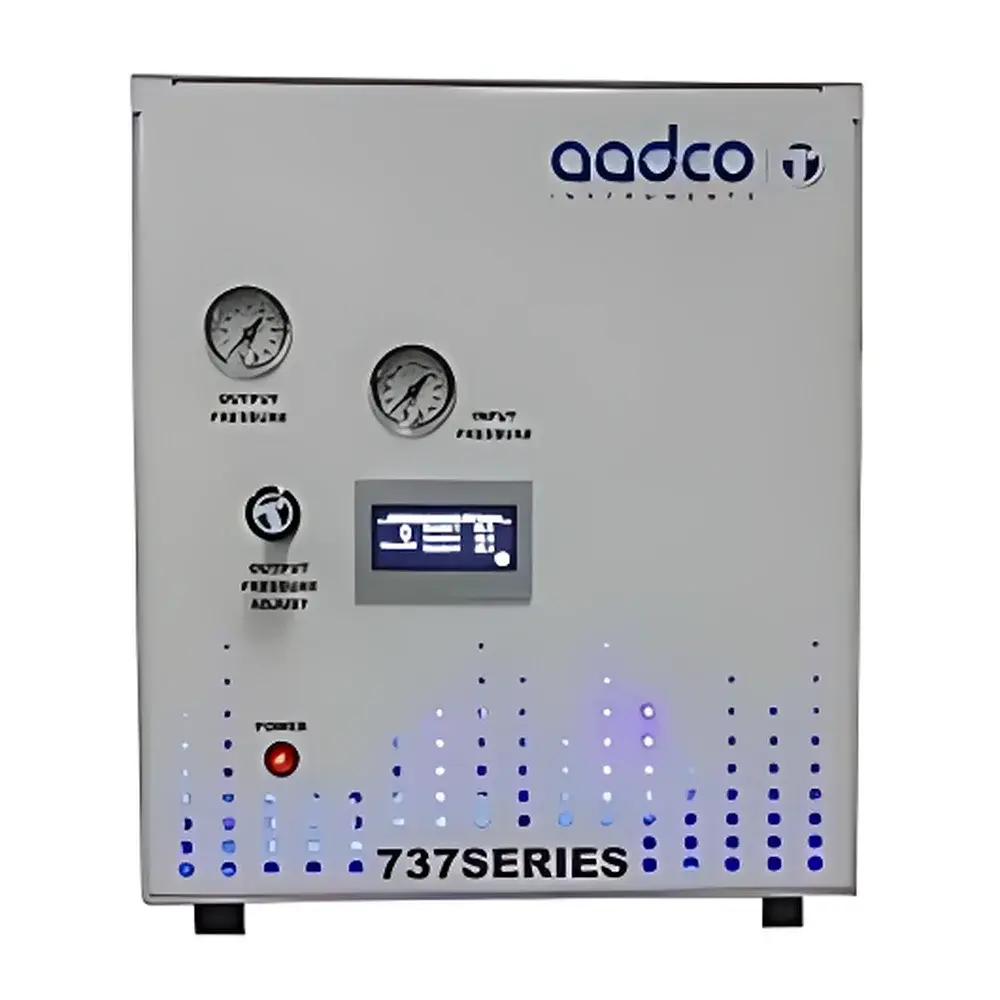
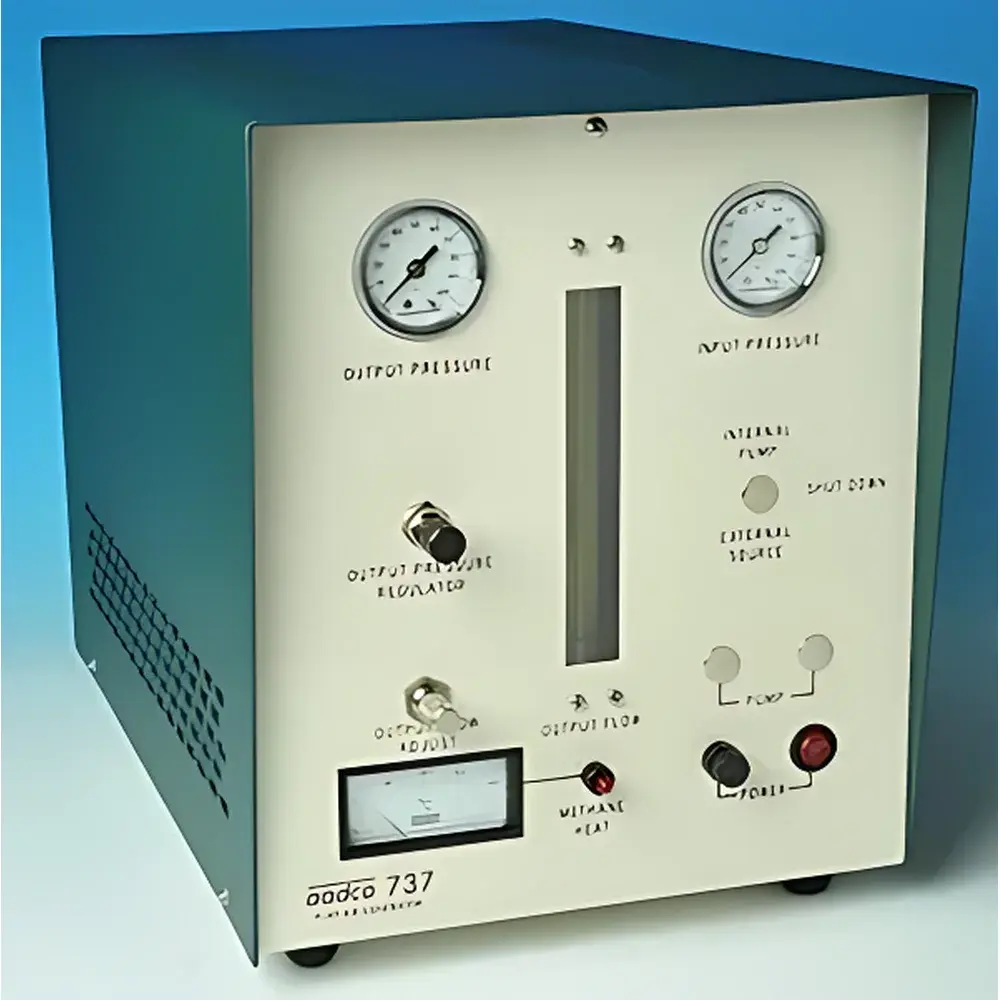
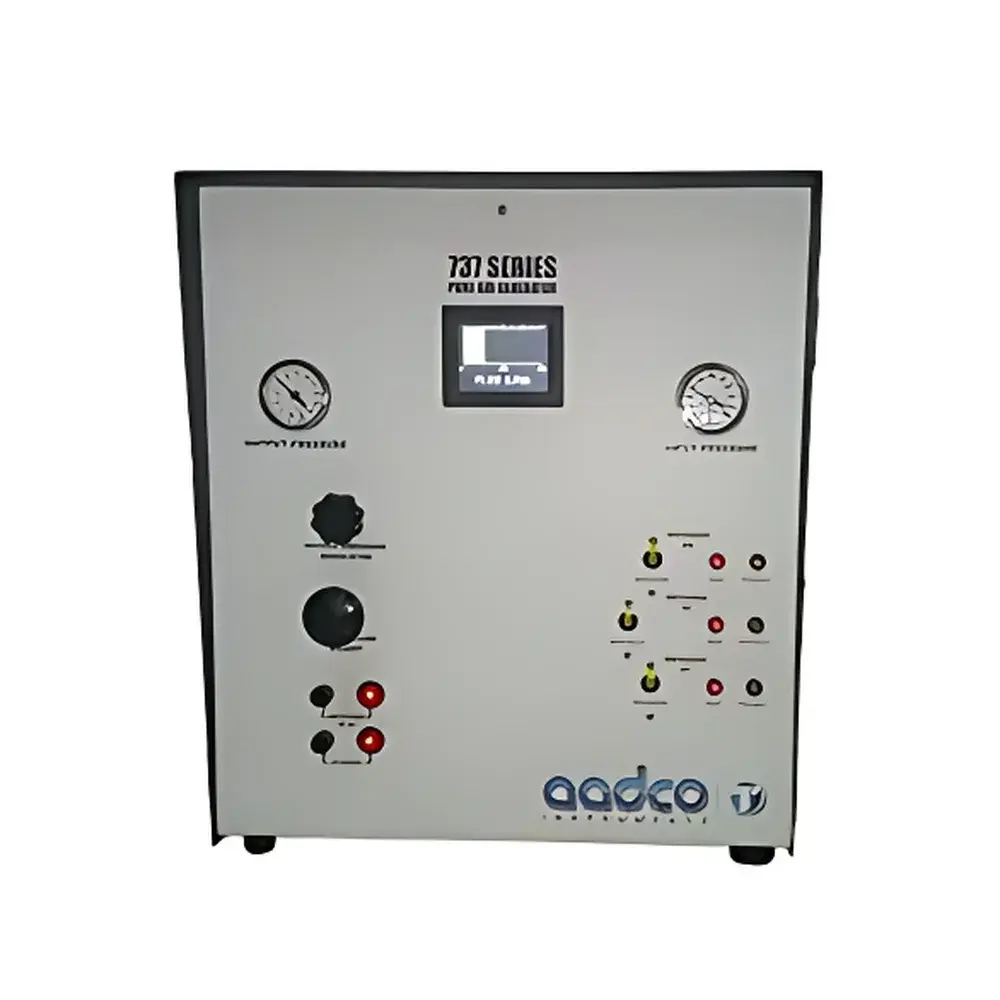
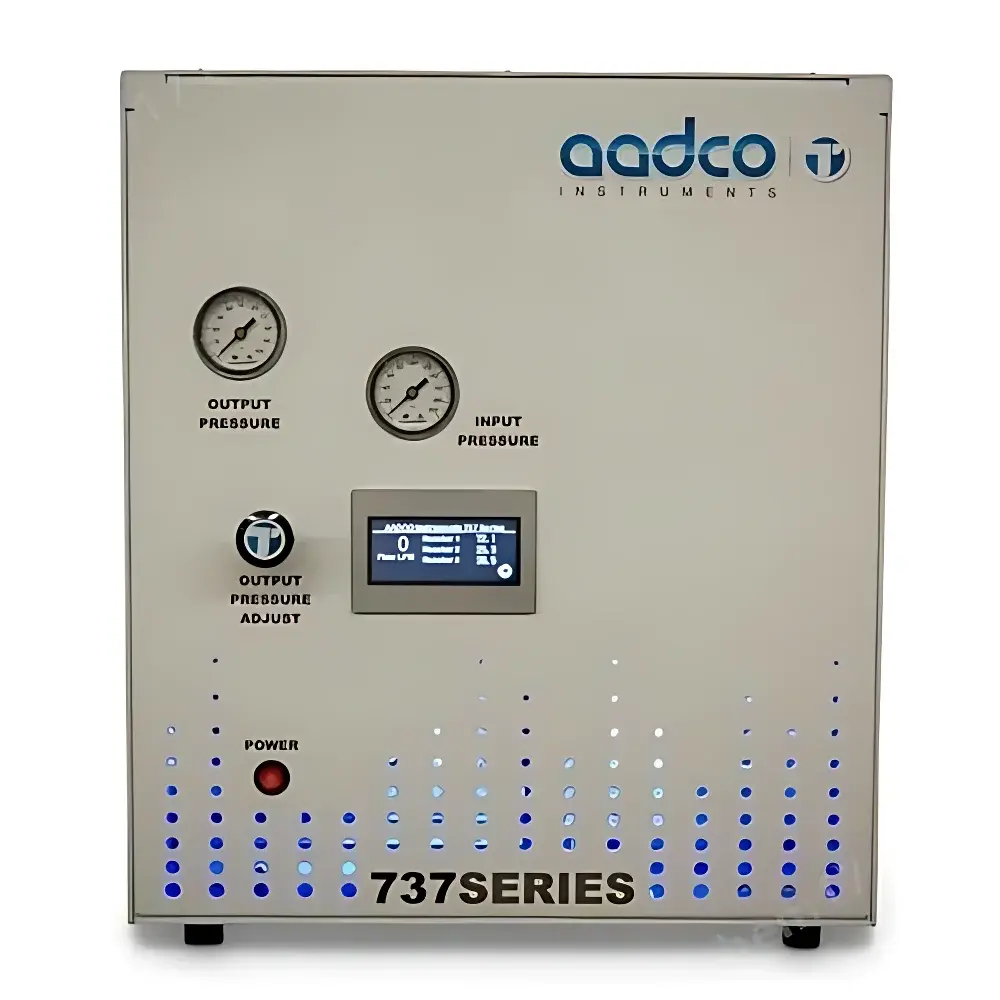
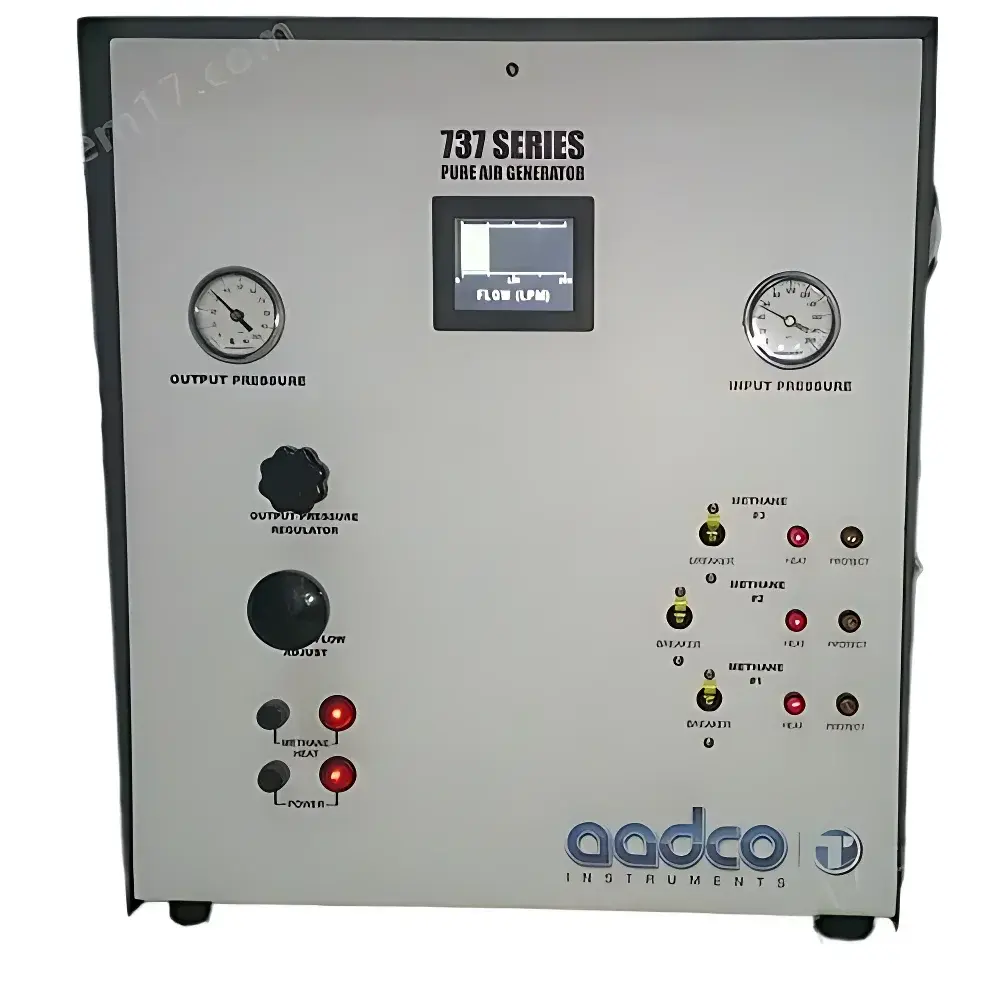
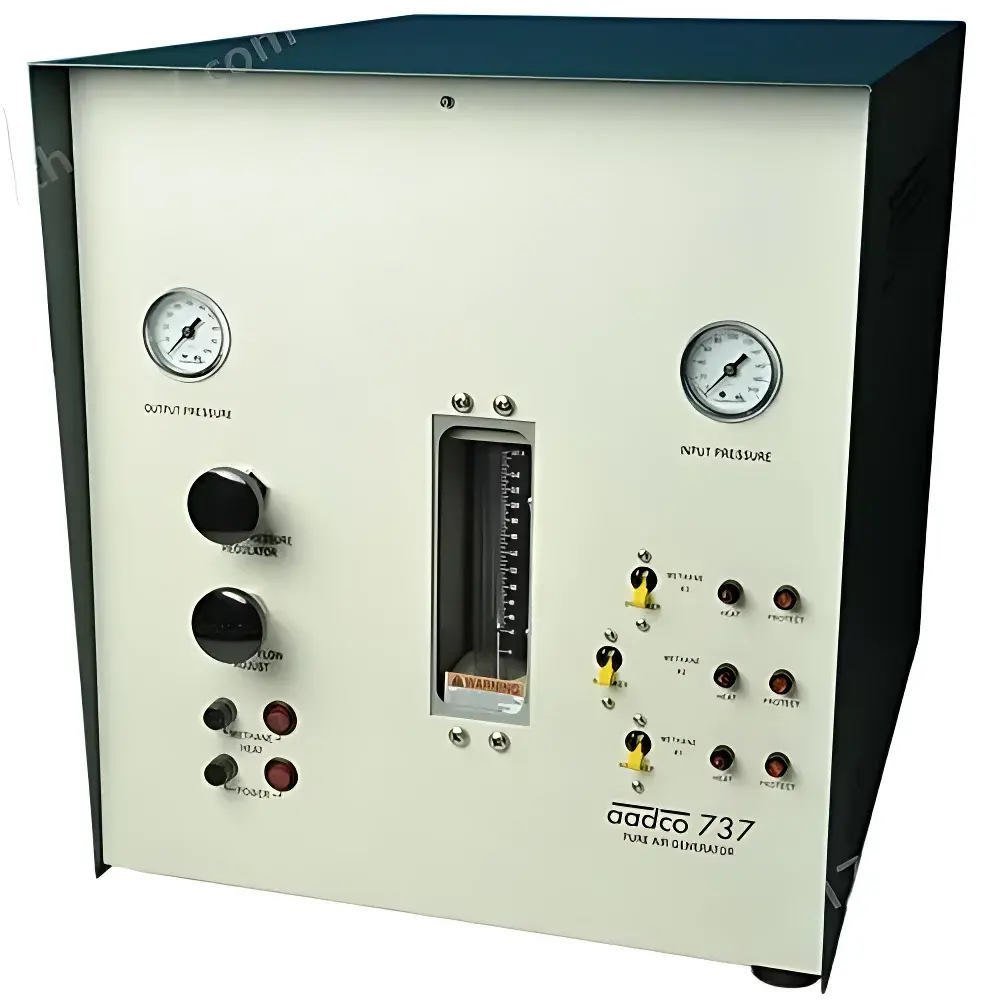
AADCO ZA-737-250 Zero Air Generator
| Brand | AADCO |
|---|---|
| Origin | USA |
| Model | ZA-737-250 |
| Zero Air Purity | <1 ppb (for CO, NO, NO₂, SO₂, H₂S, NH₃, O₃, hydrocarbons, COS, SF₆, fluorocarbons) |
| Flow Rate | 250 L/min |
| Output Pressure | 80 psi |
| Dew Point | −50 °C |
| Flow Accuracy | ±1 L/min |
| Electrical Supply | 115 V, 60 Hz (15 A) or 220–240 V, 50/60 Hz |
| Dimensions (H×W×D) | 533 mm × 464 mm × 711 mm |
| Weight | 396 kg |
| Warranty | 1 year |
Overview
The AADCO ZA-737-250 Zero Air Generator is a high-capacity, laboratory-grade instrument engineered to produce ultra-pure zero air for calibration, reference, and background gas applications in environmental monitoring, ambient air quality analysis, and trace gas measurement systems. Designed according to the fundamental principles of catalytic oxidation, cryogenic adsorption, and precision pressure-swing purification, the ZA-737-250 delivers consistent, contaminant-free air with verified purity across a broad spectrum of reactive and non-reactive species. Its architecture supports continuous operation under regulated flow and pressure conditions—critical for maintaining baseline integrity in chemiluminescence NOx analyzers, UV fluorescence SO2 detectors, ozone monitors, and GC-FID systems. As part of the legacy AADCO 737 series—now manufactured and supported by Tisch Environmental following its acquisition—the ZA-737-250 retains identical core hardware, materials-of-construction, and performance validation protocols used in hundreds of installations worldwide, including U.S. EPA regional laboratories, state air monitoring networks, ISO/IEC 17025-accredited testing facilities, and university research centers conducting atmospheric chemistry studies.
Key Features
- Ultra-low contaminant output: certified <1 ppb total hydrocarbons (as methane), <0.5 ppb SO₂, NO, NO₂, H₂S, and NH₃, <1 ppb O₃ and CO, and <0.5 ppb COS and SF₆—validated per ASTM D6167 and EPA Method TO-15 supporting criteria
- Stable 250 L/min volumetric flow at 80 psi output pressure, adjustable via integrated needle valve with digital LED flow indication (±1 L/min accuracy)
- Dual-stage purification: high-efficiency particulate filtration followed by catalytic oxidation (to convert CO and VOCs to CO₂ and H₂O) and deep-cold desiccant/adsorbent beds (−50 °C dew point)
- Robust mechanical construction: stainless steel housings, brass fittings, and leak-tested manifolds compliant with ASME B31.8 and CGA G-4.1 standards for compressed gas systems
- Flexible power configuration: auto-switching 115 V / 220–240 V, 50/60 Hz input with thermal overload protection and line-conditioned internal regulators
- Modular footprint: compatible with both benchtop and rack-mount installation; optional vibration-dampened mounting kit available for sensitive analytical suites
Sample Compatibility & Compliance
The ZA-737-250 is explicitly designed for use with regulatory-grade ambient air monitoring instrumentation requiring certified zero air per U.S. EPA 40 CFR Part 53, EN 14625:2012, and ISO 8573-1 Class 0 (for gaseous contaminants). It meets traceability requirements for calibration gas generation under ISO/IEC 17025:2017 Clause 6.4.10 and supports GLP-compliant audit trails when integrated with validated data loggers. The unit’s output purity profile satisfies the stringent background specifications for photometric ozone calibrators (EPA EQOA-01), chemiluminescent NOx analyzers (EPA EQNA-01), and FTIR-based multi-gas verification systems. All consumables—including catalyst cartridges, desiccant columns, and pre-filters—are serialized and supplied with CoA documentation referencing NIST-traceable reference methods.
Software & Data Management
While the ZA-737-250 operates as a standalone hardware system without embedded firmware or touchscreen interface, it is fully compatible with third-party supervisory control and data acquisition (SCADA) platforms via analog 4–20 mA output signals for real-time flow and pressure monitoring. Optional RS-485 Modbus RTU integration enables remote status polling (e.g., filter saturation alerts, overtemperature events, pressure drop thresholds) within centralized lab management systems. All operational logs—including runtime hours, maintenance intervals, and calibration certificate expiration dates—can be maintained in accordance with FDA 21 CFR Part 11 requirements using validated electronic lab notebooks (ELN) such as LabArchives or Benchling when paired with external data capture modules.
Applications
- Primary and secondary calibration of ambient air pollutant analyzers (NOx, SO2, O3, CO, VOCs)
- Zero/span verification for continuous emission monitoring systems (CEMS) in power generation and industrial stack applications
- Carrier and purge gas supply for GC-MS, PTR-TOF, and cavity ring-down spectroscopy (CRDS) platforms
- Baseline drift correction in open-path differential optical absorption spectroscopy (OP-DOAS)
- Reference gas generation for inter-laboratory comparison studies under WMO GAW and EMEP protocols
- Teaching and research applications in atmospheric science, environmental engineering, and analytical chemistry curricula
FAQ
What zero air purity specifications does the ZA-737-250 meet?
It achieves <1 ppb total hydrocarbons (as methane), <0.5 ppb for SO₂, NO, NO₂, H₂S, NH₃, and COS, and <1 ppb for O₃ and CO—verified against EPA Traceability Protocol for Gaseous Calibration Standards.
Is the unit suitable for use in cleanroom or ISO Class 5 environments?
Yes—its stainless-steel fluid path, particle-filtered intake, and absence of oil-lubricated compressors make it compatible with ISO 14644-1 Class 5 cleanrooms when installed with HEPA-filtered inlet air.
How often do consumables require replacement?
Catalyst cartridges are rated for 12 months or 8,760 operating hours; desiccant columns for 6 months under continuous 250 L/min operation; pre-filters every 3 months—schedule adjusted per inlet air quality per ASTM D2519.
Can the ZA-737-250 be integrated into an automated calibration sequence?
Yes—via 4–20 mA analog outputs and optional Modbus RTU, enabling synchronization with programmable logic controllers (PLCs) and calibration software such as Thermo Fisher QL-2000 or Horiba AP-200.
Does the generator comply with international shipping and import regulations for laboratory equipment?
Yes—it carries CE marking per 2014/30/EU (EMC Directive) and 2014/35/EU (LVD Directive), and is classified under HS Code 8543.70.90 for duty assessment in most OECD countries.







