Distek LabEye In-Line Dissolution Monitoring System
| Brand | Distek |
|---|---|
| Origin | USA |
| Manufacturer Type | Authorized Distributor |
| Origin Category | Imported |
| Model | LabEye |
| Pricing | Upon Request |
Overview
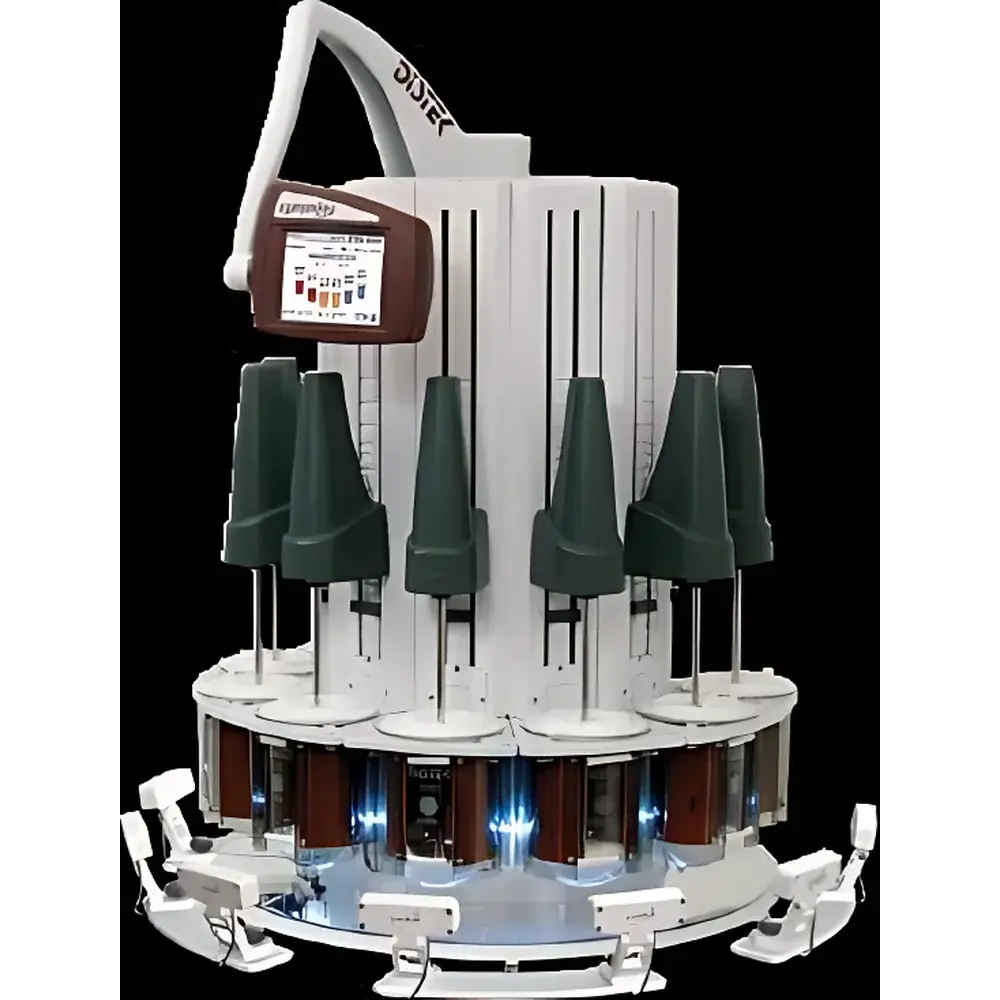
The Distek LabEye In-Line Dissolution Monitoring System is a purpose-built, multi-camera imaging platform engineered for real-time visual surveillance and high-fidelity documentation of dissolution testing processes in pharmaceutical R&D and QC laboratories. Unlike conventional endpoint sampling methods, LabEye employs synchronized, non-invasive optical monitoring—leveraging high-resolution digital imaging to capture dynamic tablet erosion, capsule disintegration, and formulation behavior directly within USP Apparatus 1 (basket), Apparatus 2 (paddle), and Apparatus 4 (flow-through) vessels. The system operates on the principle of continuous visual process analytics (VPA), enabling objective, time-stamped observation of physical changes during dissolution without altering hydrodynamics or requiring manual intervention. Its architecture supports integration into regulated environments where visual evidence complements chemical assay data, fulfilling complementary roles in method development, troubleshooting, and batch release investigations.
Key Features
- High-definition imaging at 30 frames per second (fps) with full 1080p resolution (1920 × 1080 pixels), ensuring clarity for fine particulate tracking and surface morphology assessment.
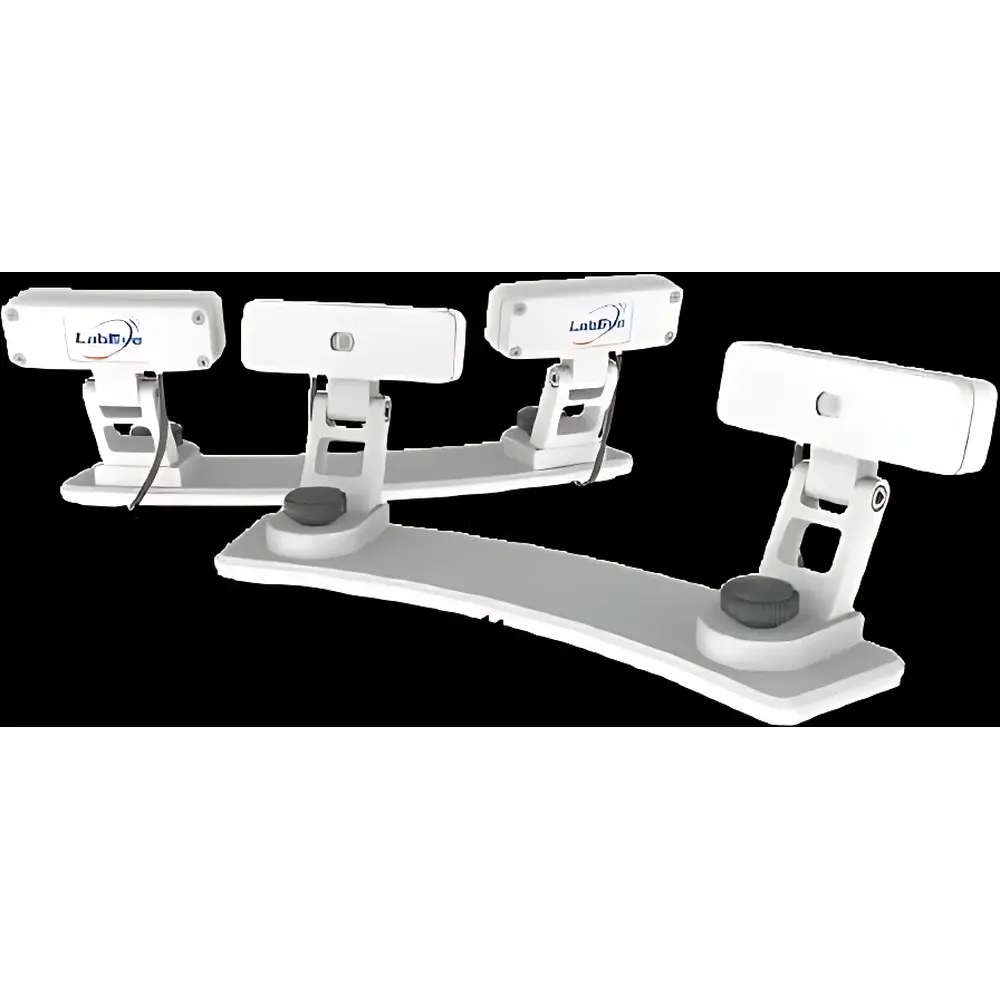
- Modular camera configuration supporting 1–8 independently positioned units, each equipped with adjustable focus, auto-exposure control, and low-noise CMOS sensors optimized for low-light aqueous environments.
- Precise temporal synchronization across all cameras via hardware-triggered acquisition, eliminating inter-frame drift during multi-vessel comparative studies.
- Integrated scheduling engine allowing users to define time-based snapshot triggers and scheduled video recording windows directly within the LabEye Control Software—no external scripting required.
- Standardized mechanical mounting interface compatible with major dissolution apparatus brands including Distek, Hanson, Sotax, Agilent, and Erweka, facilitating rapid deployment without vessel modification.
- Rugged, IP54-rated enclosures designed for laboratory benchtop use; lenses feature anti-fog coating and chemical-resistant housing suitable for humid, temperature-controlled dissolution baths.
Sample Compatibility & Compliance
LabEye is validated for use with solid oral dosage forms—including immediate-release tablets, extended-release matrix tablets, soft gelatin capsules, and osmotic pump systems—under standard USP <711>, Ph. Eur. 2.9.3, and JP 17 dissolution conditions. It does not interfere with vessel geometry, paddle/basket rotation, or medium temperature uniformity. All recorded imagery is stored with embedded metadata (timestamp, vessel ID, apparatus type, operator ID, and environmental log data), supporting ALCOA+ data integrity principles. The system architecture is compatible with 21 CFR Part 11-compliant electronic signatures and audit trail functionality when deployed alongside validated LIMS or ELN platforms. While LabEye itself is not a quantitative analytical instrument, its outputs are routinely cited in regulatory submissions (e.g., FDA ANDA supplements, EMA scientific advice responses) as supplementary evidence for dissolution mechanism understanding and root-cause analysis of failed profiles.
Software & Data Management
The LabEye Control Software provides a centralized interface for camera calibration, acquisition scheduling, live preview, and media management. Recorded videos and snapshots are saved in MP4 (H.264) and PNG formats respectively, with configurable file naming conventions aligned to internal SOPs. Media files include embedded EXIF metadata and can be exported with hash-verified checksums for long-term archival. The software supports DICOM export mode for integration with enterprise imaging repositories and offers RESTful API endpoints for automated ingestion into document management systems. Audit trails record all user actions—including login/logout, parameter changes, and export events—with immutable timestamps. Backups are managed via configurable network share paths or cloud-synced storage locations compliant with ISO/IEC 27001 information security standards.
Applications
- Visual validation of sink condition establishment and maintenance during early dissolution timepoints.
- Root-cause investigation of anomalous dissolution profiles—e.g., tablet capping, sticking, or gel-layer formation—by correlating image sequences with UV/Vis or HPLC quantitation.
- Comparative evaluation of excipient effects on disintegration kinetics under identical hydrodynamic conditions.
- Supporting QbD initiatives by generating empirical evidence for input-output relationships between formulation variables and physical performance attributes.
- Training and standardization of dissolution technician practices through annotated playback and side-by-side vessel comparison.
- Documentation for regulatory inspections where visual evidence strengthens justification for method suitability or deviation investigations.
FAQ
Is LabEye compliant with 21 CFR Part 11?
Yes—when deployed with appropriate administrative controls (e.g., role-based access, electronic signatures, and audit trail review procedures), LabEye supports compliance with 21 CFR Part 11 requirements for electronic records and signatures.
Can LabEye be used with non-Distek dissolution apparatuses?
Yes—the standardized mounting system includes adaptable brackets and alignment fixtures certified for compatibility with Hanson SR8-Plus, Sotax AT7, Agilent DD-7, and Erweka DT80 series instruments.
Does LabEye provide quantitative dissolution data?
No—LabEye is a qualitative and semi-quantitative visual monitoring tool. It does not replace UV/Vis spectrophotometry or HPLC but enhances interpretation of such data through contextual imagery.
What is the maximum recommended cable length between camera and host PC?
For optimal signal integrity and latency-free operation, USB 3.2 Gen 1 cables should not exceed 3 meters; active extension solutions or fiber-optic USB extenders are recommended for longer runs.
Is remote monitoring supported?
Yes—via secure HTTPS-enabled web viewer accessible through modern browsers; requires local network configuration and optional TLS certificate deployment for enterprise-grade authentication.