
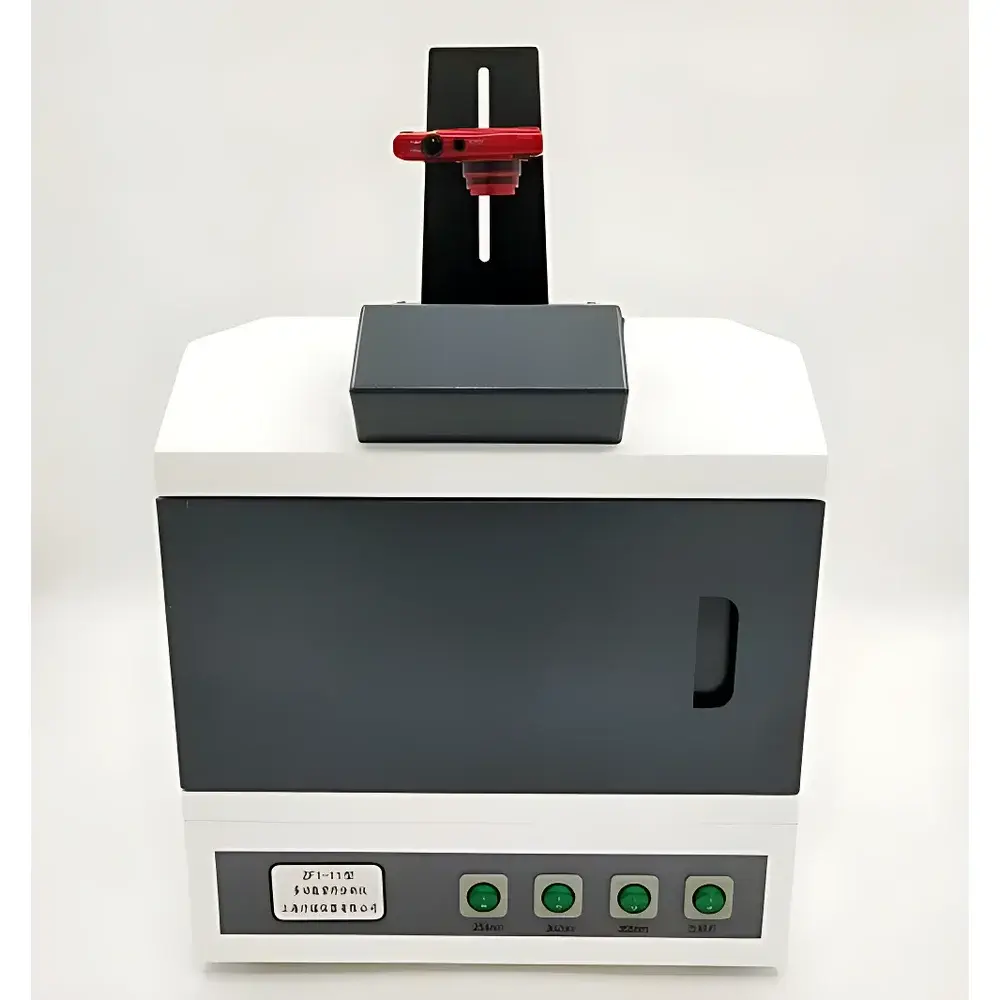
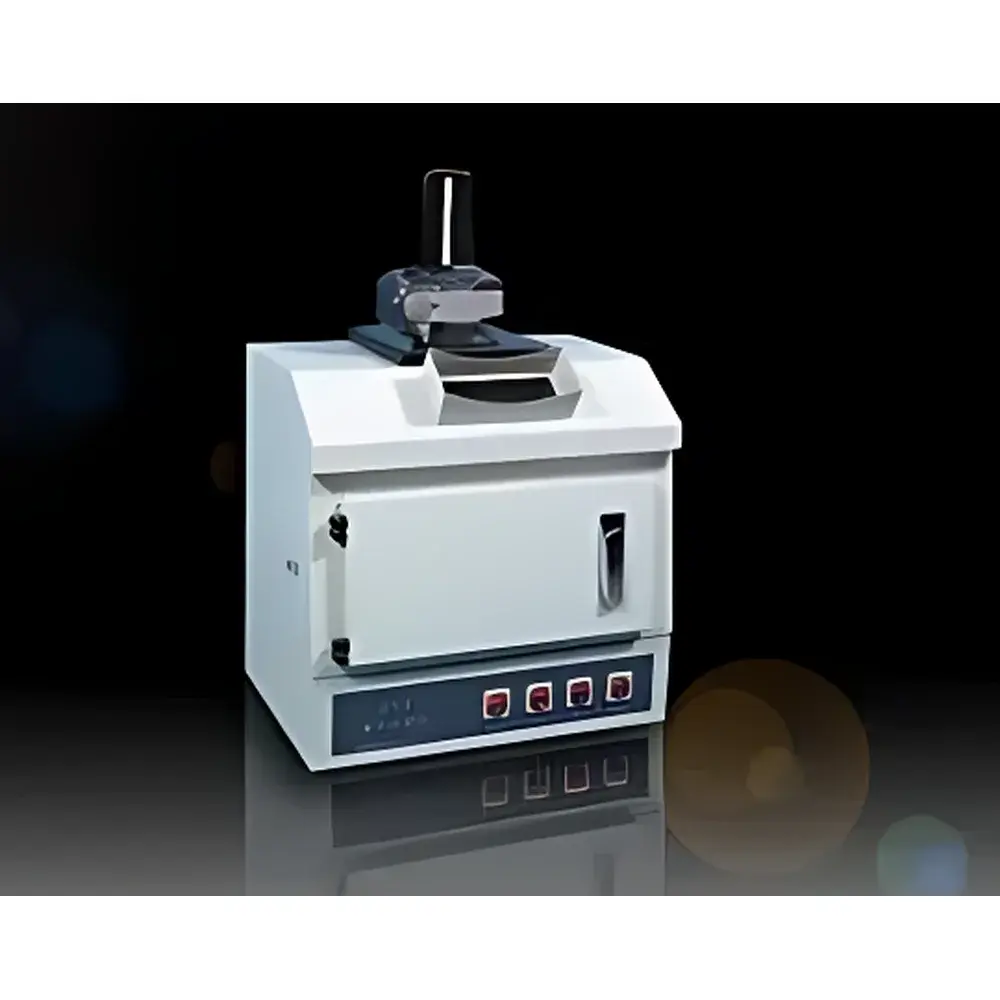
Hanuo ZF1-1 Multi-Wavelength Darkroom UV Transilluminator and Gel Cutter
| Brand | Hanuo |
|---|---|
| Origin | Shanghai, China |
| Manufacturer Type | Authorized Distributor |
| Product Category | Domestic |
| Model | ZF1-1 |
| Instrument Type | Darkroom-style |
| Wavelength Options | 254 nm, 302 nm, 365 nm, and White Light |
| UV Filter Area | 20 × 15 cm |
| UV Lamps | 60 W total (dual-band reflective configuration) |
| Input Voltage | 220 V AC, 50 Hz |
| Compliance | CE-marked for laboratory use, conforms to IEC 61010-1 safety standards |
Overview
The Hanuo ZF1-1 Multi-Wavelength Darkroom UV Transilluminator and Gel Cutter is a purpose-engineered instrument designed for nucleic acid and protein visualization, excision, and documentation in molecular biology laboratories. It operates on the principle of ultraviolet-induced fluorescence: when nucleic acids (e.g., ethidium bromide– or SYBR®-stained DNA/RNA) or fluorescently labeled proteins are exposed to specific UV wavelengths, they absorb photons and re-emit visible light at longer wavelengths—enabling high-contrast detection under controlled darkroom conditions. Unlike open-bench transilluminators, the ZF1-1 integrates a fully enclosed, light-tight cabinet with internal reflective surfaces and optimized lamp geometry to eliminate ambient interference, reduce operator UV exposure, and ensure reproducible band intensity quantification across repeated runs.
Key Features
- Four independent illumination modes: 254 nm (optimal for UV shadowing and crosslinking), 302 nm (standard for ethidium bromide–stained nucleic acids), 365 nm (low-energy excitation for SYBR® Safe, GelRed®, and other long-wavelength dyes), and white light (for Coomassie- or silver-stained protein gels and post-UV documentation).
- Integrated dual-side access ports: precisely positioned cut-out windows on both lateral panels allow sterile, gloved handling of gels during excision—minimizing UV exposure time while enabling real-time visual alignment under active illumination.
- Quick-swap fluorescent conversion plate: a removable, UV-transparent acrylic panel with embedded phosphor coating enables seamless transition from UV to visible-light imaging without lamp replacement or mechanical reconfiguration.
- Dedicated digital camera mounting interface: includes standardized 1/4″-20 threaded tripod socket and adjustable height support arm—compatible with DSLR, mirrorless, and scientific CMOS cameras equipped with macro lenses (e.g., Canon EF-S 60mm f/2.8, Nikon AF-S Micro-Nikkor 60mm).
- Optimized optical uniformity: interior aluminum-coated reflectors and diffused lamp array architecture deliver ±5% irradiance homogeneity across the full 20 × 15 cm viewing area—critical for quantitative densitometry and comparative gel analysis.
- High-transmission UV filter glass: fused silica-based filter with <0.1% stray light transmission below 240 nm and sharp cutoff characteristics ensures minimal background haze and eliminates lamp filament shadowing artifacts.
Sample Compatibility & Compliance
The ZF1-1 supports standard electrophoretic formats including agarose (0.5–3.0%), polyacrylamide (8–20%), SDS-PAGE, native PAGE, and thin-layer chromatography (TLC) plates. It accommodates gels up to 15 × 15 cm and is compatible with common nucleic acid stains (EtBr, SYBR® Gold, GelGreen®), protein stains (Coomassie Brilliant Blue R-250, Deep Purple™), and chemiluminescent substrates when used with appropriate emission filters. The unit complies with IEC 61010-1:2010 for electrical safety in laboratory equipment and meets EN 62471 photobiological safety requirements for UV radiation exposure (Risk Group 2). Optional interlock kits available for integration into GLP/GMP environments requiring access-controlled UV activation.
Software & Data Management
While the ZF1-1 operates as a standalone hardware platform, its standardized camera interface facilitates integration with third-party image acquisition software such as ImageLab™ (Bio-Rad), AlphaView SA (ProteinSimple), or open-source tools like Fiji/ImageJ. All acquired TIFF or PNG images retain embedded EXIF metadata—including wavelength mode, exposure time, and lens focal length—supporting traceable documentation per ISO/IEC 17025 and FDA 21 CFR Part 11 guidelines when paired with audit-trail-enabled laboratory information management systems (LIMS). No proprietary firmware or vendor-locked drivers are required.
Applications
- Visualization and semi-quantitative analysis of DNA/RNA fragments in agarose and polyacrylamide gels
- Precision excision of target bands for downstream cloning, sequencing, or mass spectrometry
- Documentation of electrophoretic mobility shift assays (EMSA) and Southern/Northern blots
- Fluorescence-based TLC plate development monitoring (e.g., lipid or metabolite separation)
- UV crosslinking validation prior to nucleic acid transfer protocols
- Teaching laboratory demonstrations of fluorescence principles and gel electrophoresis fundamentals
FAQ
Does the ZF1-1 include UV protective eyewear or gloves?
No—personal protective equipment (PPE) must be sourced separately. ANSI Z87.1-rated UV-blocking goggles and nitrile gloves with >99% UV-A/B absorption are strongly recommended during operation.
Can the unit be used with SYBR® Safe stain without filter modification?
Yes—the 365 nm excitation source is fully compatible with SYBR® Safe, GelRed®, and similar long-wavelength dyes; no additional optical filters are required.
Is the 20 × 15 cm filter area usable at all four wavelengths simultaneously?
No—wavelength selection is discrete and mutually exclusive; only one lamp set (254 nm, 302 nm, 365 nm, or white) is energized at a time to maintain spectral purity and avoid photobleaching.
What is the typical service life of the UV lamps?
Rated average lifespan is 2,000 hours under continuous operation; output intensity declines gradually—calibration verification using NIST-traceable fluorescent reference standards is advised every 500 operating hours.
Is the ZF1-1 suitable for routine QC testing in regulated biomanufacturing?
It may be deployed in non-GMP support roles (e.g., research-grade gel verification); for cGMP release testing, formal validation (IQ/OQ/PQ) against USP and internal SOPs is required prior to implementation.
Related Products




