
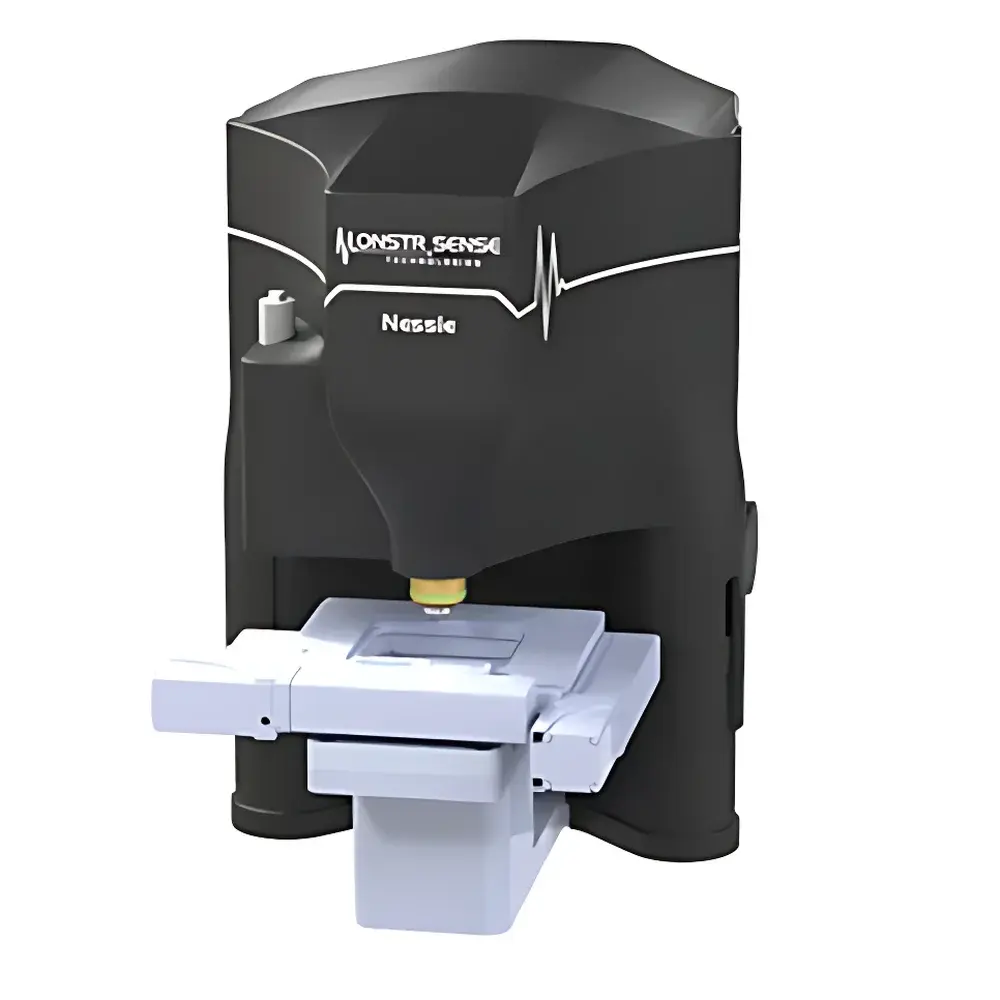
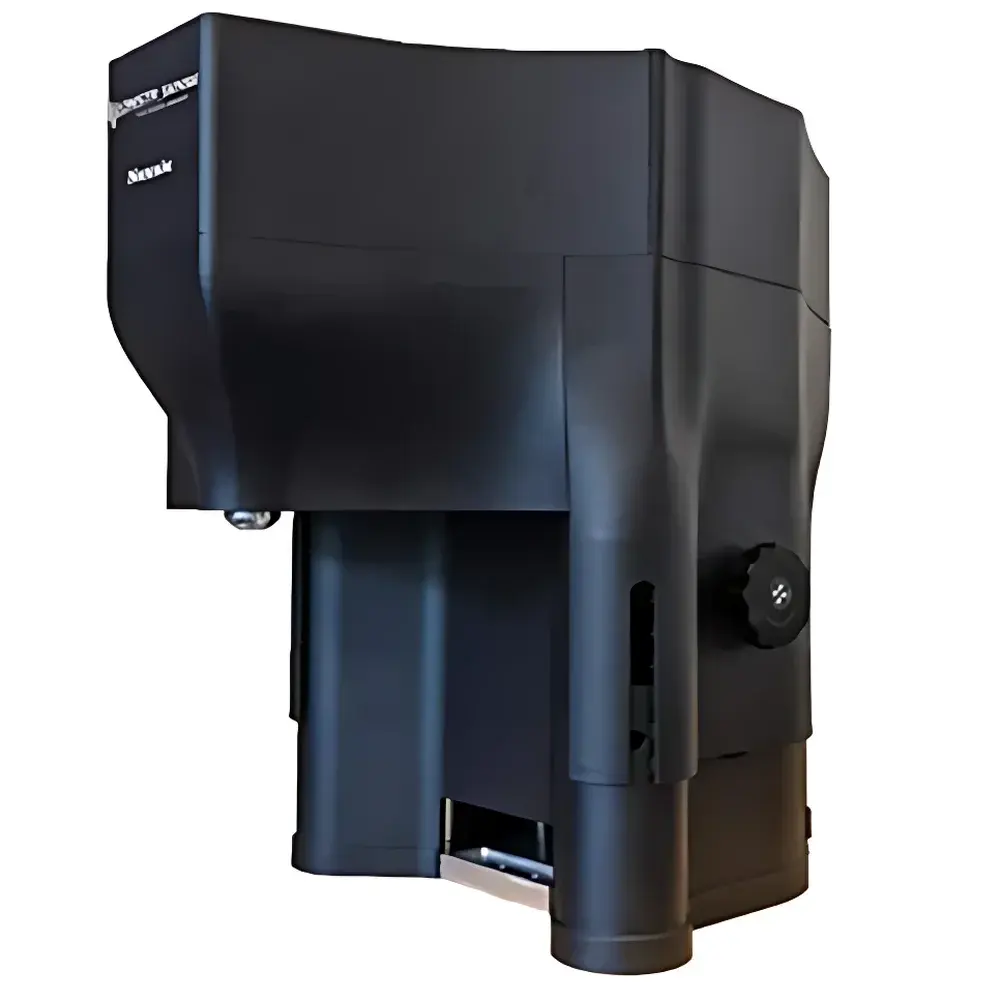
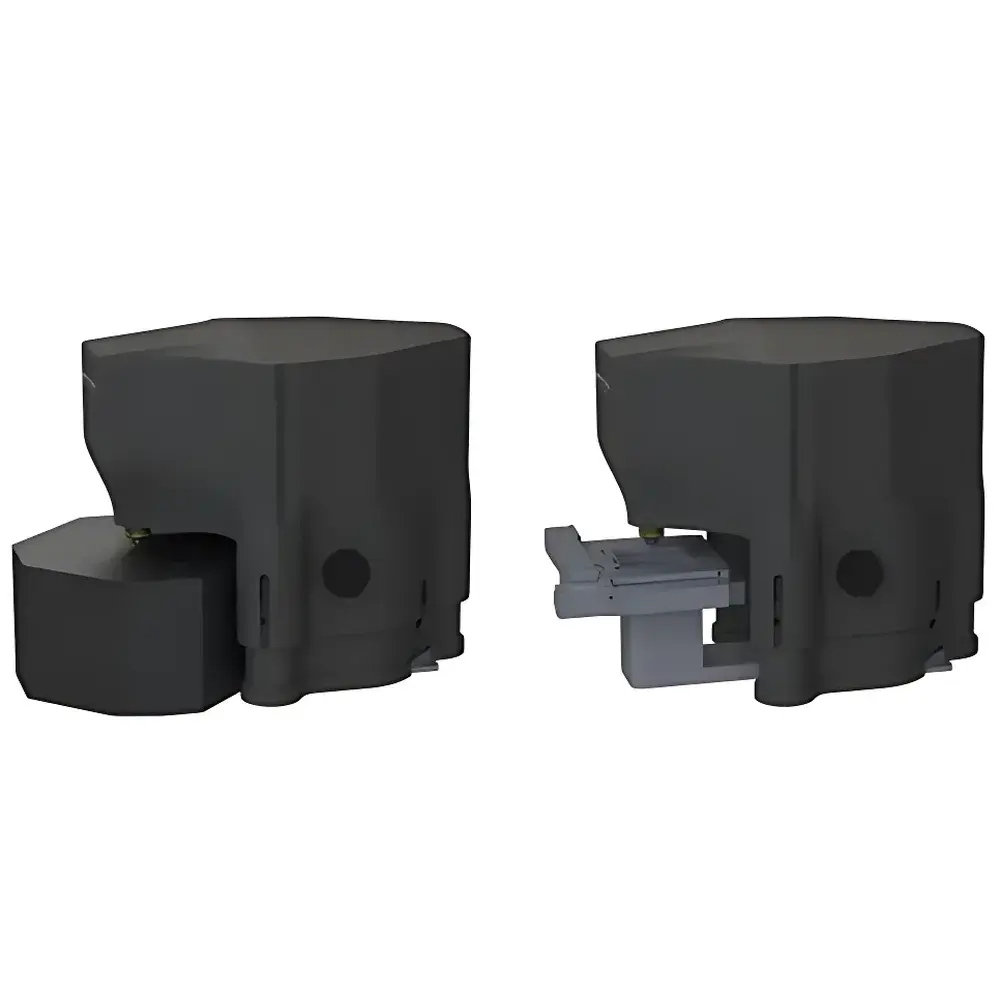
MONSTR Sense Technologies NESSIE High-Precision Laser Scanning Microscope
| Brand | MONSTR Sense Technologies |
|---|---|
| Origin | USA |
| Manufacturer Type | Authorized Distributor |
| Origin Category | Imported Instrument |
| Model | NESSIE |
| Pricing | Available Upon Request |
Overview
The MONSTR Sense Technologies NESSIE High-Precision Laser Scanning Microscope is an engineered optical platform developed from foundational research at the University of Michigan. Designed for ultrafast, high-fidelity spectral and spatial characterization of quantum materials, NESSIE implements a fully co-linear, diffraction-limited scanning architecture based on parabolic relay optics and in-plane scanning mirrors. Unlike conventional galvanometric laser scanning microscopes—where X/Y scanners are positioned outside the image plane and induce beam walk-off and field-dependent aberrations—NESSIE places both scanning mirrors precisely at the intermediate image plane. This configuration eliminates beam drift across the field of view, ensures strict collinearity between excitation and collection paths, and preserves wavefront fidelity during raster scanning. The system operates across a broad spectral range (450–1100 nm) and is optimized for integration with ultrafast nonlinear spectroscopy, particularly four-wave mixing (FWM), transient absorption, and multidimensional coherent spectroscopy (MDCS). Its mechanical architecture supports direct coupling to cryogenic optical cryostats (e.g., 6 K low-vibration optical cryostats), enabling quantitative low-temperature photoluminescence, exciton lifetime mapping, and sub-diffraction-limited nonlinear imaging without compromise to mechanical stability or optical alignment.
Key Features
- Zero-beam-drift scanning optics: Dual-axis galvo scanners located at the telecentric image plane, coupled via off-axis parabolic relays to eliminate beam walk-off and maintain strict co-linearity throughout the full field.
- Aberration-corrected wide-field illumination: Engineered to suppress vignetting across the entire objective field of view—critical for quantitative reflectivity, FWM intensity, and lifetime mapping.
- Cryostat-compatible mechanical design: Modular vertical lift mechanism accommodates sample stages ranging from 4″ to 8″ in height; 5.5″ clearance between objective centerline and microscope housing enables direct mounting of commercial optical cryostats without adapter plates or mechanical decoupling.
- High-stability structural architecture: Independent support and elevation subsystems isolate the optical train from external vibrations—essential for long-integration nonlinear measurements under ambient lab conditions.
- Native co-linear spectroscopic integration: Single-input/single-output optical path simplifies alignment with ultrafast pump-probe spectrometers and enables seamless implementation of time-resolved FWM, transient absorption, and MDCS modalities.
Sample Compatibility & Compliance
NESSIE is compatible with standard upright and inverted microscope configurations and accepts industry-standard objectives (e.g., 10×–100×, NA 0.1–0.95). It supports vacuum-, atmosphere-, and cryogenic-environment sample chambers—including closed-cycle optical cryostats with optical access windows (CaF₂, sapphire, or fused silica). The system adheres to ISO 10110-7 (laser beam quality specifications) and complies with ANSI Z136.1 safety standards for Class 3B/4 laser operation when integrated with ultrafast Ti:sapphire or OPO sources. All optical mounts and kinematic adjustments meet ISO 9001-certified manufacturing tolerances. For regulated environments, data acquisition workflows can be configured to meet GLP/GMP documentation requirements, including audit-trail-enabled LabVIEW logging and timestamp-synchronized metadata tagging per scan point.
Software & Data Management
NESSIE is controlled via a modular LabVIEW-based software suite supporting real-time raster scanning, autofocus routines, and pixel-synchronized signal acquisition. The system provides native API bindings (C/C++, Python) for integration with custom analysis pipelines—including Fourier-domain processing, decay fitting (biexponential, stretched exponential), and hyperspectral clustering. All raw datasets include embedded metadata (wavelength, delay time, polarization state, objective ID, environmental temperature) compliant with HDF5 1.12+ and MIAME-compliant spectral imaging standards. Time-resolved FWM maps, decay time images, and multidimensional coherence spectra are exportable in vendor-neutral formats (e.g., .tiff stacks with OME-TIFF headers, .h5 with NeXus schema support) for downstream analysis in MATLAB, Python (SciPy/NumPy), or commercial platforms such as Igor Pro and OriginLab.
Applications
- Quantitative exciton dynamics mapping in 2D heterostructures (e.g., MoSe₂/WSe₂, WS₂/MoS₂), including bright/dark exciton discrimination via FWM contrast.
- Spatially resolved carrier relaxation kinetics and interlayer coupling dynamics at cryogenic temperatures (6–300 K).
- Non-contact, non-destructive defect identification in CVD-grown TMD monolayers using FWM hyperspectral signatures and lifetime heterogeneity analysis.
- Multidimensional coherent spectroscopy (MDCS) micro-imaging for probing many-body correlations, phonon-assisted transitions, and coherent quantum beat phenomena with µm-scale spatial resolution.
- Industrial QC applications: In-line material screening for strain uniformity, layer stacking fidelity, and interface defect density in semiconductor heterostructures.
FAQ
What laser sources are compatible with NESSIE?
NESSIE supports continuous-wave and pulsed lasers operating between 450 nm and 1100 nm. Standard configurations integrate with Ti:sapphire oscillators (700–1000 nm), OPOs, and fiber-amplified systems. Custom optical paths are available for UV (266 nm) and mid-IR (up to 4 µm) extensions.
Can NESSIE be used with vacuum or inert-atmosphere chambers?
Yes—the microscope’s modular optical train allows beam delivery through viewport windows with minimal wavefront distortion. Optional vacuum-compatible kinematic mounts and feedthrough-compatible detector interfaces are available.
Is NESSIE compliant with FDA 21 CFR Part 11 for regulated laboratories?
While NESSIE itself is a research-grade instrument, its LabVIEW control software supports electronic signature authentication, user-access controls, and immutable audit logs—enabling validation pathways for Part 11 compliance when deployed within validated laboratory information management systems (LIMS).
What is the minimum resolvable feature size in FWM mode?
Under optimal conditions with high-NA objectives and near-infrared excitation, NESSIE achieves ~540 nm spatial resolution in FWM imaging—surpassing the ~940 nm Abbe limit of linear reflectivity imaging due to the nonlinear point-spread function inherent to fourth-order optical processes.
Does NESSIE support automated stage synchronization with ultrafast delay lines?
Yes—via TTL-triggered synchronization and programmable delay line control through the LabVIEW API, enabling precise spatiotemporal sampling for pump-probe and multidimensional coherent spectroscopy experiments.




