
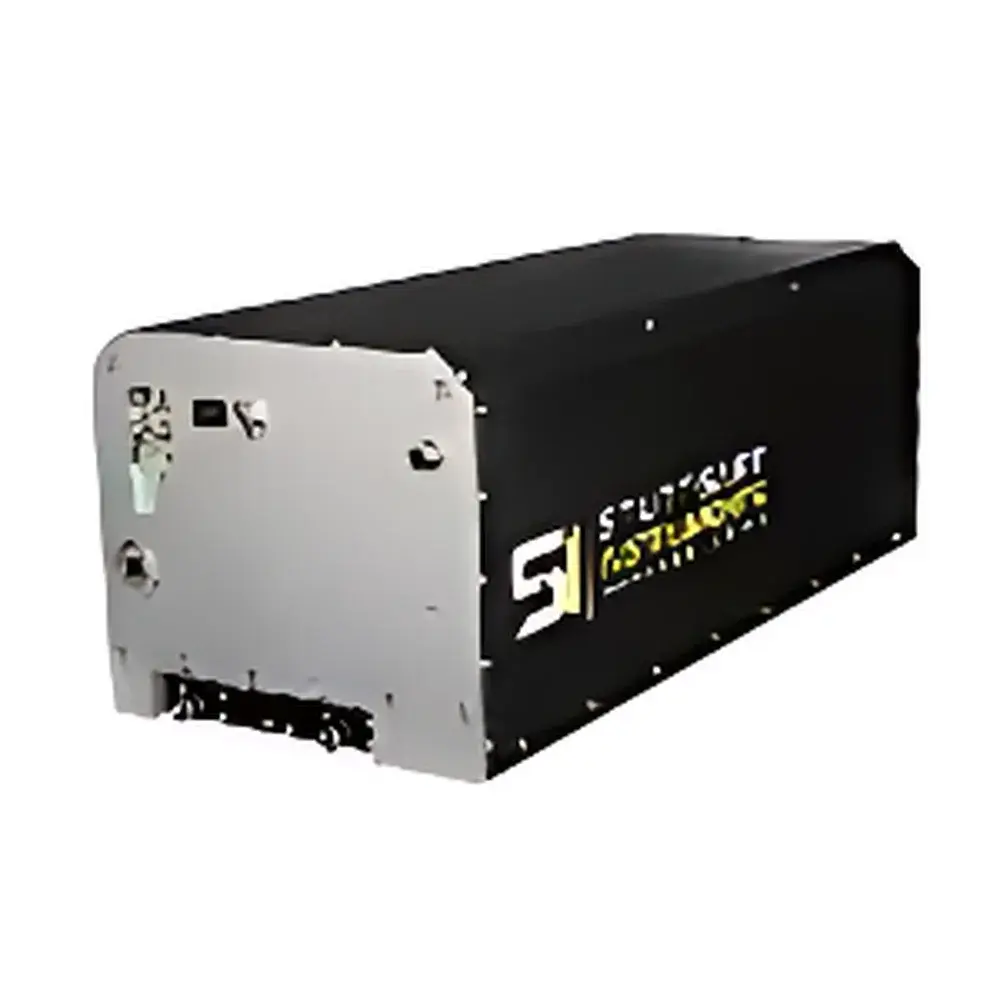
Stuttgart Instruments Piano Ultra-Narrow Linewidth Continuously Tunable Laser System
| Brand | Stuttgart Instruments |
|---|---|
| Origin | Germany |
| Manufacturer Type | Authorized Distributor |
| Product Category | Imported |
| Model | Piano |
| Component Type | Light Source |
| Spectral Range | Mid-Infrared (MIR) tunable |
| Linewidth | < 100 kHz (typ.) |
| Wavelength Stability | < 0.02 cm⁻¹/h |
| Relative Intensity Noise (RIN) | < −160 dBc/Hz |
| Modulation Bandwidth | DC to > 10 MHz |
| Integrated Pump Laser | Yes |
| Form Factor | Compact, All-in-One Benchtop System |
Overview
The Stuttgart Instruments Piano Ultra-Narrow Linewidth Continuously Tunable Laser System is a high-performance mid-infrared (MIR) light source engineered for demanding applications in precision spectroscopy, quantum optics, and nanoscale optical imaging. Based on difference-frequency generation (DFG) in orientation-patterned gallium arsenide (OP-GaAs) or similar nonlinear crystals, the Piano system delivers continuous, mode-hop-free wavelength tuning across key atmospheric transmission windows (e.g., 2.5–5.5 µm or 6–12 µm, depending on configuration). Its ultra-narrow instantaneous linewidth (< 100 kHz), exceptional long-term frequency stability (< 0.02 cm⁻¹/h), and ultra-low relative intensity noise (< −160 dBc/Hz) make it suitable for heterodyne detection, cavity-enhanced absorption spectroscopy, and coherent infrared microscopy where spectral purity and phase coherence are critical. Unlike external cavity diode lasers or optical parametric oscillators, the Piano architecture integrates the pump laser, nonlinear stage, temperature-stabilized optics, and active frequency feedback loop into a single robust, alignment-free platform—eliminating sensitivity to environmental drift and enabling turnkey operation in laboratory and industrial settings.
Key Features
- Continuous, mode-hop-free tuning over >100 cm⁻¹ spectral range with sub-MHz absolute frequency accuracy (traceable to NIST-calibrated wavemeters)
- Integrated DFG-based MIR generation with fiber-pigtailed pump lasers and actively stabilized crystal temperature control (±1 mK)
- Real-time frequency locking via built-in Pound–Drever–Hall (PDH) or scanning Fabry–Pérot interferometer reference
- High-speed analog and digital modulation inputs supporting amplitude, frequency, and phase modulation up to 10 MHz bandwidth
- Low-noise, low-vibration mechanical design compliant with ISO 10110-7 surface quality and MIL-STD-810G shock/vibration specifications
- Front-panel LCD interface with USB 2.0, Ethernet (TCP/IP), and RS-232 connectivity for remote control and integration into automated test benches
Sample Compatibility & Compliance
The Piano laser system is compatible with standard MIR optical components including ZnSe lenses, KBr beam splitters, HgCdTe (MCT) detectors, and cryogenically cooled photoconductive antennas. It meets electromagnetic compatibility requirements per EN 61326-1:2013 (industrial environment) and laser safety classification IEC 60825-1:2014 (Class 1 under normal operation; Class 3B at internal optical ports). The system supports GLP/GMP-compliant operation through optional audit-trail-enabled firmware (21 CFR Part 11 ready), and its spectral calibration protocol aligns with ASTM E1421–22 (“Standard Practice for Calibration of Fourier Transform Infrared (FT-IR) Spectrometers”) and ISO/IEC 17025:2017 for metrological traceability.
Software & Data Management
Stuttgart Instruments provides the Piano Control Suite—a cross-platform application (Windows/macOS/Linux) supporting real-time wavelength scanning, lock-point optimization, noise spectral analysis, and data logging in HDF5 format. API support includes Python (pyPiano), MATLAB Instrument Control Toolbox, and LabVIEW VIs. All software modules implement role-based access control, electronic signatures, and timestamped parameter change logs—enabling full compliance with FDA 21 CFR Part 11 for regulated environments. Raw spectral traces, modulation response curves, and stability metrics can be exported in CSV or MAT format for post-processing in Origin, Igor Pro, or custom Python pipelines.
Applications
- Scanning near-field optical microscopy (SNOM) with diffraction-unlimited spatial resolution and label-free chemical contrast
- Atomic force infrared (AFIR) spectroscopy for nanoscale vibrational mapping of polymers, biological tissues, and 2D materials
- Photoacoustic microscopy (PAM) with optimized excitation at molecular fingerprint absorption bands (e.g., C=O stretch at 5.7 µm, C–H bend at 6.8 µm)
- Trace gas sensing in environmental monitoring and industrial process control using direct absorption or wavelength modulation spectroscopy (WMS)
- Quantum dot and color-center excitation in solid-state quantum emitters requiring narrowband, stable MIR pumping
- Generation of polarization-entangled photon pairs via spontaneous parametric down-conversion (SPDC) in nonlinear waveguides
FAQ
What is the typical output power range across the tuning band?
Output power varies with wavelength and configuration; typical values range from 0.5 mW to 5 mW (free-space) or −10 dBm to −3 dBm (fiber-coupled), depending on crystal efficiency and pump power.
Can the Piano system be integrated into a vacuum chamber or cryogenic setup?
Yes—custom vacuum-compatible and low-temperature variants are available upon request, including CF-flanged output ports and cryo-rated optical mounts.
Is factory recalibration required, and how often?
Annual calibration is recommended for metrology-grade use; the system includes self-diagnostic routines and onboard reference etalons for user-performed verification between service intervals.
Does the system support external cavity locking to a user-provided reference cavity?
Yes—via analog error signal input and configurable PID parameters; detailed interface specifications are provided in the OEM Integration Manual.
What warranty and technical support options are offered?
Standard warranty is 24 months parts-and-labor; extended service plans include on-site calibration, remote diagnostics, and priority firmware updates.



