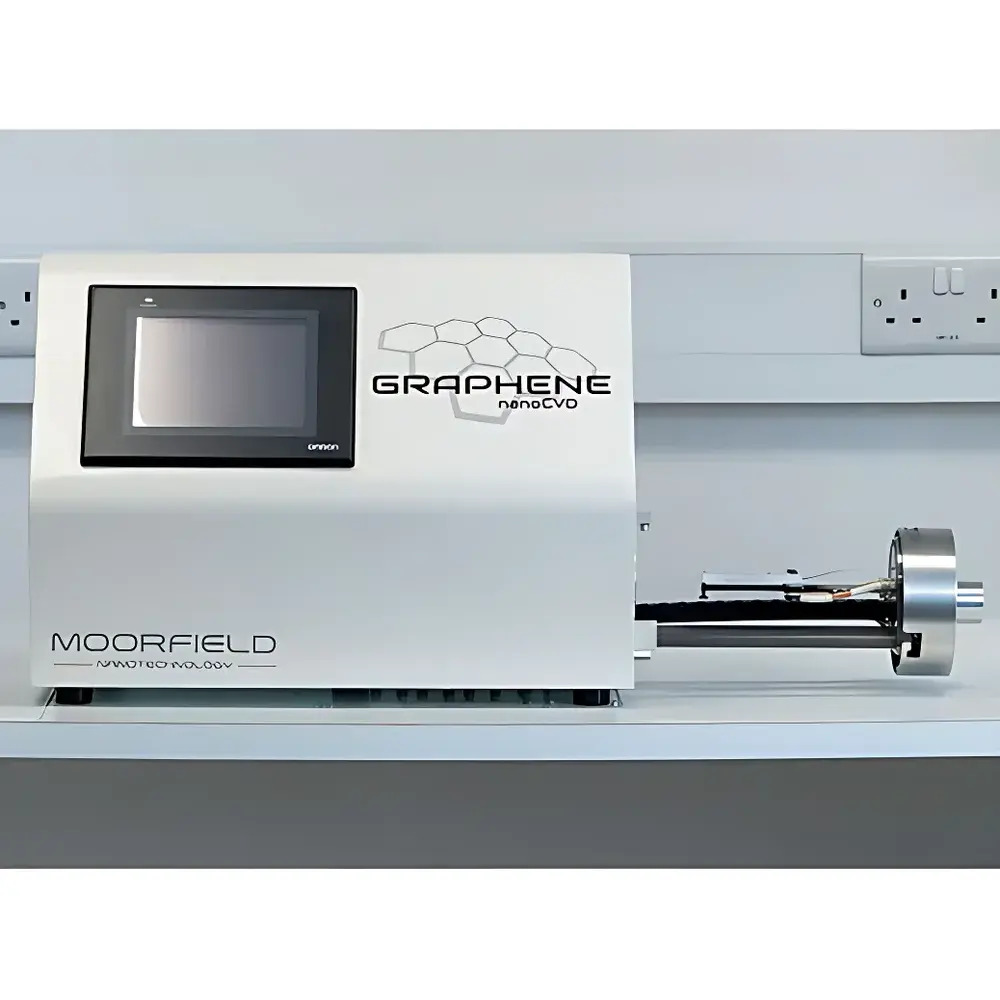
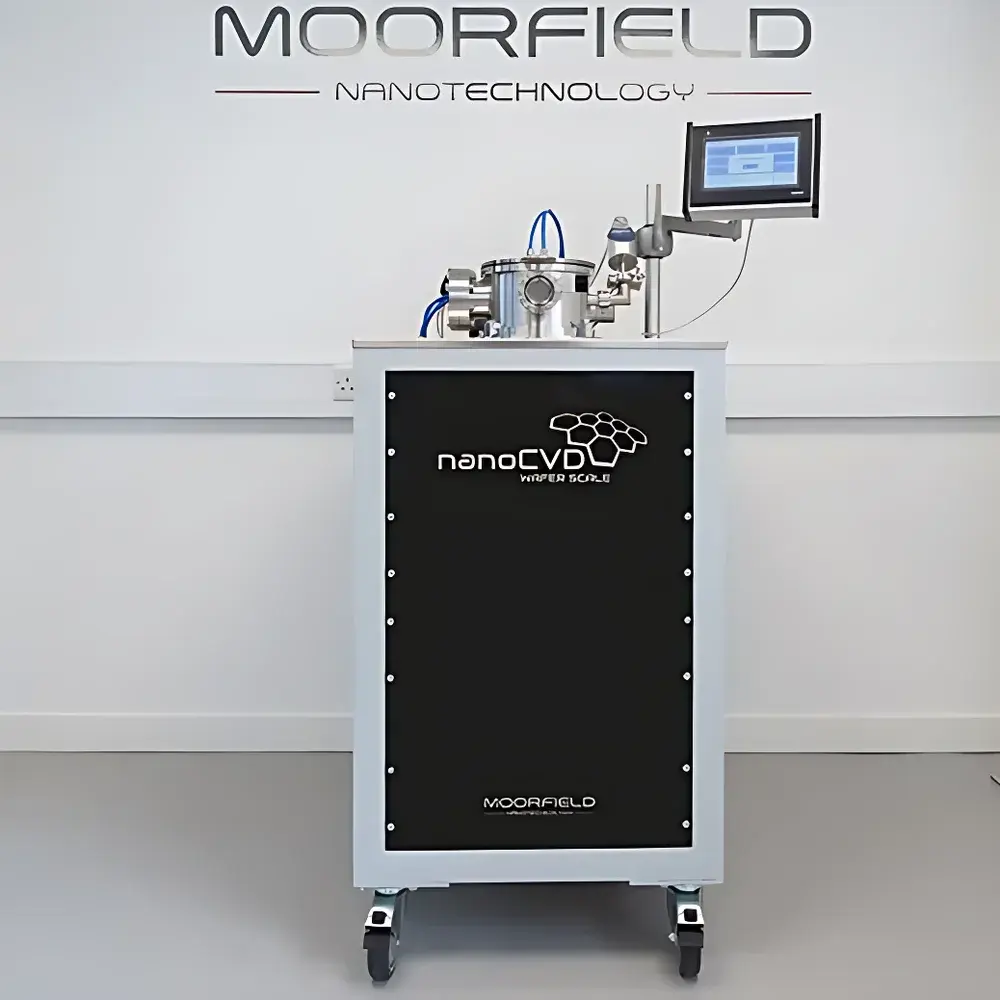
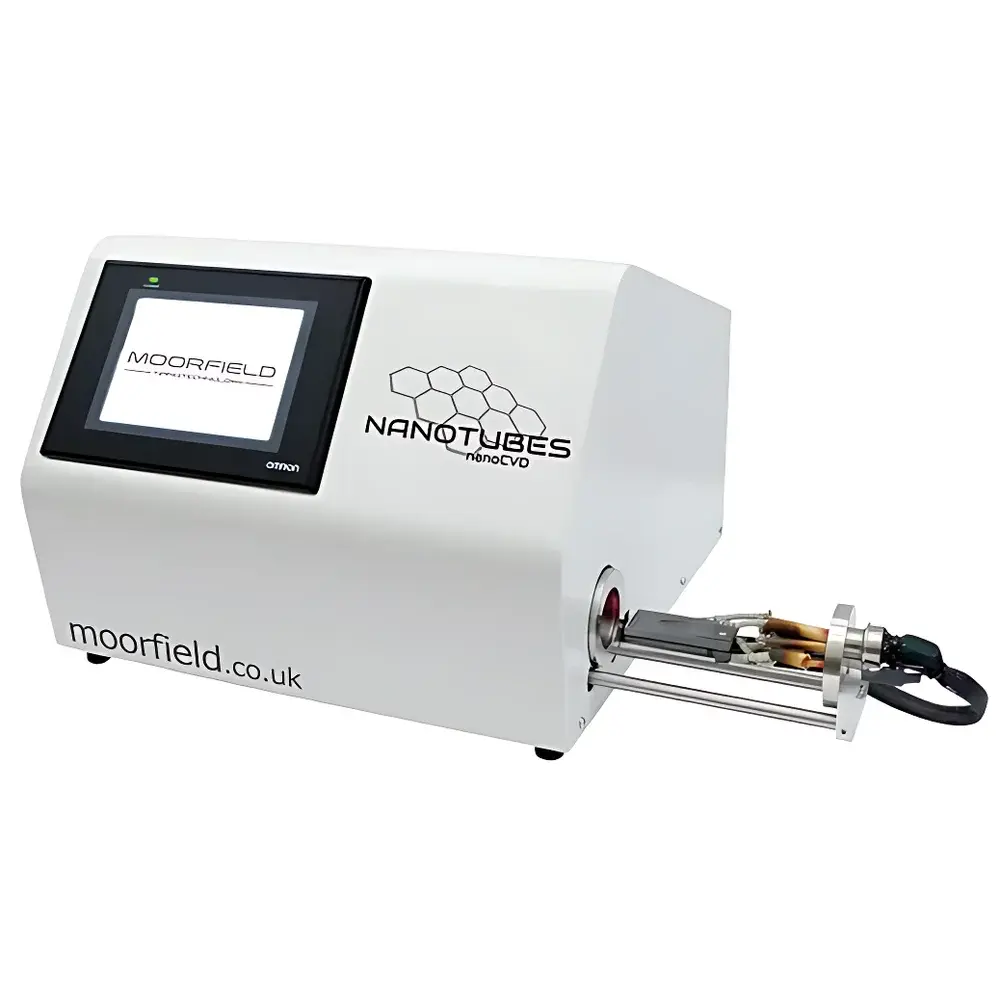
Moorefield oCVD-8G Desktop Cold-Wall Chemical Vapor Deposition System for High-Quality Graphene and Carbon Nanotube Synthesis
| Brand | Moorefield |
|---|---|
| Origin | United Kingdom |
| Heating Method | Cold-Wall Design |
| Base Pressure | 5×10⁻⁷ mbar |
| Substrate Dimensions | 20 × 40 mm² |
| Maximum Temperature | 1100 °C |
| Growth Time | <30 min |
| Process Gases | Ar, H₂, CH₄ |
| Mass Flow Controllers (MFCs) | Integrated for Precise Gas Delivery |
| Plasma Option | Optional RF Source (150 W, 13.56 MHz) for oCVD-WPG Variant |
| Compliance | Compatible with ISO Class 5 Cleanroom Environments |
| Safety Features | Exhaust Dilution Module, Vacuum Interlock, Thermal Shutdown |
Overview
The Moorefield oCVD-8G is a compact, high-performance desktop chemical vapor deposition (CVD) system engineered specifically for the reproducible synthesis of monolayer graphene and vertically aligned or randomly oriented carbon nanotubes (CNTs) under controlled cold-wall conditions. Unlike conventional tube-furnace CVD systems, the oCVD-8G employs a low-thermal-mass resistively heated substrate stage housed within a water-cooled stainless-steel vacuum chamber — a design principle validated through collaborative development with Nobel-affiliated research groups. This architecture enables rapid thermal ramping (0–1000 °C in ≤2 minutes), precise temperature stabilization (±1 °C), and sub-second gas switching fidelity via calibrated mass flow controllers. The system operates on the fundamental principle of surface-catalyzed hydrocarbon decomposition (e.g., CH₄ or C₂H₄) over transition-metal substrates (Cu, Ni, or patterned thin films), where reaction kinetics are governed by localized thermal gradients, partial pressures, and residence time — all digitally regulated in real time. Its engineering prioritizes experimental rigor over throughput, making it ideal for academic labs requiring metrologically traceable, publication-grade 2D material synthesis.
Key Features
- Integrated cold-wall vacuum chamber with water-cooled stainless-steel walls and internal thermal shielding, achieving base pressure ≤5×10⁻⁷ mbar using a turbomolecular pumping system
- Resistively heated sample stage capable of stable operation up to 1100 °C, with programmable ramp rates (0.1–50 °C/s) and active PID feedback control
- Three-channel MFC-controlled gas delivery (Ar, H₂, CH₄ standard; optional N₂, C₂H₄, or NH₃ compatibility)
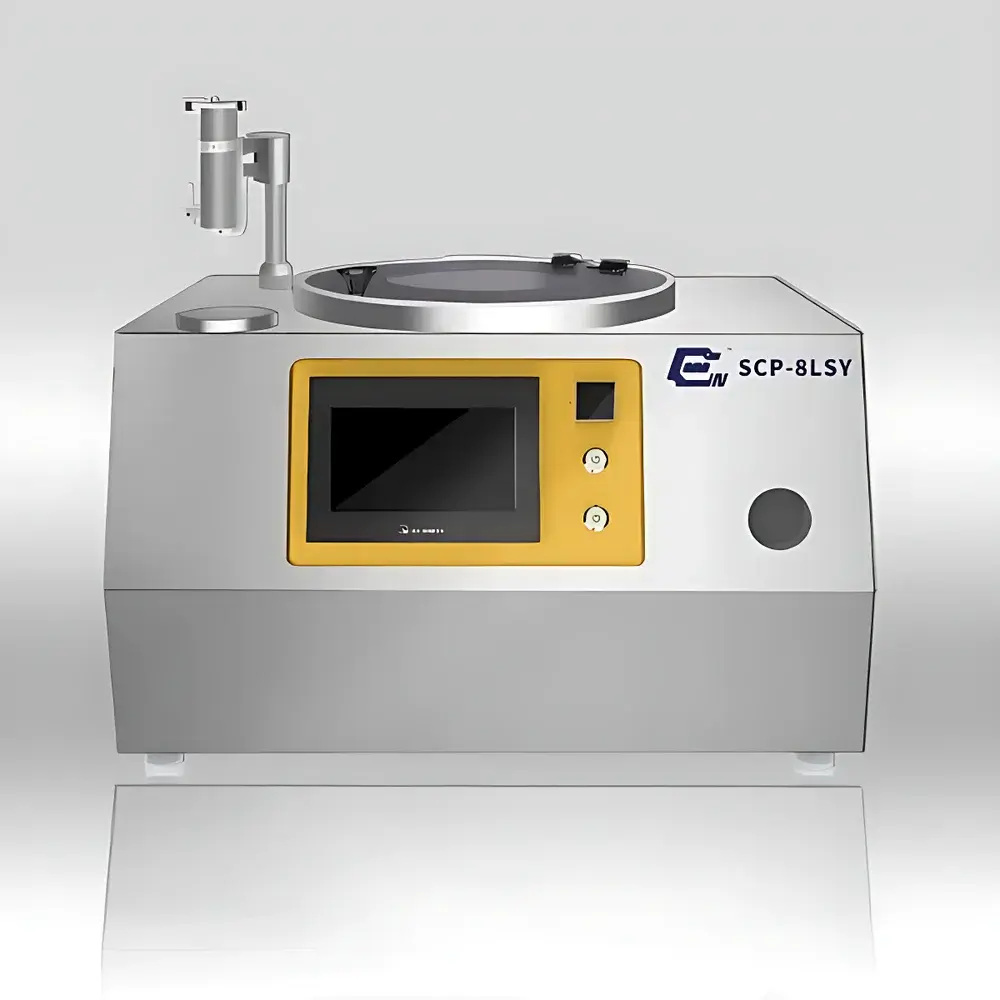
- 7-inch industrial-grade HMI touchscreen interface with guided workflow navigation, auto-saved parameter templates, and password-protected user profiles
- Full automation support: USB/RS-232/Ethernet connectivity for remote monitoring, data logging (CSV/TXT), and integration into LabVIEW or Python-based control frameworks
- Dedicated exhaust management: catalytic scrubber + dilution module compliant with local occupational exposure limits (OELs) for CH₄ and H₂
- Cleanroom-ready mechanical footprint (W × D × H: 650 × 720 × 680 mm); ESD-safe construction and grounding provisions
Sample Compatibility & Compliance
The oCVD-8G accommodates rigid and flexible substrates up to 40 mm × 20 mm, including Cu/Ni foils (25–100 µm), Si/SiO₂ wafers, quartz, sapphire, and polymer-supported metal films. It supports both thermal CVD (for graphene on Cu) and plasma-enhanced CVD (PE-CVD) when upgraded to the oCVD-WPG configuration — enabling nucleation control for single-walled CNT forests or large-area (>76 mm diameter) graphene on insulating substrates. All hardware and firmware comply with CE marking requirements (2014/30/EU EMC Directive, 2014/35/EU LVD Directive) and meet ISO 14644-1 Class 5 cleanroom particulate specifications. Data audit trails satisfy GLP-compliant documentation needs, and optional 21 CFR Part 11–ready software modules provide electronic signature capability, change history logs, and role-based access control for regulated environments.
Software & Data Management
The embedded control firmware records timestamped process variables — including stage temperature, chamber pressure, gas flow rates, and MFC valve positions — at 10 Hz resolution. Exported datasets include metadata headers (operator ID, recipe name, substrate lot number) and are structured for direct import into MATLAB, OriginLab, or Python Pandas workflows. The system ships with pre-validated graphene growth protocols (e.g., “Monolayer Graphene on Cu Foil – Standard Thermal CVD”) and allows users to define custom multi-step recipes with conditional logic (e.g., “hold at 1000 °C until pressure stabilizes below 1×10⁻³ mbar”). Remote diagnostics, firmware updates, and calibration certificate management are accessible via secure HTTPS portal. Third-party API support enables synchronization with laboratory information management systems (LIMS) for automated sample tracking and inventory reconciliation.
Applications
The oCVD-8G serves as a foundational tool in advanced materials laboratories focused on two-dimensional (2D) science and nanoelectronics. Published applications include: scalable synthesis of transfer-free graphene electrodes for transparent conductive textiles (Neves et al., Sci. Rep. 2015); carrier mobility benchmarking exceeding 20,000 cm²/V·s in monolayer graphene exhibiting quantum Hall effect (Bointon et al., Adv. Mater. 2015); electrochemical mapping of individual SWCNTs with atomic-scale kink resolution (Güell et al., Nano Lett. 2014); and investigation of intrinsic oxygen reduction activity at pristine carbon nanotube surfaces (Byers et al., JACS 2014). Beyond graphene and CNTs, the platform supports synthesis of transition metal dichalcogenides (TMDs), hexagonal boron nitride (h-BN), and doped carbon architectures for battery anodes, photodetectors, and biosensor interfaces — all under identical vacuum and thermal boundary conditions required for cross-material comparison studies.
FAQ
What substrates are compatible with the oCVD-8G?
Standard substrates include polycrystalline Cu or Ni foils (25–100 µm thick), Si/SiO₂ wafers (up to 4″), quartz, and sapphire. Custom substrate holders accommodate non-planar or patterned geometries upon request.
Can the system grow graphene directly on insulating substrates?
Yes — when equipped with the optional RF plasma source (oCVD-WPG configuration), the system enables low-temperature PE-CVD growth of graphene on dielectrics such as SiO₂, Al₂O₃, or flexible polyimide films.
Is remote operation supported?
Full Ethernet-based remote control is available, including real-time parameter monitoring, recipe execution, and diagnostic logging. Integration with institutional VPNs and firewalls follows standard TLS 1.2 protocols.
How is process reproducibility ensured across multiple users?
Each recipe stores full environmental context (gas purity batch IDs, chamber bake-out history, calibration timestamps). The system enforces version-controlled protocol libraries with mandatory electronic sign-off prior to run initiation.
Does the system meet safety standards for university laboratory deployment?
Yes — it incorporates redundant thermal cutoffs, gas leak detection interlocks, and exhaust dilution compliant with UK COSHH and EU CLP regulations. Installation requires only standard 230 VAC / 16 A power and chilled water supply (15–25 °C, 2 bar min.).