
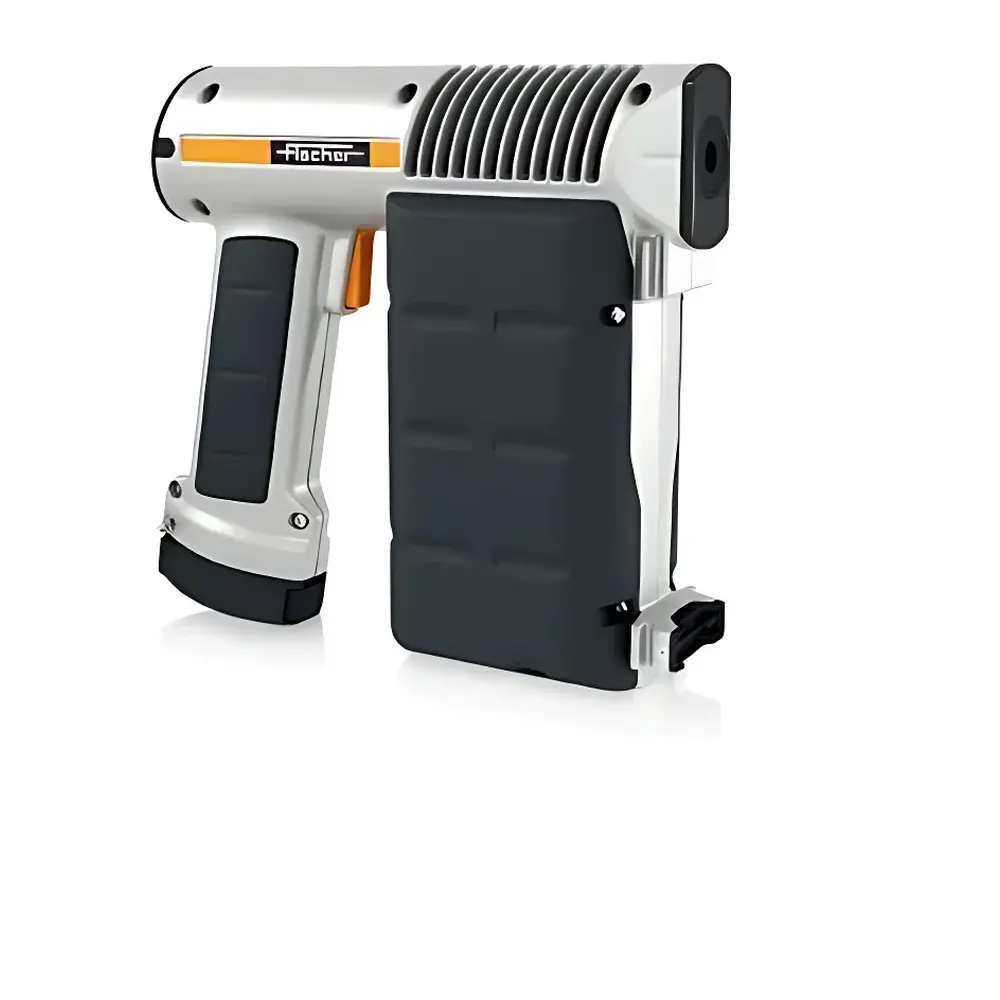
Fischer FISCHERSCOPE® X-RAY XAN500 Portable Energy-Dispersive X-ray Fluorescence Coating Thickness Analyzer
| Brand | Fischer |
|---|---|
| Origin | Germany |
| Model | XAN500 |
| Detector Type | Silicon Drift Detector (SDD) |
| Measurement Principle | Energy-Dispersive X-ray Fluorescence (ED-XRF) |
| Portability | Handheld & Benchtop-Convertible Configuration |
| Compliance | CE, RoHS, ISO 3497, ASTM B568, DIN EN ISO 3497, ISO 2178 (for magnetic substrates), ISO 2360 (for non-magnetic substrates) |
| Software | WinFTM® v8.x with GLP/GMP-compliant audit trail, FDA 21 CFR Part 11 optional module |
| Price Range | USD 25,000 – 65,000 (FOB Hamburg) |
Overview
The Fischer FISCHERSCOPE® X-RAY XAN500 is a portable, energy-dispersive X-ray fluorescence (ED-XRF) analyzer engineered for non-destructive, quantitative measurement of metallic and alloyed coating thicknesses—ranging from sub-nanometer to several micrometers—and simultaneous elemental composition analysis of bulk materials and layered structures. Its operational principle relies on excitation of characteristic X-ray fluorescence photons by a micro-focus X-ray tube (typically Rh or Pd anode), followed by high-resolution spectral detection using a thermoelectrically cooled silicon drift detector (SDD). The instrument applies Fischer’s proprietary fundamental parameter (FP) algorithm—fully matrix-corrected and standardless—to derive layer thickness and composition without requiring physical calibration standards for most common industrial coatings (e.g., Ni, Cr, Zn, Sn, Au, Ag, Cu, Pb, Cd, and their alloys on steel, Al, Cu, or plastic substrates). Designed for metrological rigor in dynamic environments, the XAN500 meets traceable accuracy requirements defined in ISO 3497 and ASTM B568, making it suitable for accredited quality laboratories, supplier qualification audits, and in-line process verification where mobility and repeatability are critical.
Key Features
- True handheld operation with ergonomic, balanced housing and integrated trigger-actuated measurement cycle—enabling single-handed use on large, immobile components such as automotive chassis, aerospace structural panels, or electroplated enclosures.
- High-performance silicon drift detector (SDD) with 20,000 cps count rate capability, ensuring high peak-to-background ratios for ultra-thin layer quantification (e.g., <5 nm Au over Ni underplate).
- Fundamental Parameter (FP) software engine eliminates dependence on certified reference standards for routine measurements—reducing calibration overhead while maintaining traceability to NIST-traceable physics models.
- Modular mechanical design supports rapid conversion between handheld and benchtop configurations via optional portable smart case with integrated XYZ stage, sample holder, and shielded measurement chamber—meeting ISO 2178/2360 compliance for standardized substrate-based testing.
- Real-time spectrum visualization, automatic peak deconvolution, and multi-layer modeling (up to 5 layers including interdiffusion zones) within WinFTM® v8.x software platform.
- Ruggedized IP54-rated enclosure with shock-absorbing polymer housing, battery-operated (≥6 h continuous operation), and internal temperature stabilization for field deployment across ambient conditions from 10 °C to 40 °C.
Sample Compatibility & Compliance
The XAN500 accommodates diverse geometries—including curved surfaces, recessed features, and irregular contours—via its compact probe head (Ø25 mm aperture) and adjustable stand-off distance (0–15 mm). It measures coatings on conductive and non-conductive substrates (e.g., Zn on galvanized steel, Cr on ABS plastic, Sn on PCB pads, or Pd/Ni/Au stacks on semiconductor leadframes). Validation protocols align with international standards: ISO 3497 for coating thickness measurement uncertainty estimation, ASTM B568 for ED-XRF methodology, and ISO 2178/2360 for magnetic/non-magnetic substrate discrimination. For regulated industries, optional 21 CFR Part 11 compliance packages provide electronic signature support, user access control tiers, and immutable audit trails—fully compatible with GLP and GMP documentation workflows.
Software & Data Management
WinFTM® v8.x serves as the unified analytical interface, offering method-driven measurement templates, automated report generation (PDF/CSV/XML), and database-integrated result archiving. All spectral data—including raw counts, background-subtracted spectra, and FP-fitted layer parameters—are stored with full metadata (operator ID, timestamp, GPS coordinates if enabled, environmental sensor logs). The software supports statistical process control (SPC) charting, trend analysis across batches, and direct export to LIMS or MES platforms via ODBC or REST API. Firmware updates and method libraries are distributed through Fischer’s secure customer portal, ensuring long-term maintainability and regulatory alignment.
Applications
- Automotive: In-process verification of Zn-Ni alloy plating on brake calipers; post-plating inspection of decorative Cr layers on trim components.
- Electronics: Thickness and composition validation of ENIG (electroless nickel immersion gold) finishes on PCBs; Cu/SnAg solder finish uniformity assessment.
- Aerospace: Rapid screening of Alodine (chromate conversion) coatings on aluminum airframe parts; measurement of thermal barrier coatings (TBCs) on turbine blades.
- Jewelry & Watchmaking: Precise quantification of rhodium plating over white gold; karat verification of precious metal alloys.
- Medical Devices: Verification of biocompatible coatings (e.g., TiN, DLC) on surgical instruments and implant components per ISO 10993-15.
FAQ
Does the XAN500 require radioactive sources?
No. It uses a low-power, electronically controlled micro-focus X-ray tube—fully compliant with IEC 61010-1 and exempt from nuclear regulatory licensing in most jurisdictions.
Can it measure multi-layer systems such as Ni/Cu/Au on FR4?
Yes. WinFTM® supports up to five simultaneously modeled layers with interfacial roughness and diffusion zone estimation using iterative FP fitting.
Is calibration transfer possible between different XAN500 units?
Yes—through shared method files and embedded instrument-specific correction factors, enabling consistent cross-site measurement harmonization.
What is the typical measurement repeatability for a 0.5 µm Ni layer on steel?
Under controlled conditions (n ≥ 10, same spot), relative standard deviation (RSD) is ≤1.2 % at 2σ confidence level per ISO 3497 Annex D.
Does Fischer offer application-specific method development services?
Yes—certified application engineers provide on-site or remote method optimization, uncertainty budgeting, and IQ/OQ/PQ documentation support for regulated users.
Related Products



