
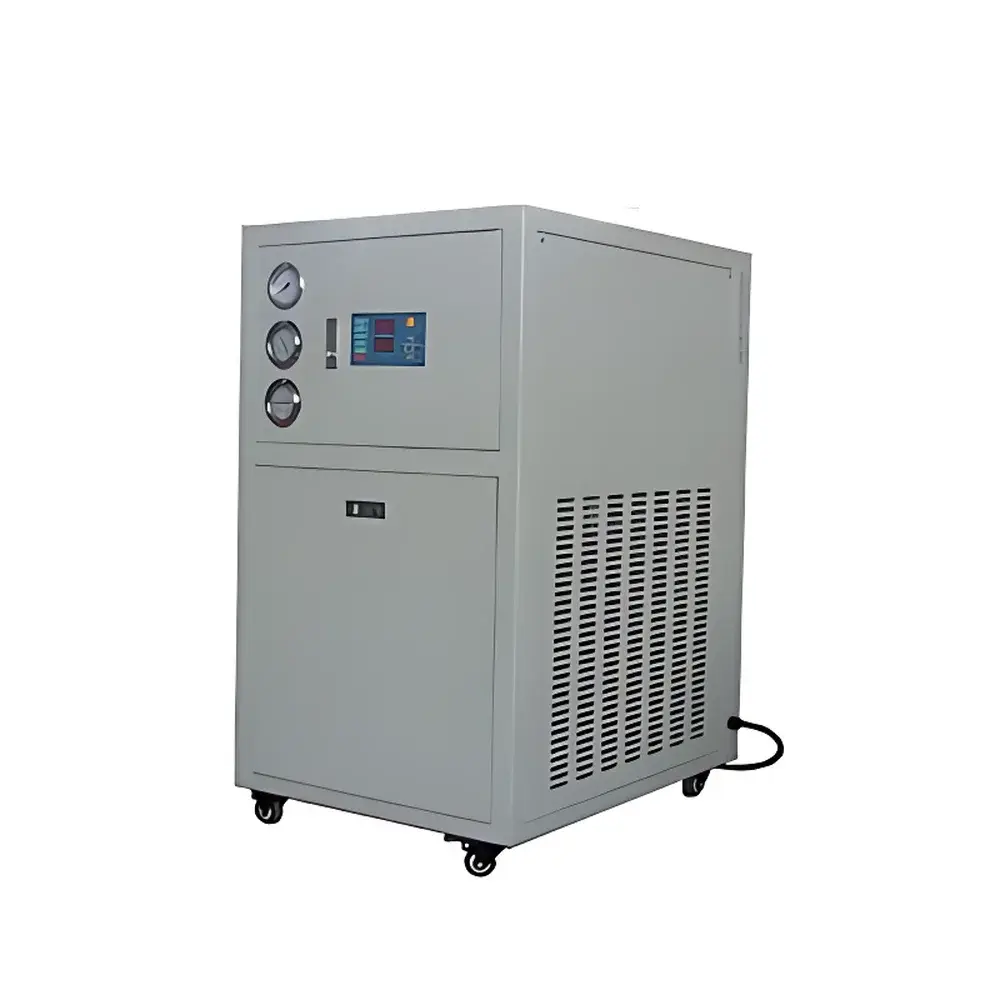
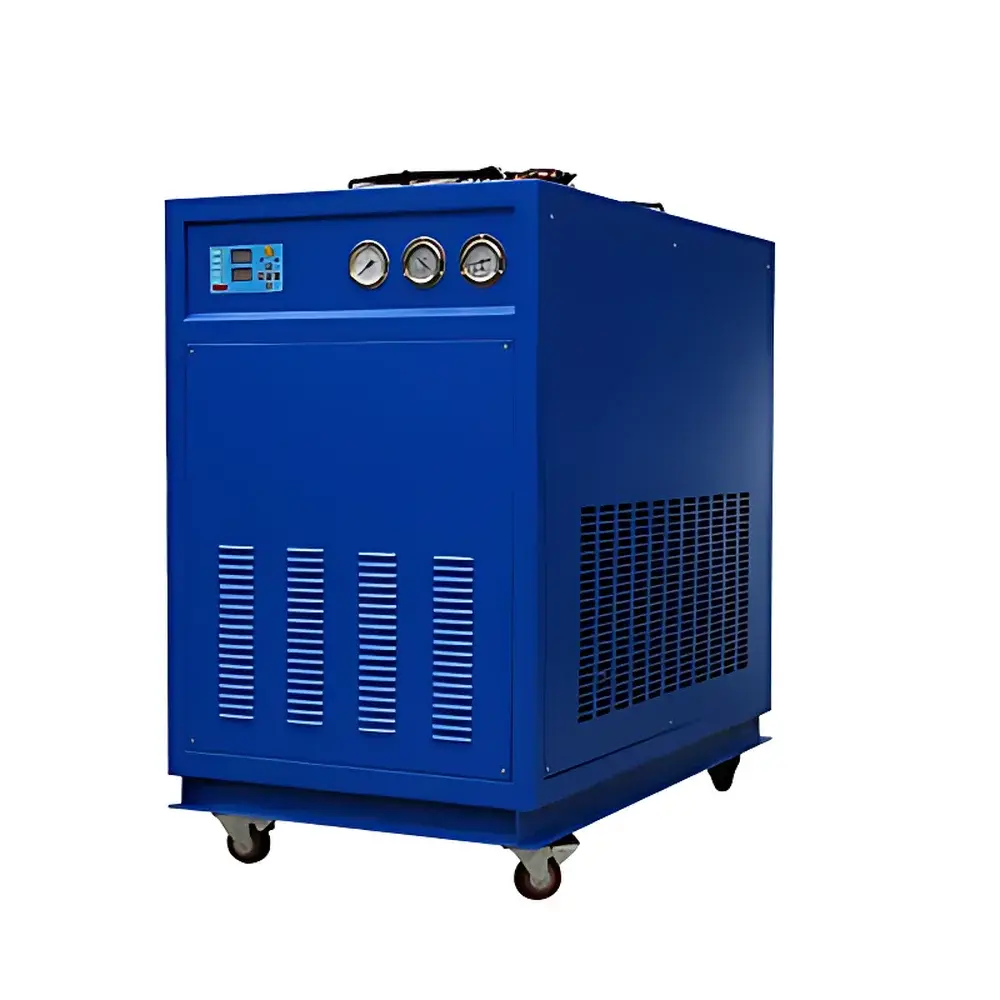
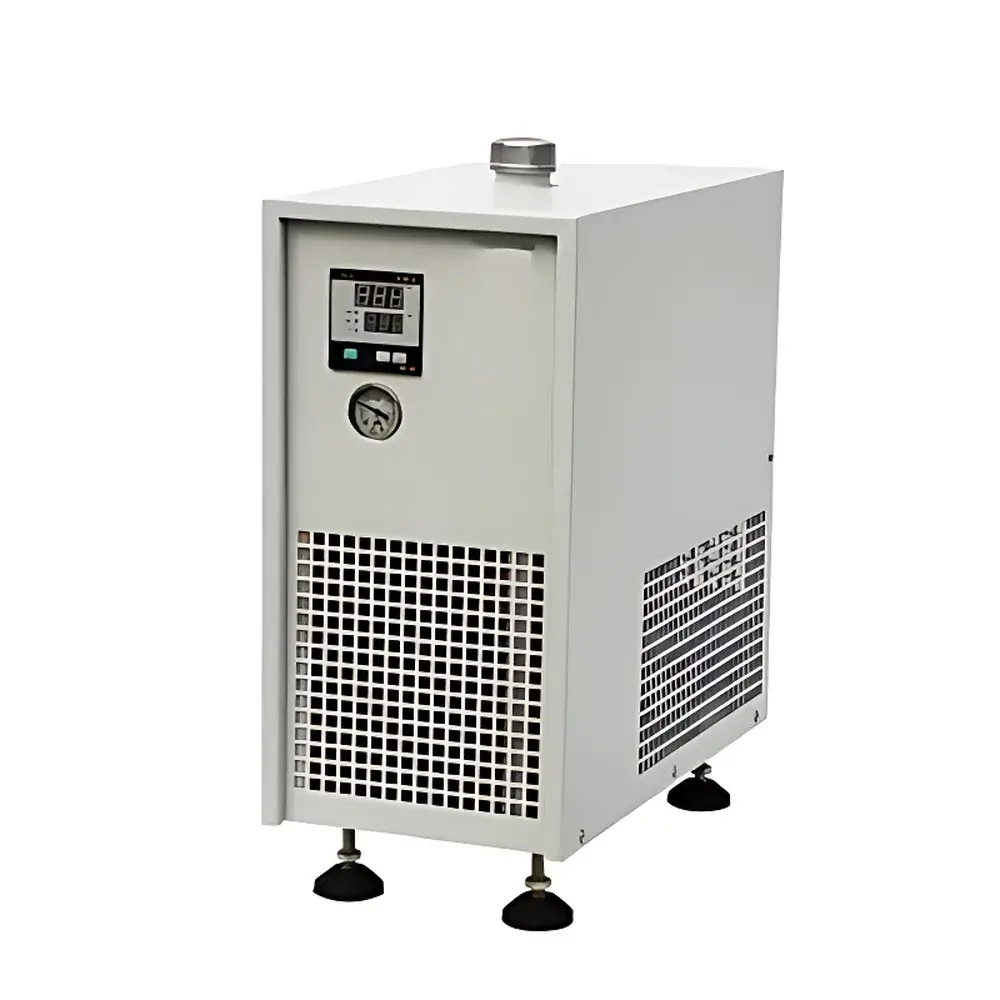
Tianfeng TF-LS-6HP Industrial Air-Cooled Low-Temperature Circulating Chiller
| Brand | Tianfeng |
|---|---|
| Origin | Shanghai, China |
| Manufacturer Type | OEM Manufacturer |
| Instrument Type | Integrated Circulating Chiller |
| Cooling Method | Air-Cooled |
| Temperature Range | 0–10 °C |
| Refrigeration Capacity | 18.9 kW |
| Temperature Stability | ±0.1 °C |
| Circulating Pump Pressure | 2.0 bar |
| Circulating Flow Rate | 2 L/min |
| Reservoir Volume | 110 L |
| Operation Mode | Continuous Duty |
Overview
The Tianfeng TF-LS-6HP Industrial Air-Cooled Low-Temperature Circulating Chiller is an engineered thermal management solution designed for precision cooling of high-heat-load laboratory and industrial equipment. Based on vapor-compression refrigeration cycle architecture, it employs a scroll compressor—selected for its mechanical robustness, low vibration, and long-term operational stability—to deliver consistent heat extraction from process fluids. The unit operates within a tightly controlled temperature range of 0–10 °C with ±0.1 °C stability, enabling reliable thermal conditioning of sensitive instrumentation such as graphite furnace atomic absorption spectrometers (GFAAS), inductively coupled plasma optical emission spectrometers (ICP-OES), X-ray fluorescence (XRF) analyzers, scanning electron microscopes (SEM), and transmission electron microscopes (TEM). Unlike water-cooled chillers requiring external cooling towers or facility water loops, this air-cooled design eliminates dependency on plant water infrastructure—making it ideal for laboratories with limited utility access or mobile deployment requirements.
Key Features
- Integrated air-cooled architecture with compact footprint (1350 × 800 × 1500 mm), facilitating placement in constrained lab environments or near equipment racks.
- High-efficiency scroll compressor paired with internationally sourced expansion valves and solenoid valves (Italy/Germany), ensuring stable refrigerant flow and minimized thermal cycling stress.
- Full stainless-steel reservoir (110 L capacity) and circulation pump—corrosion-resistant and compatible with deionized water, glycol-water mixtures, and other non-aggressive coolants used in analytical instrumentation.
- Dual operating modes: precise constant-temperature control and adaptive intelligent temperature regulation, where setpoint adjusts dynamically based on real-time load feedback to optimize energy efficiency without compromising thermal fidelity.
- Digital PID temperature controller (standard Chinese-made unit; optional RKC Japan controller available) with intuitive interface, real-time display of outlet fluid temperature, and programmable ramp/soak profiles.
- Comprehensive safety system including high-pressure cut-off, low-flow alarm, over-temperature shutdown, and dry-run protection—each triggering relay-based fault signal output for integration into facility monitoring networks (e.g., BMS or LabVantage).
- Continuous-duty rated motor and sealed electrical components conforming to IP54 ingress protection—suitable for extended unattended operation in ambient temperatures up to 40 °C.
Sample Compatibility & Compliance
The TF-LS-6HP is compatible with a wide spectrum of laboratory instruments requiring stable low-temperature coolant delivery—including but not limited to laser-based systems (e.g., laser ablation ICP-MS), vacuum deposition tools, cryo-SEM stages, and high-power RF generators. Its stainless-steel wetted path meets material compatibility requirements for use with ultrapure water (UPW) and 20–30% ethylene glycol solutions commonly specified in ASTM D1121 and ISO 2531. While not certified to UL 61010-1 or CE EN 61000-6-4 out-of-the-box, the unit complies with electromagnetic compatibility (EMC) and safety principles aligned with IEC 61000-4 series test methodologies. Documentation supports traceable calibration of temperature sensors per ISO/IEC 17025 guidelines when used in GLP/GMP-regulated environments. Optional audit-trail-capable controllers can be configured to meet FDA 21 CFR Part 11 data integrity expectations for electronic records.
Software & Data Management
The standard configuration includes local digital control only—no embedded Ethernet or USB interfaces. However, analog 4–20 mA and 0–10 VDC process signals are provided for remote temperature and pressure monitoring via PLC or SCADA systems. For laboratories implementing centralized instrument management platforms (e.g., Thermo Fisher SampleManager LIMS or LabWare LIMS), optional RS485 Modbus RTU communication modules enable bidirectional parameter readout and setpoint adjustment. All firmware logs—including compressor run time, fault history, and temperature deviation events—are stored internally for retrieval via front-panel navigation. Data export requires manual transcription or integration through third-party OPC UA gateways.
Applications
- Materials Characterization: Maintains thermal equilibrium during XRD sample stage heating/cooling cycles and prevents thermal drift in EDS detectors mounted on SEM/TEM columns.
- Elemental Analysis: Stabilizes graphite furnace temperature gradients in GFAAS and cools plasma torches and nebulizer chambers in ICP-OES/ICP-MS to suppress matrix interferences and improve detection limits.
- Laser Systems: Removes waste heat from CO₂, fiber, and ultrafast lasers used in micromachining, marking, and spectroscopic applications—preserving beam quality and diode lifetime.
- Vacuum & Thin-Film Deposition: Regulates substrate chuck temperature during sputtering and e-beam evaporation, directly influencing film adhesion, stoichiometry, and crystallinity.
- Pharmaceutical QC: Supports controlled cooling of dissolution apparatus baths and HPLC column ovens per USP and Ph. Eur. 2.2.43 specifications.
FAQ
What is the maximum allowable return coolant temperature?
The unit is rated for continuous operation with return fluid temperatures ≤40 °C. Exceeding this threshold increases condensing pressure, reduces compressor efficiency, and accelerates refrigerant oil degradation.
Can the chiller operate with 30% propylene glycol solution?
Yes—provided viscosity remains below 25 cP at minimum operating temperature. Glycol concentration must be validated against pump NPSH requirements and heat transfer coefficient reduction per ASHRAE Handbook Fundamentals Chapter 22.
Is remote start/stop functionality supported?
Standard configuration includes dry-contact terminals for external relay control. Optional Modbus-enabled versions support command-level start/stop via supervisory software.
What maintenance intervals are recommended?
Compressor oil analysis every 2,000 operating hours; condenser coil cleaning quarterly in dusty environments; annual verification of refrigerant charge and PID controller calibration using NIST-traceable reference thermometers.
Does the unit comply with RoHS or REACH directives?
All PCBs, wiring harnesses, and refrigerant (R410A or R407C, depending on configuration) meet EU RoHS 2011/65/EU and REACH SVHC screening thresholds. Material declarations available upon request.



