
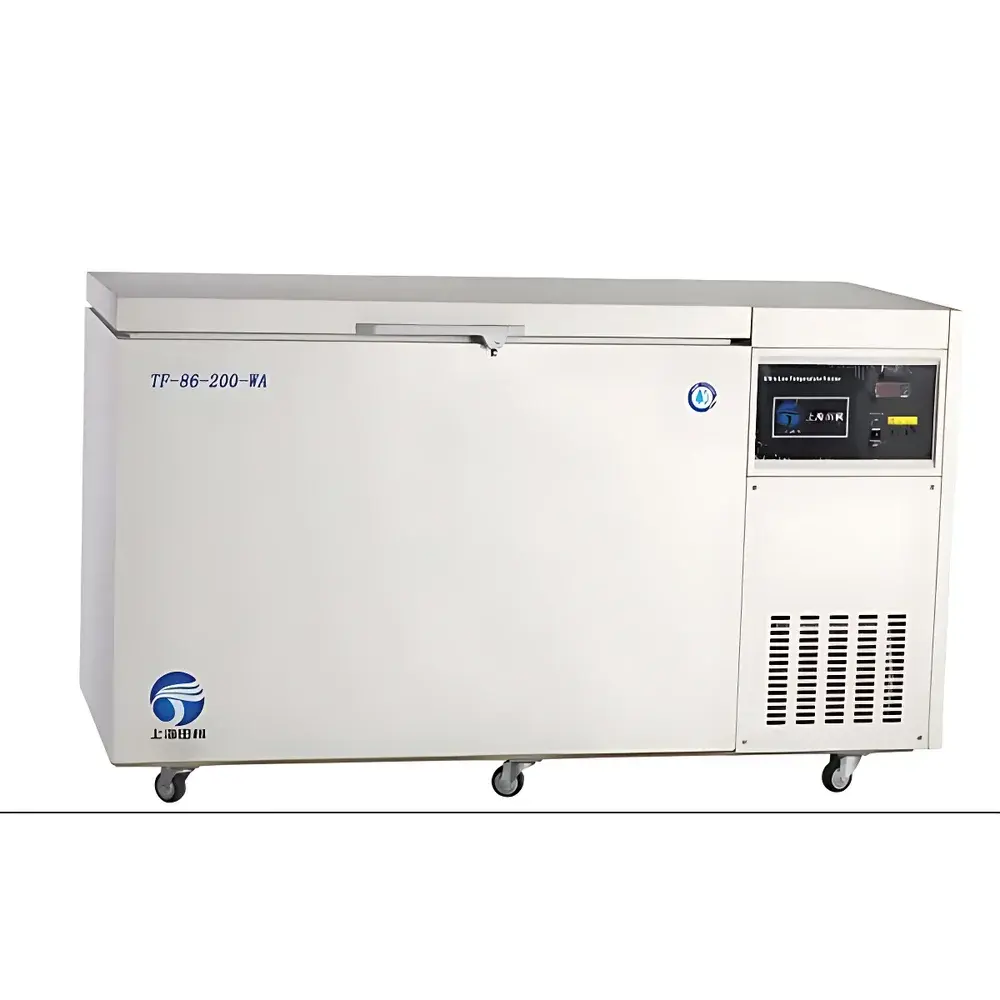
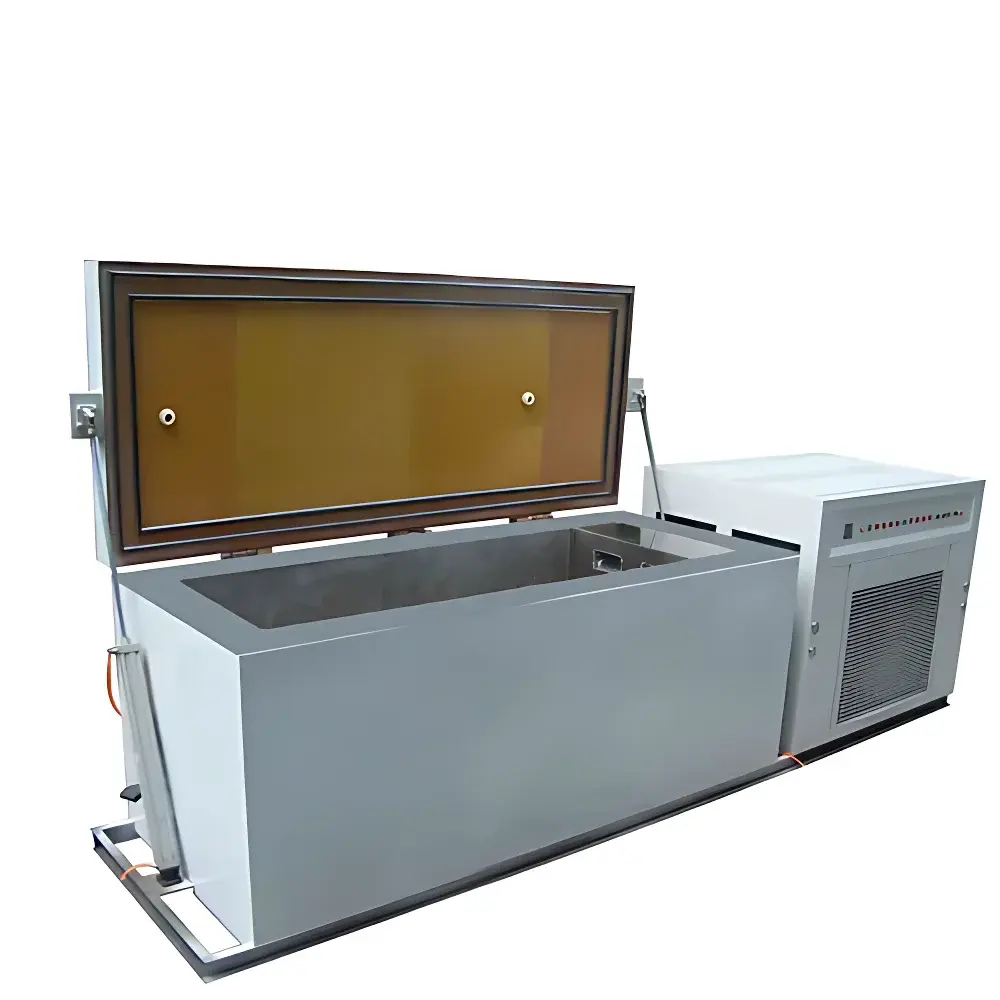
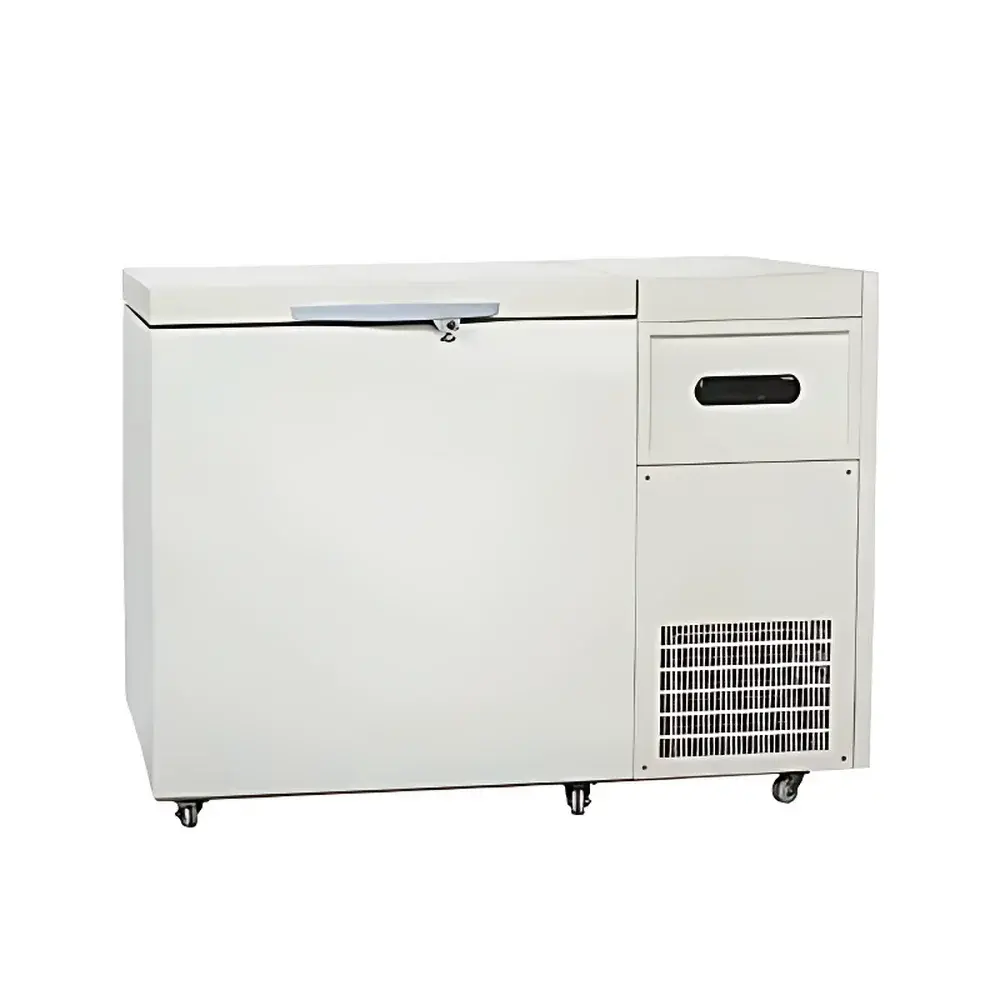
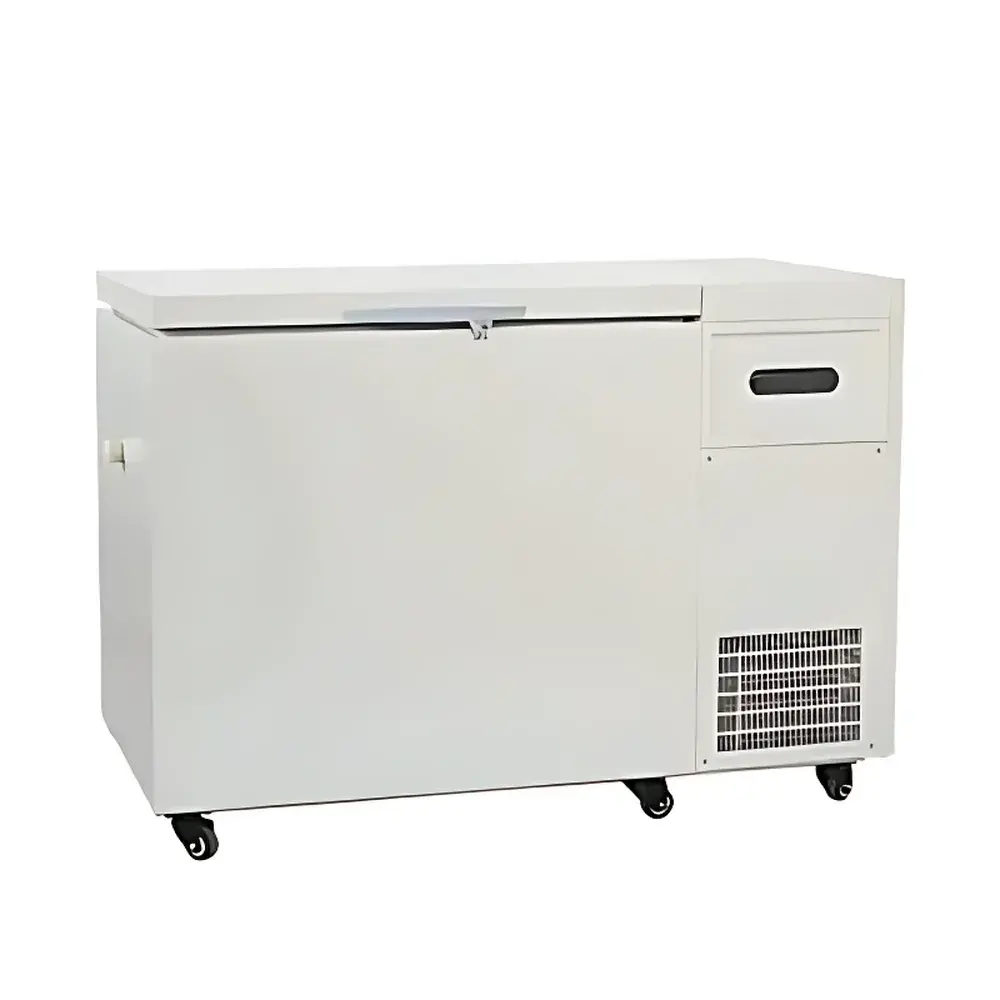
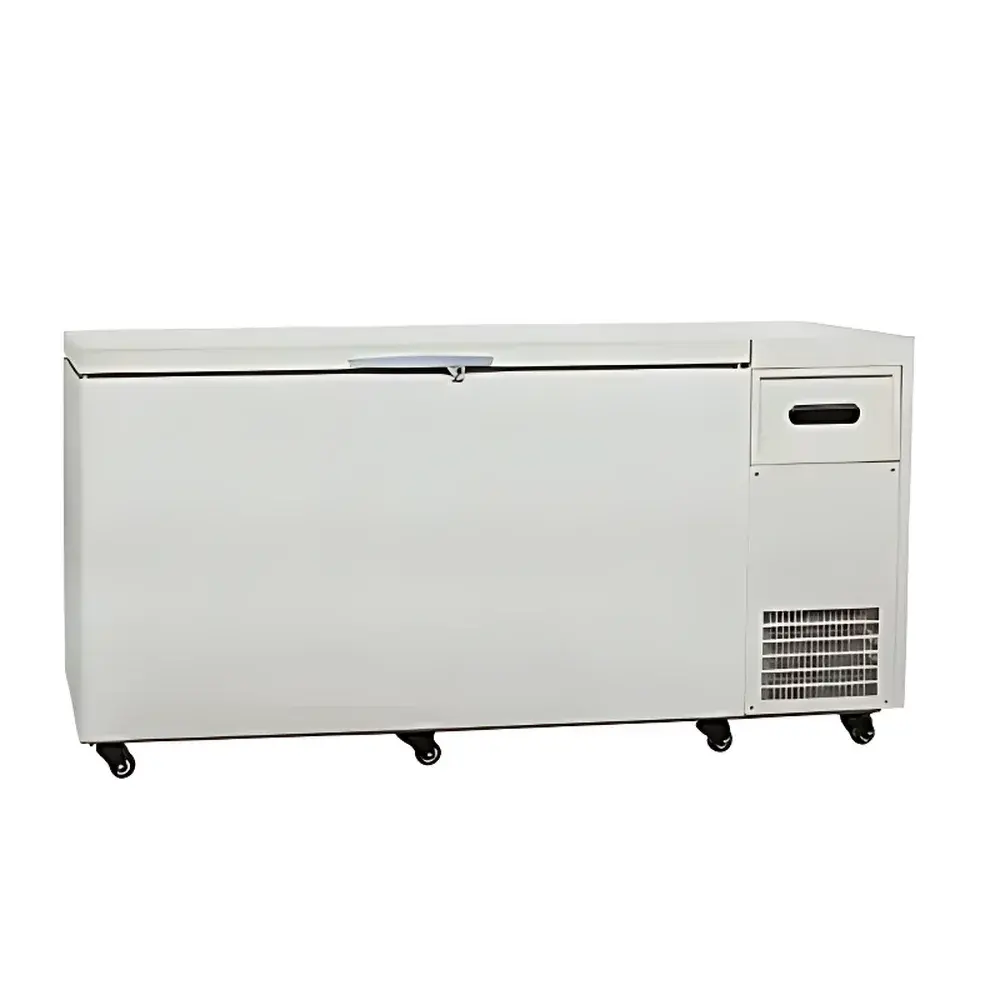
Tianfeng TF-60-118-WA Ultra-Low Temperature Freezer
| Brand | Tianfeng |
|---|---|
| Origin | Shanghai, China |
| Manufacturer Type | Direct Manufacturer |
| Model | TF-60-118-WA |
| Effective Capacity | 118 L |
| Temperature Range | −25 °C to −60 °C |
| Interior Dimensions (mm) | 500 × 400 × 560 |
| Exterior Dimensions (mm) | 900 × 750 × 920 |
| Power Supply | 220 V / 50 Hz |
| Rated Power | 450 W |
| Noise Level | 57 dB(A) |
| Refrigerant | Eco-friendly non-CFC/HFC blend (R-23/R-508B or equivalent) |
| Insulation | Dual-layer high-density polyurethane foam |
| Interior Material | Stainless steel (AISI 304) |
| Door Configuration | Four independent inner doors with magnetic gasket seals |
| Shelving | Three adjustable stainless steel shelves |
| Interface | RS-232 (optional) |
| Compliance | ISO 9001:2000 certified manufacturing |
| Safety Features | Door lock, power lock, audible/visual alarm system |
Overview
The Tianfeng TF-60-118-WA Ultra-Low Temperature Freezer is an engineered solution for reliable long-term cryopreservation of biologics, clinical specimens, and temperature-sensitive reagents at sustained operating temperatures between −25 °C and −60 °C. Designed for laboratory and biomedical infrastructure environments—including blood banks, clinical diagnostics labs, biobanks, and academic research facilities—the unit employs a dual-mode condensation system combining natural convection and forced-air cooling to ensure thermal stability under variable ambient conditions (up to 32 °C ambient, 60% RH). Its refrigeration architecture integrates a high-efficiency imported ultra-low-temperature compressor stage with cascade refrigeration principles, enabling consistent evaporator surface temperatures below −65 °C while maintaining low energy consumption (450 W nominal) and acoustic emissions (≤57 dB[A]). The cabinet’s structural integrity is reinforced by 120 mm thick polyurethane insulation with closed-cell density ≥38 kg/m³, minimizing thermal bridging and ensuring uniform internal temperature distribution (±2.5 °C uniformity across load zone per IEC 61000-4-2 validation protocol).
Key Features
- Stainless steel interior (AISI 304) and door liners with seamless, radius-cornered cavity design—facilitating decontamination and reducing microbial retention points.
- Four independently sealed inner doors with magnetic gaskets minimize cold air loss during frequent access; each compartment supports individual temperature monitoring capability (optional).
- Dual-path condenser system: 50% natural convection + 50% fan-assisted airflow—enhancing operational resilience in dusty or high-ambient-temperature settings without risk of compressor overload.
- Three-tier adjustable stainless steel shelving system allows flexible configuration for vial racks, cryoboxes, or bulk sample containers (max. load capacity: 85 kg distributed evenly).
- Integrated alarm system with visual indicator and audible alert (85 dB) triggers on temperature deviation (>±3 °C setpoint), power failure, door ajar, or sensor fault—compliant with ISO 13485:2016 clause 7.5.10 for medical device storage environments.
- RS-232 serial interface (optional) enables connection to laboratory information management systems (LIMS) or centralized environmental monitoring platforms for audit-trail-capable data logging (supports timestamped temperature history export).
- Physical security provisions include dual-lock mechanism (mechanical door lock + dedicated power switch lock) aligned with CLIA and CAP requirements for controlled-access specimen storage.
Sample Compatibility & Compliance
The TF-60-118-WA maintains stable thermal conditions suitable for preservation of primary human tissues, peripheral blood mononuclear cells (PBMCs), stem cell suspensions, viral vectors, monoclonal antibodies, and lyophilized enzyme preparations. Its validated temperature performance meets the minimum stabilization criteria outlined in USP “Good Storage and Distribution Practices”, ASTM F2651-21 “Standard Guide for Cryopreservation of Biological Materials”, and ISO 20387:2018 “Biotechnology — Biobanking”. All electrical components conform to IEC 61010-1:2010 safety standards for laboratory equipment. The unit is manufactured under an ISO 9001:2000–certified quality management system, with full traceability of critical components (compressor, expansion valve, temperature sensors) from Tier-1 international suppliers.
Software & Data Management
While the base model operates via a microprocessor-based digital controller with LED display (setpoint, real-time chamber temperature, alarm status), optional firmware upgrades support GLP/GMP-compliant data handling. When equipped with RS-232 connectivity and compatible acquisition software, the freezer logs temperature readings at user-defined intervals (1–60 min), stores up to 30 days of continuous data onboard, and exports CSV-formatted files with ISO 8601 timestamps. Audit trail functionality includes operator ID tagging (via external authentication), modification history, and electronic signature support—meeting FDA 21 CFR Part 11 requirements when deployed with validated third-party middleware.
Applications
This ultra-low temperature freezer serves mission-critical roles across regulated and research-intensive domains: long-term archiving of clinical trial biospecimens in biorepositories; stabilization of thermolabile diagnostic reagents in reference laboratories; storage of vaccine intermediates and adjuvanted formulations prior to fill-finish; cryoconservation of marine-derived biomaterials in fisheries genomics programs; and maintenance of reference standards for proficiency testing schemes administered by CAP or UK NEQAS. Its compact footprint (0.63 m² floor area) and height-optimized design (1.89 m total) accommodate installation in space-constrained cleanrooms, mobile laboratory units, and ISO Class 7–8 containment suites.
FAQ
What is the recommended ambient operating environment?
The unit is rated for continuous operation at ambient temperatures between 10 °C and 32 °C, with relative humidity ≤60% non-condensing. Installation requires ≥10 cm clearance on all sides and rear for adequate airflow.
How often should the condenser filter be cleaned?
Under standard laboratory conditions, inspect and vacuum the removable dust filter every 3 months; increase frequency to monthly in high-particulate environments (e.g., animal housing corridors or manufacturing cleanroom support areas).
Can this freezer be integrated into a central monitoring network?
Yes—via optional RS-232 output and compatible Modbus RTU or ASCII protocol drivers, it interfaces with BMS platforms (e.g., Siemens Desigo, Honeywell Experion) for remote alarm forwarding and trend analysis.
Is validation documentation available for IQ/OQ/PQ protocols?
Tianfeng provides factory-assembled DQ/IQ templates compliant with GAMP5 guidelines; site-specific OQ/PQ execution requires third-party qualification partners per client SOPs.
What maintenance is required during the first year of operation?
No scheduled lubrication is needed. Annual verification includes calibration of the PT100 temperature sensor against NIST-traceable reference, inspection of door gasket compression force (≥5 N/mm per ISO 15223-1), and functional test of all alarm thresholds per IEC 62304 Annex C.
Related Products




