
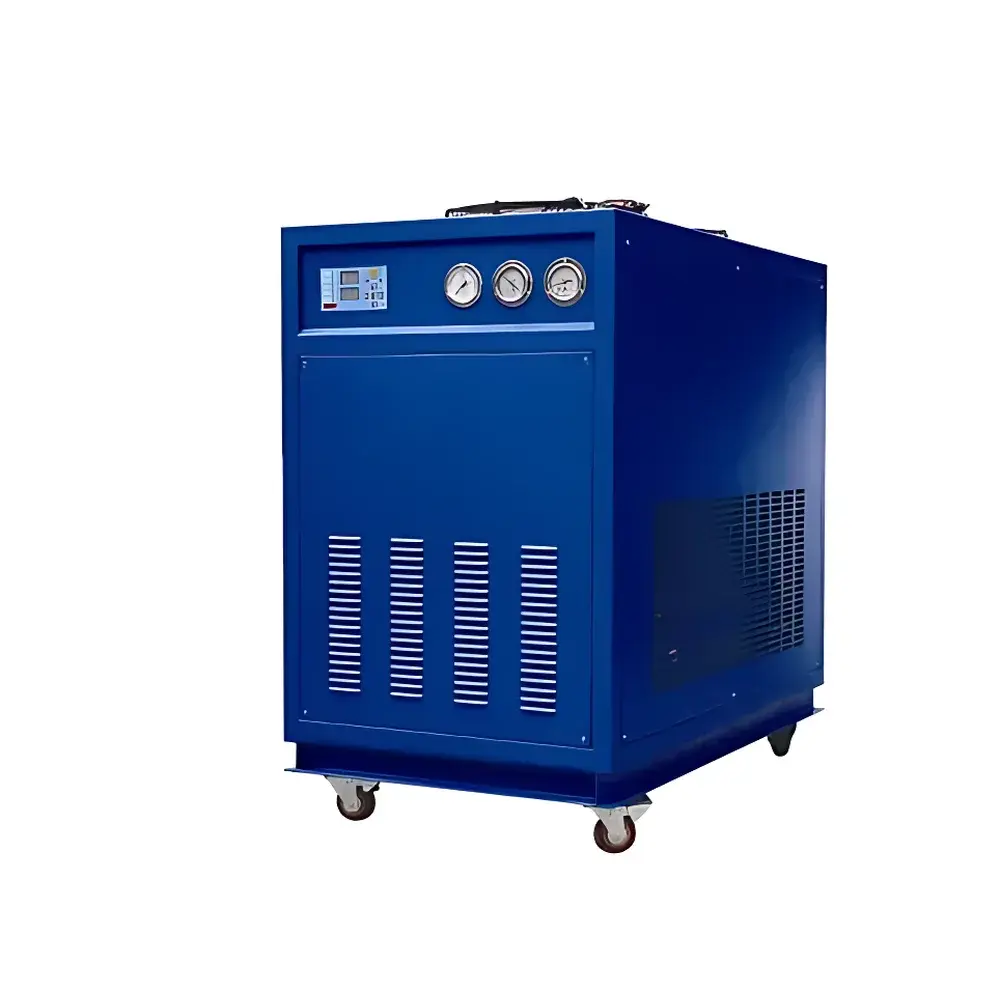
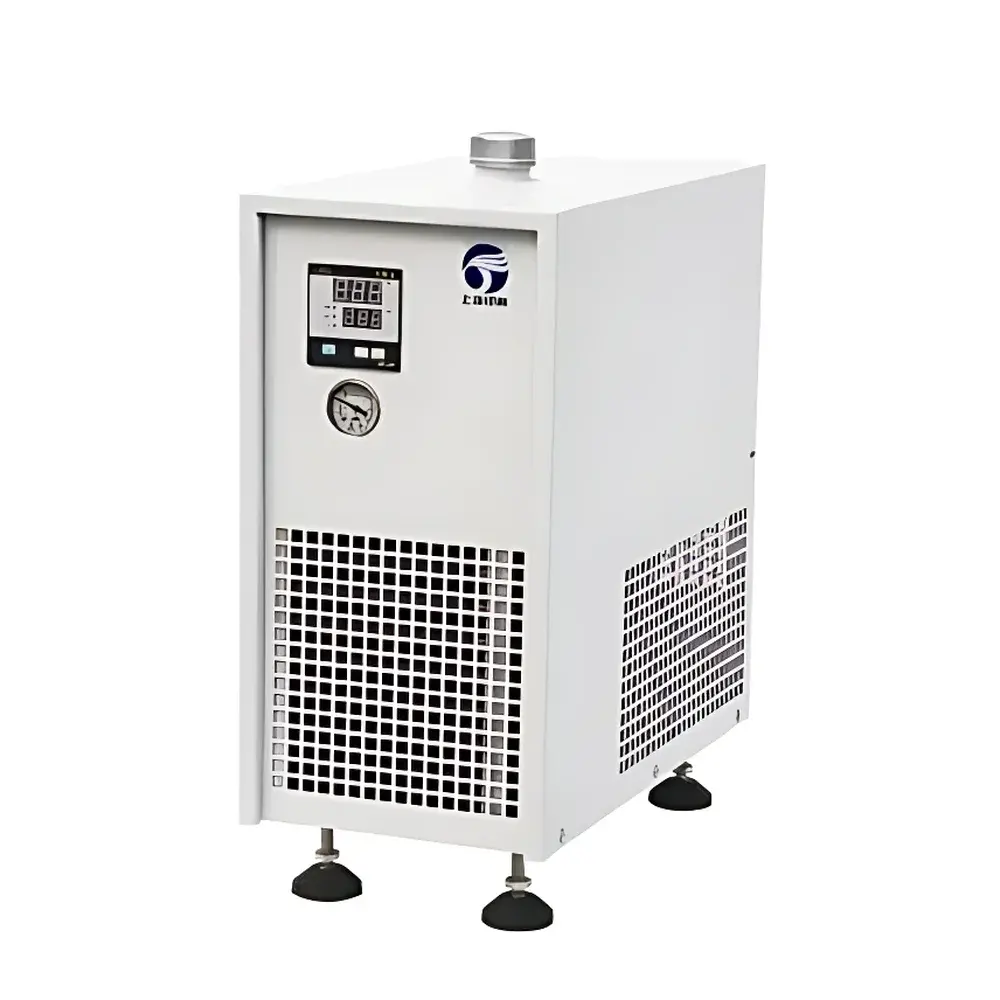
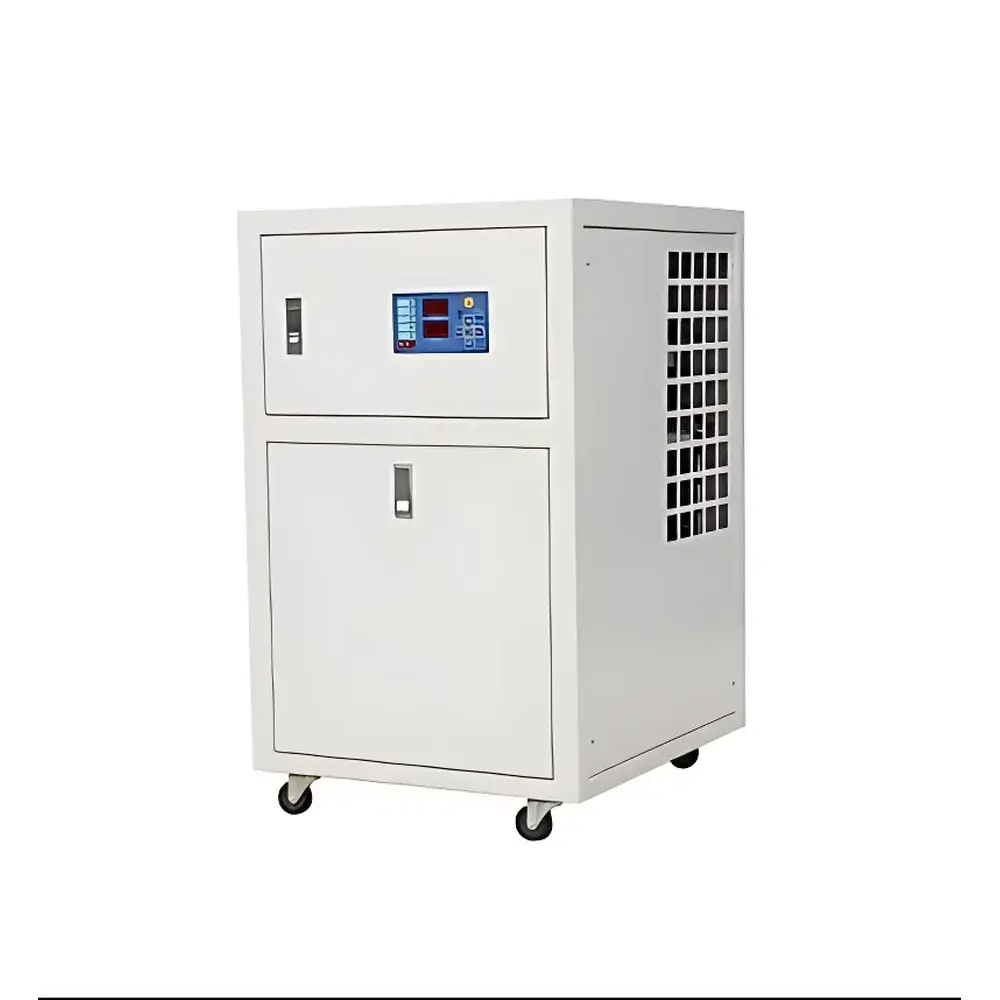
Tianfeng TF-LS-0.3HP Integrated Circulating Chiller
| Brand | Tianfeng |
|---|---|
| Origin | Shanghai, China |
| Manufacturer Type | Direct Manufacturer |
| Regional Classification | Domestic (China) |
| Model | TF-LS-0.3HP |
| Instrument Type | Integrated Unit |
| Cooling Method | Water-Cooled |
| Temperature Control Range | 0–10 °C |
| Refrigeration Capacity | 0.3 kW |
| Temperature Stability | ±0.1 °C |
| Circulating Pump Pressure | 2.0 bar |
| Circulating Pump Flow Rate | 20 L/min |
| Reservoir Volume | 5 L |
| Operating Mode | Continuous |
Overview
The Tianfeng TF-LS-0.3HP Integrated Circulating Chiller is an engineered solution for precise, stable thermal management of laboratory and light industrial instrumentation requiring consistent coolant delivery within the 0–10 °C range. Designed around a hermetically sealed piston compressor and R22 refrigerant cycle, it employs a direct-expansion water-box evaporator configuration—where coolant circulates through a stainless-steel coil immersed in the 5-liter reservoir—to deliver high thermal inertia and minimal temperature drift. Its water-cooled architecture eliminates dependency on ambient air conditions, making it especially suitable for controlled environments such as analytical laboratories, cleanrooms, or enclosed equipment cabinets where airflow and noise constraints apply. The chiller operates continuously under full load with no duty-cycle limitations, supporting uninterrupted operation of sensitive instruments including graphite furnace atomic absorption spectrometers (GFAAS), inductively coupled plasma optical emission spectrometers (ICP-OES), X-ray fluorescence (XRF) analyzers, scanning electron microscopes (SEM), and laser-based systems requiring stable thermal sink performance.
Key Features
- Hermetically sealed, imported reciprocating compressor (0.125 kW) delivering reliable refrigeration output of 0.3 kW at nominal conditions
- Stainless-steel plate-type evaporator integrated into the 5 L reservoir, enabling corrosion resistance, rapid thermal equilibration, and simplified maintenance
- High-efficiency circulating pump (20 L/min flow rate, 4 m head, 2.0 bar pressure rating) with dual-sourced options: Italian OEM or domestic Nanfang brand
- Digital PID temperature controller with ±0.1 °C stability over 0–10 °C operating band; display resolution of 0.1 °C; setpoint range programmable from 5–35 °C
- Comprehensive safety architecture: compressor discharge overtemperature protection, motor winding thermal cutoff, flow fault detection via mechanical flow meter, and automatic shutdown with status indication
- Robust mechanical construction: electrostatically powder-coated steel enclosure (505 × 230 × 500 mm), quick-release panels, and copper-aluminum finned condenser with axial fan (2.5 m³/min airflow)
Sample Compatibility & Compliance
The TF-LS-0.3HP is compatible with standard laboratory coolant loops using Φ12 mm inlet/outlet ports and aqueous or glycol-water mixtures (up to 30% concentration). It meets fundamental electrical safety requirements per GB 4706.1 (Chinese national equivalent of IEC 60335-1) and electromagnetic compatibility (EMC) standards per GB 4343.1. While not certified to UL/CSA or CE for export markets without additional conformity assessment, its component-level sourcing—including Schneider Electric contactors and control relays—supports traceability and alignment with GLP-aligned lab infrastructure. The unit’s continuous-duty rating and closed-loop design ensure compliance with operational prerequisites for ISO/IEC 17025-accredited testing laboratories where instrument cooling stability directly impacts measurement uncertainty budgets.
Software & Data Management
This chiller operates via embedded hardware-based PID logic with no external software dependency. All operational parameters—including real-time coolant temperature, fault codes, and run-time hours—are displayed locally on the front-panel digital interface. No data logging, remote monitoring, or network connectivity is provided. However, the analog temperature output signal (0–10 V or 4–20 mA optional upon request) enables integration into centralized building management systems (BMS) or SCADA platforms for supervisory oversight. For regulated environments requiring audit trails (e.g., FDA 21 CFR Part 11), third-party data loggers may be deployed externally to record temperature history, though the unit itself does not generate electronic records or user-accessible firmware updates.
Applications
- Cooling of high-resolution analytical instruments: GFAAS, ICP-MS, XRD, SEM/TEM, and XRF systems requiring low-noise, vibration-isolated thermal regulation
- Thermal stabilization of laser diodes, RF amplifiers, and vacuum chamber feedthroughs in physics and materials science labs
- Support for chromatographic detectors (e.g., ELSD, CAD) and mass spectrometer ion sources demanding sub-ambient coolant supply
- Process cooling in pilot-scale synthesis reactors, rotary evaporators, and cryo-milling setups where intermittent or continuous heat removal is critical
- Backup thermal management for redundant cooling circuits in multi-instrument shared utility networks
FAQ
What is the maximum allowable coolant viscosity or glycol concentration for this chiller?
The system is validated for use with water or water-glycol solutions up to 30% by volume. Higher concentrations increase pumping resistance and reduce heat transfer efficiency; viscosity must remain below 5 cP at operating temperature.
Does the unit include an automatic refill function?
Yes—it features a built-in float-switch–activated auto-refill mechanism that maintains reservoir level within ±50 mL tolerance during extended operation.
Can the chiller operate at ambient temperatures above 35 °C?
Performance degrades above 35 °C ambient due to reduced condenser delta-T; continuous operation is not recommended beyond 40 °C ambient without supplemental ventilation or chilled condenser water.
Is the refrigerant R22 compliant with current environmental regulations?
R22 is subject to phase-out under the Montreal Protocol and EU F-Gas Regulation. Units shipped post-2025 may require retrofitting or replacement with R404A/R410A-compatible variants; consult local regulatory guidance prior to procurement.
What maintenance intervals are recommended for long-term reliability?
Compressor oil inspection every 24 months; condenser coil cleaning quarterly in dusty environments; reservoir descaling annually if using hard water; full system leak check and refrigerant charge verification every 36 months.



