
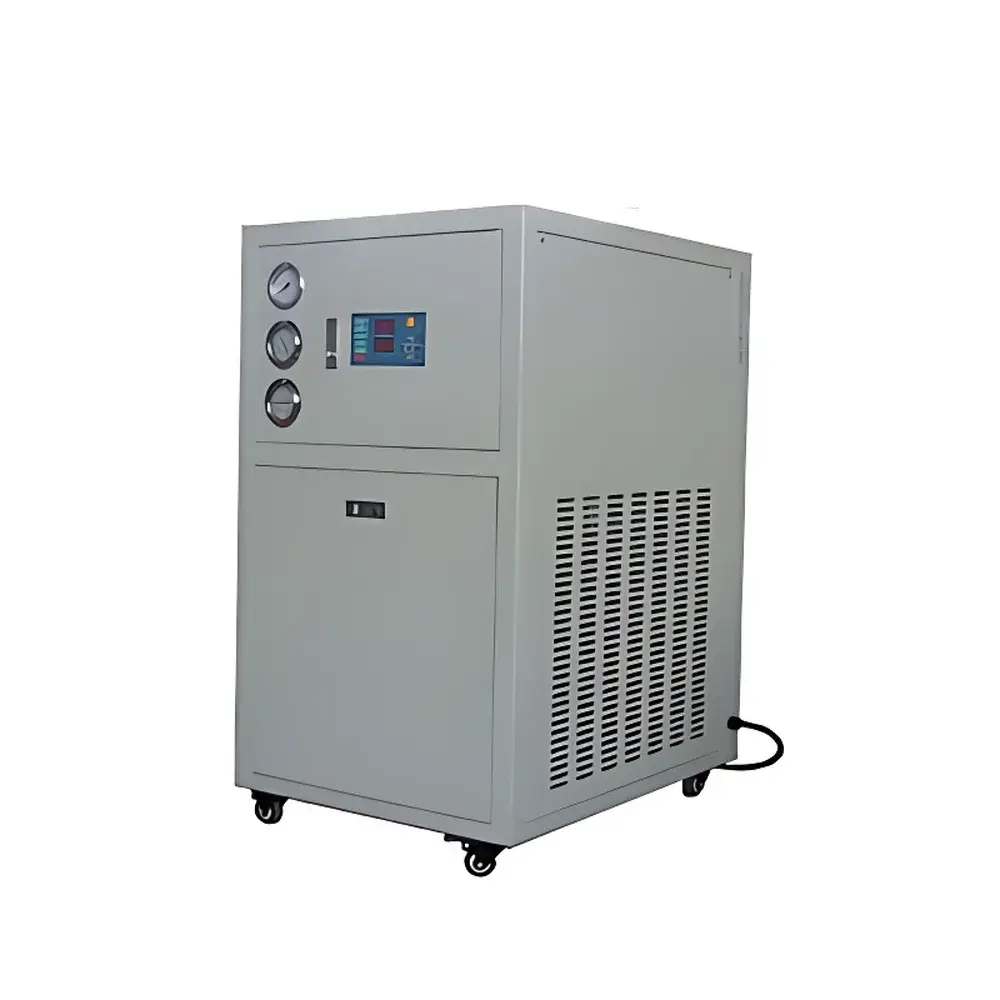
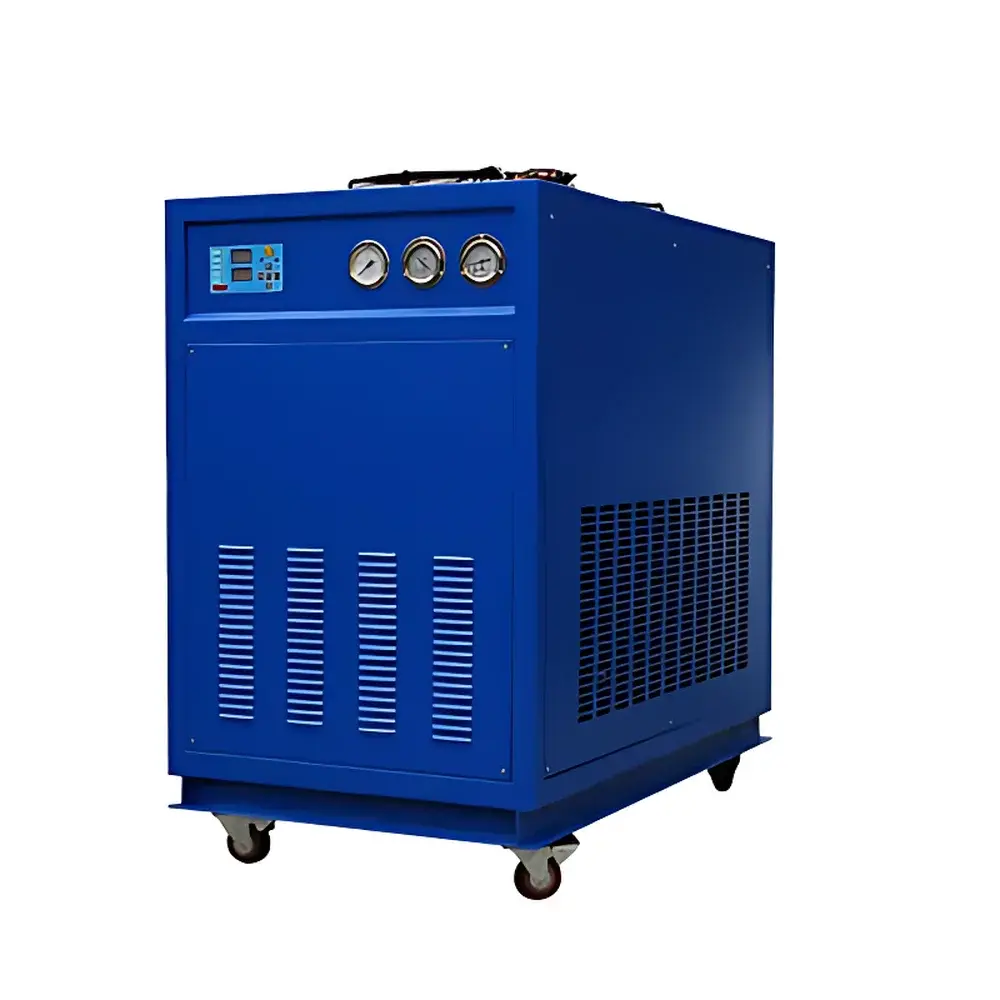
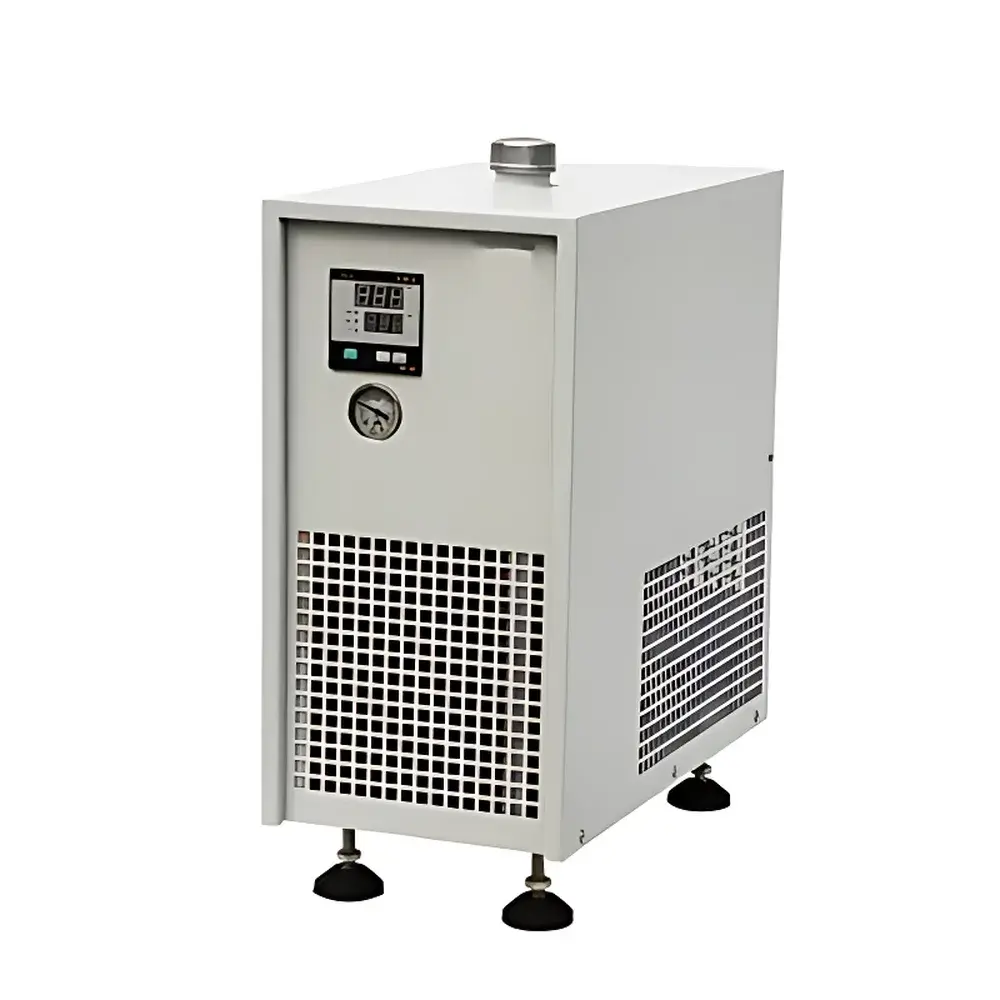
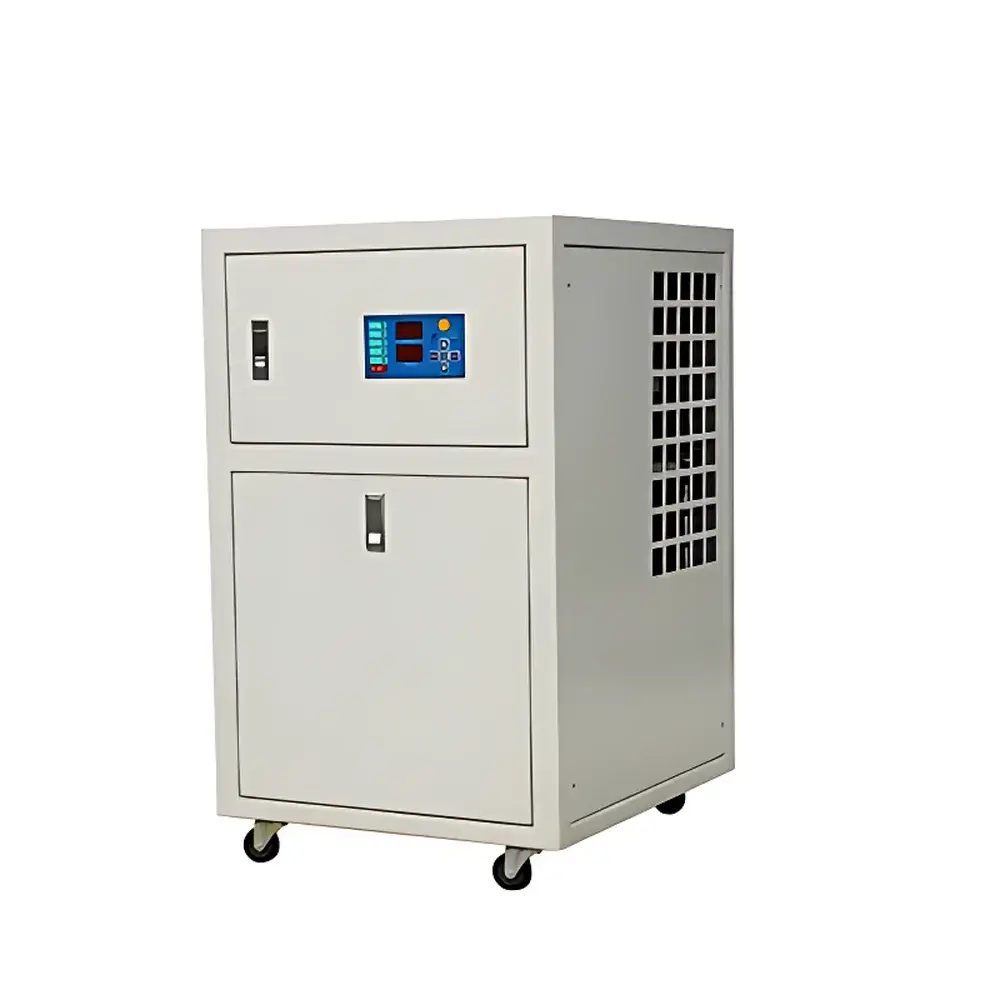
Tianfeng LS-3500W Integrated Circulating Chiller
| Brand | Tianfeng |
|---|---|
| Origin | Shanghai, China |
| Manufacturer Type | Direct Manufacturer |
| Product Category | Domestic |
| Model | Tianfeng-LS-3500W |
| Instrument Type | Integrated Unit |
| Cooling Method | Water-Cooled |
| Temperature Stability Range | 0–10 °C |
| Refrigeration Capacity | 3.5 kW |
| Temperature Fluctuation | ±0.1 °C |
| Circulation Pump Pressure | 2.0 bar |
| Circulation Flow Rate | 2 L/min |
| Reservoir Volume | 45 L |
| Operating Mode | Continuous Duty |
| Power Supply | 220 V, 50 Hz |
| Compressor Type | Scroll |
| Safety Protections | Compressor Overheat Protection, Overcurrent Protection, High/Low Pressure Switches, Overtemperature Cut-off |
| Construction | Stainless Steel Reservoir & Pump |
| Control System | Digital PID Temperature Controller (Optional RKC Controller Available) |
| Dimensions (L×W×H) | 800 × 600 × 1065 mm |
| Noise Level | Low |
| Certifications | ISO 9001:2000 Certified |
Overview
The Tianfeng LS-3500W Integrated Circulating Chiller is a precision-engineered, water-cooled thermal management system designed for stable, continuous-duty cooling of high-heat-load laboratory and industrial instrumentation. It operates on the vapor-compression refrigeration cycle, utilizing a high-efficiency scroll compressor and internationally sourced expansion valves (Italy/Germany), electromagnetic valves, and refrigerant circuit components. The unit delivers consistent thermal regulation across its operational range of 0–10 °C with a tight temperature stability of ±0.1 °C—critical for applications requiring strict thermal control to prevent instrument drift, detector saturation, or thermal-induced mechanical deformation. Unlike air-cooled chillers, its water-cooled architecture enables higher heat rejection efficiency in confined lab environments and supports integration into centralized cooling loops where ambient air conditioning capacity is limited or inconsistent.
Key Features
- Integrated compact design (800 × 600 × 1065 mm) optimized for benchtop or floor-mounted deployment in space-constrained laboratories.
- Stainless steel reservoir (45 L) and circulation pump ensure corrosion resistance, long-term fluid integrity, and compatibility with deionized water or inhibited glycol-water mixtures.
- Digital PID temperature controller with real-time display of setpoint and actual outlet temperature; optional upgrade to RKC (Japan) controller for enhanced repeatability and programmable ramp/soak profiles.
- Continuous-duty operation rated for 24/7 use, supported by multi-layer safety protections: high/low refrigerant pressure switches, compressor overheat cut-off, overcurrent detection, and outlet overtemperature lockout.
- Adjustable flow rate (0–2 L/min) and pressure output (up to 2.0 bar) enable precise matching to instrument inlet specifications—including high-backpressure analytical systems such as ICP-MS, XRD, and SEM cooling circuits.
- Low-noise scroll compressor and vibration-damped mounting minimize acoustic interference in sensitive measurement environments.
- Compliance-ready architecture: All electrical components meet IEC 61000-6-3 (EMC emission) and IEC 61000-6-2 (immunity) standards; internal wiring uses UL-listed conductors and Siemens/Schneider/Omron certified contactors and relays.
Sample Compatibility & Compliance
The LS-3500W is validated for thermal stabilization of high-value analytical platforms including graphite furnace atomic absorption spectrometers (GFAAS), inductively coupled plasma optical emission spectrometers (ICP-OES), inductively coupled plasma mass spectrometers (ICP-MS), X-ray fluorescence (XRF) and X-ray diffraction (XRD) systems, scanning electron microscopes (SEM), and transmission electron microscopes (TEM). Its closed-loop circulation prevents contamination of instrument coolant paths and eliminates evaporation-related concentration shifts in recirculated fluids. The chiller meets ISO 9001:2000 quality management system requirements for design, manufacturing, and post-delivery support. While not inherently 21 CFR Part 11 compliant, its digital controller supports audit-trail-capable data logging when interfaced with validated third-party SCADA or LIMS software—enabling alignment with GLP and GMP documentation workflows in regulated pharmaceutical and clinical research labs.
Software & Data Management
The standard interface includes an RS-485 port (Modbus RTU protocol) for integration into facility-wide monitoring networks. Optional analog 0–10 V or 4–20 mA outputs allow connection to building management systems (BMS) or PLC-based process controllers. No proprietary software is bundled; instead, the unit is compatible with industry-standard OPC UA and Modbus TCP gateways for seamless ingestion into LabVIEW, Ignition, or DeltaV environments. Temperature setpoints, real-time flow/pressure readings, and fault codes are accessible via serial command set—facilitating automated calibration verification and preventive maintenance scheduling. For traceability-critical applications, external data loggers may record timestamps, outlet temperature deviations (>±0.05 °C), and compressor runtime—supporting ISO/IEC 17025 clause 5.9 requirements for equipment performance monitoring.
Applications
- Materials Characterization: Maintains constant detector and source temperatures in XRD and XRF systems to suppress thermal lattice expansion artifacts and improve peak resolution.
- Elemental Analysis: Stabilizes plasma torch and interface cones in ICP-OES and ICP-MS, reducing oxide-based polyatomic interferences and improving long-term signal stability (RSD < 0.8% over 8 h).
- Electron Microscopy: Cools SEM/TEM cold traps, filament housings, and beam column components to limit thermal drift during high-magnification imaging and EDS mapping.
- Laser Systems: Provides stable coolant supply for CO₂, fiber, and ultrafast lasers used in ablation, LIBS, or time-resolved spectroscopy setups—preventing wavelength shift and mode instability.
- Pharmaceutical QC: Supports controlled-temperature operation of dissolution testers, HPLC column ovens, and automated sample coolers per USP and environmental control guidelines.
- Plastics & Metrology: Used in lab-scale injection molding validation and coordinate measuring machine (CMM) thermal compensation systems where sub-0.2 °C thermal gradients affect dimensional accuracy.
FAQ
What is the maximum allowable return water temperature for continuous operation?
The unit is rated for continuous duty with inlet water temperatures up to 35 °C. Return temperatures exceeding 40 °C may trigger high-pressure cut-out protection and accelerate compressor wear; sustained operation above this threshold is not recommended.
Can the chiller be integrated into an existing building chilled water loop?
Yes—the water-cooled condenser accepts facility-supplied cooling water at 30–35 °C inlet and 40 °C outlet. A differential pressure regulator and isolation valve are required upstream to maintain stable flow and prevent backflow.
Is the reservoir compatible with 30% propylene glycol solutions?
Yes—stainless steel wetted parts and EPDM seals are fully compatible with inhibited glycol mixtures for sub-zero applications; however, the stated 0–10 °C operating range assumes pure water or low-conductivity coolant.
Does the unit support remote start/stop and alarm signaling?
Yes—dry-contact terminals are provided for external relay control of power state and fault indication (e.g., compressor failure, low flow, high temp), enabling integration with lab emergency shutdown protocols.
What maintenance intervals are recommended for optimal longevity?
Compressor oil and refrigerant charge require inspection every 24 months under continuous use; condenser water filter cleaning is recommended quarterly; PID sensor calibration verification should occur semiannually per ISO/IEC 17025 Section 6.4.6.



