
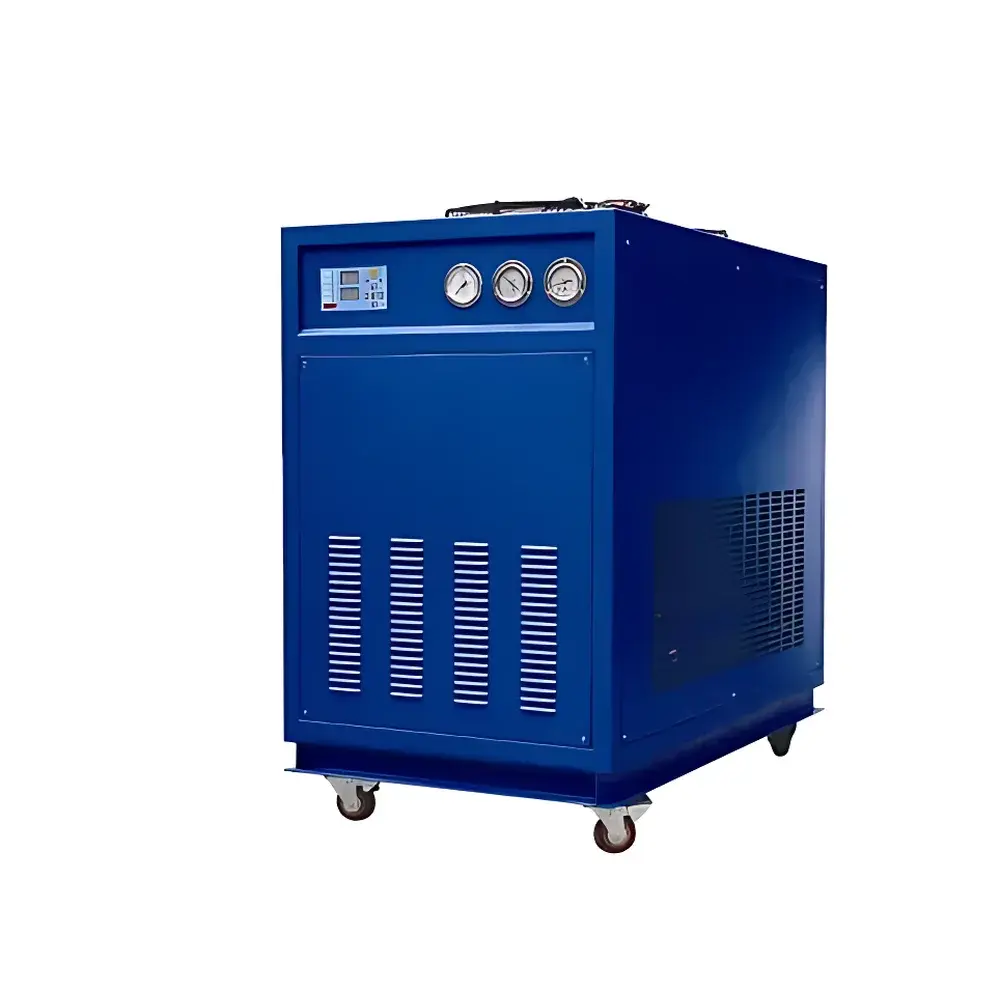
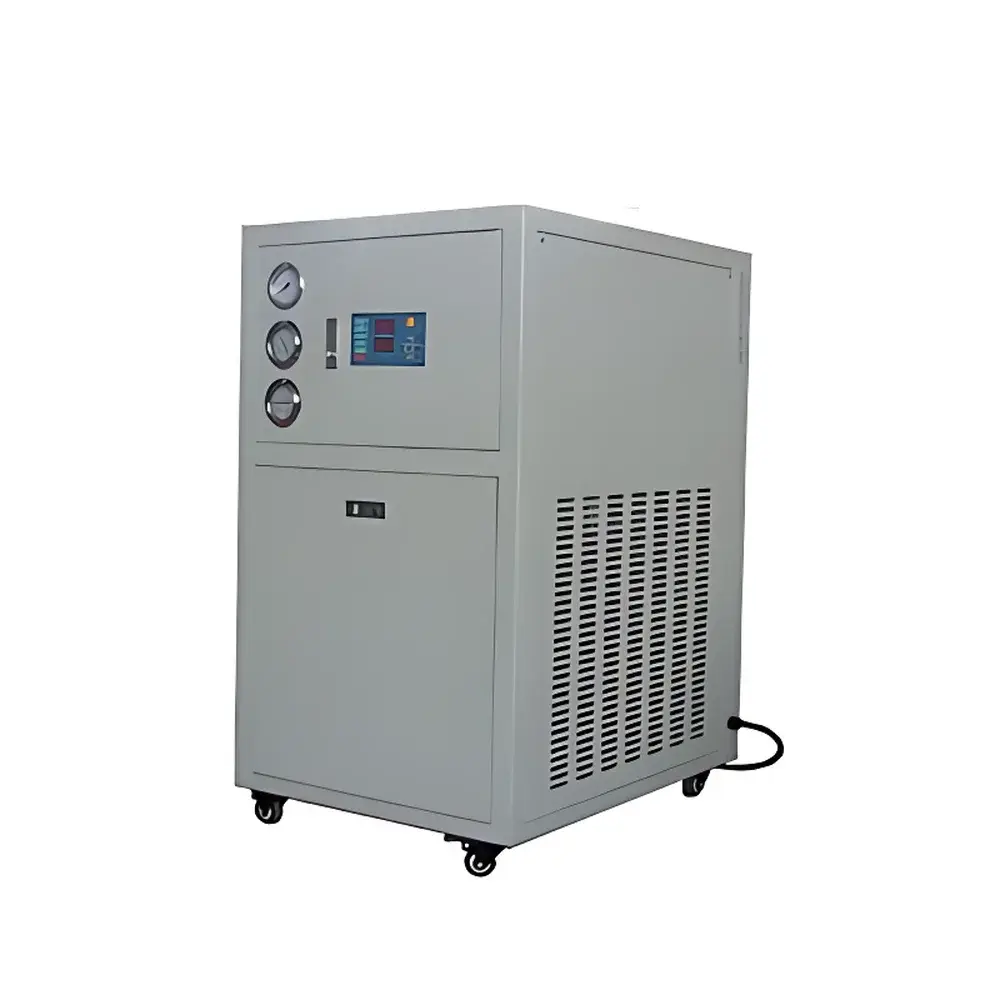
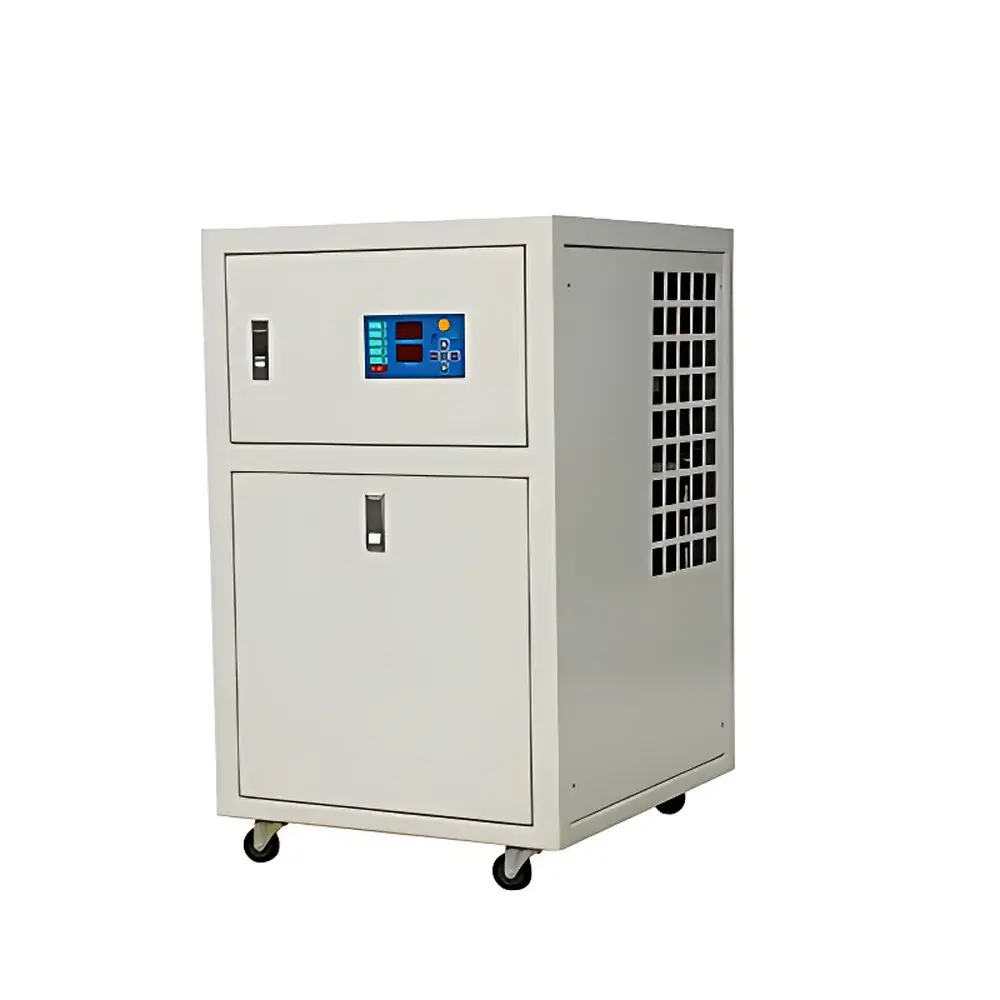
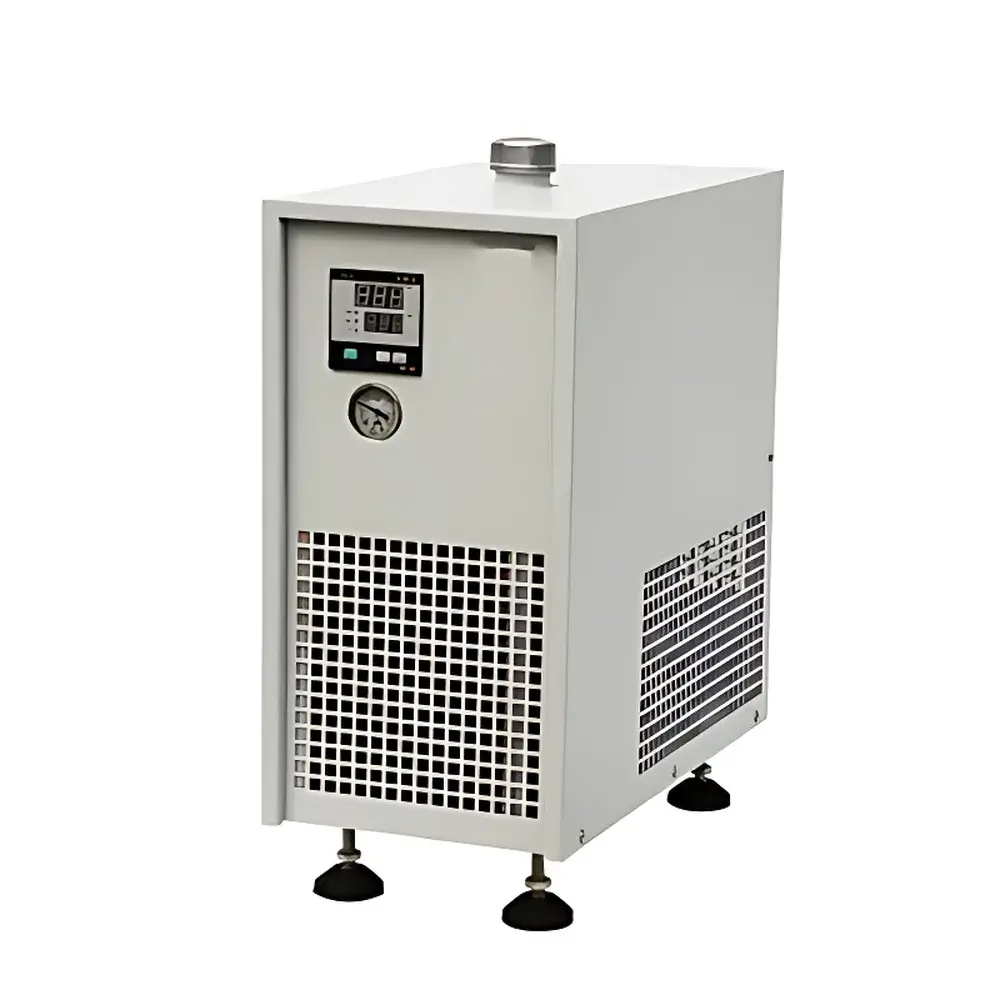
Tianfeng TF-LS-12HP Industrial Circulating Chiller
| Brand | Tianfeng |
|---|---|
| Origin | Shanghai, China |
| Manufacturer Type | Direct Manufacturer |
| Equipment Type | Integrated Circulating Chiller |
| Cooling Method | Air-Cooled |
| Temperature Control Range | 0–50 °C |
| Refrigeration Capacity | 37.2 kW (standard, at 12 °C inlet / 7 °C outlet water, 30 °C ambient inlet / 40 °C outlet air) |
| Temperature Stability | ±0.1 °C |
| Circulating Pump Pressure | 0–2 bar |
| Circulating Flow Rate | 0–6.39 m³/h |
| Reservoir Volume | 260 L |
| Operating Mode | Continuous Duty |
| Compressor Type | Hermetic Scroll Compressor (10.32 kW) |
| Refrigerant | R22 |
| Power Supply | 380 V, 3-phase + N + PE, 50 Hz |
| Dimensions (L×W×H) | 1610 × 900 × 1850 mm |
| Net Weight | Approx. 620 kg |
| Safety Protections | Compressor overheat, overcurrent, high/low pressure, overtemperature, phase sequence & phase loss protection |
Overview
The Tianfeng TF-LS-12HP Industrial Circulating Chiller is an integrated, air-cooled refrigeration system engineered for precision temperature control in demanding laboratory and industrial environments. It operates on the vapor-compression refrigeration cycle, utilizing a hermetic scroll compressor, R22 refrigerant, and a high-efficiency copper-tube/aluminum-fin condenser with low-noise external rotor fans. Designed for continuous-duty operation, the unit maintains stable coolant temperatures between 0 °C and 50 °C with a tight stability of ±0.1 °C—critical for applications requiring thermal consistency across extended runtime. Its primary function is to remove heat from process equipment—such as analytical instrumentation, laser systems, or machining spindles—by circulating chilled water through closed-loop heat exchangers. The chiller’s thermally insulated stainless-steel reservoir (260 L), variable-speed circulation pump (0–6.39 m³/h, 0–2 bar), and PID-based digital temperature controller enable responsive thermal management without manual intervention.
Key Features
- Hermetic scroll compressor (10.32 kW) delivering high volumetric efficiency, low vibration, and extended service life under continuous load.
- Stainless-steel water tank and pump housing ensure corrosion resistance and long-term compatibility with deionized or inhibited coolant solutions.
- Digital microprocessor controller with real-time display of setpoint, actual water temperature, and system status; supports programmable ramping and hold functions.
- Comprehensive safety architecture including high/low refrigerant pressure switches, compressor overheat protection, phase sequence monitoring, and overcurrent cutoff.
- Air-cooled condenser with optimized fin density and 12,000 m³/h airflow capacity enables reliable operation in ambient conditions up to 40 °C.
- Modular electrical cabinet featuring CE-certified components from Siemens, Schneider Electric, and Omron—ensuring EMC compliance and operational reliability.
- Optional configuration support for RS485 Modbus RTU communication, enabling integration into centralized building management or laboratory automation systems (LIMS).
Sample Compatibility & Compliance
The TF-LS-12HP is compatible with a broad spectrum of heat-generating laboratory and production equipment, including graphite furnace atomic absorption spectrometers (GFAAS), inductively coupled plasma optical emission spectrometers (ICP-OES), ICP-mass spectrometers (ICP-MS), X-ray fluorescence (XRF) and X-ray diffraction (XRD) systems, scanning and transmission electron microscopes (SEM/TEM), laser marking/cutting/welding platforms, and high-speed CNC spindles. Its cooling performance meets the thermal load requirements specified in ASTM E2912 (Standard Guide for Selection of Laboratory Chillers) and aligns with ISO 17025 clause 6.4.3 regarding environmental condition control for accredited testing laboratories. While not inherently 21 CFR Part 11 compliant, its optional digital logging module supports audit-trail-capable data recording when paired with validated third-party software—facilitating GLP/GMP-aligned documentation workflows.
Software & Data Management
The standard controller provides local setpoint adjustment, real-time temperature readout, and alarm status indication via a backlit LCD interface. For advanced data handling, the optional RS485 port enables bidirectional communication with external SCADA or LIMS platforms using Modbus RTU protocol. Logged parameters—including water inlet/outlet temperature, compressor run time, fault codes, and pump status—can be timestamped and exported for trend analysis. When deployed in regulated environments, users may configure external data acquisition systems to meet ALCOA+ principles (Attributable, Legible, Contemporaneous, Original, Accurate, Complete, Consistent, Enduring, Available), supporting traceability during regulatory audits.
Applications
- Laboratory Instrument Cooling: Stabilizes thermal drift in high-resolution spectroscopic and microscopic systems—reducing signal noise and improving measurement reproducibility.
- Laser System Thermal Management: Maintains diode and solid-state laser head temperatures within manufacturer-specified tolerances, preventing wavelength shift and power degradation.
- Materials Testing Equipment: Supports controlled cooling of tensile testers, rheometers, and differential scanning calorimeters (DSC) during dynamic thermal profiling.
- Industrial Process Support: Provides consistent mold cooling for polymer processing, oil temperature regulation in hydraulic systems, and vacuum chamber thermal stabilization in PVD/CVD tools.
- Pharmaceutical & Biotech: Enables precise temperature control during fermentation, chromatography column conditioning, and lyophilizer condenser operation.
FAQ
What is the recommended maximum return water temperature for sustained compressor longevity?
For optimal service life, return water temperature should not exceed 40 °C. Higher return temperatures increase condensing pressure and reduce compressor efficiency, accelerating wear.
Can this chiller operate continuously at 0 °C outlet temperature?
Yes—the unit is rated for continuous operation down to 0 °C with appropriate glycol-water mixture (e.g., 25% propylene glycol) to prevent freezing and maintain flow integrity.
Is remote monitoring supported out-of-the-box?
Basic remote status indication requires optional RS485 interface and external gateway; full telemetry and alarm notification require integration with user-supplied SCADA or cloud-based infrastructure.
Does the chiller comply with RoHS or REACH directives?
While R22 refrigerant is not RoHS-restricted, it is subject to EU F-Gas Regulation (EU No. 517/2014) phase-out timelines; replacement with R404A or R449A variants is available upon request for new installations.
What maintenance intervals are recommended for laboratory-grade reliability?
Condenser coil cleaning every 3 months (in dusty environments), refrigerant charge verification annually, and full system performance validation per ISO/IEC 17025 every 12–24 months—depending on usage intensity and criticality of application.



