
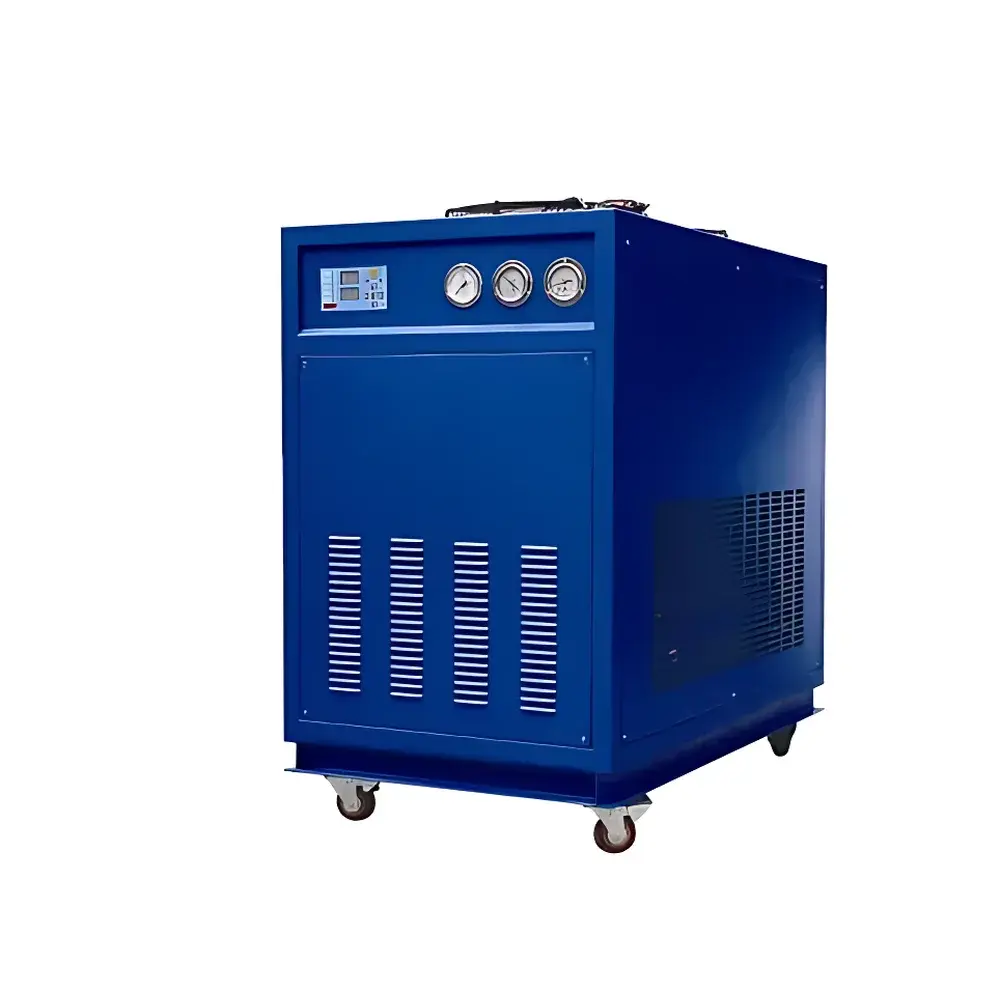
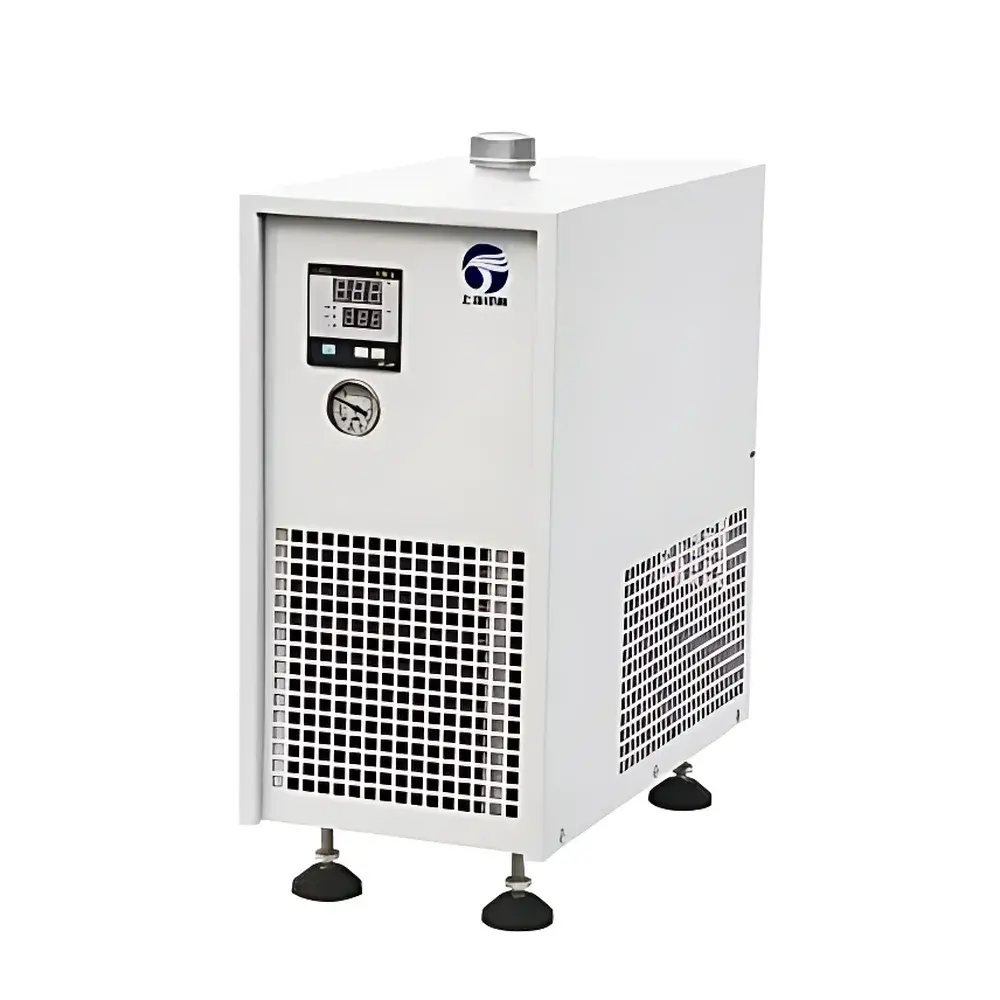
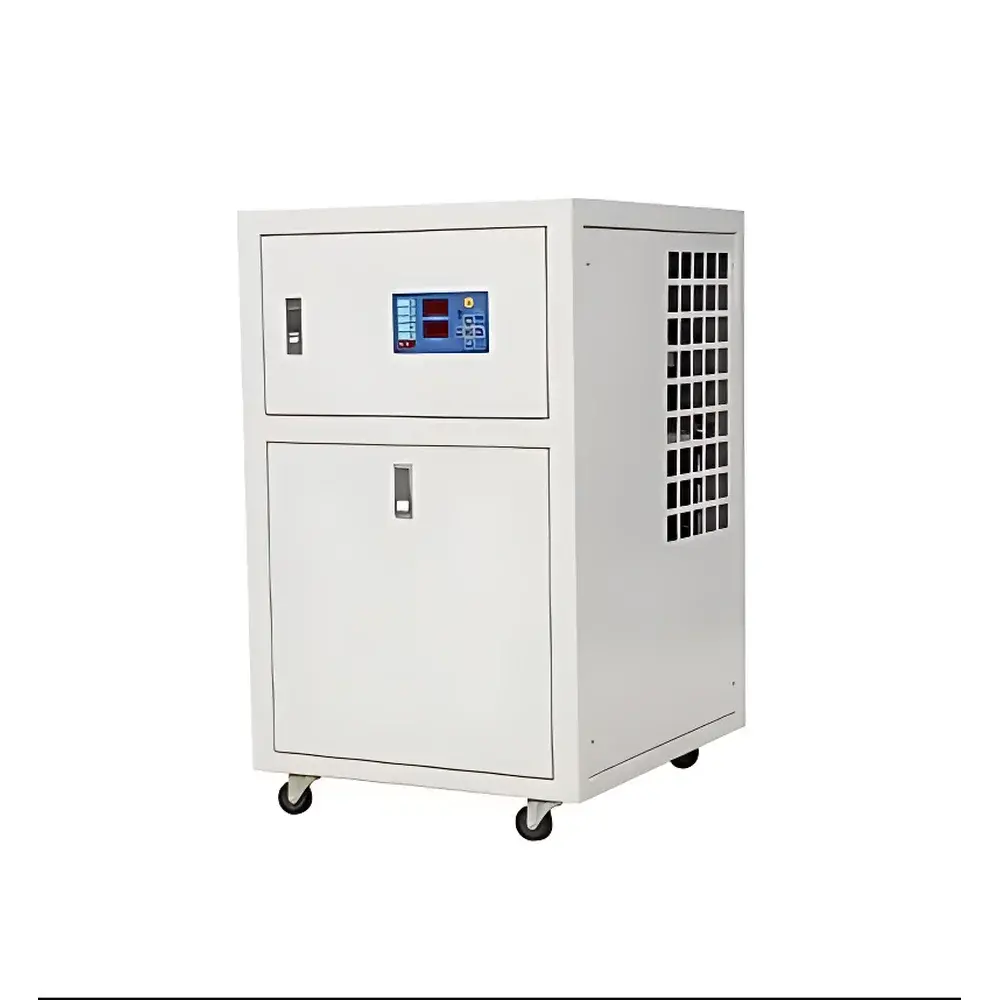
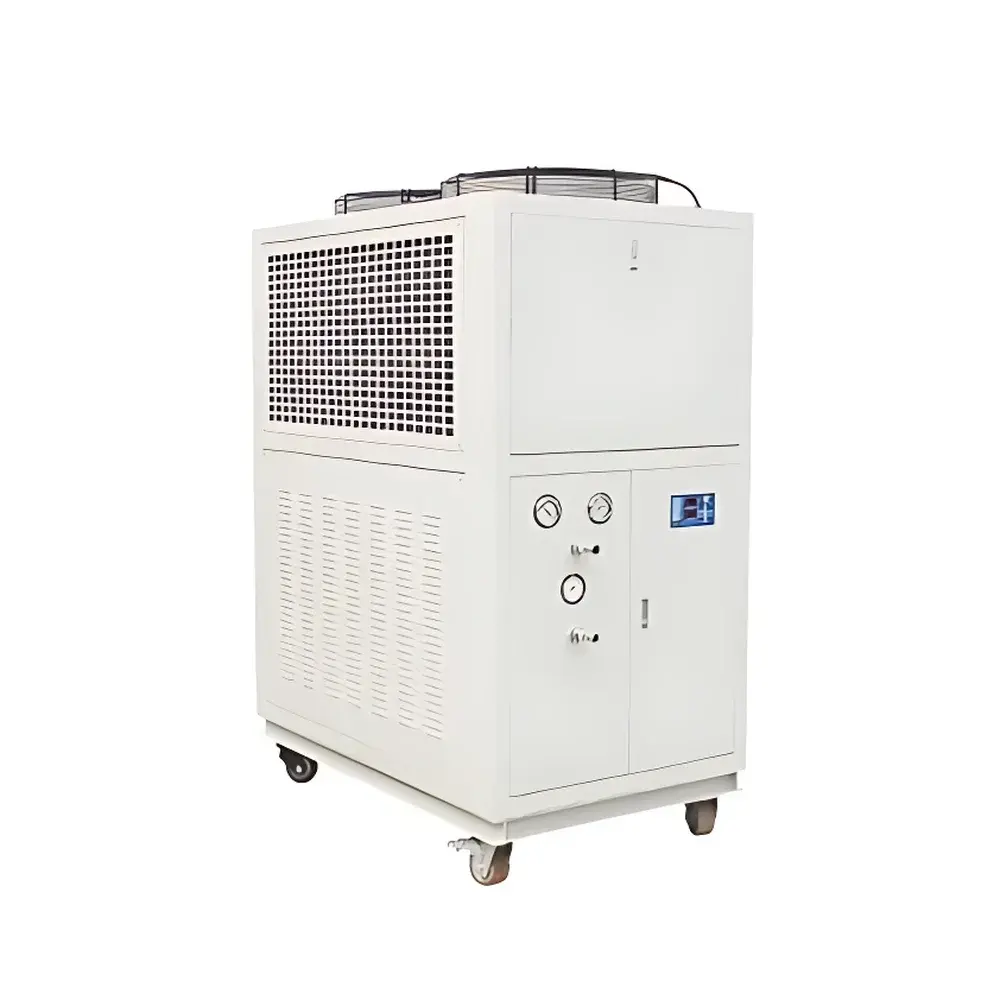
Tianfeng TF-LS-20HP Cascade Low-Temperature Circulating Chiller
| Brand | Tianfeng |
|---|---|
| Origin | Shanghai, China |
| Manufacturer Type | Direct Manufacturer |
| Equipment Type | Integrated Circulating Chiller |
| Cooling Method | Water-Cooled |
| Temperature Control Range | –20 °C to +60 °C |
| Refrigeration Capacity | 63 kW (54,180 kcal/h) at 7 °C outlet / 12 °C inlet |
| Temperature Stability | ±0.3 °C |
| Circulating Pump Pressure | 10 m head (user pump: 20 m) |
| Circulating Flow Rate | 8.6 m³/h (standard), up to 18.42 m³/h with user pump |
| Reservoir Volume | 200 L |
| Compressor | Hermetic Scroll, 14.7 kW |
| Refrigerant | R22 |
| Power Supply | 380 V / 50 Hz / 3-phase + N + PE |
| Dimensions (L×W×H) | 2000 × 800 × 2000 mm |
| Net Weight | Approx. 850 kg |
| Safety Protections | High/Low Pressure Switch, Compressor Overheat & Discharge Overheat Protection, Phase Sequence & Phase Loss Detection, Overcurrent & Overtemperature Alarms |
Overview
The Tianfeng TF-LS-20HP Cascade Low-Temperature Circulating Chiller is an engineered solution for precision thermal management in demanding laboratory and industrial applications requiring stable sub-ambient cooling. Unlike single-stage vapor-compression chillers, this unit employs a two-stage cascade refrigeration cycle—comprising separate high- and low-temperature circuits with optimized refrigerant pairs—to achieve reliable operation down to –20 °C while maintaining high energy efficiency and long-term compressor integrity. The system is designed for continuous-duty operation in environments where precise coolant temperature control, minimal thermal drift, and robust mechanical stability are critical—such as analytical instrumentation cooling, vacuum system thermal regulation, and high-power laser source stabilization.
Key Features
- Integrated cascade architecture enabling stable operation from –20 °C to +60 °C with ±0.3 °C temperature stability under steady-state load conditions
- Hermetically sealed scroll compressor (14.7 kW) paired with high-efficiency brazed plate heat exchanger and copper-tube/aluminum-fin air-cooled condenser
- Dual-pump configuration: primary chiller pump (0.75 kW, 10 m head, 8.6 m³/h) and optional auxiliary user pump (0.37 kW, 20 m head) for extended loop resistance
- 200 L stainless-steel reservoir with level sensor, anti-corrosion coating, and insulated lid to minimize ambient heat ingress
- Digital PID temperature controller with real-time display, programmable setpoint ramping, and configurable alarm thresholds
- Comprehensive safety suite: high/low refrigerant pressure monitoring, compressor discharge overheat protection, phase sequence and phase loss detection, motor overcurrent cutoff, and tank overtemperature interlock
- Modular electrical cabinet housing CE-compliant components from Siemens, Schneider Electric, and Omron—including contactors, relays, and circuit breakers
- Noise-optimized airflow design: low-RPM external rotor fan (2.6 kW) delivering 20,000 m³/h cooling air at <78 dB(A) at 1 m distance
Sample Compatibility & Compliance
The TF-LS-20HP is compatible with a broad spectrum of laboratory and production equipment requiring closed-loop coolant circulation, including but not limited to graphite furnace atomic absorption spectrometers (GFAAS), inductively coupled plasma optical emission spectrometers (ICP-OES), ICP-mass spectrometers (ICP-MS), X-ray fluorescence (XRF) analyzers, X-ray diffractometers (XRD), scanning electron microscopes (SEM), and transmission electron microscopes (TEM). Its hydraulic interface supports standard DN20 (¾″) BSP/Female NPT connections and accommodates glycol-water mixtures up to 30% concentration. The unit complies with ISO 9001:2015 quality management requirements and meets electromagnetic compatibility (EMC) standards per IEC 61000-6-2 and IEC 61000-6-4. While not certified for medical device use under FDA 21 CFR Part 820, its design principles align with GLP-compliant thermal infrastructure expectations for instrument qualification (IQ/OQ/PQ) protocols.
Software & Data Management
The chiller operates via an embedded microcontroller-based control system with no external PC dependency. Temperature setpoints, operational mode (constant-temperature or intelligent adaptive control), pump status, and alarm history are accessible through a backlit LCD interface with tactile keypad navigation. All safety events—including pressure excursions, temperature deviations >±2 °C from setpoint, and power anomalies—are logged with timestamp and retained for ≥1,000 entries. Optional RS485 Modbus RTU communication enables integration into centralized building management systems (BMS) or laboratory information management systems (LIMS) for remote monitoring, event-triggered notifications, and audit-trail generation compliant with ALCOA+ data integrity principles. Firmware updates are performed via secure USB interface with version rollback capability.
Applications
This chiller serves as a thermally stable cold source for applications where heat extraction must be both precise and uninterrupted. In analytical laboratories, it maintains optimal detector and source temperatures in high-resolution mass spectrometry and synchrotron beamline instrumentation. In materials science, it controls sample stage temperature during cryo-SEM imaging and low-temperature XRD data collection. In semiconductor manufacturing support, it cools RF generators, ion implantation power supplies, and vacuum chamber feedthroughs. In laser processing infrastructure, it stabilizes diode-pumped solid-state (DPSS) lasers, fiber lasers, and ultrafast oscillator amplifiers—preventing wavelength drift and mode instability induced by thermal lensing. Its capacity and temperature range also support mold cooling in high-precision injection molding validation studies and thermal conditioning of rheological test cells in polymer characterization workflows.
FAQ
What is the minimum allowable return water temperature?
The maximum recommended return water temperature is 40 °C. Sustained inlet temperatures above this threshold increase condensing pressure, reduce compressor volumetric efficiency, and accelerate refrigerant oil degradation.
Can this chiller operate with ethylene glycol solutions?
Yes—up to 30% (v/v) ethylene glycol in deionized water is supported; however, flow rate and heat transfer coefficients must be recalculated using manufacturer-provided correction factors.
Is the unit suitable for cleanroom installation?
The chiller is rated for ISO Class 8 (Class 100,000) environments when installed with HEPA-filtered intake air ducting and vibration-isolated mounting; exhaust airflow must be vented externally.
Does the controller support 21 CFR Part 11-compliant electronic signatures?
No—the embedded controller does not provide role-based access control, audit trail encryption, or electronic signature functionality; such requirements necessitate integration with validated third-party LIMS platforms.
What maintenance intervals are recommended for long-term reliability?
Compressor oil analysis every 4,000 operating hours; refrigerant circuit leak check annually; condenser coil cleaning quarterly in dusty environments; full system performance verification (capacity, delta-T, pressure differentials) biannually per ISO 5149-2 guidelines.



