
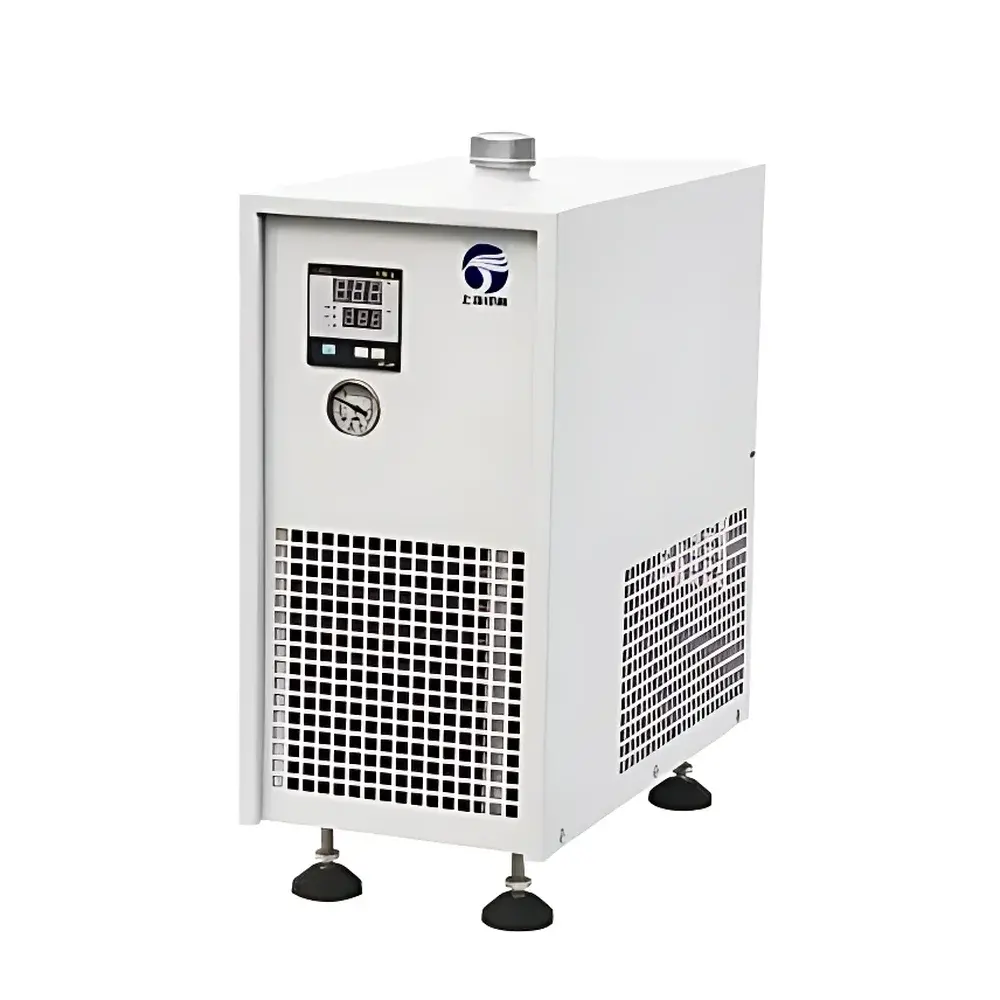
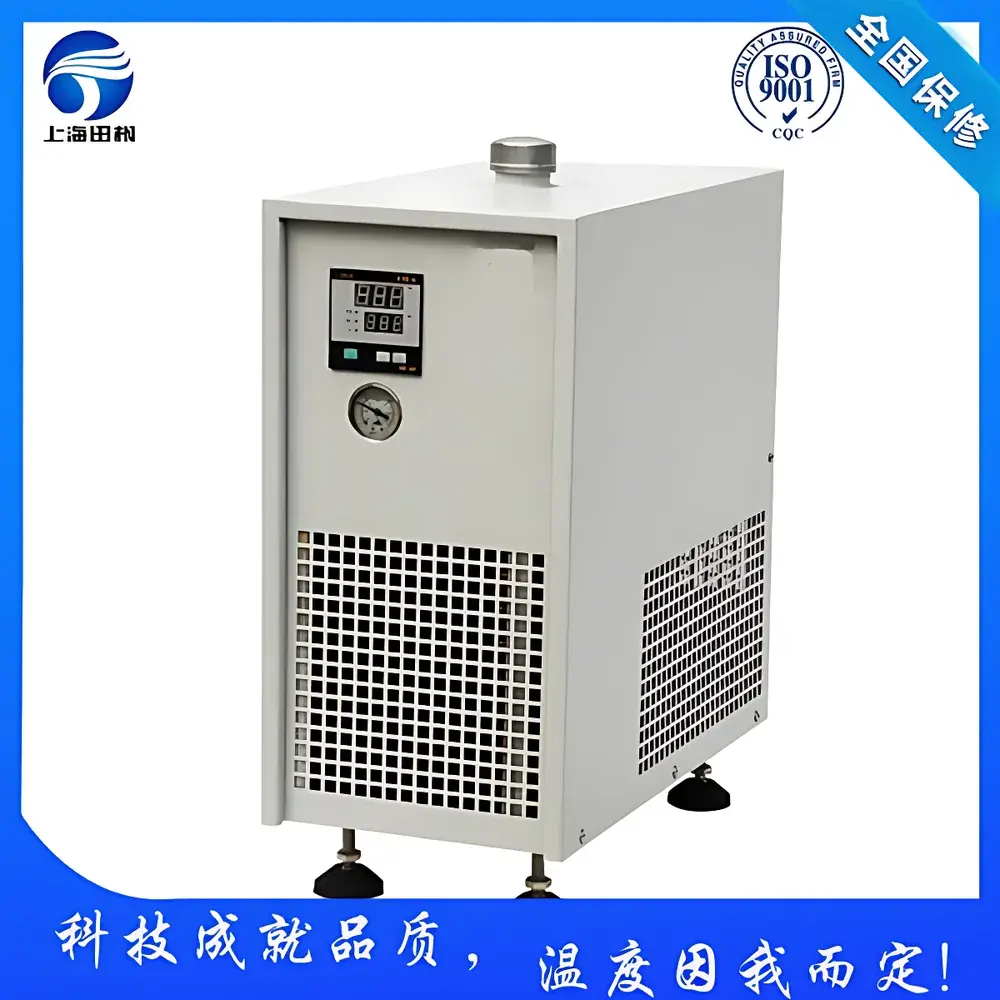
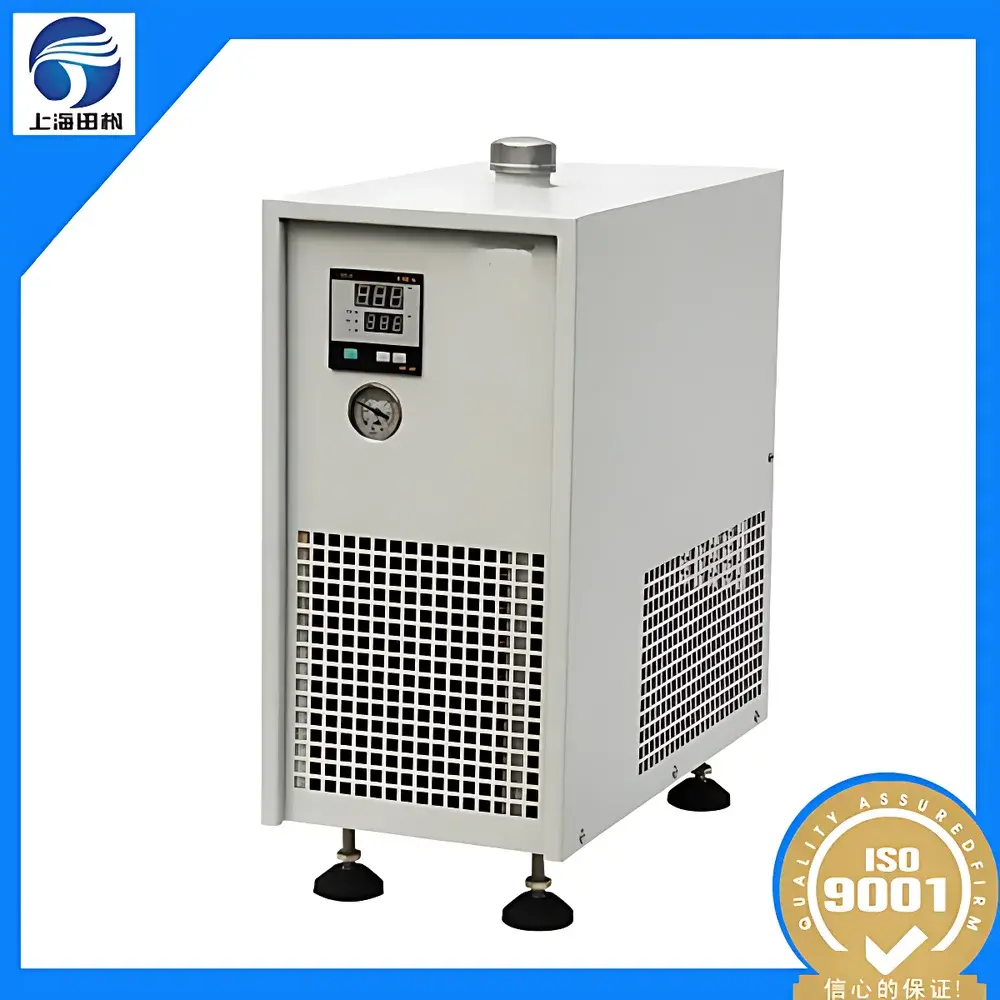
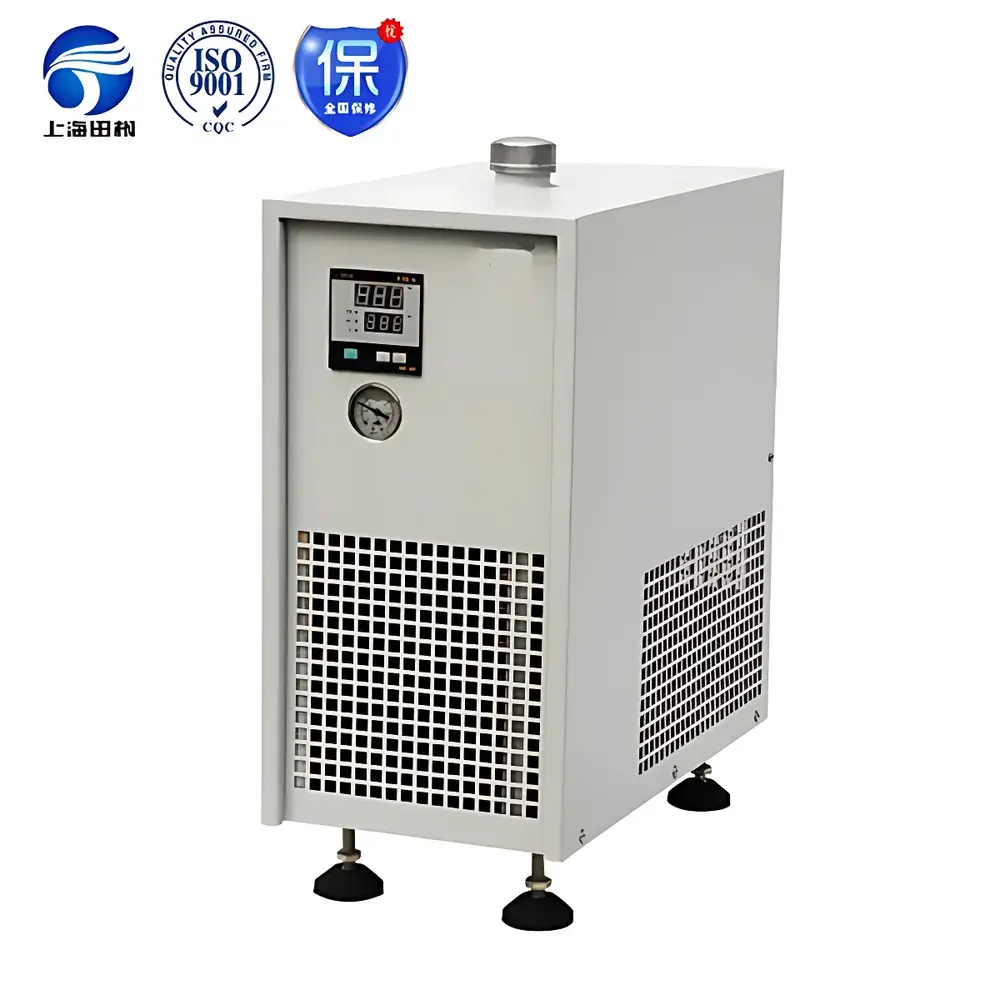
Tianfeng TF-LS-2KW Circulating Chiller
| Brand | Tianfeng |
|---|---|
| Origin | Shanghai, China |
| Manufacturer Type | Direct Manufacturer |
| Equipment Type | Integrated Circulating Chiller |
| Cooling Method | Water-Cooled |
| Temperature Control Range | 0–40 °C |
| Refrigeration Capacity | 2 kW (1,720–6,820 kcal/h) |
| Temperature Stability | ±0.1 °C |
| Circulation Pump Pressure | 0–2.0 bar |
| Circulation Flow Rate | 0–38 L/min |
| Reservoir Volume | 27 L |
| Power Consumption | 1.34 kW |
| Input Voltage | 220 V, 50 Hz |
| Dimensions (L×W×H) | 650 × 550 × 915 mm |
| Compressor Type | Scroll Compressor |
| Safety Protections | Compressor Overheat Protection, High/Low Pressure Switches, Overcurrent Protection, Overtemperature Alarm |
| Construction | Stainless Steel Reservoir & Pump |
| Control System | Digital PID Temperature Controller (Optional RKC Controller Available) |
| Certifications | ISO 9001:2000 Certified |
Overview
The Tianfeng TF-LS-2KW Circulating Chiller is an integrated, water-cooled temperature control system engineered for precision thermal management in laboratory and light-industrial environments. It operates on a closed-loop refrigeration cycle using a high-efficiency scroll compressor, R410A refrigerant, and a dual-stage heat exchange architecture—comprising an evaporator for chilled water generation and a condenser cooled by external tap or tower water. The chiller maintains setpoint temperatures within ±0.1 °C across a stable operating range of 0–40 °C, delivering consistent thermal load rejection to sensitive instrumentation. Its design prioritizes long-duration continuous operation (24/7 duty cycle), low acoustic emissions (<65 dB(A)), and robust mechanical integrity—critical for integration with analytical instruments requiring vibration-sensitive cooling, such as graphite furnace atomic absorption spectrometers (GFAAS), inductively coupled plasma optical emission spectrometers (ICP-OES), X-ray diffractometers (XRD), and scanning electron microscopes (SEM).
Key Features
- Integrated all-in-one architecture with stainless steel reservoir (27 L capacity), corrosion-resistant pump, and insulated fluid path—eliminating external plumbing complexity.
- PID-based digital temperature controller with real-time display, adjustable setpoint resolution of 0.1 °C, and programmable ramp-soak profiles for multi-step thermal protocols.
- Scroll-type hermetic compressor (European-sourced) ensuring high volumetric efficiency, low starting torque, and extended service life under continuous duty.
- Dual-safety architecture: electronic overtemperature cutoff, high/low refrigerant pressure switches, motor overcurrent protection, and dry-run detection for pump failure mitigation.
- Adjustable flow regulation (0–38 L/min) and pressure output (0–2.0 bar) compatible with variable hydraulic resistance across instrument manifolds and cold plates.
- Compliance-ready electrical components—including Siemens contactors, Schneider circuit breakers, and Omron relays—supporting traceable maintenance logs and GLP-aligned operational documentation.
Sample Compatibility & Compliance
The TF-LS-2KW is validated for thermal stabilization of laboratory instrumentation with nominal cooling demands between 1.5–2.5 kW at ΔT = 5 °C (inlet 12 °C / outlet 7 °C). It interfaces seamlessly with OEM coolant ports on ICP-MS systems, laser ablation units, vacuum coating chambers, and high-resolution TEM cryo-stages. All wetted materials meet ASTM A240 Type 304 stainless steel specifications. The unit conforms to IEC 61000-6-3 (EMC emissions) and IEC 61000-6-2 (immunity), and its mechanical construction complies with ISO 13857 (safety distances) and EN 60204-1 (electrical equipment of machines). While not FDA 21 CFR Part 11–certified out-of-box, the optional RKC controller supports audit-trail logging, user-level access control, and electronic signature capability when configured per laboratory SOPs.
Software & Data Management
The standard interface includes a local 4-digit LED display with tactile keypad navigation for manual setpoint adjustment, flow rate override, and alarm acknowledgment. For networked labs, optional RS-485 Modbus RTU output enables integration into SCADA or LIMS platforms (e.g., LabWare, Thermo Fisher SampleManager) for remote monitoring of coolant temperature, pump status, compressor run-hours, and fault codes. Data logging intervals are configurable from 1 second to 60 minutes; stored records persist through power loss via non-volatile memory. Firmware updates are performed via USB port without disassembly—ensuring minimal downtime during regulatory revalidation cycles.
Applications
- Atomic Spectroscopy: Stabilizes graphite furnace temperature gradients in GFAAS; prevents detector drift in ICP-OES/ICP-MS torch cooling circuits.
- Materials Characterization: Maintains thermal equilibrium in XRD goniometers and SEM specimen stages during high-resolution imaging and EBSD mapping.
- Vacuum & Thin-Film Systems: Regulates cathode and substrate temperatures in sputtering and e-beam evaporation tools to ensure film stoichiometry reproducibility.
- Pharmaceutical QC: Supports controlled cooling in dissolution testers (USP Apparatus II) and HPLC column ovens where ambient fluctuations compromise retention time precision.
- Biotechnology: Provides stable jacket temperatures for fermenter pilot reactors and cold-trap condensers in lyophilization pre-chilling stages.
FAQ
What is the recommended inlet water temperature for the condenser side?
For optimal efficiency and compressor longevity, the external cooling water supply should be maintained at ≤30 °C with a minimum flow rate of 1.2 m³/h. Inlet temperatures exceeding 35 °C significantly reduce refrigeration capacity and increase discharge pressure.
Can this chiller operate continuously for 72 hours or longer?
Yes—the TF-LS-2KW is rated for indefinite continuous operation (IEC 60034-1 S1 duty cycle) provided ambient conditions remain within 10–40 °C and relative humidity does not exceed 80% non-condensing.
Is the reservoir volume sufficient for connection to multiple instruments?
With a 27 L tank and 38 L/min max flow, the unit supports daisy-chained configurations up to three low-flow devices (e.g., two ICP torches + one laser cavity) when equipped with a balanced manifold and flow restrictors.
Does the chiller support glycol-water mixtures for sub-zero operation?
No—the system is designed exclusively for pure water or ≤20% propylene glycol solutions. Operation below 0 °C is not supported due to lack of freeze-stat protection and low-temperature refrigerant charge optimization.
How often does the refrigerant require servicing?
Under normal operation and leak-free installation, the sealed R410A circuit requires no scheduled refrigerant replenishment. Annual verification of charge mass and pressure differentials is recommended during preventive maintenance per ISO 5149 guidelines.
Related Products



