
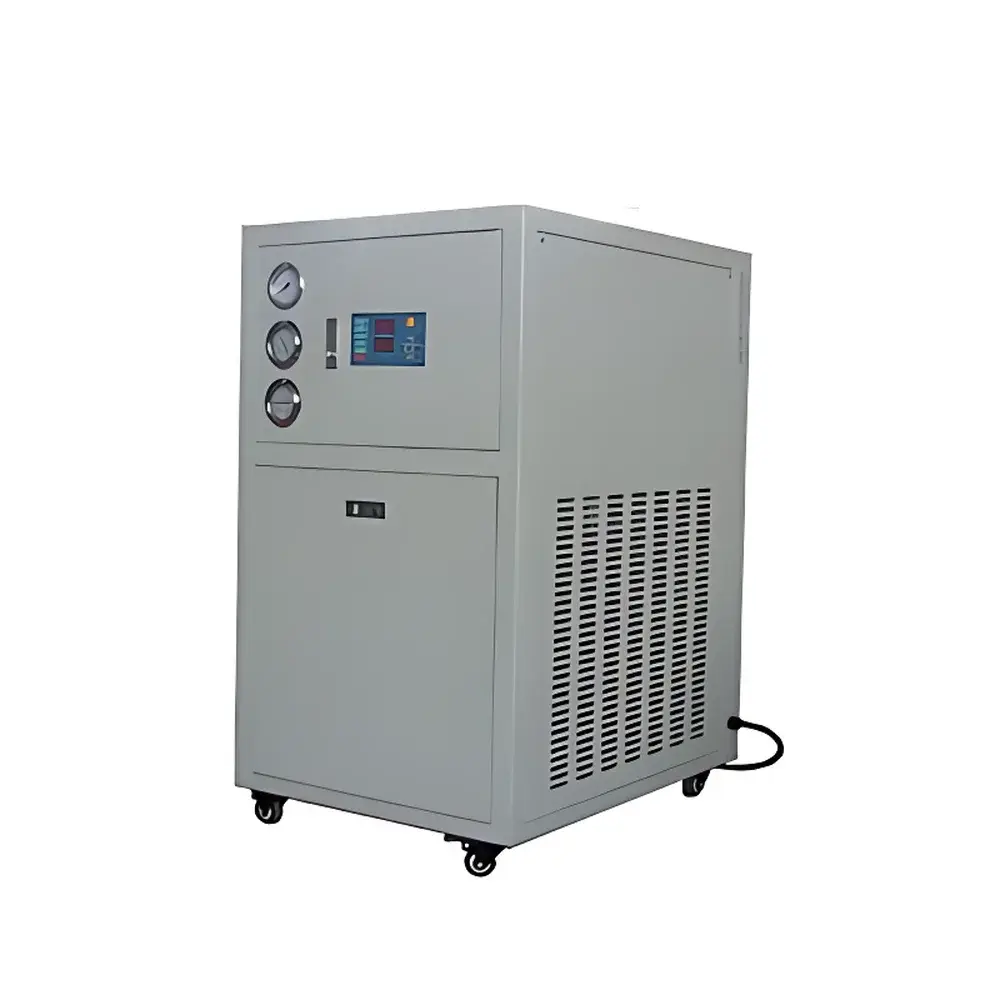
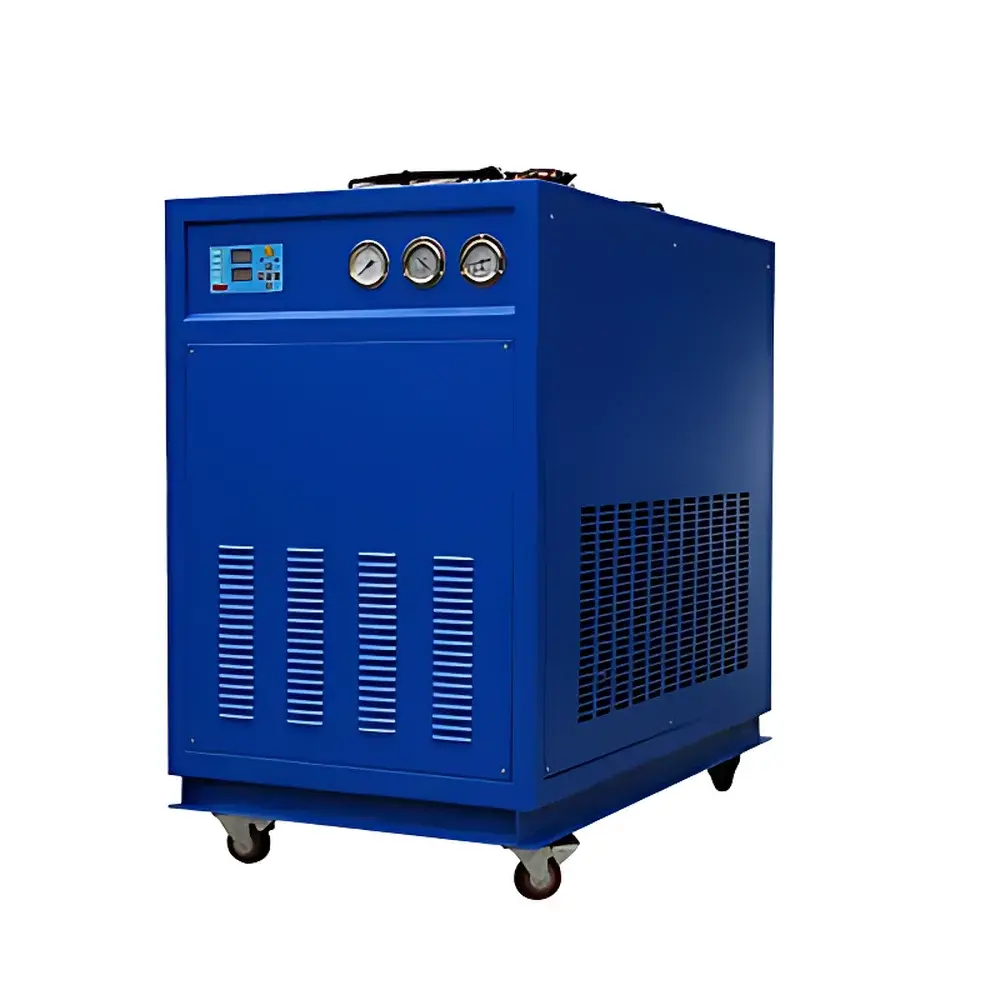
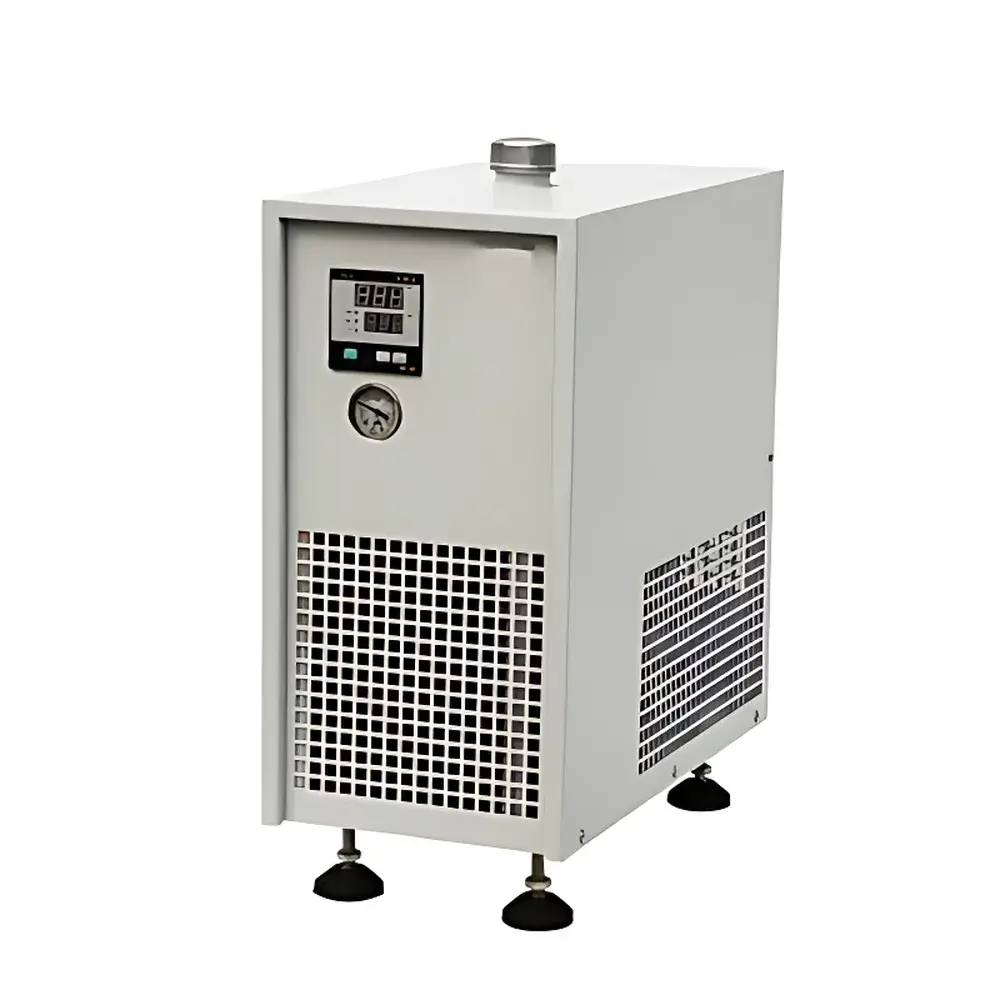
Tianfeng LS-2KW Laboratory Circulating Chiller
| Brand | Tianfeng |
|---|---|
| Origin | Shanghai, China |
| Manufacturer Type | Direct Manufacturer |
| Product Category | Domestic |
| Model | Tianfeng LS-2KW |
| Instrument Type | Integrated Unit |
| Cooling Method | Water-Cooled |
| Temperature Control Range | 0–40 °C |
| Refrigeration Capacity | 300–9000 W |
| Temperature Stability | ±0.1 °C |
| Circulating Pump Pressure | 2.0 bar |
| Circulating Pump Flow Rate | 38 L/min |
| Reservoir Volume | 5–550 L |
| Operating Mode | Continuous |
| Power Input | 1.34 kW |
| Reservoir Capacity (Standard) | 27 L |
| Dimensions (L×W×H) | 650×550×915 mm |
| Power Supply | 220 V, 50 Hz |
| Safety Protections | Compressor Overheat Protection, Overcurrent Protection, High/Low Pressure Switches, Overtemperature Cut-off |
| Construction | Stainless Steel Reservoir & Pump |
| Compressor | Scroll Type |
| Controller | Domestic High-Accuracy Digital PID Controller (Optional RKC Japan) |
| Key Components | Imported Expansion Valve & Solenoid Valve (Italy/Germany), Siemens/Schneider/Omron Electrical Components |
| Noise Level | Low |
| Certifications | ISO 9001:2000 Certified |
Overview
The Tianfeng LS-2KW Laboratory Circulating Chiller is a precision-engineered, integrated refrigeration system designed for stable thermal management of sensitive analytical and process equipment in research laboratories and pilot-scale facilities. It operates on a vapor-compression refrigeration cycle, utilizing a high-efficiency scroll compressor, thermostatically regulated expansion valve, and forced-circulation heat exchange architecture to deliver consistent cooling performance across variable thermal loads. Unlike ambient-air-cooled units, the LS-2KW employs a water-cooled condenser configuration—ideal for controlled laboratory environments where acoustic noise, heat rejection, and spatial constraints are critical design parameters. Its core function is to maintain process fluids (typically deionized water or water-glycol mixtures) within a tightly regulated temperature band (0–40 °C) with a stability of ±0.1 °C, enabling reliable operation of instrumentation requiring precise thermal stabilization—including atomic absorption spectrometers (GFAAS), ICP-OES/MS systems, X-ray diffractometers (XRD), scanning and transmission electron microscopes (SEM/TEM), and laser-based material processing platforms.
Key Features
- Integrated compact design (650 × 550 × 915 mm) optimized for benchtop or floor-mounted deployment in space-constrained labs;
- Stainless steel reservoir (27 L standard capacity) and corrosion-resistant pump housing ensure long-term fluid integrity and compatibility with deionized water, ethylene glycol solutions, and mild aqueous coolants;
- Digital PID temperature controller with real-time display and user-adjustable setpoint resolution of 0.1 °C;
- Continuous-duty scroll compressor delivering stable refrigeration output from 300 W to 9 kW (at standard conditions: 12 °C inlet / 7 °C outlet chilled water; 30 °C ambient / 40 °C condenser water);
- High-flow, low-pulsation circulation pump rated at 38 L/min @ 2.0 bar, supporting multi-instrument daisy-chaining with minimal pressure drop;
- Comprehensive safety architecture including compressor overheat detection, high/low refrigerant pressure interlocks, overcurrent protection, and reservoir overtemperature cutoff;
- Low-noise operation (<65 dB(A) at 1 m), compliant with ISO 7779 and ANSI S12.55 standards for laboratory acoustic environments;
- Modular electrical interface with CE-compliant components (Siemens, Schneider, Omron) and optional RKC (Japan) temperature controller for enhanced traceability and regulatory alignment.
Sample Compatibility & Compliance
The LS-2KW chiller is compatible with a wide range of laboratory instruments requiring closed-loop coolant circulation, including but not limited to graphite furnace atomic absorption spectrometers, plasma emission and mass spectrometry systems, XRF and XRD analyzers, electron microscopy platforms, laser ablation systems, and high-power optical benches. Its stainless steel wetted path meets ASTM F838-22 requirements for biocompatibility and extractables testing when used with USP-grade water. The unit conforms to ISO 9001:2000 quality management system certification and supports GLP/GMP-aligned operational documentation through its digital controller’s event logging capability (optional firmware upgrade). While not intrinsically rated for hazardous locations, it complies with IEC 61000-6-3 (EMC emissions) and IEC 61000-6-2 (immunity) for use in electromagnetic-sensitive laboratory zones.
Software & Data Management
The standard digital controller provides local setpoint adjustment, real-time temperature readout, flow status indication, and fault code display. For integration into centralized lab infrastructure, optional RS-485 Modbus RTU communication enables remote monitoring and control via LIMS or SCADA platforms. Event logs—including temperature excursions, pump runtime, compressor cycles, and alarm triggers—are timestamped and storable for audit purposes. When configured with validated firmware, the system supports FDA 21 CFR Part 11-compliant electronic records through external authentication servers, facilitating compliance in regulated pharmaceutical and clinical research settings. Data export is supported via USB or serial dump for trend analysis in MATLAB, Python (Pandas), or LabVIEW environments.
Applications
- Thermal stabilization of plasma sources and RF generators in ICP-OES/MS instrumentation to minimize spectral drift and improve measurement reproducibility;
- Cooling of X-ray tube anodes and detector cryostats in XRF and XRD systems to maintain optimal photon detection efficiency and prevent thermal lensing;
- Temperature regulation of laser diode stacks and fiber-coupled modules in Raman spectroscopy and LIBS setups;
- Heat extraction from vacuum chamber feedthroughs and electron gun assemblies in SEM/TEM systems to reduce thermal drift during high-resolution imaging;
- Process cooling of graphite furnace atomizers and quartz cuvettes in GFAAS to ensure consistent atomization kinetics and calibration linearity;
- Support of controlled-rate freezing protocols in cryomicroscopy sample preparation workflows;
- Integration into automated sample introduction systems requiring synchronized thermal conditioning of nebulizers and spray chambers.
FAQ
What is the recommended maximum return water temperature for continuous operation?
The chiller is engineered for sustained operation with return water temperatures ≤40 °C. Exceeding this threshold accelerates compressor wear and may trigger high-pressure cutouts. For optimal longevity, maintain return temperatures between 30–38 °C.
Can the LS-2KW be integrated into a multi-instrument cooling loop?
Yes—the 38 L/min flow rate and 2.0 bar pressure head support parallel or series configurations with up to four mid-power instruments (e.g., two ICP-OES units + one XRD + one laser system), provided total thermal load remains within the 300–9000 W operating envelope.
Is the reservoir volume customizable?
Standard configuration includes a 27 L stainless steel tank; custom reservoir capacities from 5 L to 550 L are available under OEM engineering support, subject to structural reinforcement and pump re-rating.
Does the unit meet regulatory requirements for pharmaceutical QC labs?
With optional validated firmware, electronic log export, and audit-trail-enabled controller, the LS-2KW supports compliance with USP , ISO/IEC 17025, and FDA 21 CFR Part 11 when deployed as part of a documented qualification protocol (IQ/OQ/PQ).
What maintenance intervals are recommended for laboratory-grade operation?
Compressor oil and refrigerant levels should be verified annually; condenser water-side strainers require quarterly cleaning; PID sensor calibration is advised every 6 months using NIST-traceable reference thermometers.
Related Products



