
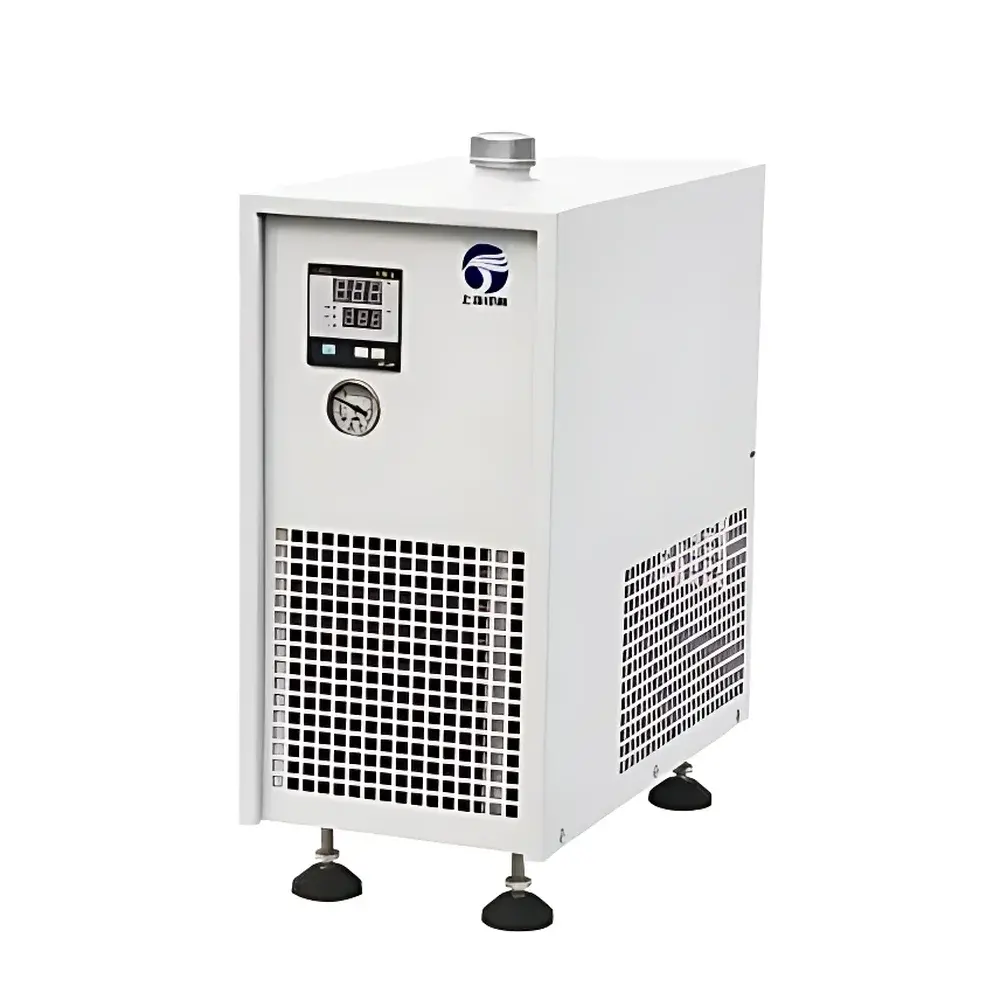
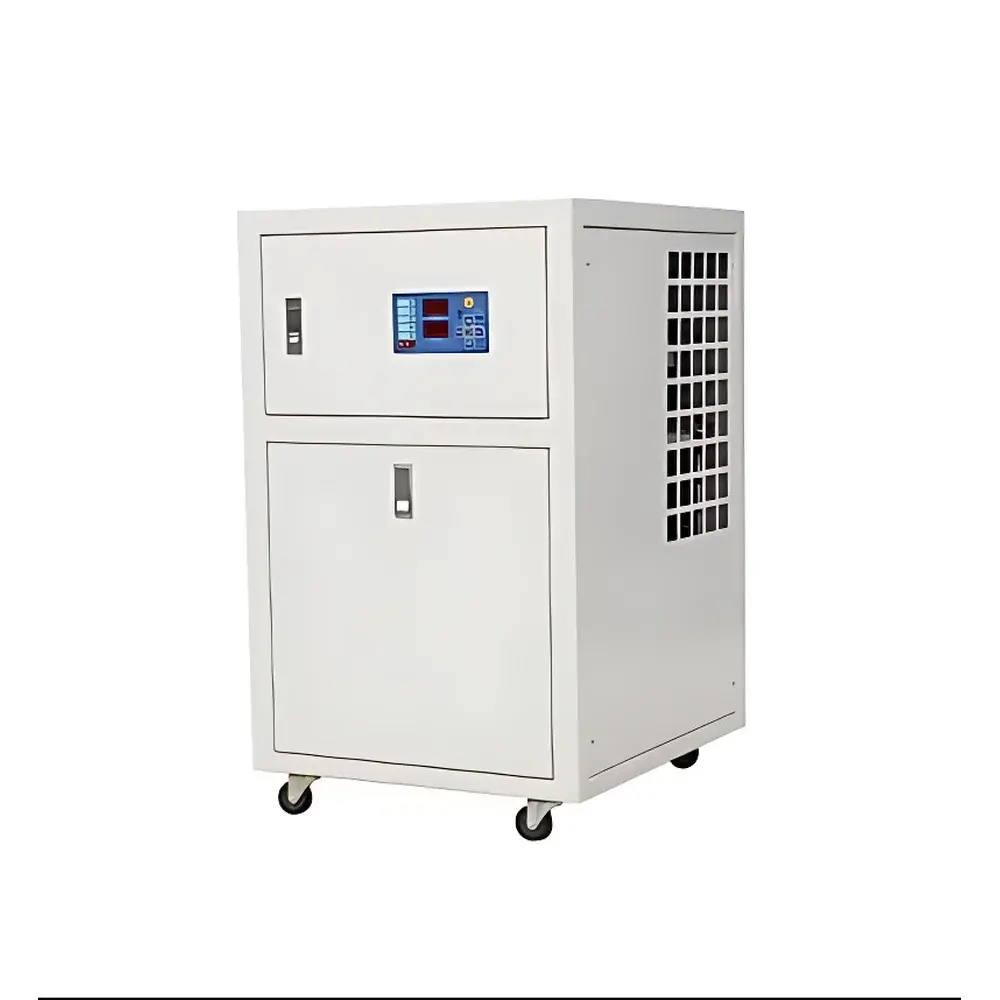
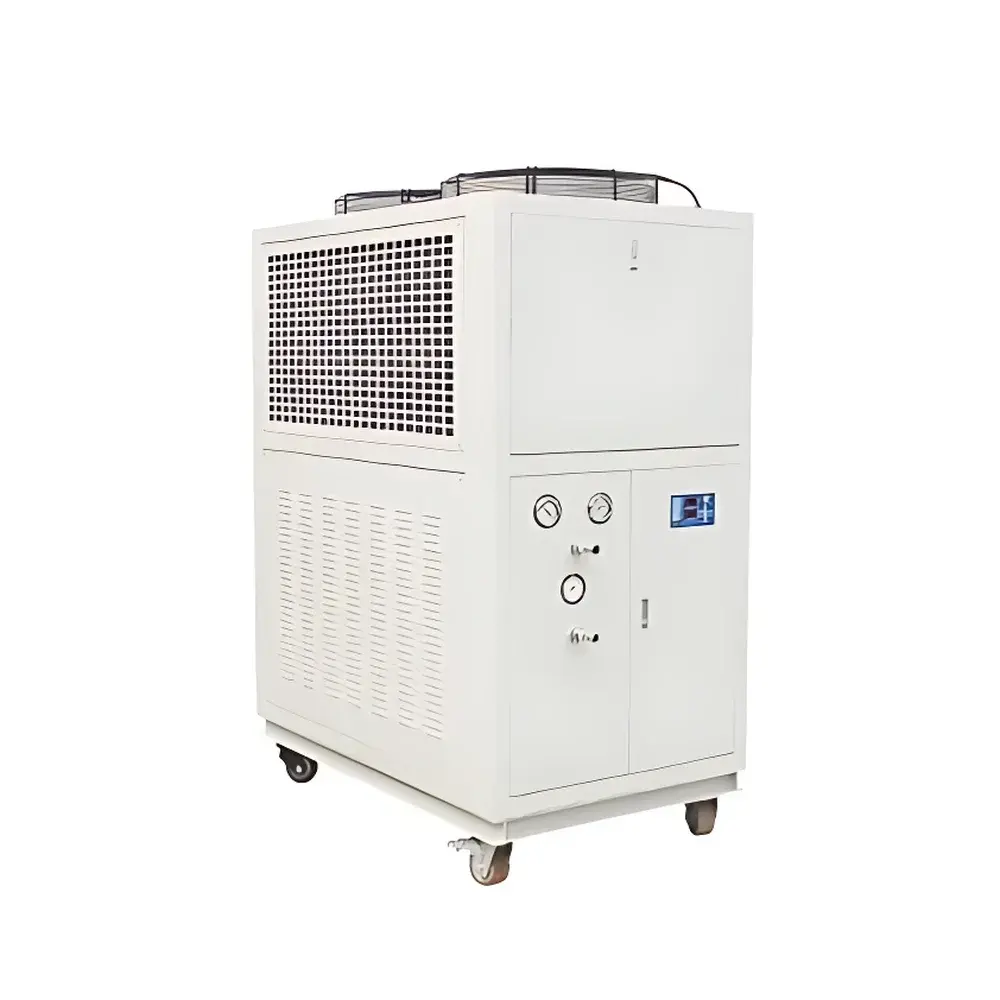
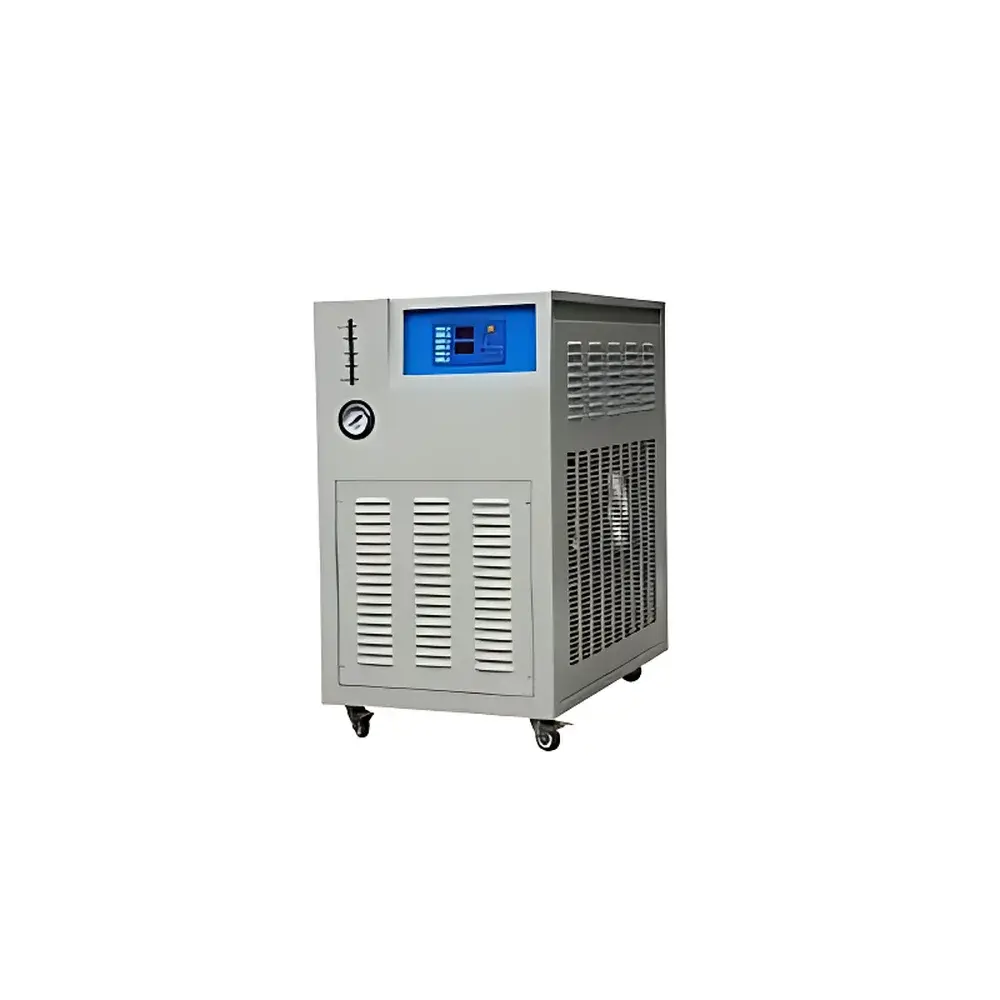
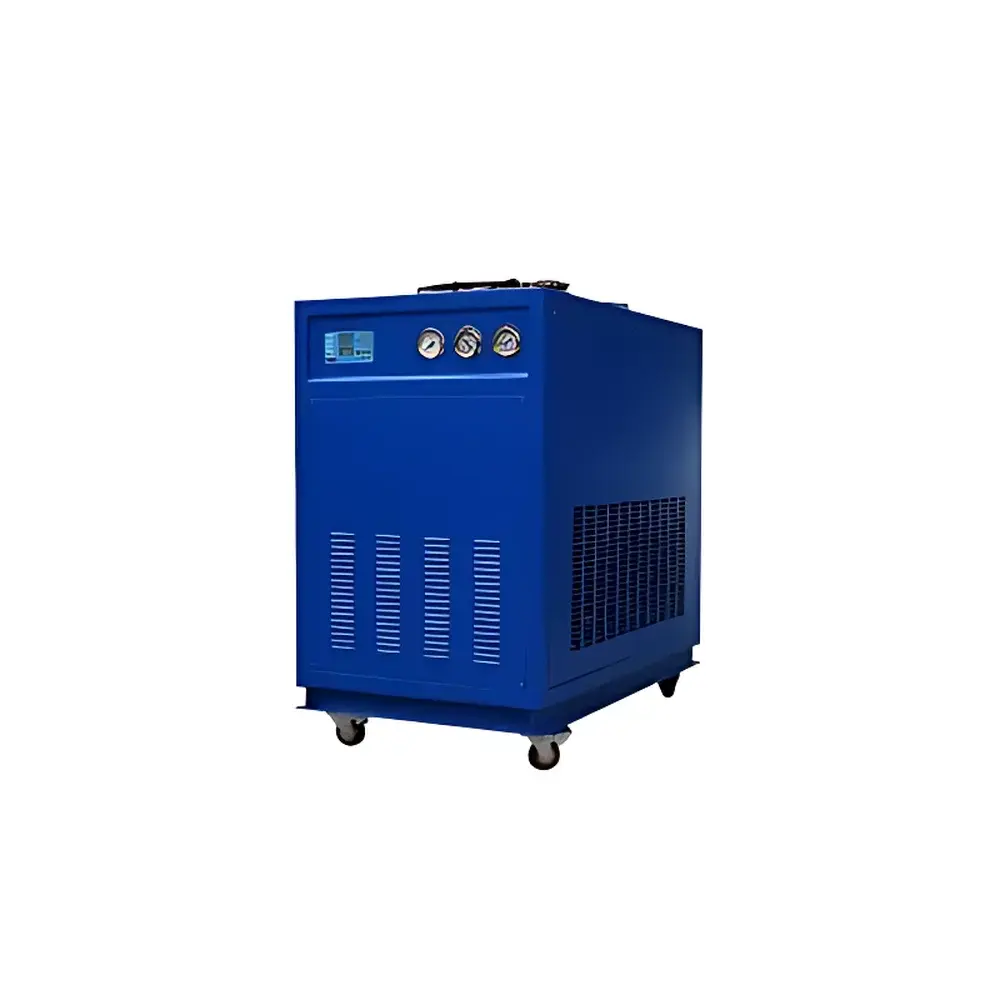
Tianfeng TF-LS-0.3kW Air-Cooled Laboratory Circulating Chiller
| Brand | Tianfeng |
|---|---|
| Origin | Shanghai, China |
| Manufacturer Type | Direct Manufacturer |
| Product Type | Integrated Air-Cooled Circulating Chiller |
| Cooling Capacity | 0.3 kW (300 W) |
| Temperature Range | 5–35 °C |
| Temperature Stability | ±0.1 °C |
| Reservoir Volume | 15 L |
| Pump Flow Rate | 2 m³/h |
| Pump Pressure (Head) | 14 m |
| Power Supply | 220 V, 50 Hz |
| Refrigerant | R22 |
| Compressor Type | Rotary Vane |
| Evaporator | Stainless Steel Tank Coil |
| Condenser | Copper Tube with Aluminum Fin + Low-Noise External Rotor Fan |
| Safety Protections | Compressor Overheat, Overcurrent, High/Low Pressure, and Overtemperature Protection |
| Dimensions (L×W×H) | 650 × 500 × 765 mm |
Overview
The Tianfeng TF-LS-0.3kW Air-Cooled Laboratory Circulating Chiller is an integrated, compact refrigeration system engineered for precise thermal management of sensitive analytical and experimental equipment in research laboratories, academic institutions, and quality control environments. It operates on the vapor-compression refrigeration cycle, utilizing R22 refrigerant and a high-efficiency rotary vane compressor to deliver stable, continuous cooling without requiring external water sources or chilled water infrastructure. Designed specifically for low-to-moderate heat load applications—such as graphite furnace atomic absorption spectrometers (GFAAS), inductively coupled plasma optical emission spectrometers (ICP-OES), X-ray fluorescence (XRF) analyzers, scanning electron microscopes (SEM), and laser-based instrumentation—the chiller maintains setpoint temperatures within ±0.1 °C across its full operational range of 5–35 °C. Its air-cooled architecture eliminates dependency on facility cooling towers or municipal water lines, making it ideal for space-constrained labs or mobile laboratory setups where installation flexibility and rapid deployment are critical.
Key Features
- Integrated all-in-one design with stainless steel reservoir (15 L capacity), built-in circulation pump (2 m³/h flow, 14 m head), and precision temperature control system
- High-reliability rotary vane compressor (0.517 kW input) paired with a copper-aluminum finned condenser and low-noise external rotor fan (1000 m³/h airflow)
- Digital PID temperature controller with ±1 °C display resolution and programmable setpoint range (5–35 °C); supports real-time monitoring and manual override
- Corrosion-resistant stainless steel tank coil evaporator with automatic water level sensing and refill function for uninterrupted operation
- Comprehensive safety architecture including compressor overheat protection, overcurrent cutoff, high/low refrigerant pressure interlocks, and reservoir overtemperature shutdown
- Electrical components sourced from globally certified suppliers: Schneider contactors, Siemens/Mitsubishi/OMRON PLC-grade relays and control modules
- Industrial-grade powder-coated steel enclosure with quick-release panels for tool-free access to internal components and routine maintenance
Sample Compatibility & Compliance
This chiller is compatible with a broad spectrum of laboratory instruments requiring regulated coolant delivery—including but not limited to atomic spectroscopy systems (AAS, ICP-MS), X-ray analytical platforms (XRF, XRD), electron microscopy suites (SEM, TEM), and laser ablation or UV-Vis-NIR spectrophotometers. It meets general-purpose electrical safety standards per IEC 61010-1 (Safety Requirements for Electrical Equipment for Measurement, Control, and Laboratory Use). While not certified for medical device use under ISO 13485 or FDA 21 CFR Part 11, its robust construction, traceable component sourcing, and stable thermal output support GLP-compliant workflows when integrated into validated instrument cooling loops. All refrigerant handling adheres to national environmental regulations governing R22 use and disposal.
Software & Data Management
The TF-LS-0.3kW operates via standalone hardware-based control—no embedded firmware, network interface, or proprietary software suite is included. Temperature setpoints and status indicators are managed exclusively through the front-panel digital display and tactile buttons. This architecture ensures deterministic response time, immunity to cybersecurity threats, and long-term operational consistency without dependency on operating system updates or driver compatibility. For integration into centralized lab monitoring systems, analog voltage (0–10 V) or 4–20 mA output signals can be configured upon request to relay temperature feedback or fault status to external SCADA or BMS platforms. Audit trails and electronic records are maintained externally by the host instrument’s data acquisition system.
Applications
- Thermal stabilization of graphite furnace atomizers in AAS systems to prevent thermal drift during peak-integrated absorbance measurements
- Cooling high-power RF generators and plasma torches in ICP-OES/ICP-MS installations to maintain spectral resolution and signal-to-noise ratio
- Heat dissipation for X-ray tube anodes in benchtop XRF and XRD diffractometers, extending tube lifetime and reducing thermal lensing artifacts
- Active cooling of detector housings in SEM/TEM columns to minimize thermal noise and improve electron beam coherence
- Supporting laser diode arrays and solid-state lasers used in Raman spectroscopy and confocal microscopy setups
- General-purpose recirculating cooling for vacuum pumps, power supplies, and high-frequency RF amplifiers in physics and materials science labs
FAQ
What is the maximum ambient temperature at which this chiller can operate reliably?
The unit is rated for continuous operation in ambient conditions up to 35 °C. Performance degrades gradually above this threshold; derating curves are available upon request.
Can the chiller be used with ethylene glycol/water mixtures?
Yes—it is compatible with aqueous solutions containing up to 30% (v/v) inhibited ethylene glycol for sub-zero temperature operation down to –5 °C, provided the viscosity remains below 20 cP at operating temperature.
Is remote monitoring or Ethernet connectivity supported?
No native networking capability is provided; however, optional analog I/O modules (4–20 mA or 0–10 V) can be factory-installed for integration with third-party building automation or process control systems.
How often does the refrigerant require servicing or replenishment?
Under normal sealed-system operation and absence of mechanical damage or leakage, R22 charge requires no periodic replenishment. Annual visual inspection of condenser fins and fan functionality is recommended.
Does the chiller comply with RoHS or REACH directives?
While the unit contains R22—a substance exempted from RoHS restrictions due to its functional necessity in legacy refrigeration systems—it complies fully with REACH SVHC reporting requirements. Component-level declarations are available under NDA.



