
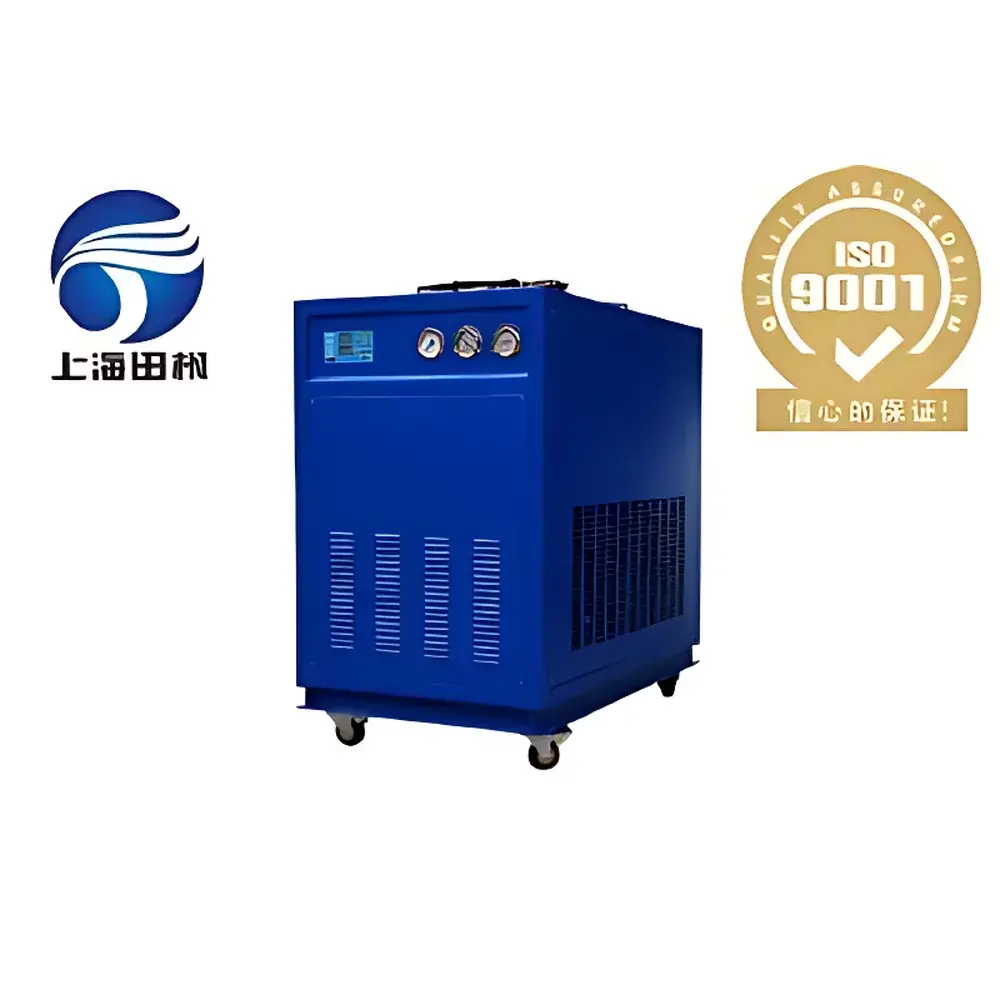
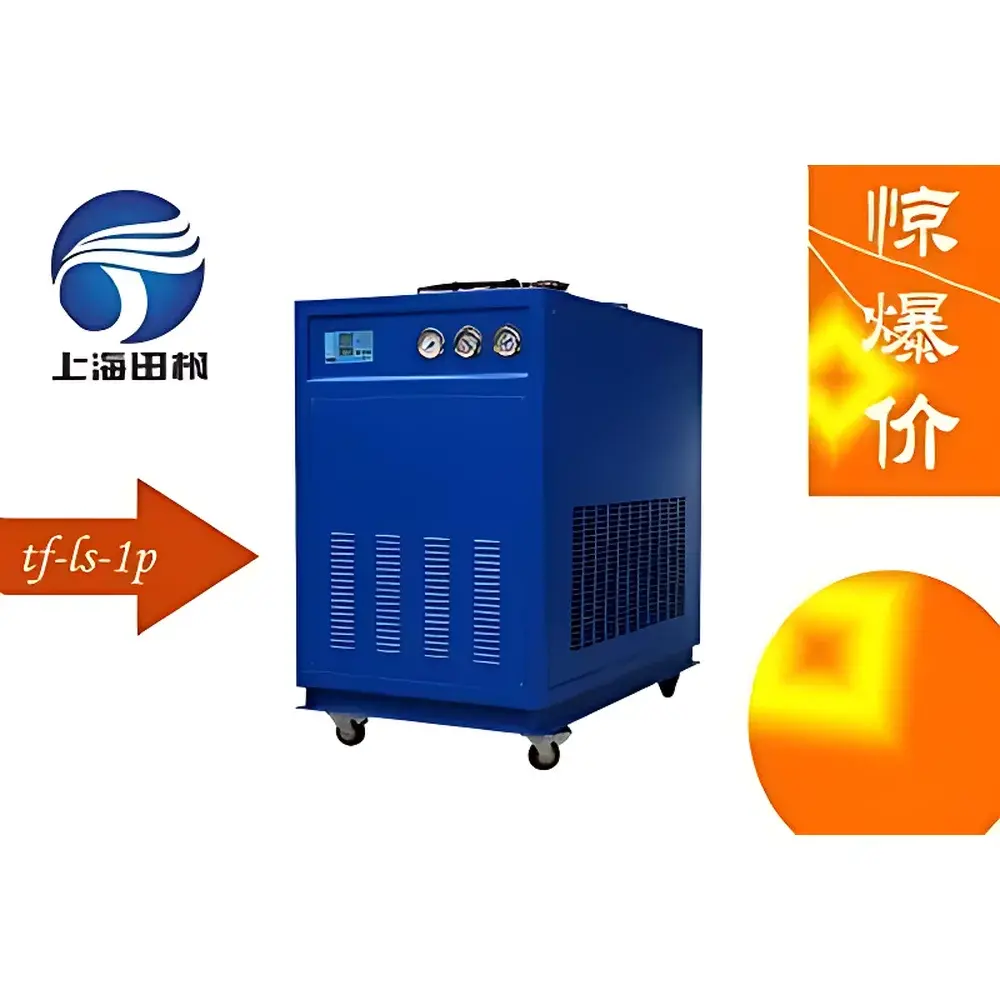
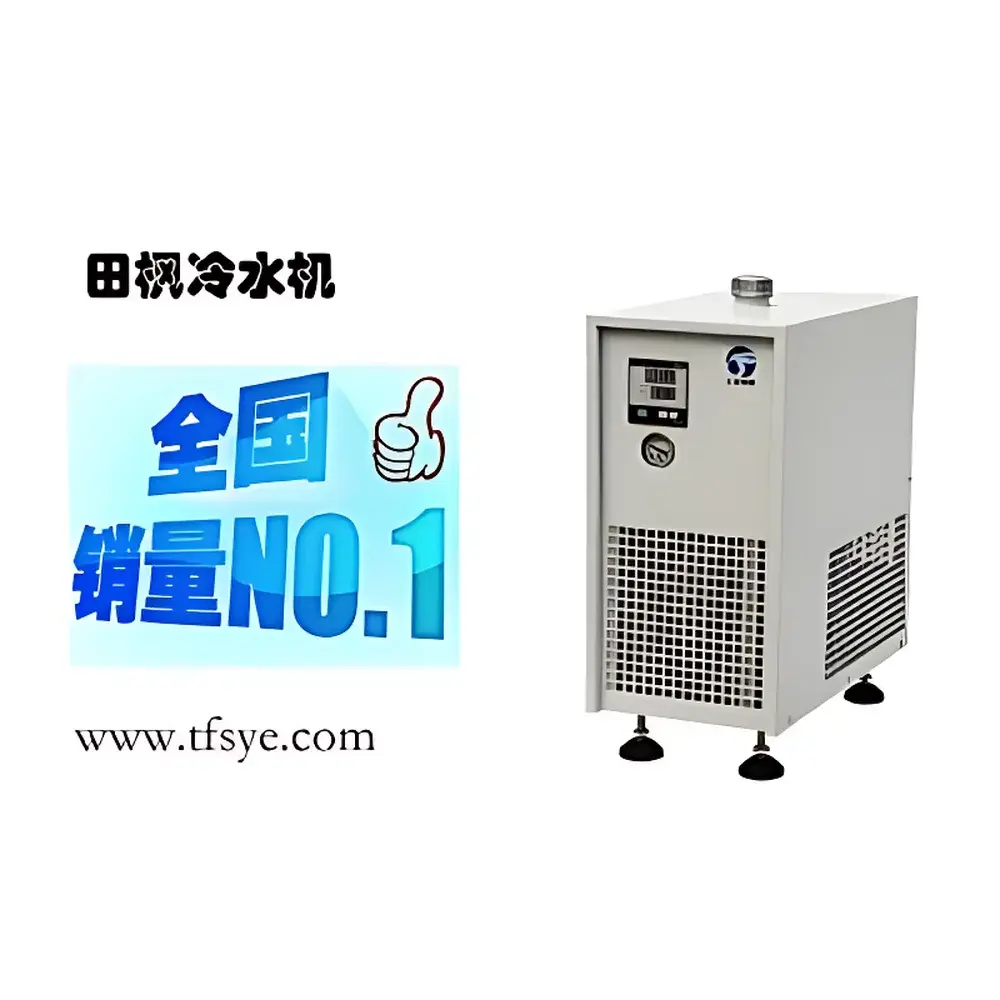
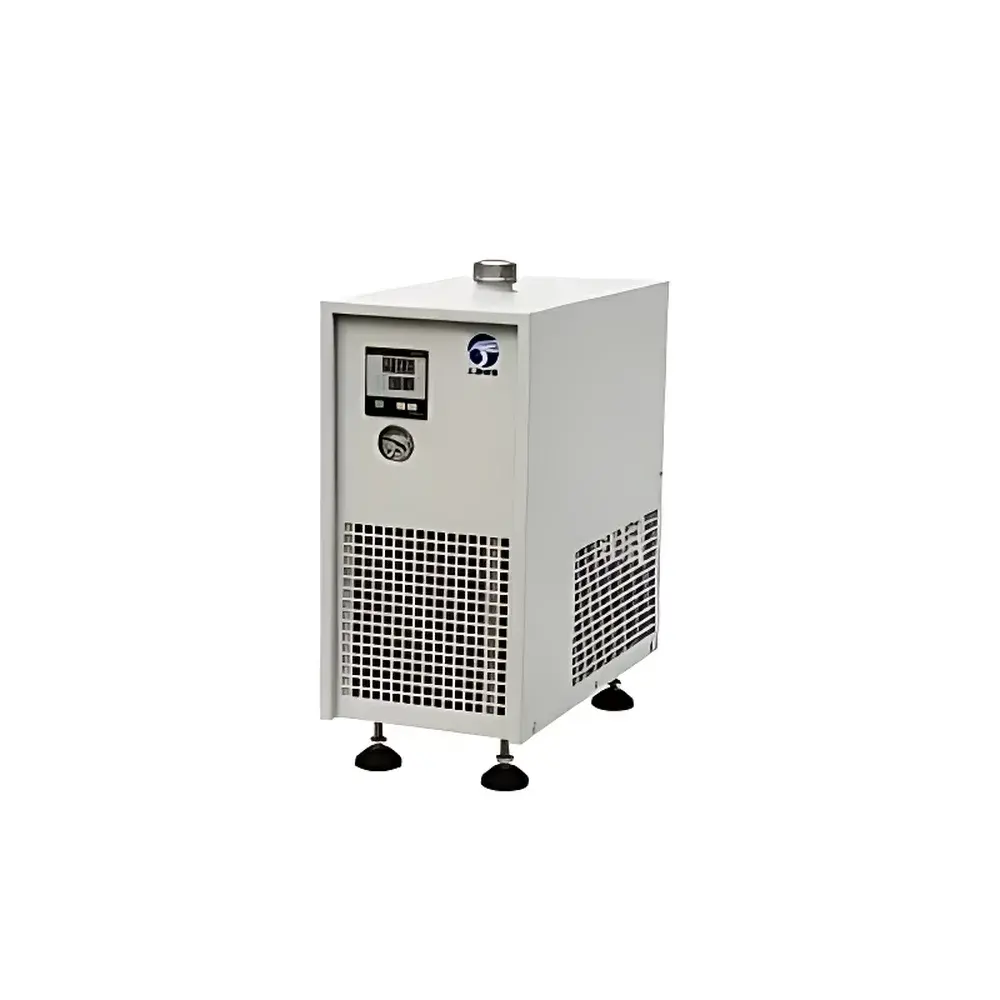
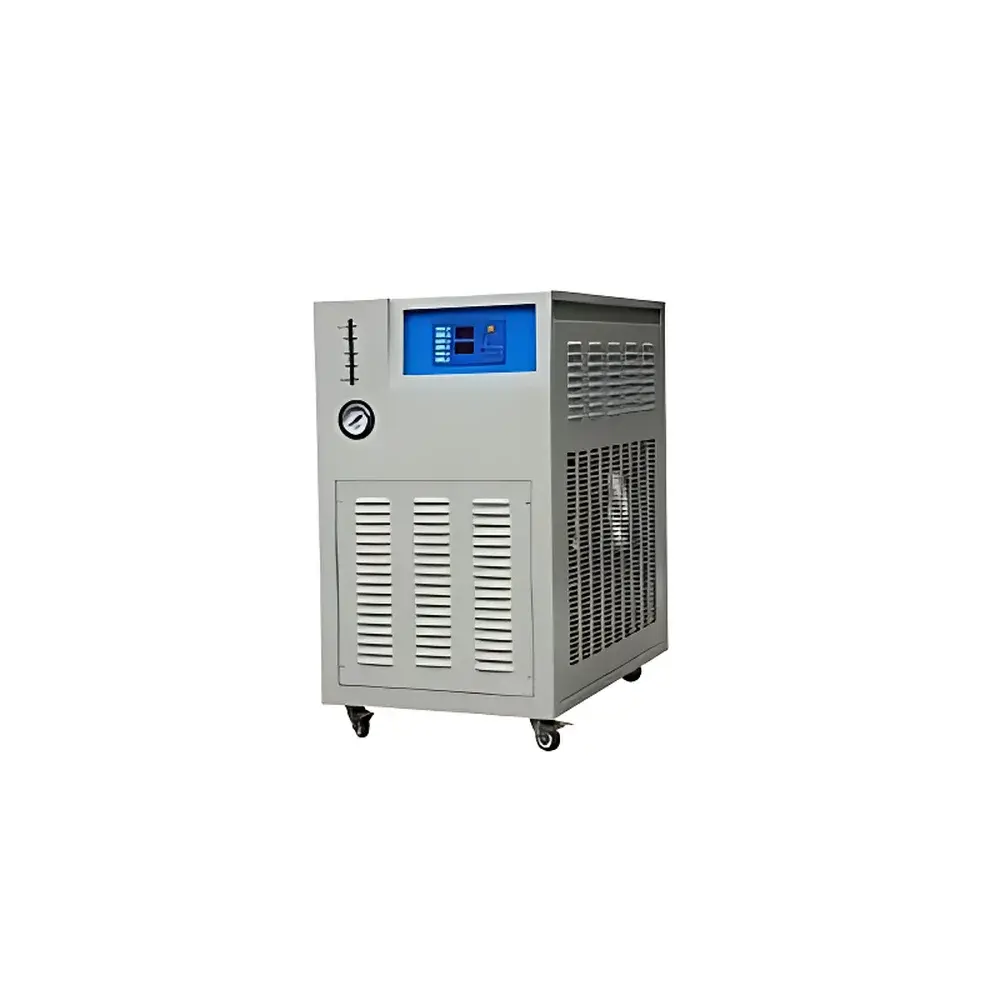
Tianfeng TF-LS-2.5KW Air-Cooled Circulating Chiller
| Brand | Tianfeng |
|---|---|
| Origin | Shanghai, China |
| Manufacturer Type | Direct Manufacturer |
| Product Category | Domestic |
| Model | TF-LS-2.5KW |
| Unit Type | Integrated |
| Cooling Method | Air-Cooled |
| Refrigeration Capacity | 2.5 kW |
| Operating Mode | Continuous |
| Power Supply | 380 V (L1/L2/L3/N/PE), 50 Hz |
| Refrigerant | R22 |
| Compressor Type | Hermetic Scroll |
| Evaporator | Immersion Coil in Stainless Steel Reservoir |
| Reservoir Volume | 27 L |
| Pump Flow Rate | 2 m³/h |
| Pump Head | 14 m |
| Water Inlet/Outlet Port | DN25 |
| Safety Protections | Compressor Overheat, Overcurrent, High/Low Pressure, Overtemperature, Phase Sequence & Phase Loss Protection |
Overview
The Tianfeng TF-LS-2.5KW is an integrated, air-cooled circulating chiller engineered for stable thermal management in laboratory and analytical instrumentation environments. It operates on the vapor-compression refrigeration cycle, utilizing R22 refrigerant and a hermetic scroll compressor to deliver precise, continuous cooling capacity of 2.5 kW at standard ambient conditions (≤35 °C). Designed for integration with spectrometers, laser systems, ICP-OES/MS, NMR preamplifiers, and other heat-sensitive equipment, the unit maintains setpoint stability within ±0.3 °C under steady-state load via proportional-integral (PI) temperature control. Its compact footprint (650 × 550 × 920 mm) and self-contained architecture eliminate the need for external condenser water loops or chilled water infrastructure—making it suitable for benchtop, under-bench, or dedicated utility cabinet installation in ISO Class 5–8 laboratories.
Key Features
- Hermetic scroll compressor (4.43 kW input) ensures high volumetric efficiency, low vibration, and extended service life under continuous-duty operation.
- Air-cooled condenser with high-efficiency copper-tube/aluminum-fin design and low-noise external-rotor fan (5000 m³/h airflow) enables reliable heat rejection without facility water dependency.
- Stainless steel reservoir (27 L capacity) with immersion-type coil evaporator provides uniform thermal exchange and minimizes temperature stratification.
- Integrated centrifugal pump (0.37 kW, 2 m³/h flow, 14 m head) supports closed-loop circulation through instruments with pressure drops up to 1.2 bar.
- Comprehensive safety suite includes dual-pressure switches, thermistor-based overtemperature cutoff, electronic phase monitoring, and motor overload protection—fully compliant with IEC 61000-6-2/6-4 EMC standards.
- Front-panel digital interface with LED display enables local setpoint adjustment (range: 5–35 °C), real-time monitoring of outlet temperature, and fault code diagnostics.
Sample Compatibility & Compliance
The TF-LS-2.5KW is compatible with deionized water, 20–30% ethylene glycol/water mixtures, and other non-corrosive heat-transfer fluids meeting ASTM D1384 specifications. It is not rated for flammable or highly viscous media. The unit conforms to GB/T 10870–2014 (Chinese national standard for liquid chillers) and carries CE marking per Machinery Directive 2006/42/EC and Low Voltage Directive 2014/35/EU. Electrical insulation meets IP20 rating; all internal wiring complies with UL 61010-1 requirements for laboratory equipment. While not inherently 21 CFR Part 11 compliant, its analog control architecture supports external data logging via 4–20 mA or 0–10 V analog outputs for integration into validated GxP environments where audit trails are managed at the supervisory SCADA level.
Software & Data Management
This model features a standalone microcontroller-based control system without embedded networking or proprietary software. Temperature setpoints, operational status, and alarm events are accessible only via the front-panel interface. For traceable operation in regulated labs, users may connect optional third-party data loggers (e.g., Omega OM-DAQPRO-5300) to the analog output terminals. All firmware updates require physical access and are performed using a manufacturer-provided USB programming tool—no remote update capability is implemented. Calibration certificates for temperature sensors (±0.2 °C accuracy at 20 °C) and pressure transducers are available upon request and conform to ISO/IEC 17025-accredited calibration practices.
Applications
- Thermal stabilization of high-power lasers (e.g., CO₂, Nd:YAG, fiber lasers) requiring consistent coolant inlet temperature to maintain beam quality and diode lifetime.
- Cooling of inductively coupled plasma sources in elemental analysis systems, preventing thermal drift in plasma impedance and improving long-term signal reproducibility.
- Supporting vacuum pumps and mass spectrometer ion sources by rejecting waste heat while maintaining dew point control below instrument operating thresholds.
- Providing secondary cooling loops for calorimeters, rheometers, and material testing frames where precise thermal boundary conditions affect mechanical property measurements.
- Backup cooling for chromatographic column ovens during transient power interruptions or ambient temperature excursions exceeding HVAC capacity.
FAQ
What is the minimum allowable coolant temperature setpoint?
The controller permits setting temperatures between 5 °C and 35 °C. Operation below 5 °C is prohibited due to risk of freezing in the reservoir and evaporator coil.
Can this chiller be used with tap water?
No. Tap water is not recommended due to mineral scaling, biological growth, and corrosion risks. Deionized water or inhibited glycol solutions are required for sustained operation.
Does the unit include flow monitoring or low-flow shutdown?
It does not feature built-in flow sensing. Users must install an external flow switch (e.g., Dwyer FM-1000 series) in the return line if flow interlock is required for instrument protection.
Is R22 refrigerant still serviceable under current environmental regulations?
R22 is phased out under the Montreal Protocol. Field service requires certified technicians holding EPA Section 608 certification; replacement compressors or refrigerant recharges may incur regulatory reporting obligations depending on jurisdiction.
What maintenance intervals are recommended for continuous lab operation?
Condenser coil cleaning every 3 months, refrigerant pressure verification annually, and pump seal inspection every 24 months—per the manufacturer’s Maintenance Log Sheet (Rev. 2023-09).



